nylon filter paper
CN → US| HS Code | Tariff Rate | Origin | Destination | Doc |
|---|---|---|---|---|
| 4823201000 | 35.0% | CN | US | Official Doc |
| 4823209000 | 35.0% | CN | US | Official Doc |
Product Images
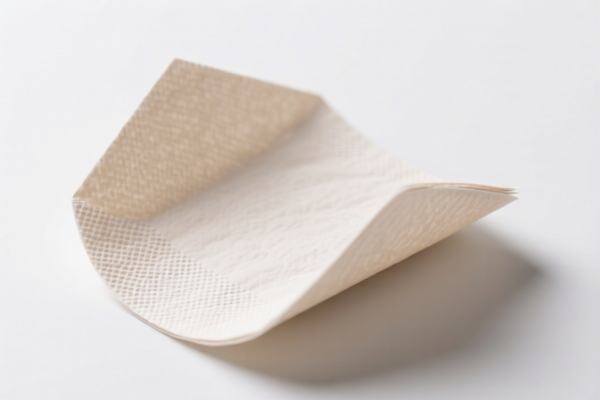
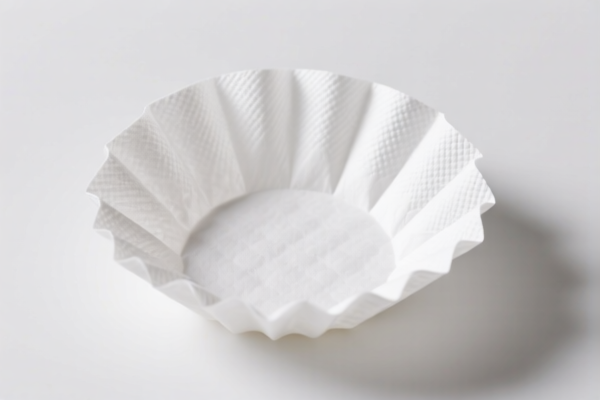

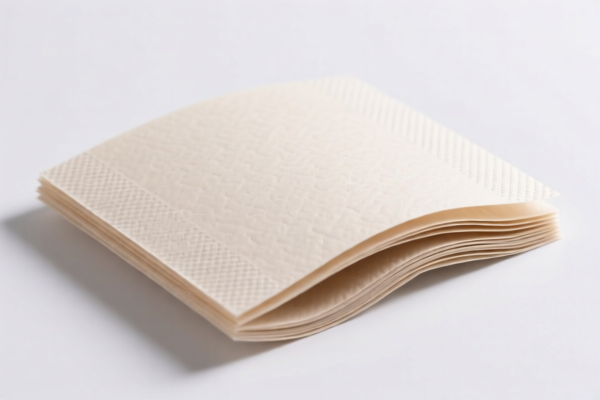
AI Analysis
🧪 Nylon Filter Paper (Nylon Membrane Filters)
🌐 HS Code Reference & Customs Clearance Guide | 2026 Latest Tariff Analysis | Professional Strategy
📌 I. Product Definition & Classification: Do You Know "Nylon Filter Paper"?
Nylon Filter Paper (often technically referred to as Nylon Membrane Filters or Synthetic Fiber Filter Paper) is a critical laboratory and industrial consumable used for solid-liquid separation, particle analysis, and microbial testing.
In international trade, it falls under Chapter 48: Paper and Paperboard. Specifically, it is classified based on its form and specific application:
1. Paint Filters and Strainers (Specific Application)
Used primarily in the automotive and coatings industry to filter paint, varnish, and other viscous fluids to remove impurities before spraying or application.
2. Other Filter Paper and Paperboard (General Purpose)
Used in laboratory filtration, water testing, chemical analysis, and general industrial processes where specific "paint" application is not the primary designated use.
⚠️ Key Distinction Point:
- If the product is explicitly marketed and designed as a "Paint Filter" or "Paint Strainer" →归类 to 4823.20.10.00
- If it is a general-purpose nylon membrane, lab filter, or industrial filter not exclusively for paint →归类 to 4823.20.90.00
- Note: Even though the material is "Nylon" (a synthetic polymer), if it is in the form of paper/board/felt cut to size, it remains in Chapter 48, not Chapter 39 (Plastics).
📦 II. HS Code Classification Details (2026 Latest Tariff Authority)
| HS Code | Product Description | Application Scenario | Material Type |
|---|---|---|---|
4823.20.10.00 |
Paint filters and strainers | Automotive paint filtration, coating industry, viscous fluid straining | Nylon/Polyester cellulose blend |
4823.20.90.00 |
Other filter paper and paperboard | Lab analysis, water testing, general industrial filtration, particle counting | Pure Nylon membranes, cellulose blends |
🔍 Critical Reminder:
- Do NOT misclassify Nylon Membranes as "Plastic Products" (Chapter 39). If they are in sheet/felt form cut to size, they are Paper/Paperboard (Chapter 48).
- The distinction between10and90depends entirely on the specific intended use (Paint vs. Other).
- If you are unsure,4823.20.90.00is the safer "catch-all" for general lab/industrial filters.
💰 III. 2026 Latest Tariff Rate Breakdown (With Additional Taxes)
✅ Applicable Country: USA (US)
✅ Country of Origin: China (CN)
✅ Effective Date: Ongoing (25% Section 301 Tariff)
🎯 1. 4823.20.10.00 —— Paint Filters and Strainers
| Item | Detail |
|---|---|
| Base Tariff Rate | 0.0% (ad valorem) |
| Section 301 Additional Tariff | +25.0% |
| Total Tariff Rate | 25.0% |
| Tax Calculation | CIF Value × 25% |
| De Minimis Exemption? | ❌ No (Section 301 goods generally do not qualify for $800 de minimis exemption if subject to 301 tariffs, though policy varies; consult current CBP rulings) |
| Legal Basis | USITC HTSUS 4823.20.10 + Section 301 List 4 |
📌 Explanation:
- "Paint filters" are specifically listed in the 301 tariff list.
- Total Cost Impact: You pay 25% on top of the CIF value. This is a significant cost driver for automotive supply chains.
🎯 2. 4823.20.90.00 —— Other Filter Paper and Paperboard
| Item | Detail |
|---|---|
| Base Tariff Rate | 0.0% (ad valorem) |
| Section 301 Additional Tariff | +25.0% |
| Total Tariff Rate | 25.0% |
| Tax Calculation | CIF Value × 25% |
| De Minimis Exemption? | ❌ No |
| Legal Basis | USITC HTSUS 4823.20.90 + Section 301 List 4 |
📌 Note:
- Even if it’s not a "paint" filter, it falls under the same "Other Paperboard" category in Section 301.
- The tariff rate is identical to paint filters.
- Whether you classify it as10or90, the 25% surcharge applies. The distinction matters more for data tracking, anti-dumping duties (if any), and regulatory compliance than for base tax savings.
🛠️ IV. Customs Clearance Practical Advice (Pitfall Avoidance Guide)
✅ 1. Document Checklist (Essential)
| Document | Required? | Description |
|---|---|---|
| ✅ Product Specification Sheet | ✔️ | Must state material (e.g., 100% Nylon), pore size (microns), diameter, and thickness. |
| ✅ Commercial Invoice | ✔️ | Clearly describe as "Nylon Filter Paper for [Lab/Industrial Use]". Avoid vague terms like "Paper". |
| ✅ HS Code Justification | ✔️ | Explain why it is classified under Ch. 48 (e.g., "Cut to size, fiber-based matrix") rather than Ch. 39. |
| ✅ Material Safety Data Sheet (MSDS) | ✔️ | Required for chemical/biological filtration safety. |
| ✅ Proof of Origin | ✔️ | If shipped from China, origin is CN. |
✅ 2. Declaration Tips (Key Strategy)
🔥 "Nylon ≠ Plastic, Filter ≠ Textile"
| Scenario | Correct Declaration | Wrong Practice |
|---|---|---|
| Lab Use | "Nylon Membrane Filter Paper, 0.45 micron, 47mm diameter" | "Plastic Filter" → Misclassification risk |
| Paint Industry | "Paint Strainer, Nylon Fiber, Automotive Grade" | "Paper Filter" → Might trigger "Other" code but still 25% |
| Bulk Rolls | "Unwound Nylon Filter Paper, Cut to Size" | "Plastic Rolls" → Chapter 39 error |
| Kit Components | Declare filters separately | Bundle with glassware to hide value |
⚠️ Warning:
- Do not declare as "Textile" (Chapter 59) even if it contains fibers. If it is for filtration and cut to shape, Ch. 48 is correct.
- Do not declare as "Plastic Sheet" (Chapter 39) unless it is a solid sheet without the porous fibrous structure of filter paper. CBP may reclassify and penalize.
✅ 3. Special Cases
| Scenario | Handling Advice |
|---|---|
| Imported for R&D Lab | Ensure the invoice specifies "For Laboratory Use Only" to avoid "Commercial Industrial" scrutiny. |
| Packaged in Kits | If packaged with funnel and clamp, the kit may be classified as a "Set". Ensure the filter is the essential component. |
| High-Value Medical Grade | If used in sterile medical devices, ensure FDA registration numbers are available if required by the end-user. |
🌍 V. Global Market Clearance Comparison (2026)
| Country/Region | Recommended HS Code | Tariff (China Origin) | Certification | Notes |
|---|---|---|---|---|
| 🇺🇸 USA | 4823.20.90.00 |
25% (Section 301) | None specific | High compliance risk if misclassified as Ch. 39 |
| 🇨🇳 China | 4823.20.90.00 |
5-8% | None | Standard import |
| 🇪🇺 EU | 4823.20.90.00 |
0% (GSP may apply) | CE (if medical) | No Section 301 equivalent |
| 🇬🇧 UK | 4823.20.90.00 |
0-5% | UKCA | Post-Brexit rules apply |
📌 Conclusion:
- The USA is the most expensive market for Nylon Filter Paper from China due to the 25% Section 301 tariff.
- For EU/UK, the tariff is significantly lower or zero, making these markets more attractive for cost-sensitive shipments.
📌 VI. Common Errors & Pitfalls (Lessons Learned)
❌ Error 1: Classifying as "Plastic Filter Membrane" (Chapter 39)
👉 Consequence: CBP may reject, reclassify to Ch. 48, and assess 25% tariff + penalties.
👉 Fix: Emphasize "Fiber Matrix" and "Paper-like structure" in description.
❌ Error 2: Ignoring the 25% Surcharge in Pricing
👉 Consequence: Profit margin erosion.
👉 Fix: Always quote DDP prices including 25% tariff for US customers.
❌ Error 3: Vague Description "Filter Paper"
👉 Consequence: Customs delay for inspection.
👉 Fix: Specify "Nylon", "Pore Size", and "Application".
✅ Correct Declaration Example:
"Nylon Membrane Filter Paper, 0.22 micron pore size, 47mm diameter, for laboratory bacterial filtration, cut to size, Chapter 48."
🎯 VII. Conclusion: Professional Clearance, Cost Control!
🎯 Remember:
🔹 "Nylon Filter is Chapter 48, Not 39!"
🔹 "25% Tariff is Inevitable for US Imports from China."
🔹 "Be Specific: Paint vs. Other determines the Sub-Code, but Not the Tax Rate."
📌 Pro Tip:
If you are importing large volumes, consider Duty Drawback programs if the filters are used in manufacturing and the final product is re-exported.
Also, ensure your supplier provides accurate material composition to defend against Chapter 39 misclassification.
📣 Immediate Action:
📞 Verify HS Code with your freight forwarder
📄 Update Incoterms to reflect 25% tariff burden
🚀 Clear customs smoothly, avoid delays, protect your margins!
✨ Precision in Classification Saves Thousands!
💼 Your Bottom Line Depends on the First Line of Description!
Customer Reviews
About HS Code Classification
The Harmonized System (HS) is an internationally standardized nomenclature developed by the World Customs Organization (WCO) to classify traded products. Over 200 countries use the HS system as the basis for customs tariffs, trade statistics, and import/export regulations.
Each HS code follows a hierarchical structure:
- Chapter (2 digits) — Broad category of goods (e.g., Chapter 84: Machinery and Mechanical Appliances)
- Heading (4 digits) — More specific grouping within the chapter
- Subheading (6 digits) — Internationally standardized breakdown, used by all WCO member countries
- National subdivisions (8-10 digits) — Country-specific extensions for further classification, such as US HTSUS 10-digit codes
Correct HS code classification is essential for smooth customs clearance, accurate duty payment, and compliance with trade regulations. Misclassification can lead to customs delays, overpayment of duties, or penalties.
When importing from CN to US, the applicable tariff rates may include:
- Most-Favored-Nation (MFN) rate — The standard duty rate applied to WTO members
- General rate — Applied to countries without trade agreements
- Trade remedy duties — Additional tariffs such as Section 301 (anti-dumping), Section 232 (national security), or countervailing duties
The information provided on this page is for reference purposes only. For official classification, please consult with your local customs authority or a licensed customs broker.