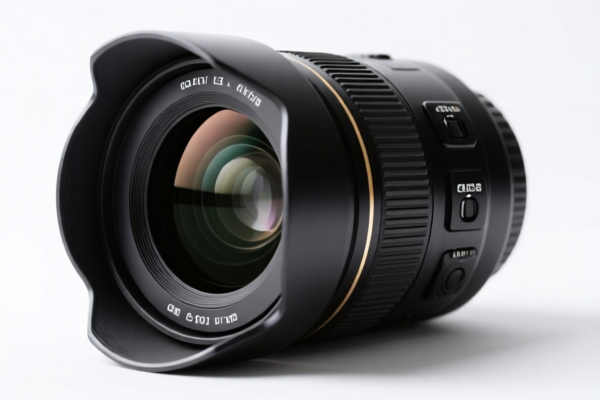
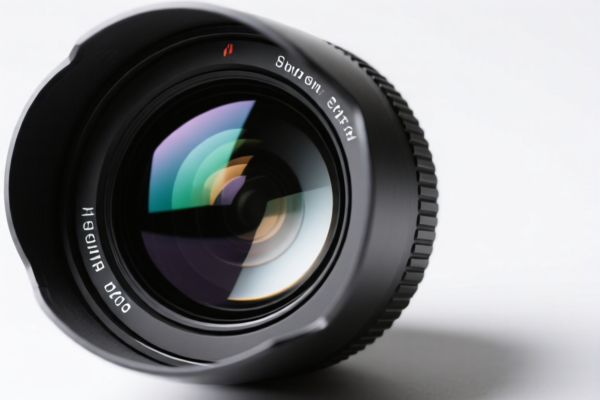
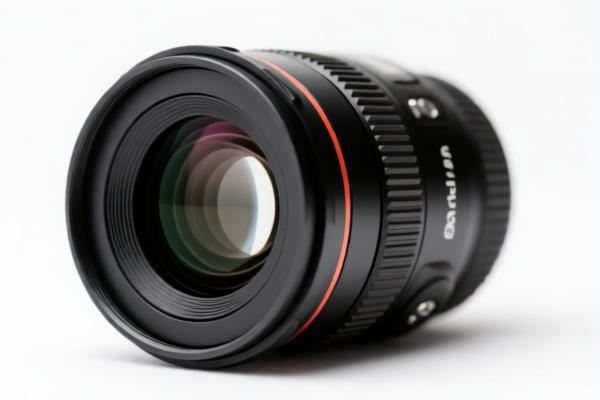
objective lens
CN → US| HS Code | Tariff Rate | Origin | Destination | Doc |
|---|---|---|---|---|
| 9013907000 | 35.0% | CN | US | Official Doc |
| 9013908000 | 89.5% | CN | US | Official Doc |
| 9002119000 | 37.3% | CN | US | Official Doc |
| 9001904000 | 10.0% | CN | US | Official Doc |
| 9001909000 | 35.0% | CN | US | Official Doc |
| 9002190000 | 35.0% | CN | US | Official Doc |
Product Images
AI Analysis
🔍 Objective Lens: The Eye of the Optical World – 2026 HS Code Guide & Clearance Strategy
🌐 Global Trade & Customs Guide | 2026 HS Code Classification | Strategic Clearance for Optics
📌 Product Focus: Objective Lens (Optical Systems, Cameras, Microscopes, Telescopes)
An Objective Lens is the primary optical element in imaging systems (microscopes, telescopes, cameras, endoscopes). It gathers light and forms the initial image. In international trade, classification is critical because a misclassification can lead to 35% to 89.5% tariffs depending on the perceived material and integration level.
⚠️ The Core Dilemma:
Is it a "finished optical element" (low tax) or a "part of a complex optical instrument" (high tax due to steel/aluminum components or specific 301/122 clauses)?
📦 I. 2026 HS Code Classification Breakdown (Data from Customs Database)
Based on the provided customs data, here is the authoritative mapping of Objective Lenses to their respective HS Codes. The distinction lies in the HS Heading (01 vs. 13) and the specific material composition.
| HS Code | Official Description & Logic | Total Tax Rate | Tax Structure Details |
|---|---|---|---|
| 9002.19.00.00 | Other lenses, mirrors, and parts thereof. ⚠️ Logic: Default inference is Optical Glass or standard optical material. No conflict with material definition. |
35.0% | • Base: 0.0% • Additional: 25.0% • Section 122: 10.0% |
| 9013.90.70.00 | Other instruments & apparatus parts. ⚠️ Logic: Objective lens is a component (part) of an optical instrument/assembly. Fits the "parts" definition strictly. |
35.0% | • Base: 0.0% • Additional: 25.0% • Section 122: 10.0% |
| 9013.90.80.00 | Parts & accessories of optical appliances. ⚠️ Logic: Inferred as Glass/Lens Assembly. ⚠️ Risk: If contains Steel, Aluminum, or Copper components, the surcharge skyrockets. |
89.5% (Critical Risk) |
• Base: 4.5% • Additional: 25.0% • Section 122: 10.0% • Material Surcharge: 50% (for Steel/Al/Cu) |
| 9002.11.90.00 | Objectives and their parts. ⚠️ Logic: Specifically "Objectives." No material or form conflict. High specificity for the term "Objective". |
37.3% | • Base: 2.3% • Additional: 25.0% • Section 122: 10.0% |
| 9001.90.40.00 | Mirrors, prisms, and other optical elements. ⚠️ Logic: Broad category for "Optical Components." Fits perfectly if the lens is treated as a raw optical element. |
10.0% (Best Rate) |
• Base: 0.0% • Additional: 0.0% • Section 122: 10.0% |
| 9001.90.90.00 | Other optical elements. ⚠️ Logic: Inferred as Glass or Plastic. Fits the "Other" category with no material conflict. |
35.0% | • Base: 0.0% • Additional: 25.0% • Section 122: 10.0% |
📌 Key Insight:
The 10.0% rate for 9001.90.40.00 is the "Golden Ticket." To achieve this, you must prove the item is a standalone Optical Element (Glass/Prism/Mirror) and NOT a specialized "Part of an Instrument" (which often triggers the 301/Section 122 surcharges or the 89.5% metal penalty).
💰 II. 2026 Tariff Structure & Policy Deep Dive
🚨 The "Total Tax" Formula Explained
The high tariffs seen in the data are a composite of three layers:
- Base Tariff (MFN Rate): Usually 0% to 4.5% (Low duty for optics).
- Section 301 / Additional Duty: +25.0% (Standard trade war penalty on Chinese origin goods).
- Section 122 / "10% Clause": +10.0% (Specific policy surcharge on Chinese optical components).
- Metal Surcharge (Critical): +50.0% (Only applies if the lens assembly contains Steel, Aluminum, or Copper mounts/frames).
🎯 Scenario A: Pure Glass Lens (The 10% Goal)
- HS Code:
9001.90.40.00 - Composition: Pure optical glass, plastic, or crystal. No metal housing.
- Calculation: 0% (Base) + 0% (301) + 10% (122) = 10.0%.
- Strategy: Classify strictly as an "Optical Element" rather than a "Part."
🎯 Scenario B: Standard Objective Lens (The 35% Standard)
- HS Code:
9002.19.00.00or9013.90.70.00 - Composition: Glass lens with standard optical mount.
- Calculation: 0% (Base) + 25% (301) + 10% (122) = 35.0%.
- Risk: Many customs officers default to "Parts of Instruments" (
9013), triggering the 25% 301 tax.
🎯 Scenario C: The "Metal Trap" (The 89.5% Disaster)
- HS Code:
9013.90.80.00 - Composition: Lens assembly with Steel, Aluminum, or Copper components (e.g., lens barrels, screw mounts).
- Calculation: 4.5% (Base) + 25% (301) + 10% (122) + 50% (Metal Surcharge) = 89.5%.
- Warning: This is the highest possible risk. Even a small aluminum ring can trigger this.
🛠️ III. Strategic Clearance Advice (The "How-To")
✅ 1. Material Declaration is Everything
- Action: Explicitly state in the commercial invoice and packing list: "Material: Optical Glass/Plastic. NO Steel, Aluminum, or Copper components."
- Why: Avoids the 50% metal surcharge under
9013.90.80.00. If you have any metal housing, try to separate the lens and the housing in the declaration (if possible) or argue the housing is negligible.
✅ 2. Product Description Wording
- ❌ Avoid: "Part of Microscope," "Component of Telescope," "Optical Instrument Accessory."
- Risk: Triggers
9013(Parts) → 35% or 89.5%.
- Risk: Triggers
- ✅ Do Use: "Objective Lens," "Optical Element," "Glass Lens," "Optical Component."
- Benefit: Supports
9001.90.40.00(10% rate) or9002(35% but safer than metal trap).
- Benefit: Supports
✅ 3. The "122 Clause" Reality Check
- Fact: The 10% Section 122 tariff applies to almost all Chinese-origin optical goods listed in the data.
- Strategy: You cannot avoid the 10% surcharge easily. Your primary battle is to avoid the 25% (301) and 0% vs 50% (Base/Metal) variables.
📝 IV. Document Checklist for Clearance
To secure the 10% or 35% rate and avoid the 89.5% penalty, prepare the following:
| Document | Requirement | Purpose |
|---|---|---|
| Technical Data Sheet | Must specify Material Composition (e.g., "BK7 Glass," "No Metal"). | Prove non-metal status to avoid 9013.90.80.00. |
| Photos (Close-up) | High-res images showing the lens material. | Visual proof for Customs Officer. |
| Bill of Materials (BOM) | List every component. | Confirm no hidden steel/aluminum mounts. |
| Commercial Invoice | Description: "Objective Lens (Optical Element)". | Avoid "Part of Instrument" keywords. |
| Certificate of Origin | Proof of Origin (China). | Determines applicability of 122/301 clauses. |
🚫 V. Common Pitfalls & How to Avoid Them
| ❌ Mistake | 🚨 Consequence | 💡 Solution |
|---|---|---|
| Misclassifying as "Part" | Using 9013.90.80.00 due to metal housing. |
Tax Jumps to 89.5% (Base 4.5% + 25% + 10% + 50%). |
| Vague Description | Writing "Optical Part" or "Lens Assembly." | Customs may assume "Part of Instrument" → 35% or 89.5%. Use "Optical Element." |
| Ignoring the 122 Clause | Assuming only 0% or 25% tax. | Always factor in the +10%. It is mandatory for Chinese optics. |
| Mixing Glass & Metal | Shipping lens with a steel barrel. | Separate the shipment or declare as "Part" but risk the metal surcharge. |
🎯 VI. Conclusion & Final Verdict
The Objective Lens is a high-risk, high-reward classification.
* Best Case: 10.0% (9001.90.40.00) if it is a pure optical element with no metal.
* Standard Case: 35.0% (9002.19.00.00 / 9013.90.70.00) for standard objectives with minimal housing.
* Worst Case: 89.5% (9013.90.80.00) if steel/aluminum/copper is present.
🚀 Final Recommendation:
Re-engineer the packaging to remove unnecessary metal parts if possible. Label the goods strictly as "Optical Elements" (9001). If metal is unavoidable, expect the 89.5% rate under9013.90.80.00and prepare your cash flow accordingly. Do not guess the HS Code; the difference between 10% and 89.5% is a matter of material declaration.
✨ Professional Customs Clearance from Precision Classification!
💼 Every percentage point counts in your profit margin.
Customer Reviews
About HS Code Classification
The Harmonized System (HS) is an internationally standardized nomenclature developed by the World Customs Organization (WCO) to classify traded products. Over 200 countries use the HS system as the basis for customs tariffs, trade statistics, and import/export regulations.
Each HS code follows a hierarchical structure:
- Chapter (2 digits) — Broad category of goods (e.g., Chapter 84: Machinery and Mechanical Appliances)
- Heading (4 digits) — More specific grouping within the chapter
- Subheading (6 digits) — Internationally standardized breakdown, used by all WCO member countries
- National subdivisions (8-10 digits) — Country-specific extensions for further classification, such as US HTSUS 10-digit codes
Correct HS code classification is essential for smooth customs clearance, accurate duty payment, and compliance with trade regulations. Misclassification can lead to customs delays, overpayment of duties, or penalties.
When importing from CN to US, the applicable tariff rates may include:
- Most-Favored-Nation (MFN) rate — The standard duty rate applied to WTO members
- General rate — Applied to countries without trade agreements
- Trade remedy duties — Additional tariffs such as Section 301 (anti-dumping), Section 232 (national security), or countervailing duties
The information provided on this page is for reference purposes only. For official classification, please consult with your local customs authority or a licensed customs broker.