off road radial tires for trucks
CN → US| HS Code | Tariff Rate | Origin | Destination | Doc |
|---|---|---|---|---|
| 4011201005 | 39.0% | CN | US | Official Doc |
| 4011201015 | 39.0% | CN | US | Official Doc |
| 4012909000 | 37.7% | CN | US | Official Doc |
| 4013100020 | 38.7% | CN | US | Official Doc |
Product Images
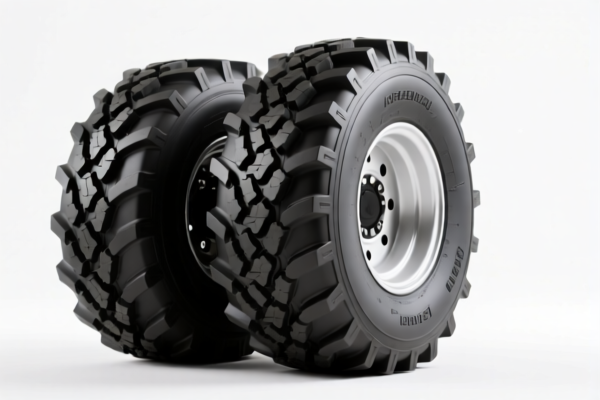
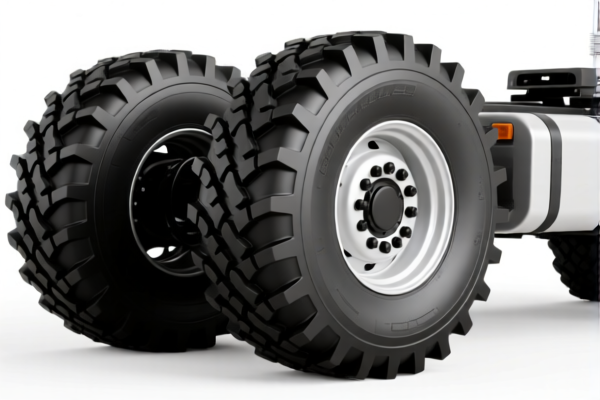
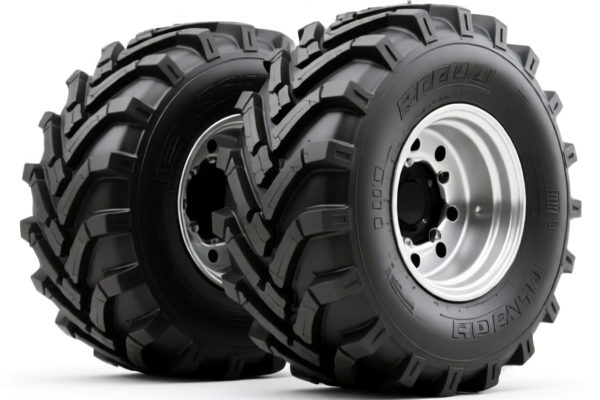
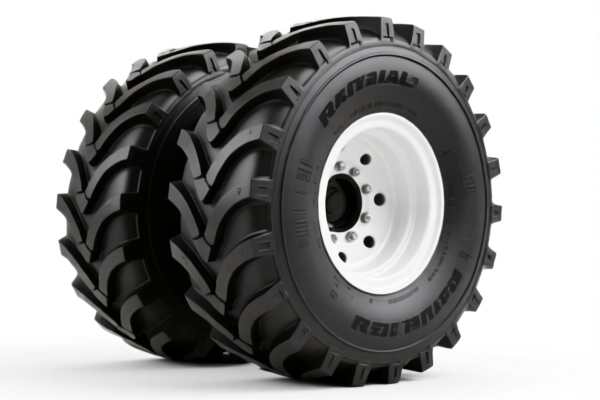
AI Analysis
🚜 Off-Road Radial Tires for Trucks (The Heavy Lifters of the Dirt Roads)
🌐 HS Code Classification & Customs Clearance Guide | 2026 Tariff Analysis | Strategic Import Strategy
📌 I. Product Definition & Classification: Are These "Tires" or "Inner Tubes"?
Off-road radial tires for trucks are specialized rubber goods designed for heavy-duty transport on unpaved, rough, or construction sites. In international trade, the distinction lies not just in the word "tire," but in the structure (Radial vs. Bias) and the component (Casing vs. Inner Tube).
- Radial Tires (4011 Series): These have cords running radially across the tire (perpendicular to the direction of travel). This structure provides better heat dissipation and fuel efficiency, crucial for heavy trucks.
- Inner Tubes (4013 Series): Sometimes, off-road tires are sold with or without separate air-retaining rubber tubes. If the product is primarily an inner tube designed for trucks, it falls under a different HS code.
⚠️ Critical Distinction:
- If the product is a complete tire (with tread, casing, and beads) → Go to Chapter 40, Heading 4011.
- If the product is only the rubber tube inside the tire → Go to Chapter 40, Heading 4013.
- If the product is a solid tire or generic "rubber tire" without radial specification → It might fall under 4012 (but this is less likely for modern truck radials).
📦 II. HS Code Classification Details (2026 Latest Tariff Data)
Based on the provided data, here are the three potential classifications for "Off-road Radial Tires for Trucks", ranked by precision.
| HS Code | Product Description | Matching Logic | Total Tax Rate |
|---|---|---|---|
| 4011.20.10.05 | Radial Pneumatic Tires, of a kind used on motor buses or trucks | ✅ Best Match: Explicitly matches "Radial" (子午线), "Truck" (卡车), and "Rubber" (橡胶). | 39.0% |
| 4011.20.10.15 | Radial Pneumatic Tires, of a kind used on motor buses or trucks | ✅ Strong Match: Same as above; confirms "Radial" tech feature and "Truck" usage. | 39.0% |
| 4012.90.90.00 | Used or Retreaded Rubber Tires; Solid or Cushion Tires | ⚠️ Generic Match: Matches "Tire" and "Rubber" but lacks the specific "Radial" and "New Truck Tire" precision. Higher risk of scrutiny. | 37.7% |
| 4013.10.00.20 | Pneumatic Rubber Inner Tubes, of a kind used on motor cycles, bicycles, or motor vehicles | ⚠️ Component Match: Only applies if the shipment is Inner Tubes only, not the full tire. | 38.7% |
🔍 Key Insight from Data:
- 4011.20.10.05 and 4011.20.10.15 are the most accurate codes for New Radial Truck Tires.
- 4012 is a fallback for generic/retreaded/solid tires, but less precise for modern off-road radials.
- 4013 is exclusively for Inner Tubes, so ensure you are not misclassifying a full tire as a tube.
💰 III. 2026 Tariff Rate Breakdown (Including Surcharges)
✅ Applicable Country: USA (US)
✅ Origin: China (CN)
✅ Effective Date: November 10, 2025 (and subsequent imports)
🎯 1. 4011.20.10.05 & 4011.20.10.15 – Radial Truck Tires (Primary Choice)
| Item | Detail |
|---|---|
| Base Tariff | 4.0% (MFN Rate) |
| Section 301 Surcharge | +25.0% (USITC Footnote for Chinese tires) |
| IEEPA Section 122 Surcharge | +10.0% (Targeting Chinese origin goods) |
| Total Effective Rate | 39.0% |
| Calculation Base | CIF Value (Cost + Insurance + Freight) |
| De Minimis Exemption | ❌ Denied (deny_de_minimis) |
| Legal Pathway | IEEPA:9903.01.24 → USITC:4011.20.10.05 → FOOTNOTE:301 |
📌 Explanation:
- The 25% surcharge is the standard Section 301 tariff on Chinese tires.
- The 10% IEEPA surcharge is a specific additional levy on Chinese-origin tires under recent executive orders.
- Combined 39% is a significant cost driver. Accurate classification is vital to avoid overpayment or penalties.
🎯 2. 4012.90.90.00 – Generic/Used/Solid Tires
| Item | Detail |
|---|---|
| Base Tariff | 2.7% |
| Section 301 Surcharge | +25.0% |
| IEEPA Section 122 Surcharge | +10.0% |
| Total Effective Rate | 37.7% |
| De Minimis Exemption | ❌ Denied |
📌 Warning:
- While slightly cheaper (37.7% vs 39.0%), using this code for new radial tires is risky. Customs may reject it for misclassification if the "Radial" and "New" attributes are evident.
- Only use if the tires are Retreaded, Solid, or Non-Radial.
🎯 3. 4013.10.00.20 – Inner Tubes Only
| Item | Detail |
|---|---|
| Base Tariff | 3.7% |
| Section 301 Surcharge | +25.0% |
| IEEPA Section 122 Surcharge | +10.0% |
| Total Effective Rate | 38.7% |
| De Minimis Exemption | ❌ Denied |
📌 Note:
- This code is only for Inner Tubes.
- Do not use this for complete tires. Misclassification can lead to severe penalties.
🛠️ IV. Customs Clearance Practical Advice (Risk Avoidance Guide)
✅ 1. Documentation Checklist (Non-Negotiable)
| Document | Required | Notes |
|---|---|---|
| ✅ Commercial Invoice | ✔️ | Must clearly state "Radial Pneumatic Tire for Trucks," brand, model, and size. |
| ✅ Packing List | ✔️ | Detail quantity, weight, and dimensions. |
| ✅ Certificate of Origin | ✔️ | Essential for proving Chinese origin (to apply correct surcharges). |
| ✅ Technical Spec Sheet | ✔️ | Must confirm Radial Structure (PLY rating, bead type) and Application (Off-Road/Truck). |
| ✅ Product Photos | ✔️ | Clear images of sidewall markings (e.g., "R" for Radial, "TRUCK" usage). |
✅ 2. Declaration Strategy (Key Phrases & Pitfalls)
🔥 "Be Specific: Radial, Truck, New. Avoid Generic Terms!"
| Scenario | Correct Declaration | Incorrect Declaration | Risk |
|---|---|---|---|
| New Radial Tire | "Off-Road Radial Pneumatic Tire for Truck, Model XYZ, 1200R24" | "Rubber Tire" or "Truck Part" | High. Customs may downgrade or penalize for lack of detail. |
| Inner Tube Only | "Pneumatic Rubber Inner Tube for Truck Tire" | "Tire" or "Rubber Casing" | High. Misclassification as 4011 (higher tax) or 4012 (wrong type). |
| Retreaded Tire | "Retreaded Radial Tire for Truck" | "New Radial Tire" | Severe Penalty. Fraud risk if new is declared for retreaded. |
✅ 3. Special Cases & Optimization
| Scenario | Recommendation |
|---|---|
| OEM/Private Label | Ensure the invoice reflects the actual manufacturer, not just the brand. |
| Mixed Container | If mixing Radial Tires (4011) with Inner Tubes (4013), declare separately. Do not lump under one code. |
| Solid Tires | If the tire is Solid (not pneumatic), use 4012.90.90.00 and ensure documentation reflects "Solid/Cushion." |
| Origin Diversification | If sourcing from Vietnam, Thailand, or India, IEEPA 10% surcharge may not apply. Verify country of origin carefully! |
🌍 V. Global Market Comparison (2026)
| Country/Region | Recommended HS Code | Base Tariff | US Surcharges | Total Cost Impact |
|---|---|---|---|---|
| 🇺🇸 USA | 4011.20.10.05 |
4.0% | +35% (301+IEEPA) | 39.0% (High) |
| 🇨🇳 China | 4011.20.10.05 |
6.0% | None | 6.0% (Low) |
| 🇪🇺 EU | 4011.20.00 |
0-4% | None | ~2-4% (Moderate) |
| 🇮🇳 India | 4011.20.00 |
10-15% | None | ~12% (Moderate) |
📌 Conclusion:
- USA is the most expensive market due to the 35% combined surcharge.
- China has low base tariffs but no export duty.
- EU and India offer more competitive total costs, but have different certification requirements (e.g., ECE, BIS).
📌 VI. Common Errors & Pitfalls (Lessons Learned)
❌ Error 1: Declaring "Radial Tires" as "Rubber Parts" (Chapter 40, Other)
👉 Consequence: Misclassification. Customs may reassess under 4011 with higher scrutiny or penalties.
❌ Error 2: Mixing "New" and "Retreaded" Tires under one HS Code
👉 Consequence: Severe fraud allegations. Retreaded tires have different codes and tax treatments.
❌ Error 3: Ignoring "Radial" Specification
👉 Consequence: If the tire is Radial but declared as "Non-Radial," it may fall under 4011.20.90 (higher tax) or be rejected for inconsistency.
❌ Error 4: Using Generic Names like "Tire"
👉 Consequence: Customs may request additional documentation, delaying clearance by days or weeks.
✅ Correct Practice:
"Radial Pneumatic Tire, Off-Road Type, for Heavy-Duty Trucks, Size 1200R24, Brand ABC, Made in China"
🎯 VII. Conclusion: Precise Classification Saves Money!
🎯 Key Takeaway:
🔹 Use
4011.20.10.05or4011.20.10.15for New Radial Truck Tires.
🔹 Use4013.10.00.20only for Inner Tubes.
🔹 Avoid4012unless the tires are Retreaded, Solid, or Non-Radial.
🔹 Total Tax in USA: 39%. Plan your pricing accordingly!
📌 Pro Tip:
- If you are importing from China, factor in the 39% total tariff.
- Consider pre-classification rulings from CBP if your shipment volume is high.
- For USA imports, ensure the IEEPA surcharge is correctly applied to avoid post-entry audits.
📣 Action Required:
📞 Contact your customs broker with Technical Specs and Origin Documents.
🚀 Optimize your supply chain to mitigate 39% US tariff impact.
✨ Professional Classification, Smooth Clearance, Maximized Profit!
💼 Every Detail Matters in International Trade!
Customer Reviews
About HS Code Classification
The Harmonized System (HS) is an internationally standardized nomenclature developed by the World Customs Organization (WCO) to classify traded products. Over 200 countries use the HS system as the basis for customs tariffs, trade statistics, and import/export regulations.
Each HS code follows a hierarchical structure:
- Chapter (2 digits) — Broad category of goods (e.g., Chapter 84: Machinery and Mechanical Appliances)
- Heading (4 digits) — More specific grouping within the chapter
- Subheading (6 digits) — Internationally standardized breakdown, used by all WCO member countries
- National subdivisions (8-10 digits) — Country-specific extensions for further classification, such as US HTSUS 10-digit codes
Correct HS code classification is essential for smooth customs clearance, accurate duty payment, and compliance with trade regulations. Misclassification can lead to customs delays, overpayment of duties, or penalties.
When importing from CN to US, the applicable tariff rates may include:
- Most-Favored-Nation (MFN) rate — The standard duty rate applied to WTO members
- General rate — Applied to countries without trade agreements
- Trade remedy duties — Additional tariffs such as Section 301 (anti-dumping), Section 232 (national security), or countervailing duties
The information provided on this page is for reference purposes only. For official classification, please consult with your local customs authority or a licensed customs broker.