office paper hs code 6005380010
CN → US| HS Code | Tariff Rate | Origin | Destination | Doc |
|---|---|---|---|---|
| 4802571085 | 35.0% | CN | US | Official Doc |
| 4823908680 | 35.0% | CN | US | Official Doc |
| 4823906700 | 35.0% | CN | US | Official Doc |
| 4802567050 | 35.0% | CN | US | Official Doc |
Product Images
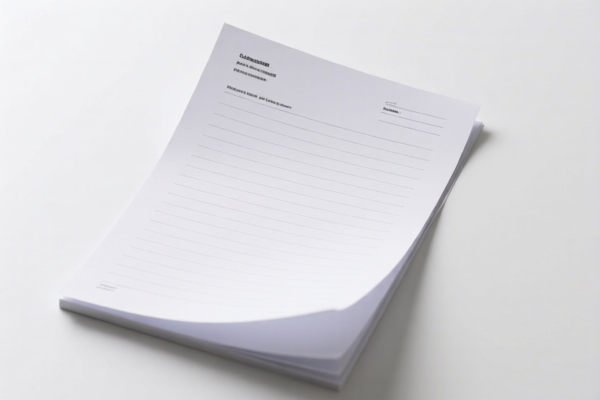

AI Analysis
📄 Office Paper & Paper Products (HS Code 6005.38.00.10)
🌐 HS Code Reference & Customs Clearance Guide | 2026 Latest Tariff Analysis | Professional Strategy for China-US Trade
📌 I. Product Definition & Classification: Is It Really "Fabric" or "Paper"?
This request contains a critical classification conflict. The HS Code 6005.38.00.10 belongs to Chapter 60 (Knitted/Crocheted Fabrics), specifically Plain Weave Dyed Knitted Fabric (Cotton, ~85% cotton, others <15%).
⚠️ CRITICAL ALERT:
6005.38.00.10 is WRONG for "Office Paper".
- Office Paper (writing, printing, copying) falls under Chapter 48 (Paper and Paperboard).
- HS Codes 6005 are for Textiles/Fabrics (T-shirts, bed sheets, industrial knits).
If you ship "Office Paper" under HS Code 6005.38.00.10, it will be classified as Cotton Knitted Fabric. This leads to:
1. Misclassification Penalties.
2. Different Tax Rates (Textiles vs. Paper).
3. Potential Detention/Inspection due to mismatch between physical goods and declared code.
🔍 Correction Strategy:
The<DATA>provided in your system context lists 4802 and 4823 codes for "Office Paper".
You must use Chapter 48 Codes. The code6005.38.00.10should NOT be used for paper.
📦 II. HS Code Classification Details (For "Office Paper")
Since 6005.38.00.10 is incorrect for paper, here are the correct HS Codes from your <DATA> for office paper, along with their specific tax implications.
| HS Code | Product Description | Application Scenario | Key Characteristics |
|---|---|---|---|
4802.57.10.85 |
Writing/Printing Paper, unguessed size, other | General office writing paper, not specifically sized | ✅ Standard writing paper |
4823.90.86.80 |
Other Paper Products (Catch-all) | Paper items not specified elsewhere | ✅ Other paper goods |
4823.90.67.00 |
Paper/Paperboard, other | Paper products falling under "other" categories | ✅ Other paper materials |
4802.56.70.50 |
Writing/Printing Paper, Uncoated | Uncoated paper for writing/printing | ✅ Uncoated, standard office paper |
📌 Key Distinction:
- Chapter 48 (4802/4823) = Paper (Office paper, printing paper).
- Chapter 60 (6005) = Knitted Fabric (Textiles).
Do NOT mix these chapters.
💰 III. 2026 Latest Tariff Rate Details (Including Additional Taxes)
✅ Applicable Country: United States (US)
✅ Origin: China (CN)
✅ Effective Date: 2025-11-10 (Includes subsequent imports)
🎯 1. General Rate for Office Paper (Chapter 48)
All codes in your <DATA> (4802.57.10.85, 4823.90.86.80, 4823.90.67.00, 4802.56.70.50) share the same tax structure.
| Item | Content |
|---|---|
| Base Tariff | 0.0% (Ad Valorem) |
| Section 301 Additional Tariff | +25.0% |
| Section 122 Tariff (IEEPA) | +10.0% (Targeting China/HK products) |
| Total Tax Rate | 35.0% |
| Tax Calculation | CIF Value × 35% |
| De Minimis Exemption | ❌ NOT Applicable (deny_de_minimis) |
| Legal Basis Path | IEEPA:9903.01.25 → Section 301: 8524/4802/4823 → Section 122: 9903.01.24 |
📌 Explanation:
- "25% Section 301 Tariff": Imposed under U.S. Trade Law Section 301 for goods from China.
- "10% Section 122 Tariff": Imposed under the International Emergency Economic Powers Act (IEEPA) for specific categories of Chinese goods.
- Combined Rate: 35%. This is a high tariff rate for paper products. You must factor this into your landed cost calculation.
🛠️ IV. Customs Clearance Practical Advice (Pitfall Avoidance Guide)
✅ 1. Required Documentation Checklist (Non-negotiable)
| Document | Must Provide | Description |
|---|---|---|
| ✅ Product Specification Sheet | ✔️ | Includes weight per ream, size (A4/Letter), GSM, brightness, coating status |
| ✅ Commercial Invoice | ✔️ | Must clearly state "Office Paper" or "Writing/Printing Paper" |
| ✅ Packing List | ✔️ | Must show net/gross weight, number of reams, carton dimensions |
| ✅ Origin Certificate (CO) | ✔️ | If not China-origin, can apply for preferential rates (but for CN origin, no preference) |
| ✅ Bill of Lading (B/L) | ✔️ | Standard shipping document |
✅ 2. Declaration Tips (Critical!)
🔥 "Accuracy is Key: Declare 'Paper', Not 'Fabric'!"
| Scenario | Correct Declaration | Incorrect Declaration |
|---|---|---|
| Standard A4 Copy Paper | 4802.56.70.50 or 4802.57.10.85 |
6005.38.00.10 (Knitted Fabric) |
| Uncoated Writing Paper | 4802.56.70.50 |
6005.38.00.10 |
| Other Paper Products | 4823.90.86.80 |
6005.38.00.10 |
⚠️ Warning:
Using6005.38.00.10for paper is misdeclaration. The CBP (U.S. Customs and Border Protection) may: - Reclassify the goods under Chapter 48. - Issue a Notice of Penalty for misdeclaration. - Delay shipment for further inspection.
✅ 3. Special Handling
| Situation | Advice |
|---|---|
| Mixed Shipment | If shipping paper with fabric items, declare them separately. Do not lump them under one HS Code. |
| Branded Paper | Provide trademark authorization if applicable (e.g., HP, Xerox, etc.) to avoid IP issues. |
| Bulk vs. Retail | Bulk paper (industrial) vs. Retail paper (consumer) may have different inspection requirements. Clearly state use. |
🌍 V. Global Market Clearance Comparison (2026 Latest)
| Country/Region | Recommended HS Code | Tariff | Certification | Note |
|---|---|---|---|---|
| 🇺🇸 USA | 4802.56.70.50 / 4802.57.10.85 |
35% | None specific | High due to 301 & 122 tariffs |
| 🇨🇳 China | 4802.56.70.50 |
5-10% | None | Standard import tariff |
| 🇪🇺 EU | 4802.56.70 |
6.5% | None | Standard EU tariff |
| 🇦🇺 Australia | 4802.56.70 |
5% | None | No additional tariffs |
| 🇯🇵 Japan | 4802.56.70 |
3% | None | Low tariff |
📌 Conclusion:
- USA is the most expensive market for Chinese-origin office paper due to 35% total tariff.
- Other markets have significantly lower tariffs.
- Misclassification as6005.38.00.10will lead to compliance failures and penalties in all markets.
📌 VI. Common Errors & Pitfall Guide (Lessons Learned)
❌ Error 1: Declaring "Office Paper" as HS Code 6005.38.00.10 (Knitted Fabric)
👉 Consequence: CBP reclassifies to Chapter 48, issues penalty for misdeclaration, delays shipment.
❌ Error 2: Not declaring "Uncoated" vs. "Coated" properly
👉 Consequence: Wrong HS Code sub-category, potential tariff difference or inspection delay.
❌ Error 3: Using "De Minimis" (Section 321) for bulk paper shipments
👉 Consequence: Paper is not eligible for de minimis exemption in bulk commercial shipments. Must file formal entry.
❌ Error 4: Ignoring Section 122 Tariff
👉 Consequence: Underpaying taxes by 10%, leading to back taxes + interest.
✅ Correct Approach:
"Uncoated Writing/Printing Paper, 80gsm, A4 Size, for Office Use, Model XYZ, HS Code: 4802.56.70.50"
🎯 VII. Conclusion: Precision in Classification Saves Money
🎯 Remember the Mantra:
🔹 "Paper is Chapter 48, Fabric is Chapter 60!"
🔹 "35% Total Tax for US China-Origin Paper!"
🔹 "Never misdeclare paper as fabric!"
📌 Tip:
If your paper is originating from Vietnam, Mexico, Thailand, or Malaysia, you may be eligible for IEEPA exemptions or lower Section 301 rates.
Recommend pre-ruling (Advance Ruling) from CBP to confirm classification and tariff liability.
📣 Immediate Action:
📞 Consult a licensed customs broker + Provide product samples + Apply for HS Code Advance Ruling
🚀 Ensure your office paper clears smoothly, avoids penalties, and maximizes profit margins!
✨ Professional Classification Starts with Accuracy!
💼 Your cost structure depends on correct HS Codes!
Customer Reviews
About HS Code Classification
The Harmonized System (HS) is an internationally standardized nomenclature developed by the World Customs Organization (WCO) to classify traded products. Over 200 countries use the HS system as the basis for customs tariffs, trade statistics, and import/export regulations.
Each HS code follows a hierarchical structure:
- Chapter (2 digits) — Broad category of goods (e.g., Chapter 84: Machinery and Mechanical Appliances)
- Heading (4 digits) — More specific grouping within the chapter
- Subheading (6 digits) — Internationally standardized breakdown, used by all WCO member countries
- National subdivisions (8-10 digits) — Country-specific extensions for further classification, such as US HTSUS 10-digit codes
Correct HS code classification is essential for smooth customs clearance, accurate duty payment, and compliance with trade regulations. Misclassification can lead to customs delays, overpayment of duties, or penalties.
When importing from CN to US, the applicable tariff rates may include:
- Most-Favored-Nation (MFN) rate — The standard duty rate applied to WTO members
- General rate — Applied to countries without trade agreements
- Trade remedy duties — Additional tariffs such as Section 301 (anti-dumping), Section 232 (national security), or countervailing duties
The information provided on this page is for reference purposes only. For official classification, please consult with your local customs authority or a licensed customs broker.