office supplies bulk packaging
CN → US| HS Code | Tariff Rate | Origin | Destination | Doc |
|---|---|---|---|---|
| 4820900000 | 35.0% | CN | US | Official Doc |
| 4820104000 | 35.0% | CN | US | Official Doc |
| 4810311020 | 35.0% | CN | US | Official Doc |
| 4810991050 | 35.0% | CN | US | Official Doc |
| 4818900080 | 17.5% | CN | US | Official Doc |
| 4818900020 | 17.5% | CN | US | Official Doc |
Product Images
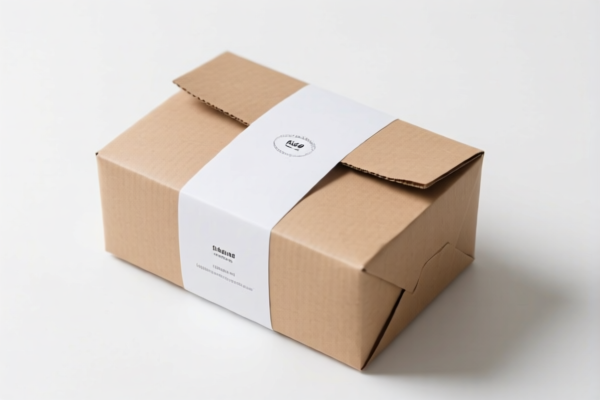
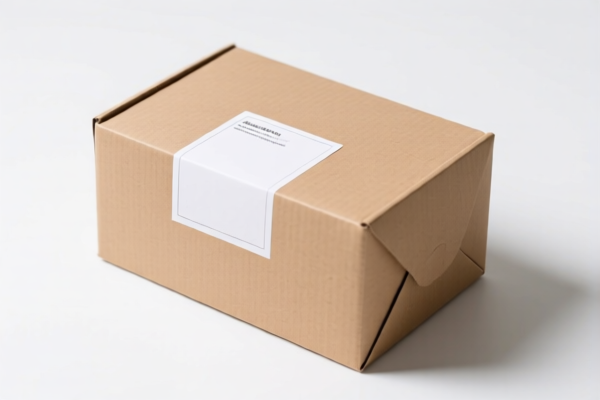
AI Analysis
📦 Office Supplies & Paper Products: Bulk Packaging Classification Guide
🌐 HS Code Reference & Customs Clearance Guide | 2026 Latest Tariff Analysis | Professional Entry Strategy
📌 I. Product Definition & Classification: Are You Packing Paper Right?
In international trade, "Office Supplies Bulk Packaging" is not a single HS code. It is a category that splits sharply based on function and material form. Misclassification is the #1 cause of customs delays for paper products because the duty rates vary drastically between "stationery" and "specialty paper."
There are three main categories you must distinguish:
1. Hygiene & Sanitary Paper Products
Includes toilet paper, facial tissues, napkins, and similar household items.
Key Feature: Used for cleaning/body contact; often rolled or folded.
2. Stationery & Notebooks
Includes registers, account books, notebooks, diaries, folders, and binders.
Key Feature: Used for writing, recording, or organizing information.
3. Coated Paper / Folding Carton Stock
Includes kraft paper, cartons, and packaging materials made from coated paperboard.
Key Feature: Structural packaging material, not the final office tool itself.
⚠️ Critical Distinction Point:
- If it’s for writing/organizing (notebooks, folders) → Goes to 4820 (Stationery).
- If it’s for cleaning/hygiene (toilet paper, tissues) → Goes to 4818 (Sanitary Paper).
- If it’s packaging material (boxes, stock) → Goes to 4810 (Coated Paper).
- Do NOT mix "Notebooks" with "Toilet Paper" in one declaration! They have different HS codes and different tax implications.
📦 II. HS Code Classification Details (2026 Latest Tariff Authority Comparison)
| HS Code | Product Description | Application Scenario | Tax Rate (Total) |
|---|---|---|---|
4818.90.00.80 |
Toilet paper & similar sanitary paper; household/hospital articles (Other) | Toilet paper rolls, sanitary towels, paper towels | 7.5% |
4818.90.00.20 |
Toilet paper & similar sanitary paper; Face masks | Paper face masks (sanitary type) | 7.5% |
4820.90.00.00 |
Registers, account books, notebooks, folders, and other stationery items | Loose-leaf binders, file covers, blank notebooks, stationery sets | 25.0% |
4820.10.40.00 |
Registers, account books, notebooks, order books, receipt books, diaries, etc. (Other) | Specific binding types (looseleaf), diary entries, official logs | 25.0% |
4810.31.10.20 |
Kraft paper/paperboard, coated, Folding Carton Stock (>95% wood fibers, ≤150g/m²) | Packaging boxes, high-quality cartons for retail | 25.0% |
4810.99.10.50 |
Other coated paper/paperboard, Folding Carton | General packaging boxes, corrugated alternatives, carton materials | 25.0% |
🔍 Key Reminder:
- Stationery (4820) and Packaging Paper (4810) carry a 25% total tax.
- Sanitary Paper (4818) carries a lower 7.5% total tax.
- Face Masks are classified under sanitary paper (4818.90.00.20), NOT stationery, even if used in office settings.
💰 III. 2026 Latest Tariff Rate Details (Including Surtax & Policy Add-ons)
✅ Applicable Country: USA (US)
✅ Country of Origin: China (CN)
✅ Effective Time: 2025–2026 (Current Trade Policy)
🎯 1. 4818.90.00.80 & 4818.90.00.20 — Sanitary & Hygiene Paper Products
| Item | Details |
|---|---|
| Base Tariff | 0.0% |
| Additional Surcharge | 7.5% (Section 301 / IEEPA Impact) |
| Total Tariff | 7.5% |
| Tax Calculation | CIF Value × 7.5% |
| De Minimis Eligibility | ❌ NO (Usually subject to strict scrutiny if bulk) |
| Legal Basis Path | USITC:4818.90.00.80 → Additional Tariff: 7.5% |
📌 Explanation:
- These are classified as "Sanitary/Household" paper.
- Despite being paper products, they are not hit with the full 25% stationery/packaging surcharge.
- Note: Face masks (4818.90.00.20) also fall here at 7.5%, which is significantly cheaper than stationery.
🎯 2. 4820.90.00.00 & 4820.10.40.00 — Stationery, Notebooks, & Folders
| Item | Details |
|---|---|
| Base Tariff | 0.0% |
| Additional Surcharge | 25.0% |
| Total Tariff | 25.0% |
| Tax Calculation | CIF Value × 25.0% |
| De Minimis Eligibility | ❌ NO (High risk of audit) |
| Legal Basis Path | USITC:4820.10.40.00 / 4820.90.00.00 → Additional Tariff: 25.0% |
📌 Explanation:
- This includes all notebooks, diaries, binders, folders, and general stationery articles.
- The 25% rate is substantial. A $10,000 shipment of notebooks incurs $2,500 in duties.
- Warning: If you ship "Bulk Office Supplies" that include both notebooks AND toilet paper, you MUST split the invoice. Mixing them can lead to the entire shipment being assessed at the higher rate or rejected for misclassification.
🎯 3. 4810.31.10.20 & 4810.99.10.50 — Folding Carton & Packaging Paper
| Item | Details |
|---|---|
| Base Tariff | 0.0% |
| Additional Surcharge | 25.0% |
| Total Tariff | 25.0% |
| Tax Calculation | CIF Value × 25.0% |
| De Minimis Eligibility | ❌ NO |
| Legal Basis Path | USITC:4810.31.10.20 / 4810.99.10.50 → Additional Tariff: 25.0% |
📌 Explanation:
- These are packaging materials made from coated kraft paper or other coated paperboard.
- Even if used to package office supplies, the paper itself is taxed at 25%.
- Folding Carton Stock (4810.31.10.20) is a specific subset for high-quality cartons (≥95% chemical wood fiber).
🛠️ IV. Customs Clearance Practical Advice (Real-World Pitfall Avoidance)
✅ 1. Document Checklist (Essential for Paper Products)
| Document | Required? | Notes |
|---|---|---|
| ✅ Product Specification Sheet | ✔️ | Must specify: Weight (g/m²), Material (Kraft/Copy), Coating type, Usage (Sanitary/Stationery). |
| ✅ Invoice (Split by HS Code) | ✔️ | Crucial: Do not lump "Notebooks" and "Toilet Paper" into one line item. |
| ✅ Packing List | ✔️ | Clearly separate bulk rolls (4818) from bound books (4820). |
| ✅ Composition Analysis | ✔️ | For 4810 codes, prove fiber content (e.g., "95% Chemical Wood Fiber") to justify specific sub-codes. |
| ✅ Photos of Product | ✔️ | Show final packaged state. If it’s a face mask, show it clearly to avoid classification as "Textile." |
✅ 2. Declaration Tips (Key Mantra)
🔥 "Separate Sanitary from Stationery, Specify Weight for Paper, Don’t Lumped It!"
| Scenario | Correct Declaration | Wrong Action | Consequence |
|---|---|---|---|
| Shipping Notebooks + Toilet Paper | Two Lines: 1x 4820.xxxxxx (25%), 2x 4818.xxxxxx (7.5%) |
One line: "Office Supplies" | Customs may assess ALL at 25% or reject. |
| Shipping Face Masks | 4818.90.00.20 (7.5%) |
4820.90.00.00 (25%) |
Overpaying 17.5% unnecessarily. |
| Shipping Empty Boxes | 4810.99.10.50 (25%) |
4820.90.00.00 |
Misclassification error. |
| Shipping Bulk Paper Rolls | 4818.90.00.80 (7.5%) |
4820.10.40.00 |
Higher tax burden. |
✅ 3. Special Cases & Optimization
| Case | Advice |
|---|---|
| Bulk Shipment with Mixed Contents | Always split the Commercial Invoice. Create separate line items for "Sanitary Paper" and "Stationery." |
| Customs Audits on "Stationery" | Provide proof of use. If it’s a "diary," show sample pages. If it’s "carton," show structural integrity. |
| Duty Minimization Strategy | Check if products qualify for De Minimis (under $800 per shipment for US). However, for bulk industrial packaging, this is rare. |
| Origin Verification | Ensure CO (Certificate of Origin) matches the HS code. Paper products are heavily scrutinized for circumvention of tariffs via transshipment. |
🌍 V. Global Market Comparison (2026)
| Country/Region | Recommended HS Code | Duty Rate (China Origin) | Key Certification | Note |
|---|---|---|---|---|
| 🇺🇸 USA | 4820.90.00.00 (Stationery) |
25.0% | No special cert | High duty. Split invoices critical. |
| 🇺🇸 USA | 4818.90.00.80 (Sanitary) |
7.5% | No special cert | Lower duty. Favorable for tissues. |
| 🇪🇺 EU | 4820.90.00 |
~6.5% | CE (if applicable) | No Section 301-style surtax. |
| 🇨🇳 China | 4820.90.00 |
5-10% | CCC (if applicable) | Lower base rate. |
| 🇬🇧 UK | 4820.90.00 |
~5-10% | UKCA | Post-Brexit rules apply. |
📌 Conclusion:
- The USA is the most expensive market for paper-based office supplies due to the 25% surcharge on stationery/packaging.
- Sanitary paper (4818) is significantly cheaper (7.5%) than stationery (4820) or packaging (4810).
- Strategy: If possible, redesign packaging to be reusable or non-paper (plastic/metal) to avoid the 25% paper tariff, though sustainability trends may counter this.
📌 VI. Common Mistakes & Pitfalls (Blood & Tears Lessons)
❌ Mistake 1: Lumping "Notebooks" and "Toilet Paper" into one HS Code.
👉 Result: Customs may reject the lower 7.5% rate for the entire batch or assess 25% on everything.
❌ Mistake 2: Classifying Face Masks as "Textiles" or "Stationery."
👉 Result: Wrong code leads to inspection delays. Correct code is 4818.90.00.20 (7.5%).
❌ Mistake 3: Ignoring Grammage (g/m²) for 4810 codes.
👉 Result: 4810.31.10.20 requires ≤150g/m². If your carton stock is heavier, it falls to 4810.99 (still 25%, but different legal path).
❌ Mistake 4: Using vague descriptions like "Office Supplies."
👉 Result: Customs will ask for clarification, causing 7–14 day delays.
✅ Correct Practice:
"Paper Notebooks, Spiral Bound, 100 Pages, A4 Size, HS Code 4820.10.40.00"
"Toilet Paper Rolls, 3-Ply, Sanitary Use, HS Code 4818.90.00.80"
🎯 VII. Conclusion: Professional Declaration Saves Money!
🎯 Remember the Mantra:
🔹 "Sanitary 7.5, Stationery 25, Paper Packaging 25. Split your invoice!"
🔹 "One Line Item is a Risk. Two Codes is Safety."
📌 Pro Tip:
If you are importing bulk office supplies, consider separating your shipment into two containers or two distinct invoices: one for Sanitary/Hygiene (4818) and one for Stationery/Packaging (4820/4810). This ensures you pay the lowest possible duty for each item.
📣 Immediate Action:
📞 Review your Commercial Invoice.
📦 Separate "Writing/Binding" items from "Cleaning/Sanitary" items.
🚀 Clear your goods faster, pay less duty, and avoid customs holds!
✨ Professional Clearance Starts with Precise Classification!
💼 Your Bottom Line Depends on the Decimal Point in the HS Code!
Customer Reviews
About HS Code Classification
The Harmonized System (HS) is an internationally standardized nomenclature developed by the World Customs Organization (WCO) to classify traded products. Over 200 countries use the HS system as the basis for customs tariffs, trade statistics, and import/export regulations.
Each HS code follows a hierarchical structure:
- Chapter (2 digits) — Broad category of goods (e.g., Chapter 84: Machinery and Mechanical Appliances)
- Heading (4 digits) — More specific grouping within the chapter
- Subheading (6 digits) — Internationally standardized breakdown, used by all WCO member countries
- National subdivisions (8-10 digits) — Country-specific extensions for further classification, such as US HTSUS 10-digit codes
Correct HS code classification is essential for smooth customs clearance, accurate duty payment, and compliance with trade regulations. Misclassification can lead to customs delays, overpayment of duties, or penalties.
When importing from CN to US, the applicable tariff rates may include:
- Most-Favored-Nation (MFN) rate — The standard duty rate applied to WTO members
- General rate — Applied to countries without trade agreements
- Trade remedy duties — Additional tariffs such as Section 301 (anti-dumping), Section 232 (national security), or countervailing duties
The information provided on this page is for reference purposes only. For official classification, please consult with your local customs authority or a licensed customs broker.