onion slicer
CN → US| HS Code | Tariff Rate | Origin | Destination | Doc |
|---|---|---|---|---|
| 8438600000 | 35.0% | CN | US | Official Doc |
| 8433600090 | 35.0% | CN | US | Official Doc |
| 8433905080 | 35.0% | CN | US | Official Doc |
| 8438800000 | 35.0% | CN | US | Official Doc |
| 8437800090 | 35.0% | CN | US | Official Doc |
Product Images
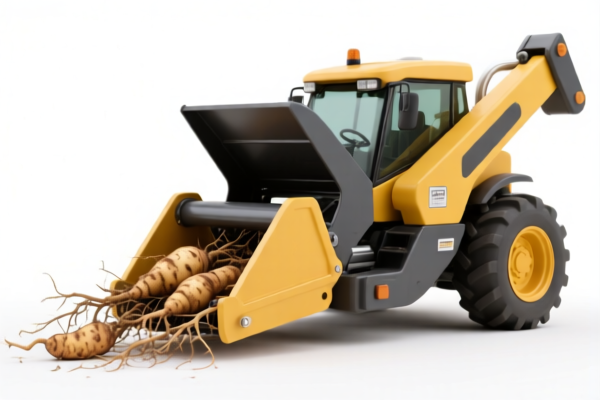
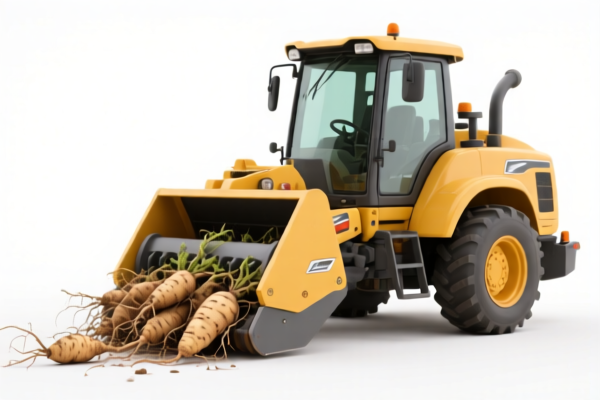
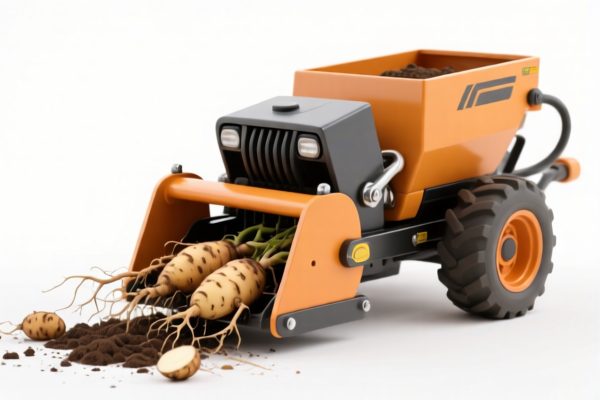
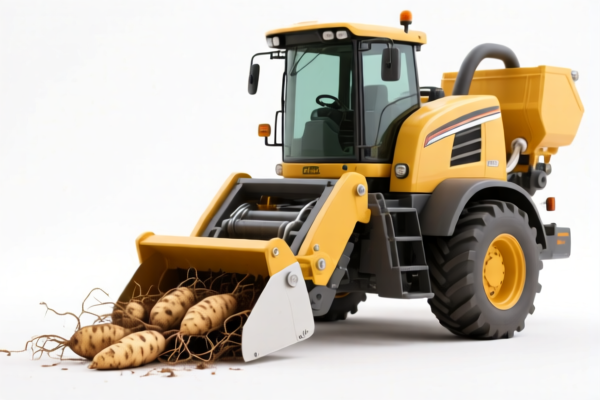
AI Analysis
🧅 Onion Slicer (Vegetable Processing Machinery)
🌐 HS Code Reference & Customs Clearance Guide | 2026 Latest Tariff Analysis | Professional通关 Strategy
📌 I. Product Definition & Classification: Do You Really Understand "Onion Slicer"?
An Onion Slicer is a specialized mechanical device used in the food processing industry to prepare onions. In international trade, its classification depends heavily on its specific function and structural design. It generally falls under two main categories:
Food Preparation Machinery (Chapter 84, Heading 8438): Machines specifically designed for the preparation of vegetables (like slicing, peeling, or chopping onions) for human consumption. Agricultural Product Processing Machinery (Chapter 84, Heading 8433/8437): Machines used for cleaning, sorting, grading, or handling agricultural products (onions) before they enter the food processing stage.
⚠️ Key Distinction Point:
- If the machine is explicitly designed for final food preparation (e.g., industrial slicing into uniform rings/chips) → Likely 8438.
- If the machine is for pre-processing (e.g., cleaning, initial grading, or handling raw onions) → Likely 8433 or 8437.
📦 II. HS Code Classification Details (2026 Latest Tariff Authoritative Comparison)
Based on the provided data, here are the potential HS Code classifications for "Onion Slicer":
| HS Code | Product Description | Application Scenario | Key Feature |
|---|---|---|---|
8438.60.00.00 |
Machinery for preparing vegetables (Onions) | Industrial food processing lines for onion rings/chips | ✅ Specific Purpose: Explicitly defined as "vegetable preparation machinery." |
8433.60.00.90 |
Machinery for cleaning/sorting/grading agricultural products | Pre-processing stages: cleaning dirt, sorting by size | ✅ Agricultural Focus: Defined as "other machinery for handling agricultural products." |
8433.90.50.80 |
Parts/Accessories or Specific Machinery for Fruit/Veg Handling | Specialized attachments for cleaning or grading fruit/veg | ✅ Matching Use: Highly matches machinery for cleaning/sorting fruits/veg. |
8438.80.00.00 |
Food Preparation Machinery (Other) | General industrial food prep machines (broad category) | ✅ General Food Prep: Defined as machinery for industrial preparation/manufacturing of food. |
8437.80.00.90 |
Machinery for handling dehydrated legumes/veg | Processing of dried/dehydrated vegetable products | ✅ Specific Crop Match: Defined as machinery for handling dehydrated vegetables (beans, etc.). |
🔍 Important Reminder:
- 8438 Series: Focuses on food preparation (post-harvest, pre-consumption processing).
- 8433/8437 Series: Focuses on agricultural handling (cleaning, sorting, grading, drying).
- Misclassification Risk: Declaring an onion slicer as8433(agricultural) when it is primarily a food prep machine (8438) may lead to customs delays if the importer cannot prove its primary use is raw material handling.
💰 III. 2026 Latest Tariff Rate Detail (Including Surcharges & Policy Add-ons)
✅ Applicable Country: United States (US)
✅ Origin: China (CN)
✅ Effective Date: From November 10, 2025 (and subsequent imports)
🎯 1. All Referenced HS Codes (8438.60.00.00, 8433.60.00.90, 8433.90.50.80, 8438.80.00.00, 8437.80.00.90)
| Item | Content |
|---|---|
| Base Tariff | 0% (ad valorem) |
| Section 301 Surcharge | +25% (USITC Footnote 9903.88.01) |
| Section 122 Surcharge | +10% (Against Chinese/HK products, effective from 2025-11-10) |
| Total Tariff Rate | 35.0% |
| Tax Calculation | CIF Value × 35% |
| De Minimis Eligibility | ❌ Not Applicable (deny_de_minimis) |
| Legal Basis Path | IEEPA:9903.01.25 → IEEPA:9903.01.24 → USITC:[HS_CODE] → FOOTNOTE:9903.88.01 |
📌 Explanation:
- The 25% Section 301 Surcharge is applied under the "Additional Duties" clause of the Trade Act Section 301;
- The 10% Section 122 Surcharge is an additional duty under the International Emergency Economic Powers Act (IEEPA);
- Total 35%, which is a high tariff burden, must be anticipated in advance!
🛠️ IV. Customs Clearance Practical Suggestions (Battle-Tested Pitfall Avoidance Guide)
✅ 1. Required Documentation Checklist (All are Mandatory)
| Document | Mandatory? | Description |
|---|---|---|
| ✅ Product Specification Sheet | ✔️ | Include capacity, slice thickness, motor power, material type (SS304/SS316). |
| ✅ Operation Manual | ✔️ | Must clearly state intended use (e.g., "For slicing onions for food production"). |
| ✅ Product Photos (with Nameplate) | ✔️ | Clear view of model number, voltage, and any safety labels. |
| ✅ Third-Party Test Report | ✔️ | NSF, FDA (if food contact), UL, CE (if applicable). |
| ✅ Commercial Invoice | ✔️ | Explicitly state "Onion Slicer / Vegetable Preparation Machinery." |
| ✅ Packing List | ✔️ | Detail parts vs. complete machine to avoid partial shipment issues. |
| ✅ Certificate of Origin (CO) | ✔️ | If non-China origin, may qualify for reduced tariffs (not applicable here due to 35% total). |
✅ 2. Declaration Tips (Key Mantra)
🔥 "Purpose Defines Code, Name Must Be Precise, Don't Split If Whole, 35% Is The Price!"
| Scenario | Correct Declaration | Wrong Action |
|---|---|---|
| Dedicated Onion Slicer | 8438.60.00.00 (Vegetable Prep) |
Misdeclare as 8433 (Agricultural) → Risk of re-classification. |
| Multi-purpose Chopper | 8438.80.00.00 (Other Food Prep) |
Declare as 8437 (Grains) → Incorrect use description. |
| Cleaning/Sorting Machine | 8433.60.00.90 (Agri Handling) |
Declare as 8438 (Food Prep) → If no slicing function exists. |
| Standalone Slicing Blade | 8433.90.50.80 or 8438.90.x.x |
Declare as complete machine → Under/Over valuation. |
✅ 3. Special Cases Handling
| Scenario | Handling Advice |
|---|---|
| OEM Custom Slicer | Provide client order + design drawings. Avoid vague terms like "Multi-function machine." |
| Onion Slicer for Dehydrated Onions | Consider 8437.80.00.90 if primarily for dehydrated products, but ensure description matches. |
| Onion Slicer for Raw/Processing | Use 8438.60.00.00 if it slices fresh onions for further processing (e.g., chips). |
| Machine with Integrated Cleaning | If it cleans AND slices, 8438.60.00.00 is likely preferred if slicing is the main function. |
🌍 V. Global Market Comparison (2026 Latest)
| Country/Region | Recommended HS Code | Tariff Rate (China Origin) | Certification Required | Notes |
|---|---|---|---|---|
| 🇺🇸 USA | 8438.60.00.00 |
35% (0% + 25% + 10%) | NSF, FDA, UL | Highest cost due to Section 301 & 122. |
| 🇨🇳 China | 8438.60.00.00 |
~5-10% | CCC, ISO | Lower import duty for domestic use. |
| 🇪🇺 EU | 8438.60.00.00 |
0-4.5% (depending on exact subheading) | CE, RoHS | No additional US-style surcharges. |
| 🇬🇧 UK | 8438.60.00.00 |
0-4.5% | UKCA, CE | Post-Brexit rules apply; check UK TARIC. |
| 🇦🇺 Australia | 8438.60.00.00 |
~5% | RCM, Food Standards | No major surcharges. |
📌 Conclusion:
- USA is the only market with significant surcharges (35% total).
- China-origin Onion Slicers entering the US face high costs.
- Alternative Markets (EU, UK, AU) offer much lower tariffs, making them more attractive if supply chain allows.
📌 VI. Common Mistakes & Pitfall Avoidance (Lessons Learned)
❌ Mistake 1: Declaring as "Kitchen Appliance"
👉 Consequence: Customs may reject Chapter 84 classification and assign incorrect code → Delays & Fines.
❌ Mistake 2: Ignoring the "Food Contact" Aspect
👉 Consequence: If the machine touches food, NSF/FDA compliance is mandatory. Lack of proof → Rejection at Border.
❌ Mistake 3: Using Vague Descriptions like "Onion Machine"
👉 Consequence: Customs may ask for clarification → Storage Fees & Demurrage.
❌ Mistake 4: Assuming De Minimis Exemption Applies
👉 Consequence: 35% tariff applies even to small shipments. No $800 exemption for Section 301/122 goods.
✅ Correct Practice:
"Industrial Onion Slicer, Stainless Steel 304, Capacity 500kg/hr, For Food Processing, Model XYZ, NSF Certified, Made in China"
🎯 VII. Conclusion: Professional Declaration Saves Money!
🎯 Remember the Mantra:
🔹 "Food Prep = 8438, Agri Handling = 8433, 35% is the Total Cost in USA!"
🔹 "HS Code Determines Duty, 35% is High, Declare Accurately to Avoid Penalties!"
📌 Pro Tip:
If your onion slicer is originated from Vietnam, Mexico, Thailand, or Malaysia, you may be eligible for IEEPA/301 Exemptions, reducing the tariff significantly.
Suggest applying for an Advance Ruling from US Customs (CBP) to confirm the exact HS Code and duty liability before shipping.
📣 Take Action Now:
📞 Contact a Professional Freight Forwarder + Provide Product Photos + Request HS Code Advance Ruling
🚀 Ensure Your Onion Slicer Passes Customs Smoothly, Exports Efficiently, and Maximizes Profit!
✨ Professional Clearance Starts with Accurate Classification!
💼 Every Cent of Cost Deserves Precise Calculation!
Customer Reviews
About HS Code Classification
The Harmonized System (HS) is an internationally standardized nomenclature developed by the World Customs Organization (WCO) to classify traded products. Over 200 countries use the HS system as the basis for customs tariffs, trade statistics, and import/export regulations.
Each HS code follows a hierarchical structure:
- Chapter (2 digits) — Broad category of goods (e.g., Chapter 84: Machinery and Mechanical Appliances)
- Heading (4 digits) — More specific grouping within the chapter
- Subheading (6 digits) — Internationally standardized breakdown, used by all WCO member countries
- National subdivisions (8-10 digits) — Country-specific extensions for further classification, such as US HTSUS 10-digit codes
Correct HS code classification is essential for smooth customs clearance, accurate duty payment, and compliance with trade regulations. Misclassification can lead to customs delays, overpayment of duties, or penalties.
When importing from CN to US, the applicable tariff rates may include:
- Most-Favored-Nation (MFN) rate — The standard duty rate applied to WTO members
- General rate — Applied to countries without trade agreements
- Trade remedy duties — Additional tariffs such as Section 301 (anti-dumping), Section 232 (national security), or countervailing duties
The information provided on this page is for reference purposes only. For official classification, please consult with your local customs authority or a licensed customs broker.