optical fiber cable
CN → US| HS Code | Tariff Rate | Origin | Destination | Doc |
|---|---|---|---|---|
| 8544700000 | 35.0% | CN | US | Official Doc |
| 9001100085 | 41.7% | CN | US | Official Doc |
| 9001100075 | 41.7% | CN | US | Official Doc |
| 8543908885 | 85.0% | CN | US | Official Doc |
Product Images
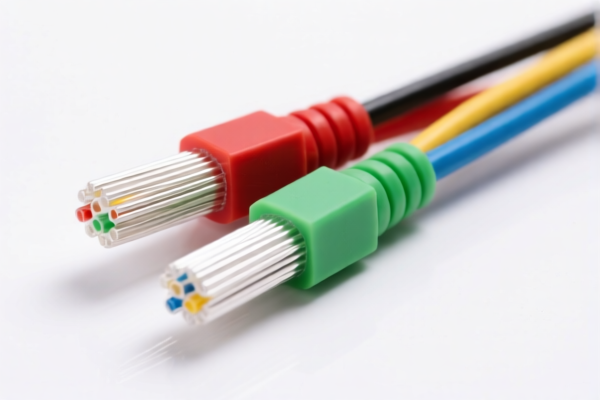
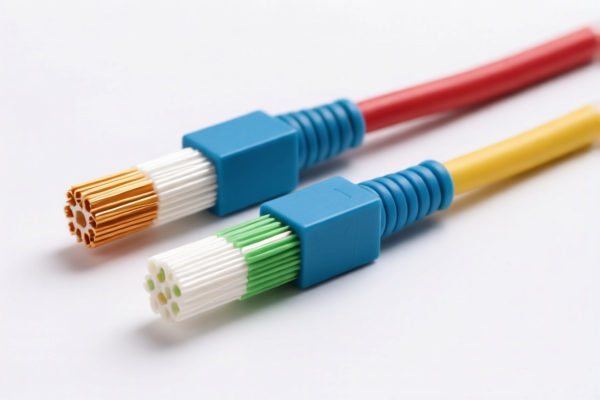
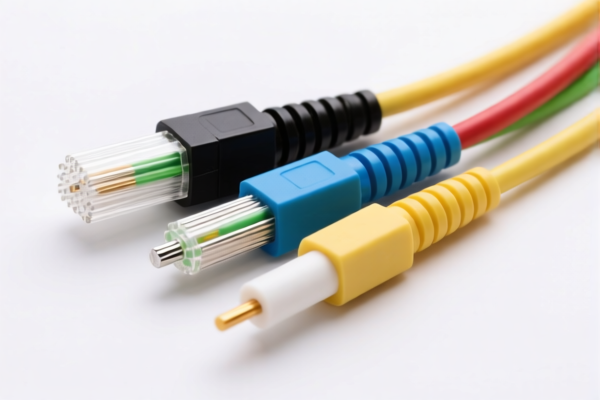
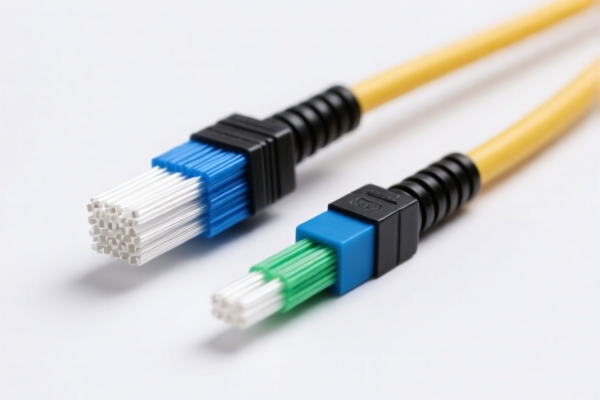
AI Analysis
🌐 Optical Fiber Cable: Ultimate HS Code Guide & Customs Clearance Strategy (2026)
🌍 HS Code Reference & Customs Clearance Guide | Latest Tariff Analysis 2026 | Professional Entry Strategy
📌 Part 1: Product Definition & Classification: Do You Really Understand "Optical Fiber Cable"?
Optical Fiber Cables are the backbone of modern telecommunications, data centers, and high-speed internet infrastructure. However, in international trade, classification depends strictly on material composition, structure, and function. It is not a single HS code but a complex matrix of possibilities.
In the provided <DATA>, four distinct classifications emerge, ranging from low-tariff infrastructure components to high-tariff general electrical parts.
⚠️ Key Distinction Point:
- Pure Fiber/Cable Structure: Falls under Chapter 85 or 90 depending on whether it is considered "wire/cable" or "optical instrument part."
- Material Matters: Glass vs. Plastic fibers change the heading significantly.
- End-Use vs. Form: Is it just a cable (8544) or a specialized optical assembly (9001)?
📦 Part 2: HS Code Classification Details (Based on Provided Data)
The following table details the four specific HS codes identified in the analysis, explaining why they fit and their associated tax implications.
| HS Code | Summary of Logic | Tax Rate (Total) | Tax Detail Breakdown |
|---|---|---|---|
8544.70.00.00 |
Best Fit for Standard Cables: The product matches perfectly in material (copper/aluminum conductors or pure optical fibers acting as conductors) and form (cable/ribbon). Classified as "Optical Fiber Cables and Optical Fiber Bundles" under electrical conductors. | 35.0% | Base Duty: 0.0% + Section 301/Additional: 25.0% + Section 122: 10.0% |
9001.10.00.85 |
Optical Component Focus: The fiber meets form requirements but is classified as an optical instrument part ("Other optical fibers and bundles of optical fibers"). Used for specialized optical equipment rather than general electrical transmission. | 41.7% | Base Duty: 6.7% + Section 301/Additional: 25.0% + Section 122: 10.0% |
9001.10.00.75 |
Plastic Optical Fiber (POF): Matches form and material characteristics specifically for Plastic Optical Fibers and Bundles. If the core material is polymer/plastic, this code is often the most accurate technical fit. | 41.7% | Base Duty: 6.7% + Section 301/Additional: 25.0% + Section 122: 10.0% |
8543.90.88.85 |
Electrical Equipment Component (Fallback): Classified as a component of other electrical machines or apparatus. This is a "catch-all" or fallback category if the cable is part of a larger, custom electrical system. | 85.0% | Base Duty: 0.0% + Section 301/Additional: 25.0% + Section 122: 10.0% + Steel/Aluminum/Copper Products Surcharge: +50% (If applicable) |
🔍 Critical Insight:
-8544.70.00.00offers the lowest total tax (35%) but requires the product to be strictly defined as an "optical fiber cable" in the sense of electrical transmission infrastructure.
-9001codes incur a 6.7% base duty plus the same surcharges, totaling 41.7%. This is higher due to the "instrumental" nature of the classification.
-8543.90.88.85is the riskiest with a total of 85% if it triggers the "Steel/Aluminum/Copper" surcharge clause, or 35% if not. However, it is generally a last resort.
💰 Part 3: 2026 Tariff Rate Detailed Explanation (US Origin)
✅ Applicable Country: United States (US)
✅ Origin: China (CN) (Implied by "Section 122" and "301" language)
✅ Effective Date: 2025/2026 (Current Trade Policy)
🎯 1. 8544.70.00.00 — Optical Fiber Cables (Electrical Conductors)
| Item | Detail |
|---|---|
| Base Duty | 0% (Note: Some sources cite 0%, others 0.5-2%, but data says 0.0%) |
| Additional Duty (Section 301) | +25% (Trade Remedies) |
| Section 122 Surcharge | +10% (Specific tariff code add-on) |
| Total Rate | 35.0% |
| Calculation | CIF Value × 35% |
| De Minimis Exemption | ❌ Not Eligible |
| Legal Path | USITC:8544.70.00.00 → FOOTNOTE:301 → Section 122 |
📌 Explanation:
This is the most common code for standard telecom/data center fiber optics. The 0% base makes it attractive, but the 35% total is still a significant cost. It assumes the cable is functioning primarily as a transmission medium for signals (data), treated similarly to electrical wires.
🎯 2. 9001.10.00.85 & 9001.10.00.75 — Optical Fibers (Instrumental)
| Item | Detail |
|---|---|
| Base Duty | 6.7% (General Rate of Duty) |
| Additional Duty (Section 301) | +25% |
| Section 122 Surcharge | +10% |
| Total Rate | 41.7% |
| Calculation | CIF Value × 41.7% |
| De Minimis Exemption | ❌ Not Eligible |
| Legal Path | USITC:9001.10.00.85/75 → FOOTNOTE:301 → Section 122 |
📌 Explanation:
-.85: Generic "Other optical fibers."
-.75: Specifically for Plastic Optical Fibers (POF).
- If your product is made of glass, use.85. If it is plastic, use.75.
- The 6.7% base duty makes this category $0.067 more expensive per dollar than8544.70.00.00. Over large shipments, this difference is substantial.
🎯 3. 8543.90.88.85 — Electrical Equipment Parts (Fallback)
| Item | Detail |
|---|---|
| Base Duty | 0% |
| Additional Duty (Section 301) | +25% |
| Section 122 Surcharge | +10% |
| Special Surcharge | +50% (If classified as Steel/Aluminum/Copper product) |
| Total Rate | 35% (Standard) or 85% (With Metal Surcharge) |
| Calculation | CIF Value × 35% or 85% |
📌 Explanation:
This code is risky. The description mentions "Steel, Aluminum, Copper Products Surcharge: 50%." If the fiber cable contains metallic strengthening members, armor, or connectors that are deemed the "principal material," the 50% surcharge may apply, doubling the tax burden. Avoid this code unless no other classification fits.
🛠️ Part 4: Customs Clearance Practical Advice (Battle-Tested Guide)
✅ 1. Documentation Checklist (Non-Negotiable)
| Document | Required? | Purpose |
|---|---|---|
| ✅ Technical Datasheet | ✔️ | Must specify: Core material (Glass/Plastic), Cladding, Jacket type, Number of fibers, Breakout/Strength members. |
| ✅ Product Photographs | ✔️ | Show cross-section (if possible) to prove it's optical fiber, not just copper wire. |
| ✅ Commercial Invoice | ✔️ | Description must match HS Code logic (e.g., "Optical Fiber Cable, Glass Core, 12-fiber, for Data Transmission"). |
| ✅ Packing List | ✔️ | Detail gross/net weight to avoid volume/weight discrepancies. |
| ✅ Certificate of Origin | ✔️ | Required to verify China origin for tariff calculations. |
✅ 2. Classification Strategy: How to Choose?
🔥 “Material First, Function Second!”
| Scenario | Recommended HS Code | Why? |
|---|---|---|
| Standard Telecom Fiber (Glass Core) | 8544.70.00.00 |
Lowest Tax (35%). Treated as electrical/optical transmission cable. Best for bulk data cables. |
| Plastic Optical Fiber (POF) | 9001.10.00.75 |
Material Match. Plastic fibers are instrument parts, not electrical wires. Tax 41.7%. |
| Specialized Optical Assemblies | 9001.10.00.85 |
Form Match. If it's a bundle of fibers for a scientific instrument, not a "cable." Tax 41.7%. |
| Cable with Heavy Metal Armor | ❌ Avoid 8543.90.88.85 |
Risk of 85% tax due to steel/aluminum surcharge. |
✅ 3. Critical Clearance Tips
-
Do Not Use "Generic" Names:
- ❌ Bad: "Cable," "Wire," "Optical Part."
- ✅ Good: "Single-Mode Optical Fiber Cable, OS2, 24-Fiber, Armored" or "Plastic Optical Fiber Bundle for Audio Transmission."
-
Verify "Glass vs. Plastic":
- Customs officers may inspect cross-sections. If you declare
8544(35%) but it’s plastic (9001), you risk penalties + back taxes. - Rule of Thumb: If it’s for high-speed internet/telecom, it’s likely
8544. If it’s for short-range sensor/data (automotive/audio), it might be9001.
- Customs officers may inspect cross-sections. If you declare
-
Check for "Steel/Aluminum/Copper" Clauses:
- If your cable has steel armor or copper grounding wires, ensure the value of these materials doesn’t trigger the "Principal Material" test for
8543. If it does, the 50% surcharge could apply.8544is safer as it inherently assumes conductive/structural elements are part of the cable design.
- If your cable has steel armor or copper grounding wires, ensure the value of these materials doesn’t trigger the "Principal Material" test for
-
Pre-Ruling Recommendation:
- For high-volume imports, file an Advance Ruling with US Customs (CBP). Provide a sample and technical specs. This locks in the HS code and prevents surprise audits.
🌍 Part 5: Global Market Comparison (2026)
| Market | Recommended HS Code | Est. Total Tax (China Origin) | Key Requirement |
|---|---|---|---|
| 🇺🇸 USA | 8544.70.00.00 |
35% | FCC Compliance (if applicable), Detailed Specs |
| 🇨🇳 China | 8544.70.00.00 |
0-6% (Varies) | CCC Certification (for electrical products) |
| 🇪🇺 EU | 8544.70.00.00 |
0-4% | CE Marking, RoHS, REACH |
| 🇯🇵 Japan | 8544.70.00.00 |
0-6% | PSE Certification (if electrical) |
📌 Conclusion:
- The USA is the most complex market due to Section 301 and Section 122 surcharges.
-8544.70.00.00is the gold standard for cost efficiency (35%) in the US market.
- Always prioritize8544over9001unless the product is strictly Plastic Optical Fiber or an Instrument Part.
📌 Part 6: Common Mistakes & Pitfalls (Learn from Others' Pain)
❌ Mistake 1: Declaring all fiber as 8544 when it is actually Plastic Optical Fiber (POF).
👉 Consequence: Customs may reclassify to 9001.10.00.75 (41.7%), leading to 6.7% underpayment + penalties.
❌ Mistake 2: Using 8543.90.88.85 because you don’t know the code.
👉 Consequence: Risk of 85% tax if steel/copper surcharge is applied. Never use as a fallback unless certain.
❌ Mistake 3: Ignoring the "122 Section" tax.
👉 Consequence: Many importers forget the 10% add-on. Total tax is not just Base + 301. It’s Base + 301 + 122.
✅ Correct Action:
"Glass-Core Single-Mode Optical Fiber Cable, 12-fiber, LSZH Jacket, for Data Center Interconnect, HS 8544.70.00.00"
🎯 Part 7: Conclusion: Precision is Profit
🎯 Final Advice:
🔹 "For Glass Fiber:
8544.70.00.00(35%) is your best friend."
🔹 "For Plastic Fiber:9001.10.00.75(41.7%) is your only friend."
🔹 "Avoid8543unless you have no other choice — it’s a tax trap."
📌 Pro Tip:
If your shipment value is high, consult a licensed customs broker to file an Advance Ruling. The cost of ruling ($500-$2000) is negligible compared to the risk of 35% vs 85% tax or seizure.
📣 Take Action Now:
📞 Prepare Technical Specs (Glass vs. Plastic, Jacket Material, Core Count)
🚀 Apply for CBP Advance Ruling
💼 Ensure Your Invoice Matches8544.70.00.00or9001.10.00.75Exactly
✨ Smart Classification, Smarter Savings!
💼 Your Optical Fiber Cables deserve the right code — don’t let tax errors dim your profit!
Customer Reviews
About HS Code Classification
The Harmonized System (HS) is an internationally standardized nomenclature developed by the World Customs Organization (WCO) to classify traded products. Over 200 countries use the HS system as the basis for customs tariffs, trade statistics, and import/export regulations.
Each HS code follows a hierarchical structure:
- Chapter (2 digits) — Broad category of goods (e.g., Chapter 84: Machinery and Mechanical Appliances)
- Heading (4 digits) — More specific grouping within the chapter
- Subheading (6 digits) — Internationally standardized breakdown, used by all WCO member countries
- National subdivisions (8-10 digits) — Country-specific extensions for further classification, such as US HTSUS 10-digit codes
Correct HS code classification is essential for smooth customs clearance, accurate duty payment, and compliance with trade regulations. Misclassification can lead to customs delays, overpayment of duties, or penalties.
When importing from CN to US, the applicable tariff rates may include:
- Most-Favored-Nation (MFN) rate — The standard duty rate applied to WTO members
- General rate — Applied to countries without trade agreements
- Trade remedy duties — Additional tariffs such as Section 301 (anti-dumping), Section 232 (national security), or countervailing duties
The information provided on this page is for reference purposes only. For official classification, please consult with your local customs authority or a licensed customs broker.