optical lenses
CN → US| HS Code | Tariff Rate | Origin | Destination | Doc |
|---|---|---|---|---|
| 9001904000 | 35.0% | CN | US | Official Doc |
| 9001905000 | 35.0% | CN | US | Official Doc |
Product Images
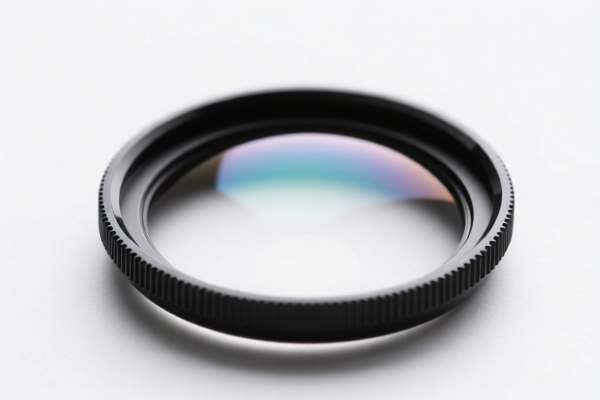
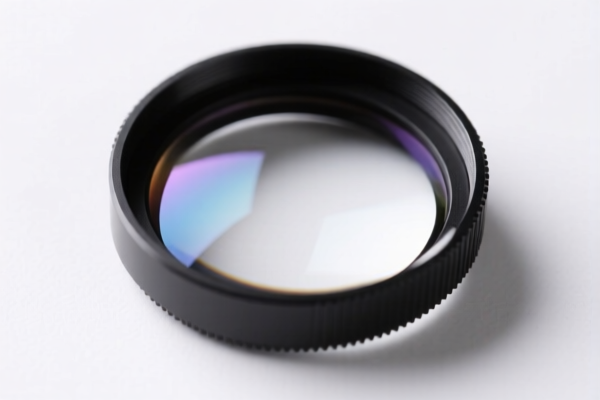
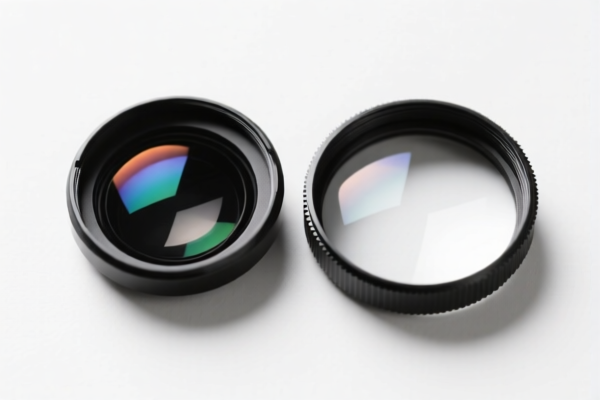
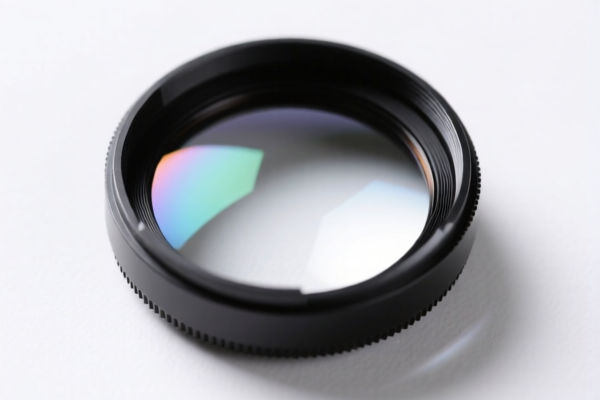
AI Analysis
🔍 Optical Lenses (Unmounted Optical Elements)
🌐 HS Code Reference & Customs Clearance Guide | 2026 Latest Tariff Analysis | Professional Level Clearance Strategy
📌 I. Product Definition & Classification: What Exactly Are "Optical Lenses"?
Optical lenses, in the context of international trade and Chapter 90, refer to precision glass or plastic components used to converge or diverge light. The key distinction here is "Unmounted" (unmounted optical elements). These are not yet assembled into frames, goggles, cameras, or medical devices. They are raw or semi-finished optical components.
In customs classification, they fall under Heading 9001, specifically distinguished from optical fibers, polarizing sheets, and prisms.
⚠️ Key Distinction Point:
- If the item is a Prism (triangular block used for deviating light paths) → HS 9001.90.50
- If the item is a Lens (curved surface used for focusing/magnifying) → HS 9001.90.40
- Note: Contact lenses are also under 9001, but if they are mounted in frames, they move to Chapter 9002. The data provided focuses on unmounted lenses.
📦 II. HS Code Classification Details (2026 Latest Tariff Authority Comparison)
Based on the provided <DATA>, there are only two relevant classifications for unmounted optical elements.
| HS Code | Product Description | Applicable Scenario | Tax Rate (Total) |
|---|---|---|---|
9001.90.40.00 |
Lenses: Unmounted optical elements of any material, other than glass not optically worked. | Single lenses, multi-element lens groups, camera lenses (unmounted), microscope objective lenses. | 25.0% |
9001.90.50.00 |
Prisms: Unmounted optical elements of any material. | Roof prisms, porro prisms, beam splitters, corner cube reflectors. | 25.0% |
🔍 Critical Reminder:
- Lenses vs. Prisms: A lens refracts light to focus or defocus; a prism refracts light to deviate or split it. Misclassification here is common. - "Other Optical Elements": If an item is neither a lens nor a prism (e.g., an unmounted mirror or filter), it may fall under other subheadings in 9001.90, but the provided data only covers Lenses and Prisms. - Mounted vs. Unmounted: Once these elements are mounted in eyeglass frames, they are classified under 9002 (Contact lenses and other optical elements, mounted). The 25% tariff applies specifically to the unmounted state.
💰 III. 2026 Latest Tariff Rate Detailed Breakdown
✅ Applicable Country: United States (US)
✅ Origin: China (CN)
✅ Effective Date: Implied current trade war era tariffs (consistent with the 25% total shown).
🎯 1. 9001.90.40.00 —— Unmounted Optical Lenses
| Item | Content |
|---|---|
| Base Tariff | 0.0% (ad valorem) |
| Section 301 Additional Tariff | +25.0% |
| Total Tax Rate | 25.0% |
| Tax Calculation | CIF Value × 25% |
| De Minimis Exemption | ❌ Not Available (Section 301 goods are excluded from de minimis treatment for China origin) |
| Legal Basis Path | HTSUS: 9001.90.40.00 → USITC Footnote 9903.88.01 (Section 301) |
📌 Explanation:
- The Base Tariff for optical lenses is 0% under normal MFN (Most Favored Nation) treatment. - The 25% Additional Tariff is imposed under Section 301 of the Trade Act of 1974 against Chinese imports. - Total Cost Impact: For every $1,000 of lenses, you pay $250 in additional duties. This is a significant cost driver. - No De Minimis: Unlike some other categories, Section 301 goods from China do not benefit from the $800 de minimis exemption (Section 321). Every shipment, regardless of value, is subject to this 25%.
🎯 2. 9001.90.50.00 —— Unmounted Optical Prisms
| Item | Content |
|---|---|
| Base Tariff | 0.0% (ad valorem) |
| Section 301 Additional Tariff | +25.0% |
| Total Tax Rate | 25.0% |
| Tax Calculation | CIF Value × 25% |
| De Minimis Exemption | ❌ Not Available |
| Legal Basis Path | HTSUS: 9001.90.50.00 → USITC Footnote 9903.88.01 (Section 301) |
📌 Note:
- Identical tax treatment to lenses. - Prisms are critical for laser systems, periscopes, and surveying equipment. - Even if the prism is made of expensive crystal (e.g., fused silica), the tariff remains 25%.
🛠️ IV. Customs Clearance Practical Advice (Real-World Pitfall Avoidance)
✅ 1. Documentation Checklist (Non-negotiable)
| Document | Required | Description |
|---|---|---|
| ✅ Commercial Invoice | ✔️ | Must clearly state: "Unmounted Optical Lenses" or "Unmounted Prisms". Do not use vague terms like "Optical Parts". |
| ✅ Product Specification Sheet | ✔️ | Must include: Material (Glass/Plastic), Refractive Index, Curvature Radius, Coating details. |
| ✅ Technical Drawing | ✔️ | Essential to prove the item is an unmounted element and not part of a larger assembly. |
| ✅ Packing List | ✔️ | Detail individual units. Bulk shipments need precise count. |
| ✅ Country of Origin Certificate | ✔️ | Critical to confirm China origin (if applicable) to determine Section 301 applicability. |
✅ 2. Declaration Tips (Key Mantras)
🔥 "Unmounted is Key, Description Must Be Precise!"
| Situation | Correct Declaration | Wrong Practice |
|---|---|---|
| Single Lens | "Unmounted Glass Optical Lens, Convex, Diameter 50mm" | "Lens" or "Glass Part" |
| Prism Assembly | "Unmounted Roof Prism, BK7 Glass" | "Prism Assembly" (if it includes mounts) |
| Lenses in Frames | NOT 9001! Must declare under 9002 | Declare as 9001.90.40.00 → Penalty |
| Camera Module | NOT 9001! Must declare under 8525/8526 or 9002 | Declare as 9001 → Classification Error |
✅ 3. Special Handling Scenarios
| Situation | Handling Advice |
|---|---|
| OEM Custom Lenses | Provide customer PO and design specs. If lenses are unique, explain in commercial invoice. |
| Mixed Shipment (Lenses + Prisms) | Declare separately. Do not lump them together. Use two different HS codes. |
| Mounted Elements | If the lens is already glued into a holder, it may be considered "Mounted". Re-evaluate classification (potentially 9002 or 9013). |
| Anti-Reflective Coating | Coating does not change the HS code. Still 9001.90.40.00. Declare coating material if asked. |
🌍 V. Global Market Clearance Comparison (2026 Latest)
| Country/Region | Recommended HS Code | Tariff (China Origin) | Certification Requirements | Notes |
|---|---|---|---|---|
| 🇺🇸 USA | 9001.90.40.00 |
25% | No specific FCC/CE for lenses, but must be safe for handling | Section 301 applies. High impact. |
| 🇨🇳 China | 9001.90.40.00 |
0% - 6% (Import Duty) | CCC (if applicable) | Low import duty, but VAT applies. |
| 🇪🇺 EU | 9001.90.90 |
0% - 4.5% | CE (if part of final product), RoHS | Generally lower tariffs than US. |
| 🇬🇧 UK | 9001.90.90 |
0% - 4.5% | UKCA (if applicable) | Post-Brexit rules apply. |
| 🇯🇵 Japan | 9001.90.000 |
0% - 3% | PSE (if part of electronic device) | FTA benefits may apply if origin is Japan/ASEAN. |
📌 Conclusion:
- USA is the most expensive market for importing optical lenses/prisms from China due to the 25% Section 301 tariff. - EU and Japan are more tariff-friendly. Consider supply chain diversification (e.g., sourcing from Vietnam or Japan) to avoid US tariffs. - Always verify if the lenses are mounted or unmounted. Mounted lenses may have different duties.
📌 VI. Common Errors & Pitfall Guide (Blood and Tears Lessons)
❌ Error 1: Declaring "Mounted Lenses" under 9001.90.40.00
👉 Consequence: Customs will reclassify to 9002.20 or 9002.11 (eyeglass lenses), potentially leading to duty evasion penalties or seizure.
❌ Error 2: Confusing "Prisms" with "Lenses"
👉 Consequence: Wrong HS Code. While both are 25%, incorrect description can lead to customs delays and additional inspections.
❌ Error 3: Ignoring "Unmounted" Status
👉 Consequence: If the lens is part of a module (e.g., camera lens barrel), it should NOT be declared as 9001.90.40.00. It may be part of the whole machine (e.g., 9006 for cameras).
❌ Error 4: Not declaring Coating Details
👉 Consequence: Minor, but can lead to questions about material composition. Always include "AR Coated" or "Multi-Coated" in description.
✅ Correct Approach:
"Unmounted Optical Lens, Glass, Convex, Diameter 25mm, AR Coated, Model XYZ, Not Mounted"
🎯 VII. Conclusion: Precision Classification Saves Money!
🎯 Remember the Mantra:
🔹 "Unmounted is 9001, Mounted is 9002."
🔹 "Lens is .40, Prism is .50."
🔹 "US Tariff is 25%, No De Minimis!"
📌 Pro Tip:
If you are importing large volumes to the US, consider HTS Exclusions (if available) or Supply Chain Restructuring.
Always apply for a Binding Tariff Information (BTI) or Customs Ruling from CBP if the classification is complex.
📣 Immediate Action:
📞 Consult a licensed customs broker + Provide detailed drawings + Apply for Pre-Ruling
🚀 Ensure your lenses, clear customs smoothly, and protect your margins!
✨ Professional Clearance Starts with Accurate Classification!
💼 Every percentage point matters in global trade!
Customer Reviews
About HS Code Classification
The Harmonized System (HS) is an internationally standardized nomenclature developed by the World Customs Organization (WCO) to classify traded products. Over 200 countries use the HS system as the basis for customs tariffs, trade statistics, and import/export regulations.
Each HS code follows a hierarchical structure:
- Chapter (2 digits) — Broad category of goods (e.g., Chapter 84: Machinery and Mechanical Appliances)
- Heading (4 digits) — More specific grouping within the chapter
- Subheading (6 digits) — Internationally standardized breakdown, used by all WCO member countries
- National subdivisions (8-10 digits) — Country-specific extensions for further classification, such as US HTSUS 10-digit codes
Correct HS code classification is essential for smooth customs clearance, accurate duty payment, and compliance with trade regulations. Misclassification can lead to customs delays, overpayment of duties, or penalties.
When importing from CN to US, the applicable tariff rates may include:
- Most-Favored-Nation (MFN) rate — The standard duty rate applied to WTO members
- General rate — Applied to countries without trade agreements
- Trade remedy duties — Additional tariffs such as Section 301 (anti-dumping), Section 232 (national security), or countervailing duties
The information provided on this page is for reference purposes only. For official classification, please consult with your local customs authority or a licensed customs broker.