other braided handbags
CN → US| HS Code | Tariff Rate | Origin | Destination | Doc |
|---|---|---|---|---|
| 4602192920 | 40.3% | CN | US | Official Doc |
| 4202224020 | 42.4% | CN | US | Official Doc |
| 4202228980 | 52.6% | CN | US | Official Doc |
| 4602112100 | 41.2% | CN | US | Official Doc |
Product Images
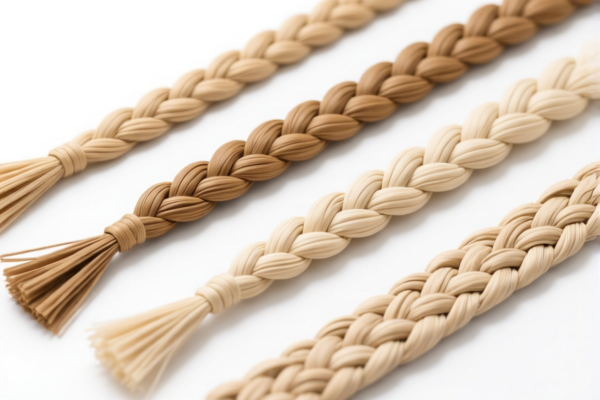
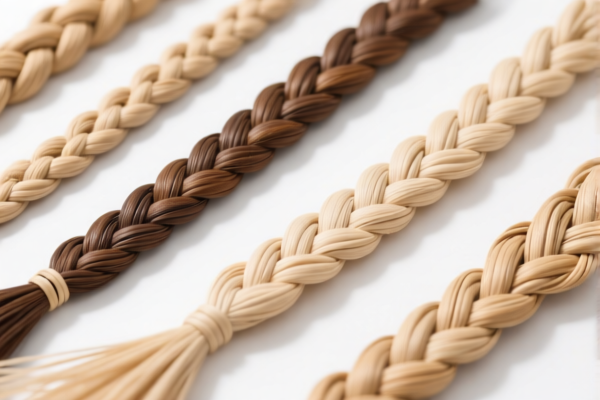
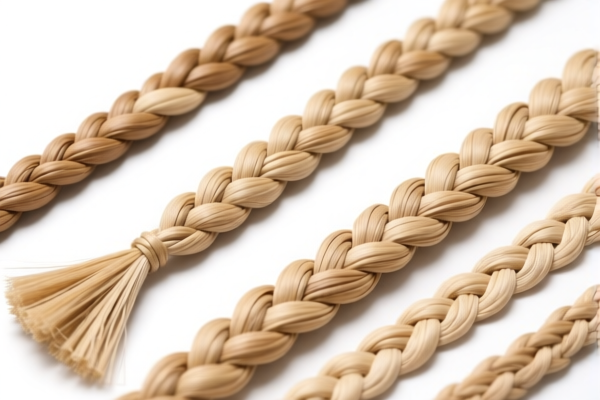
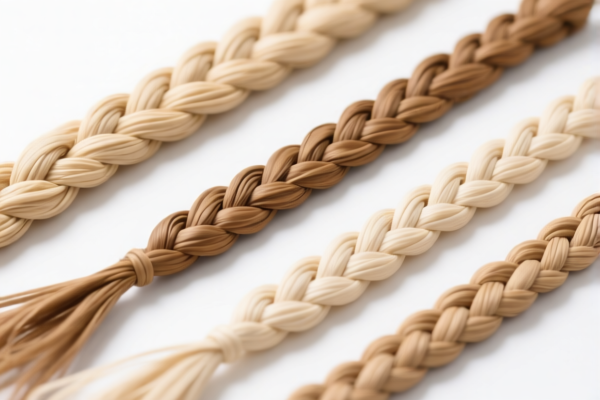
AI Analysis
👜 Braided Handbags & Woven Accessories: HS Code Classification & Duty Analysis (US-China Trade)
🌐 HS Code Reference & Customs Clearance Guide | 2026 Latest Tariff Breakdown | Strategic Classification Strategy
📌 1. Product Definition & Classification: Are You Sure You Know "Braided Handbags"?
Braided handbags represent a diverse category of fashion accessories, but in international trade, the HS Code depends entirely on the MATERIAL composition. Misclassification is the #1 cause of unexpected duties.
In this dataset, we distinguish three critical material types: 1. Plant-Based Materials (Vegetable Materials): Bamboo, rattan, straw, wicker, etc. 2. Woven Materials (Textile-based): Synthetic fibers, cotton, polyester woven into straps/bags. 3. Other Textile Materials: Non-woven, non-standard textiles, or mixed materials not falling under specific vegetable codes.
⚠️ Key Distinction Point:
- Bamboo/Rattan/Straw → Chapter 46 (Vegetable Plaiting Materials)
- Synthetic/Cotton Fabric Woven → Chapter 42 (Articles of Leather/Reproduction Leather/Textiles)
- General "Other" Textiles → Chapter 42 (Specific subheading for "Other")
📦 2. HS Code Classification Details (2026 Latest Tariff Authority Match)
| HS Code | Product Description | Material Basis | Applicable Scenario |
|---|---|---|---|
4602.19.29.20 |
Braided handbags, plant material | Vegetable plaiting materials (non-bamboo/rattan specific) | Straw bags, generic plant fiber woven bags |
4202.22.40.20 |
Braided handbags, woven material | Synthetic/Cotton textile woven structure | Fabric woven totes, synthetic strap bags |
4202.22.89.80 |
Braided handbags, other textile materials | Other textiles (non-surface covered) | Mixed textile bags, non-standard weaves |
4602.11.21.00 |
Braided handbags, bamboo/rattan | Bamboo, rattan, or similar plant materials | High-end bamboo/clutches, rattan beach bags |
🔍 Critical Reminder:
-4602.xxapplies ONLY if the bag is made primarily of plaited vegetable materials (e.g., straw, bamboo).
-4202.xxapplies if the bag is made of textiles (fabric, synthetic weave) or has a textile base.
- Do not classify a fabric-woven bag as4602just because it looks "woven"—the material dictates the chapter!
💰 3. 2026 Latest Tariff Rate Breakdown (Including Additional Taxes & Policy Surcharges)
✅ Applicable Country: United States (US)
✅ Origin: China (CN)
✅ Effective Date: 2025/2026 (Post-Trade War Surcharges Active)
🎯 1. 4602.19.29.20 —— Braided Handbags (Plant Material, Non-Specific)
| Item | Detail |
|---|---|
| Base Rate | 5.3% (MFN Rate) |
| Section 301 Surcharge | +25.0% (Additional Tariff on Chinese Goods) |
| 122 Provision Surcharge | +10.0% (Trade Remedy/Special Provision) |
| Total Effective Rate | 40.3% |
| Calculation Basis | CIF Value × 40.3% |
| De Minimis Exemption? | ❌ NO (Section 301 & 122 goods are ineligible for $800 de minimis exemption if flagged) |
| Legal Path | HTSUS:4602.19.29.20 → USITC Footnote: Section 301 → 122 Provision |
📌 Explanation:
- This is a vegetable plaiting material bag not specifically listed under bamboo/rattan.
- The 35% total surcharge (25% + 10%) is high. Many importers mistakenly believe straw/plant bags are duty-free or low-duty. They are not when originating from China.
🎯 2. 4202.22.40.20 —— Braided Handbags (Woven Material)
| Item | Detail |
|---|---|
| Base Rate | 7.4% |
| Section 301 Surcharge | +25.0% |
| 122 Provision Surcharge | +10.0% |
| Total Effective Rate | 42.4% |
| Calculation Basis | CIF Value × 42.4% |
| De Minimis Exemption? | ❌ NO |
| Legal Path | HTSUS:4202.22.40.20 → USITC Footnote: Section 301 → 122 Provision |
📌 Explanation:
- "Woven material" here refers to textile-based weaves (e.g., polyester straps woven into a bag).
- Slightly higher base rate than plant materials due to textile classification rules.
🎯 3. 4202.22.89.80 —— Braided Handbags (Other Textile Materials)
| Item | Detail |
|---|---|
| Base Rate | 17.6% |
| Section 301 Surcharge | +25.0% |
| 122 Provision Surcharge | +10.0% |
| Total Effective Rate | 52.6% |
| Calculation Basis | CIF Value × 52.6% |
| De Minimis Exemption? | ❌ NO |
| Legal Path | HTSUS:4202.22.89.80 → USITC Footnote: Section 301 → 122 Provision |
📌 Warning:
- This is the HIGHEST TAX category in the list.
- "Other textile materials" is a catch-all for bags that don’t fit the specific "woven synthetic" or "leather-covered" definitions.
- Avoid this classification if possible by correctly identifying if the material is plant-based (4602) or standard woven (4202.22.40).
🎯 4. 4602.11.21.00 —— Braided Handbags (Bamboo, Rattan, etc.)
| Item | Detail |
|---|---|
| Base Rate | 6.2% |
| Section 301 Surcharge | +25.0% |
| 122 Provision Surcharge | +10.0% |
| Total Effective Rate | 41.2% |
| Calculation Basis | CIF Value × 41.2% |
| De Minimis Exemption? | ❌ NO |
| Legal Path | HTSUS:4602.11.21.00 → USITC Footnote: Section 301 → 122 Provision |
📌 Explanation:
- Specific code for Bamboo, Rattan, or Similar Plant Materials.
- Lower base rate (6.2%) than generic plant weaves (5.3%? Wait, 6.2 > 5.3. Note: Base rates vary slightly by subheading nuance).
- Key Benefit: If your bag is clearly identifiable as Bamboo or Rattan, this is often the most defensible classification. Ensure you have material samples to prove it’s not a synthetic imitator.
🛠️ 4. Customs Clearance Operational Advice (Practical Pitfall Avoidance)
✅ 1. Document Checklist (Non-Negotiable)
| Document | Required | Purpose |
|---|---|---|
| ✅ Material Breakdown Sheet | ✔️ | Must specify % of bamboo, straw, plastic, fabric. Crucial for Chapter 46 vs 42 decision. |
| ✅ Product Photos (Close-up) | ✔️ | Show weave structure. Is it plant fiber or synthetic thread? |
| ✅ Commercial Invoice | ✔️ | Must match HS Code description exactly (e.g., "Bamboo Woven Bag" vs "Textile Bag"). |
| ✅ Origin Certificate | ✔️ | Confirm CN origin to apply correct Section 301/122 rates. |
| ✅ Structure Diagram | ✔️ | Show if lining is textile or plant-based. |
✅ 2. Classification Strategy (Key Mnemonic)
🔥 “Plant vs. Textile: Look at the Fiber, Not the Shape!”
| Scenario | Correct HS Code | Wrong HS Code | Consequence |
|---|---|---|---|
| Real Bamboo/Rattan Bag | 4602.11.21.00 (41.2%) |
4202.22.89.80 (52.6%) |
Overpay 11.4% taxes |
| Straw/Grass Bag | 4602.19.29.20 (40.3%) |
4202.22.40.20 (42.4%) |
Overpay 2.1% taxes |
| Synthetic Woven Bag | 4202.22.40.20 (42.4%) |
4602.19.29.20 (40.3%) |
Risk of penalty (Misdeclaration) |
| Unknown/Mixed Textile | 4202.22.89.80 (52.6%) |
Any other | Highest tax burden |
✅ 3. Special Cases & Mitigation
| Situation | Advice |
|---|---|
| Bamboo Lookalike (Plastic) | Do NOT use 4602. Use 4202.22.89.80 or 4202.22.40.20. Misclassifying plastic as bamboo can lead to fraud allegations. |
| Plastic Straw/Straw-like | If made of plastic, it’s NOT vegetable material. Must go to Chapter 42 or 39 (if rigid). This increases duty risk. |
| Lining Matters | If the bag is 90% bamboo but has a large cotton lining, it may still be classified as 4602. Check "Essential Character" rule. |
| De Minimis Loophole? | STOP. Section 301 and 122 provisions generally block de minimis ($800) entry for high-duty goods. Do not rely on UDC/PDP for these HS codes if value > $800. |
🌍 5. Global Market Comparison (2026)
| Market | Preferred HS Code | Est. Total Duty | Notes |
|---|---|---|---|
| 🇺🇸 USA | 4602.11.21.00 |
41.2% | High due to 301+122. Must prove plant origin. |
| 🇨🇳 China | 4602.11.00.00 |
10-15% | Lower base rates. No Section 301. |
| 🇪🇺 EU | 4602.11.00.00 |
5-10% | No Section 301 equivalent. CE/FSC certification may apply. |
| 🇬🇧 UK | 4602.11.00.00 |
5-10% | Post-Brexit rules similar to EU but no US tariffs. |
📌 Conclusion:
- The US market is the most expensive due to layered tariffs.
- Accurate material identification is the only way to save costs (e.g., saving 11.4% by correctly classifying bamboo vs. other textiles).
📌 6. Common Errors & Lessons Learned (Blood & Tears)
❌ Error 1: Calling a plastic imitator bag "Bamboo" to get a lower base rate.
👉 Result: Customs seizure, fines, and potential loss of import privileges.
👉 Fix: Submit material analysis report from a lab.
❌ Error 2: Using 4202.22.89.80 for a standard straw bag.
👉 Result: Overpaying 12.3% duty (52.6% vs 40.3%).
👉 Fix: Verify if the material is "vegetable plaiting material" (Chapter 46).
❌ Error 3: Assuming all "woven" bags are the same.
👉 Result: Misclassification between 4602 (plant) and 4202 (textile).
👉 Fix: Inspect the fiber under a microscope or request supplier confirmation.
🎯 7. Conclusion: Precise Classification Saves Thousands!
🎯 Remember the Golden Rule:
🔹 “Plant = 4602 (Lower Base), Textile = 4202 (Higher Base), Plastic = 4202/39 (Risk).”
🔹 “All China-origin goods pay +35% (25%+10%). Don’t let base rate differences fool you.”
🔹 “Check the Fiber, Not the Fashion!”
📌 Pro Tip:
If you have mixed-material bags (e.g., bamboo frame with canvas lining), consult a customs broker for a Pre-Classification Ruling. The "Essential Character" test will determine if 4602 or 4202 applies. A wrong guess can cost you 12% more in duties.
📣 Immediate Action:
📞 Audit your Bill of Lading descriptions.
📋 Request Material Certificates from suppliers.
🚀 Classify correctly to avoid 52.6% tax traps!
✨ Professional Clearance Starts with Accurate Classification!
💼 Every percentage point matters in the US-China Trade War era!
Customer Reviews
About HS Code Classification
The Harmonized System (HS) is an internationally standardized nomenclature developed by the World Customs Organization (WCO) to classify traded products. Over 200 countries use the HS system as the basis for customs tariffs, trade statistics, and import/export regulations.
Each HS code follows a hierarchical structure:
- Chapter (2 digits) — Broad category of goods (e.g., Chapter 84: Machinery and Mechanical Appliances)
- Heading (4 digits) — More specific grouping within the chapter
- Subheading (6 digits) — Internationally standardized breakdown, used by all WCO member countries
- National subdivisions (8-10 digits) — Country-specific extensions for further classification, such as US HTSUS 10-digit codes
Correct HS code classification is essential for smooth customs clearance, accurate duty payment, and compliance with trade regulations. Misclassification can lead to customs delays, overpayment of duties, or penalties.
When importing from CN to US, the applicable tariff rates may include:
- Most-Favored-Nation (MFN) rate — The standard duty rate applied to WTO members
- General rate — Applied to countries without trade agreements
- Trade remedy duties — Additional tariffs such as Section 301 (anti-dumping), Section 232 (national security), or countervailing duties
The information provided on this page is for reference purposes only. For official classification, please consult with your local customs authority or a licensed customs broker.