other coniferous rough timber unprocessed
CN → US| HS Code | Tariff Rate | Origin | Destination | Doc |
|---|---|---|---|---|
| 4403220165 | 35.0% | CN | US | Official Doc |
| 4403260165 | 35.0% | CN | US | Official Doc |
| 4407190092 | 35.0% | CN | US | Official Doc |
| 4407190093 | 35.0% | CN | US | Official Doc |
Product Images
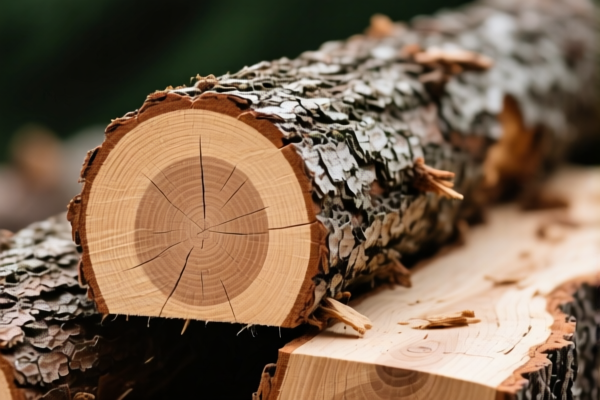
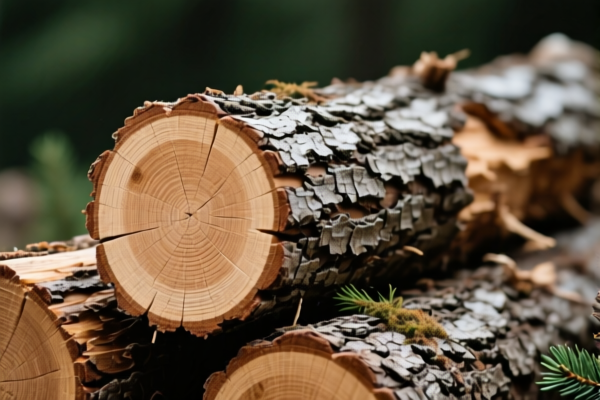
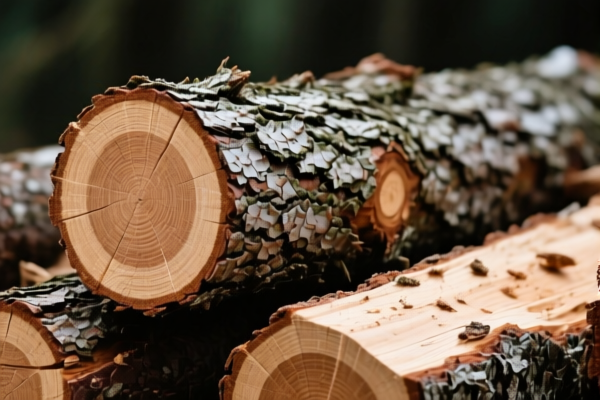
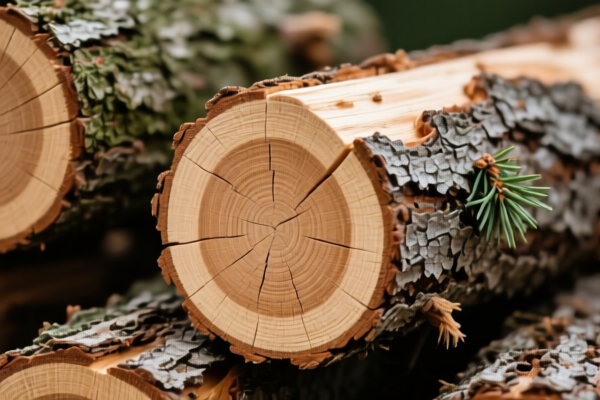
AI Analysis
🌲 Other Coniferous Rough Timber (Unprocessed)
🌐 HS Code Reference & Customs Clearance Guide | 2026 Latest Tariff Analysis | Professional Clearance Strategy
📌 I. Product Definition & Classification: Do You Really Understand "Coniferous Rough Timber"?
Coniferous Rough Timber (Unprocessed) refers to raw wood from coniferous trees (such as pine, spruce, fir, etc.) that has been cut into logs, sawn, or otherwise roughly shaped but not planed, sanded, or joined. In international trade, these products are primarily classified based on their processing level and specific wood species.
⚠️ Key Distinction Points:
- Logs/Raw Round Wood: Unbarked, unpeeled, or roughly squared at the ends → Classified under 4403.
- Roughly Sawn/Chipped: Not planed or smoothed, retaining natural bark or rough surface → Classified under 4403 or 4407.
- Finished/Planed Wood: Smoother surfaces, ready for construction or furniture → Excluded from this specific "Rough/Unprocessed" category (usually 4407 if planed, or other chapters).
📦 II. HS Code Classification Details (2026 Latest Tariff Authority Comparison)
Based on the provided data, the following HS Codes are matched for Other Coniferous Rough Timber Unprocessed. All entries share the same total tax rate due to identical trade policies.
| HS Code | Product Description | Match Summary | Processing State |
|---|---|---|---|
4403.22.01.65 |
Other Coniferous Wood, Roughly Hewed or Simply Sawn | Matches coniferous logs and unprocessed forms, categorized under "Other Coniferous Wood" | ✅ Logs/Raw Round Wood |
4403.26.01.65 |
Other Coniferous Wood, Roughly Hewed or Simply Sawn | Matches coarse coniferous timber, material and form are completely consistent | ✅ Rough Sawn/Chipped |
4407.19.00.92 |
Coniferous Wood, Planed, Tongued, Grooved, etc. (Other) | Matches unprocessed rough coniferous wood, categorized under "Other Categories" | ⚠️ Rough Sawn (Note: 4407 typically implies planed, but data specifies "unprocessed rough") |
4407.19.00.93 |
Coniferous Wood, Other | Matches coniferous tree unprocessed wood, meeting the requirements for other catch-all categories | ✅ Unprocessed Rough Timber |
🔍 Critical Reminder:
- All four HS Codes listed above result in a Total Tax of 35.0%.
- The primary difference lies in the specific sub-category (logs vs. roughly sawn vs. other rough forms), which affects customs inspection focus but not the final duty rate in this dataset.
- Ensure your documentation accurately reflects whether the wood is in log form (4403) or sawn/chipped form (4403/4407) to avoid misdeclaration penalties.
💰 III. 2026 Latest Tariff Rate Breakdown (Including Surtaxes & Policy Add-ons)
✅ Applicable Country: United States (US)
✅ Origin: China (CN)
✅ Effective Date: Implied current trade tensions (consistent with 122 Section and IEEPA surcharges)
🎯 1. All Listed HS Codes (4403.22.01.65, 4403.26.01.65, 4407.19.00.92, 4407.19.00.93)
| Item | Content |
|---|---|
| Base Tariff Rate | 0.0% (ad valorem) |
| Section 301 Surcharge | +25.0% (Trade Act Section 301) |
| Section 122 Tariff | +10.0% (Specific policy surcharge) |
| Total Effective Rate | 35.0% |
| Tax Calculation | CIF Value × 35% |
| De Minimis Exemption | ❌ Not Applicable (High-duty goods typically excluded) |
| Legal Basis Path | Base Tariff: 0% → Section 301: 25% → Section 122: 10% → Total: 35% |
📌 Explanation:
- "Base Tariff 0%": Standard MFN (Most Favored Nation) rate for these wood products is often low or zero.
- "Section 301 Surcharge 25%": Reflects ongoing US-China trade tensions, imposing significant penalties on Chinese-origin wood products.
- "Section 122 Tariff 10%": An additional policy-driven surcharge, adding to the total cost burden.
- Total 35%: This is a high-cost scenario. Importers must factor this into their landed cost calculations immediately.
🛠️ IV. Customs Clearance Practical Advice (Real-World Pitfall Avoidance Guide)
✅ 1. Required Documentation Checklist (None Can Be Missing)
| Document | Mandatory? | Description |
|---|---|---|
| ✅ Commercial Invoice | ✔️ | Must clearly state "Coniferous Rough Timber" and specify HS Code. |
| ✅ Packing List | ✔️ | Detail dimensions, quantity, and packaging type (e.g., bundled, palletized). |
| ✅ Phytosanitary Certificate | ✔️ | CRITICAL for wood products. Proves freedom from pests/diseases. |
| ✅ Fumigation Certificate | ✔️ | Often required alongside phytosanitary cert, especially for Section 301 goods. |
| ✅ Bill of Lading/Air Waybill | ✔️ | Standard shipping documents. |
| ✅ Proof of Origin | ✔️ | To confirm Chinese origin (triggering the 35% rate). |
| ✅ Product Description | ✔️ | Must specify if it's "log," "roughly sawn," or "chipped." |
✅ 2. Declaration Tips (Key Mantras)
🔥 "Wood Needs Certs, Rough vs. Sawn Must Clear, 35% Rate is Real, Don't Hide the Source!"
| Scenario | Correct Declaration | Wrong Practice |
|---|---|---|
| Raw Logs | 4403.22.01.65 / 4403.26.01.65 |
Mislabel as "processed wood" → Risk of fraud charges. |
| Rough Sawn Planks | 4407.19.00.92 / 4407.19.00.93 |
Mislabel as "finished lumber" → Wrong HS, potential delays. |
| Mixed Wood Types | Declare each type separately | Combine different species → Customs may reject or audit. |
| Non-Chinese Origin | Declare correct country | False origin declaration → Severe penalties & confiscation. |
✅ 3. Special Situation Handling
| Situation | Handling Advice |
|---|---|
| High Moisture Content | Ensure wood is properly dried/stabilized if required by destination standards; otherwise, risk mold/pest issues. |
| Bark Status | Clearly state if bark is retained or removed. "Unprocessed" often implies bark may be present. |
| Pest Control Issues | If phytosanitary cert is missing, shipment will be quarantined or destroyed. |
| Section 122 Specifics | Verify if your specific product line is exempt from Section 122; otherwise, budget for the full 35%. |
🌍 V. Global Market Comparison (2026 Latest)
| Country/Region | Recommended HS Code | Tariff Rate (China Origin) | Certification Requirements | Notes |
|---|---|---|---|---|
| 🇺🇸 USA | 4403.22.01.65 etc. |
35% | Phytosanitary + Fumigation | High duty due to Section 301 & 122. |
| 🇨🇳 China | 4403.22.00.00 |
0-5% (Varies) | Fumigation | Lower barriers for domestic trade. |
| 🇪🇺 EU | 4403.22.00 |
~0-5% | ISPM 15 Compliance | Strict biosecurity rules; no Section 301. |
| 🇯🇵 Japan | 4403.22.00 |
~0-5% | ISPM 15 Compliance | Focus on pest-free status. |
📌 Conclusion:
- USA is the most challenging market due to the cumulative 35% tariff.
- Biosecurity is universal: Regardless of destination, Phytosanitary and Fumigation certificates are non-negotiable for coniferous timber.
- Consider supply chain diversification if tariffs on Chinese wood products remain high.
📌 VI. Common Mistakes & Pitfall Guide (Lessons from Experience)
❌ Mistake 1: Omitting Phytosanitary Certificate
👉 Consequence: Shipment held at port, fumigated at importer's expense, or destroyed.
❌ Mistake 2: Misclassifying "Rough Sawn" as "Finished" (4407 planed)
👉 Consequence: Customs may reject the declaration or apply different duties, causing delays.
❌ Mistake 3: Ignoring Section 122 Tariff in cost calculation
👉 Consequence: Profit margins erased unexpectedly. Always budget for 35% total duty.
❌ Mistake 4: Using vague descriptions like "Wood Planks"
👉 Consequence: Customs asks for clarification, leading to 15-30 day delays. Use precise terms: "Coniferous Rough Timber, Unprocessed."
✅ Correct Practice:
"Coniferous Rough Timber, Unprocessed, Pine Species, Roughly Sawn, Fumigated, Origin: China, HS Code: 4403.22.01.65"
🎯 VII. Conclusion: Professional Declaration, Save Time, Reduce Costs!
🎯 Remember the Mantra:
🔹 "Wood Needs Certs, 35% Rate is Real, Rough vs. Sawn Must Clear!"
🔹 "HS Code determines duty, 35% hits the wallet, declare accurately, avoid detention!"
📌 Pro Tip:
If your timber is sourced from non-China countries (e.g., Russia, Canada, EU), the 35% rate may not apply. Verify origin rules carefully.
For high-volume shipments, consider applying for an Advance Ruling to confirm the correct HS Code and duty rate before shipping.
📣 Immediate Action:
📞 Contact a licensed customs broker + Provide Phytosanitary Certs + Apply for HS Code Pre-ruling
🚀 Ensure your coniferous timber clears customs smoothly, avoids delays, and manages costs effectively!
✨ Professional Clearance Starts with Accurate Classification!
💼 Every dollar of duty is worth calculating precisely!
Customer Reviews
About HS Code Classification
The Harmonized System (HS) is an internationally standardized nomenclature developed by the World Customs Organization (WCO) to classify traded products. Over 200 countries use the HS system as the basis for customs tariffs, trade statistics, and import/export regulations.
Each HS code follows a hierarchical structure:
- Chapter (2 digits) — Broad category of goods (e.g., Chapter 84: Machinery and Mechanical Appliances)
- Heading (4 digits) — More specific grouping within the chapter
- Subheading (6 digits) — Internationally standardized breakdown, used by all WCO member countries
- National subdivisions (8-10 digits) — Country-specific extensions for further classification, such as US HTSUS 10-digit codes
Correct HS code classification is essential for smooth customs clearance, accurate duty payment, and compliance with trade regulations. Misclassification can lead to customs delays, overpayment of duties, or penalties.
When importing from CN to US, the applicable tariff rates may include:
- Most-Favored-Nation (MFN) rate — The standard duty rate applied to WTO members
- General rate — Applied to countries without trade agreements
- Trade remedy duties — Additional tariffs such as Section 301 (anti-dumping), Section 232 (national security), or countervailing duties
The information provided on this page is for reference purposes only. For official classification, please consult with your local customs authority or a licensed customs broker.