other coniferous timber
CN → US| HS Code | Tariff Rate | Origin | Destination | Doc |
|---|---|---|---|---|
| 4407190066 | 35.0% | CN | US | Official Doc |
| 4407190067 | 35.0% | CN | US | Official Doc |
| 4403990128 | 35.0% | CN | US | Official Doc |
| 4407190066 | 35.0% | CN | US | Official Doc |
| 4407190067 | 35.0% | CN | US | Official Doc |
Product Images
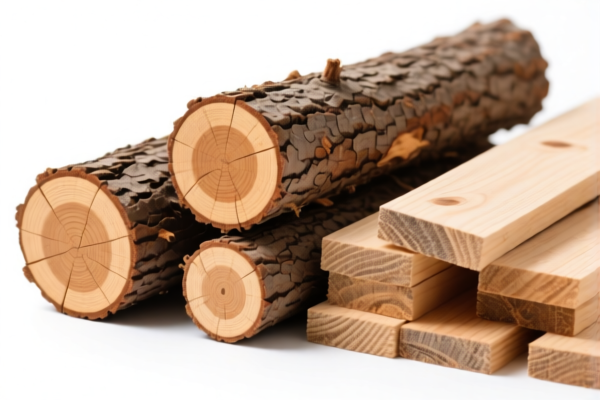
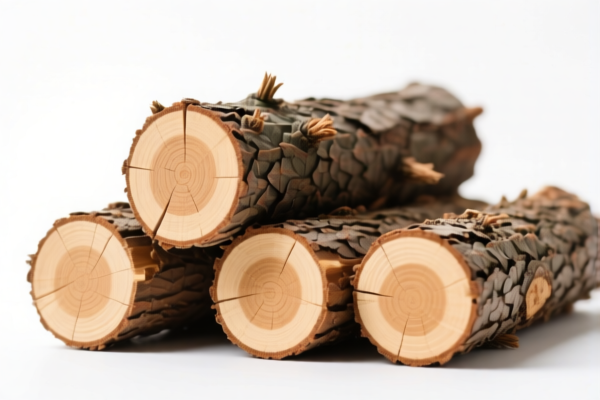
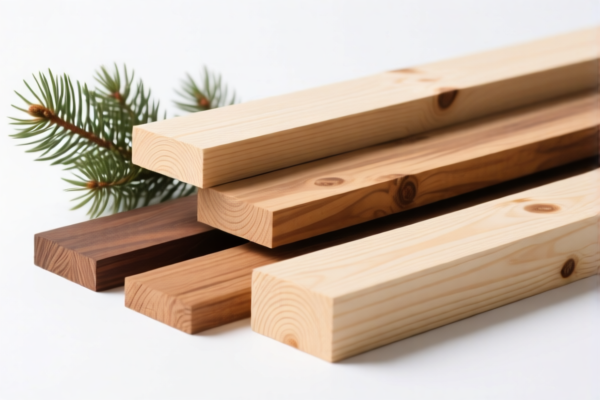
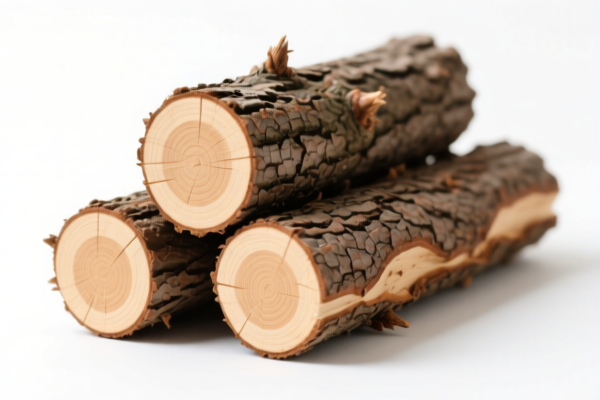
AI Analysis
🌲 Other Coniferous Timber (Larch & Piles)
🌐 HS Code Reference & Clearance Guide | 2026 Latest Tariff Analysis | Professional Clearance Strategy for Chinese Larch Products
📌 I. Product Definition & Classification: What is "Other Coniferous Timber"?
In international trade, "Other Coniferous Timber" primarily refers to processed wood from coniferous trees (evergreens) that does not fall under the specific codes for Pine, Spruce, Fir, or other common categories. In this dataset, the focus is strictly on Larch (落叶松).
Larch wood is dense, durable, and resistant to rot, making it highly valued for construction, outdoor furniture, and structural piles. The classification depends heavily on the processing level: * Sawn Wood/Lumber: Planed, edged, or roughly squared timber suitable for construction or manufacturing. * Wooden Poles/Piles: Logs or timber shaped into cylindrical piles, typically for foundation or marine use.
⚠️ Key Distinction:
- If the wood is sawn, planed, or edged (even if rough), it falls under 4407 (Wood sawn or chipped lengthwise).
- If the wood is in the form of poles or piles (cylindrical logs with minimal processing, often debarked), it may fall under 4403 (Wood in the rough, whether or not stripped of bark or sapwood).
📦 II. HS Code Classification Details (2026 Latest Tariff Authority)
| HS Code | Product Description | Application Scenario | Processing Level |
|---|---|---|---|
4407.19.00.66 |
Other coniferous timber, sawn/planed (Larch) | Construction lumber, furniture components, flooring | ✅ Processed (Sawn/Planed) |
4407.19.00.67 |
Other coniferous timber, sawn/planed (Larch) | Specialized industrial timber, engineered wood components | ✅ Processed (Sawn/Planed) |
4403.99.01.28 |
Other coniferous wooden piles/pegs (Larch) | Bridge piles, dock supports, foundation logs | ✅ Rough Form (Piles) |
🔍 Important Note:
-4407covers timber that has been lengthwise sawn or chipped and shaped (e.g., beams, planks, boards).
-4403covers timber in the rough, including poles and piles, which are typically cylindrical and not sawn into rectangular shapes.
- Larch (落叶松) is classified under "Other Coniferous Timber" because it is not Pine, Spruce, or Fir.
💰 III. 2026 Latest Tariff Rate Breakdown (Including Surcharges & Policy Add-ons)
✅ Applicable Country: United States (US)
✅ Country of Origin: China (CN)
✅ Effective Date: From November 10, 2025 (and subsequent imports)
🎯 1. 4407.19.00.66 & 4407.19.00.67 —— Other Coniferous Timber (Larch Lumber)
| Item | Content |
|---|---|
| Base Tariff | 0.0% (ad valorem) |
| Section 301 Surcharge | +25.0% (Additional Tariff under US Trade Act Section 301) |
| Section 122 Tariff | +10.0% (Additional Tariff under Section 122 of the Trade Expansion Act) |
| Total Tariff Rate | 35.0% |
| Tax Calculation | CIF Value × 35% |
| De Minimis Exemption Eligible? | ❌ No (deny_de_minimis) |
| Legal Basis Path | USITC:4407.19.00.66 → SECTION_301:25% → SECTION_122:10% |
📌 Explanation:
- "Base 0%": Larch timber generally has a low base MFN (Most Favored Nation) rate.
- "301 Surcharge 25%": This is the standard additional tariff imposed on a wide range of Chinese wood products under the Section 301 investigation.
- "Section 122 Tariff 10%": This is a specific additional tariff applied under Section 122, often used for national security or trade remedy purposes.
- Total 35%: This is a significant barrier. Importers must factor this into landed cost calculations.
🎯 2. 4403.99.01.28 —— Other Coniferous Wooden Piles (Larch Poles)
| Item | Content |
|---|---|
| Base Tariff | 0.0% |
| Section 301 Surcharge | +25.0% |
| Section 122 Tariff | +10.0% |
| Total Tariff Rate | 35.0% |
| Tax Calculation | CIF Value × 35% |
| De Minimis Exemption Eligible? | ❌ No (deny_de_minimis) |
| Legal Basis Path | USITC:4403.99.01.28 → SECTION_301:25% → SECTION_122:10% |
📌 Note:
- Even though piles are in a "rough" state, they are still subject to the same surcharges as processed lumber from China.
- No tariff advantage exists for unprocessed piles in this specific dataset.
🛠️ IV. Customs Clearance Operational Advice (Practical Pitfall Guide)
✅ 1. Required Documentation Checklist (All Mandatory)
| Document | Mandatory | Explanation |
|---|---|---|
| ✅ Product Specification Sheet | ✔️ | Must specify: Species (Larch), Moisture Content, Grade, Dimensions, Processing Type (Sawn vs. Pile). |
| ✅ Photographs | ✔️ | Clear images of the wood grain, ends, and any markings. Must distinguish between sawn lumber and cylindrical piles. |
| ✅ Commercial Invoice | ✔️ | Must accurately describe the product as "Larch Timber" or "Larch Piles," not generic "Wood." |
| ✅ Packing List | ✔️ | Detail weight, volume, and packaging type (e.g., bundled, crate). |
| ✅ Phytosanitary Certificate | ✔️ | Critical for wood products. Must confirm treatment against pests (ISPM 15 standard if packaged in wood). |
| ✅ Certificate of Origin | ✔️ | Required to prove origin is China. |
| ✅ Bill of Lading | ✔️ | Match description with invoice. |
✅ 2. Declaration Tips (Key Mnemonics)
🔥 "Species Specific, Form Clear, Tax High, Prepare Early!"
| Scenario | Correct Declaration | Wrong Practice |
|---|---|---|
| Larch Lumber (Rectangular, sawn) | 4407.19.00.66 or .67 + "Larch Sawn Timber" |
Misdeclare as "Pine" or generic "Coniferous" → Risk of penalty. |
| Larch Piles (Cylindrical, debarked) | 4403.99.01.28 + "Larch Wooden Piles" |
Misdeclare as "Lumber" → May face reclassification. |
| Mixed Shipment | Separate lines for 4407 and 4403 |
Bundle together → Confusion, delay, or incorrect tariff. |
| Moisture Content | Declare actual moisture % | Hide moisture % → Phytosanitary issues. |
✅ 3. Special Handling
| Situation | Recommendation |
|---|---|
| Larch vs. Other Conifers | Provide botanical name (Larix species) to avoid misclassification under cheaper tariffs for other species (if applicable). |
| Treated Wood | Declare if chemically treated (e.g., pressure-treated). May require additional EPA statements. |
| High Tariff Mitigation | Given 35% total tariff, consider duty drawbacks if re-exported, or explore FTAs if processed in a third country (though origin rules are strict). |
| Section 122 Specifics | Ensure documentation explicitly links to Section 122 compliance if required by local customs guidance. |
🌍 V. Global Market Comparison (2026 Latest)
| Country/Region | Recommended HS Code | Tariff (China Origin) | Certification Requirements | Notes |
|---|---|---|---|---|
| 🇺🇸 USA | 4407.19.00.66 / 4403.99.01.28 |
35% (0% + 25% + 10%) | Phytosanitary + ISPM 15 | High tariff burden; strict phytosanitary checks. |
| 🇨🇳 China | 4407.19.00.66 |
5% (General) | No special import duties for domestic trade | Domestic market has lower barriers. |
| 🇪🇺 EU | 4407.99 / 4403.99 |
Varies (0-10%) | FLEGT / EUTR Compliance | EU has strict deforestation regulations (EUTR). |
| 🇯🇵 Japan | 4407.19 |
5-8% | Fumigation Certificate | Strict on moisture and pest-free status. |
📌 Conclusion:
- The USA imposes the highest effective tariff rate (35%) on Chinese Larch timber due to Section 301 and Section 122.
- Phytosanitary compliance is equally critical as tariff compliance.
- Importers to the US must budget for significant cost increases.
📌 VI. Common Mistakes & Pitfall Guide (Lessons Learned)
❌ Mistake 1: Declaring Larch as "Pine" or "Spruce" to avoid Section 301.
👉 Consequence: Customs audit, penalty, and potential blacklisting. Larch is distinct and easily identified.
❌ Mistake 2: Failing to declare "Section 122" surcharge impact in landed cost.
👉 Consequence: Unexpected 10% cost increase, eroding profit margins.
❌ Mistake 3: Mixing Lumber (4407) and Piles (4403) in one line item.
👉 Consequence: Customs may split the shipment, causing delays and additional storage fees.
❌ Mistake 4: Ignoring Phytosanitary requirements.
👉 Consequence: Shipment held for fumigation or destroyed.
✅ Correct Practice:
"Larch Sawn Timber, Moisture Content 15%, Grade A, No Bark, HS Code: 4407.19.00.66, Origin: China"
🎯 VII. Conclusion: Professional Clearance, Cost Control, Efficiency!
🎯 Remember the Mnemonic:
🔹 "Larch is Not Pine, Tax is 35%, Section 122 Adds 10%, Phyto is Key, Don't Lose!"
🔹 "HS Code Defines Duty, 35% is High, Prep Docs Early, Avoid Delay!"
📌 Tips:
- If your Larch timber is processed in Vietnam, Mexico, or Thailand, it may qualify for preferential tariffs or exemptions under certain FTAs, but origin rules are strict.
- Recommend pre-arrival review or binding rulings for large volumes.
📣 Immediate Action:
📞 Contact a licensed customs broker + Provide product photos + Apply for phyto certificate
🚀 Let your Larch timber clear customs smoothly, efficiently, and profitably!
✨ Professional clearance starts with accurate classification!
💼 Every cent of your cost deserves precise calculation!
Customer Reviews
About HS Code Classification
The Harmonized System (HS) is an internationally standardized nomenclature developed by the World Customs Organization (WCO) to classify traded products. Over 200 countries use the HS system as the basis for customs tariffs, trade statistics, and import/export regulations.
Each HS code follows a hierarchical structure:
- Chapter (2 digits) — Broad category of goods (e.g., Chapter 84: Machinery and Mechanical Appliances)
- Heading (4 digits) — More specific grouping within the chapter
- Subheading (6 digits) — Internationally standardized breakdown, used by all WCO member countries
- National subdivisions (8-10 digits) — Country-specific extensions for further classification, such as US HTSUS 10-digit codes
Correct HS code classification is essential for smooth customs clearance, accurate duty payment, and compliance with trade regulations. Misclassification can lead to customs delays, overpayment of duties, or penalties.
When importing from CN to US, the applicable tariff rates may include:
- Most-Favored-Nation (MFN) rate — The standard duty rate applied to WTO members
- General rate — Applied to countries without trade agreements
- Trade remedy duties — Additional tariffs such as Section 301 (anti-dumping), Section 232 (national security), or countervailing duties
The information provided on this page is for reference purposes only. For official classification, please consult with your local customs authority or a licensed customs broker.