other coniferous timber for pilings
CN → US| HS Code | Tariff Rate | Origin | Destination | Doc |
|---|---|---|---|---|
| 4404100080 | 35.0% | CN | US | Official Doc |
| 4404100090 | 35.0% | CN | US | Official Doc |
| 4407190093 | 35.0% | CN | US | Official Doc |
| 4407190092 | 35.0% | CN | US | Official Doc |
| 4403260116 | 35.0% | CN | US | Official Doc |
| 4403250116 | 35.0% | CN | US | Official Doc |
Product Images
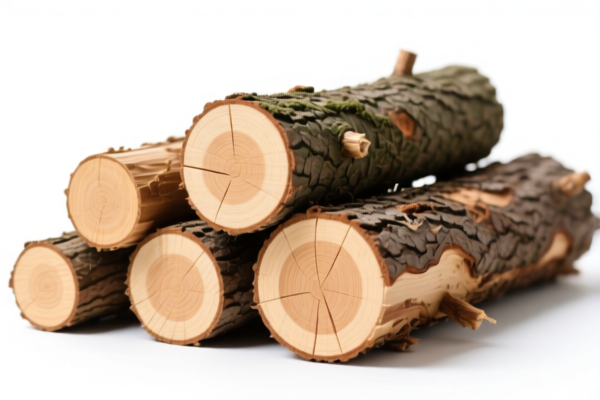
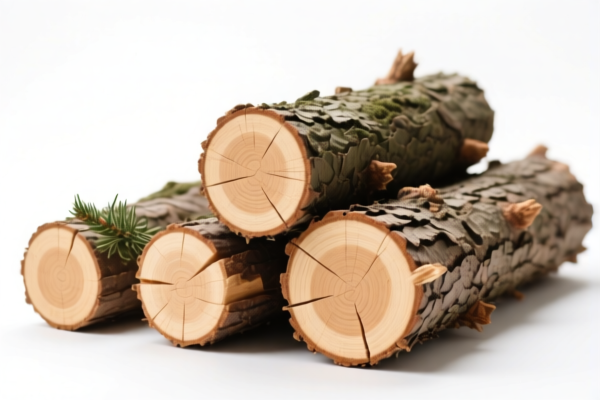
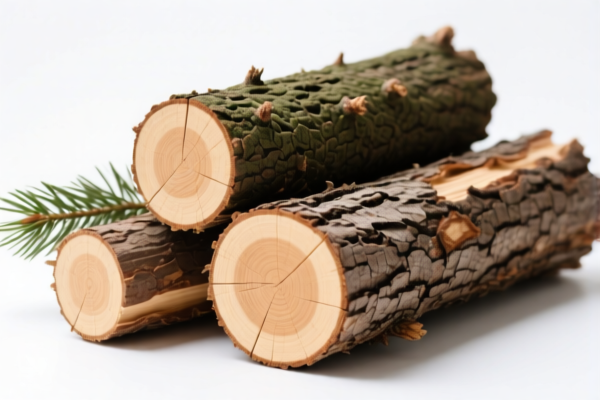
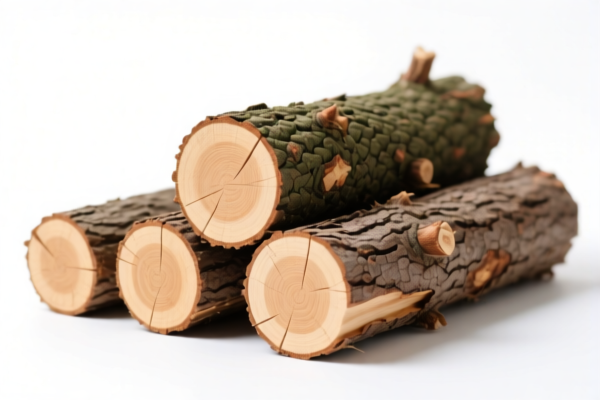
AI Analysis
🌲 Coniferous Timber for Pilings & Poles
🌐 HS Code Reference & Customs Clearance Guide | 2026 Latest Tariff Analysis | Professional-Level Clearance Strategy
📌 I. Product Definition & Classification: Do You Really Understand "Coniferous Timber for Pilings"?
Coniferous timber for pilings (often referred to as piles, posts, or poles) represents a critical category in international trade, primarily used for construction, marine infrastructure, and structural support. In customs classification, these products are not treated as simple "lumber" but are distinguished by their shape, treatment, and dimensional specifications.
The key distinction lies in whether the wood is: 1. In the Rough: Stripped of bark/sapwood but not sawn to standard dimensions. 2. Pointed/Un-sawn Lengthwise: Naturally shaped or split for piling use. 3. Sawn/Chipped: Processed into rectangular or square sections.
⚠️ Key Differentiation Points:
- If the wood is rough, bark-stripped, or pointed but not sawn into standard boards → It falls under Chapter 4403 (Wood in the rough) or 4404 (Hoopwood/Split poles).
- If the wood is sawn or chipped lengthwise (even roughly) → It falls under Chapter 4407 (Sawn wood).
- Coniferous vs. Non-Coniferous: All codes below specifically apply to Coniferous wood (e.g., Pine, Spruce, Fir). Non-coniferous wood would fall under different subheadings (e.g., 4403.24, 4403.29).
📦 II. HS Code Classification Details (2026 Latest Tariff Authority Comparison)
| HS Code | Product Description | Applicable Scenario | Key Characteristics |
|---|---|---|---|
4403.26.01.16 |
Wood in the rough, other, coniferous: Other Poles, piles and posts: Other | Rough-hewn timber, bark-stripped, or roughly squared; not specifically sized for large-diameter piles | Rough/Semi-processed |
4403.25.01.16 |
Wood in the rough, other, coniferous: Smallest cross-section ≥ 15 cm; Poles, piles and posts: Other | Large-diameter timber (≥15cm smallest dimension), often used for heavy construction or marine piles | Large Diameter (≥15cm) |
4407.19.00.93 |
Sawn/chipped wood, coniferous: Other, not treated: Other: Other | Standard sawn lumber from coniferous trees, not specifically for poles/piles, not rough | Standard Sawn Lumber |
4407.19.00.92 |
Sawn/chipped wood, coniferous: Other, not treated: Other: Rough | Rough-sawn timber, not planed or sanded, used for general construction | Rough-Sawn Lumber |
4404.10.00.80 |
Hoopwood, split poles, piles, pickets; coniferous: Poles, piles and posts | Naturally pointed or split timber, not sawn lengthwise, specifically for piling | Pointed/Split (Un-sawn) |
4404.10.00.90 |
Hoopwood, split poles, piles, pickets; coniferous: Other | Other types of split or hoopwood not classified as poles/piles | Other Split Wood |
🔍 Critical Reminder:
- Poles/Piles/Posts: If the item is intended for use as a structural post or marine piling, check if it is rough (Ch 4403) or split/pointed (Ch 4404).
- Sawn Wood: If the timber has been sawn into boards/planks, even if rough, it goes to 4407.
- Size Matters: For wood in the rough, the smallest cross-sectional dimension determines if it is classified as "large" (≥15cm) under4403.25.
💰 III. 2026 Latest Tariff Rate Details (Including Additional Duties)
✅ Applicable Country: United States (US)
✅ Origin: China (CN)
✅ Effective Date: 2025 November 10 onwards (including subsequent imports)
🎯 1. 4403.26.01.16 & 4403.25.01.16 — Coniferous Timber for Poles, Piles, and Posts (In the Rough)
| Item | Content |
|---|---|
| Base Tariff Rate | 0% (ad valorem) |
| USITC Additional Tariff | +25% (under USITC Footnote 9903.44.01) |
| IEEPA Additional Tariff | +10% (for China/HK products, effective from Nov 10, 2025) |
| Total Tariff Rate | 35% |
| Calculation Method | CIF Value × 35% |
| De Minimis Eligibility | ❌ Not Eligible (deny_de_minimis) |
| Legal Basis Path | IEEPA:9903.01.25 → IEEPA:9903.01.24 → USITC:4403.26.01.16 / 4403.25.01.16 → FOOTNOTE:9903.44.01 |
📌 Explanation:
- The 25% USITC tariff is imposed under Section 301 of the Trade Act for specific wood products from China.
- The 10% IEEPA tariff is an additional levy on Chinese-origin goods.
- Total 35%: This is a high tariff burden. Incorrect classification (e.g., declaring as non-coniferous or non-piling) to avoid this tax can lead to severe penalties.
🎯 2. 4407.19.00.93 & 4407.19.00.92 — Other Sawn Coniferous Wood
| Item | Content |
|---|---|
| Base Tariff Rate | 0% (ad valorem) |
| USITC Additional Tariff | +25% |
| IEEPA Additional Tariff | +10% |
| Total Tariff Rate | 35% |
| Calculation Method | CIF Value × 35% |
| De Minimis Eligibility | ❌ Not Eligible |
| Legal Basis Path | IEEPA:9903.01.25 → IEEPA:9903.01.24 → USITC:4407.19.00.93 / 4407.19.00.92 → FOOTNOTE:9903.44.01 |
📌 Note:
- Even if the wood is simply "sawn" and not explicitly labeled as "piles," if it is coniferous and from China, it attracts the same 35% total duty.
- "Rough" vs. "Other" in 4407 does not change the tariff rate; both are subject to the 25% + 10% additional duties.
🎯 3. 4404.10.00.80 & 4404.10.00.90 — Split Poles, Piles, and Hoopwood
| Item | Content |
|---|---|
| Base Tariff Rate | 0% (ad valorem) |
| USITC Additional Tariff | +25% |
| IEEPA Additional Tariff | +10% |
| Total Tariff Rate | 35% |
| Calculation Method | CIF Value × 35% |
| De Minimis Eligibility | ❌ Not Eligible |
| Legal Basis Path | IEEPA:9903.01.25 → IEEPA:9903.01.24 → USITC:4404.10.00.80 / 4404.10.00.90 → FOOTNOTE:9903.44.01 |
📌 Note:
- Wood that is split, pointed, or roughly trimmed (not sawn lengthwise) also falls under this high-tariff bracket.
- Do not assume "natural" shapes avoid tariffs. The origin (China) and product type (wood) trigger the 35% rate.
🛠️ IV. Customs Clearance Practical Advice (Combat Anti-Pit Guide)
✅ 1. Document Preparation Checklist (All Are Mandatory)
| Document | Mandatory | Description |
|---|---|---|
| ✅ Product Specification Sheet | ✔️ | Must include species (e.g., Pine, Spruce), dimensions, treatment status (treated/untreated), and intended use (piling/post). |
| ✅ Technical Diagram/Photos | ✔️ | Clear images showing cross-section, bark status, and whether it is sawn or split. |
| ✅ Commercial Invoice | ✔️ | Must explicitly state "Coniferous Timber for Pilings/Poles" and describe the processing method (rough, sawn, split). |
| ✅ Packing List | ✔️ | Detail weight, volume, and packaging type. Avoid vague terms like "Wood." |
| ✅ Certificate of Origin (CO) | ✔️ | Proof of Chinese origin is critical for applying/additional tariffs. |
| ✅ Phytosanitary Certificate | ✔️ | Required for all wood products to prevent pest introduction. |
| ✅ ISPM 15 Compliance | ✔️ | If wooden packaging is used, it must be heat-treated/fumigated and marked. |
✅ 2. Declaration Tips (Key Mantras)
🔥 "Specify Species, Define Shape, State Origin, Avoid Ambiguity!"
| Situation | Correct Declaration | Wrong Practice |
|---|---|---|
| Large diameter rough timber (≥15cm) | 4403.25.01.16 - "Coniferous Wood in the Rough, Piles/Posts, ≥15cm" |
Declaring as general lumber → Risk of reclassification & penalty |
| Small/medium rough timber | 4403.26.01.16 - "Coniferous Wood in the Rough, Other Poles/Piles" |
Declaring as "Firewood" → Smuggling/Undervaluation suspicion |
| Pointed/Split Poles | 4404.10.00.80 - "Coniferous Split Piles/Poles" |
Declaring as "Lumber" → Misclassification |
| Standard Sawn Planks | 4407.19.00.93 - "Sawn Coniferous Wood, Other" |
Declaring as "Poles" → If not poles, this is wrong |
| Treated Wood | Different HS Codes (e.g., 4403.20...) | Declaring as "Untreated" when treated → Severe penalty |
📌 Critical Note on Treatment:
- The codes above (4403.25/26,4407.19,4404.10) generally refer to UNTOREATED wood or wood that is not impregnated with preservatives.
- If the wood is preservative-treated (e.g., for marine use), it may fall under 4403.20 (Impregnated) or other subheadings. Check if your wood is treated! Treated wood often has different duties or regulatory requirements.
✅ 3. Special Circumstances Handling
| Situation | Handling Advice |
|---|---|
| Mixed Shipment | Separate "Poles/Piles" (4403/4404) from "General Sawn Lumber" (4407) in documentation. Do not mix to simplify. |
| OEM Custom Piles | Provide engineering drawings showing the intended use as structural piles to justify the 4403/4404 classification. |
| Bark Removal | Clearly state "Bark Removed" or "Sapwood Removed" in description. This affects the "Rough" classification. |
| Marine Use | If for marine pilings, emphasize durability requirements. However, tariff classification remains based on physical form, not end-use. |
🌍 V. Global Market Customs Clearance Comparison (2026 Latest)
| Country/Region | Recommended HS Code | Tariff Rate (China Origin) | Certification Requirements | Notes |
|---|---|---|---|---|
| 🇺🇸 USA | 4403.25/26, 4407.19, 4404.10 |
35% (Base 0% + 25% + 10%) | ISPM 15, Phytosanitary | High duty, strict inspection |
| 🇨🇳 China | Same Codes | 5% - 10% (MFN) | Phytosanitary | No additional US tariffs |
| 🇪🇺 EU | 4403, 4407, 4404 | 0% (if FSC certified) | FSC, Phytosanitary | Lower duty if sustainable |
| 🇬🇧 UK | Same Codes | 0% - 5% | FSC, Phytosanitary | Post-Brexit rules apply |
| 🇦🇺 Australia | Same Codes | 5% | FSC, ISPM 15 | Strict biosecurity |
📌 Conclusion:
- The USA imposes the highest effective tariff (35%) on Chinese coniferous timber for pilings.
- Other markets generally have lower or zero tariffs, but still require strict phytosanitary compliance.
- Strategic Tip: If shipping to the US, ensure your supplier can prove non-Chinese origin (e.g., processed in Canada or Russia) to potentially avoid the 25% + 10% additional duties, provided substantial transformation criteria are met.
📌 VI. Common Mistakes & Pitfall Guide (Blood & Tears Lessons)
❌ Mistake 1: Declaring "Poles" as "Lumber"
👉 Consequence: Customs may reclassify, leading to delays, fines, or even seizure if the distinction is critical for trade remedies.
❌ Mistake 2: Ignoring "Treatment" Status
👉 Consequence: If wood is treated but declared as untreated, you miss chemical declarations, leading to phytosanitary rejection or fines.
❌ Mistake 3: Vague Description "Wood for Construction"
👉 Consequence: Customs will request additional information, causing clearance delays and potential demurrage charges.
❌ Mistake 4: Assuming "Small Diameter" is Exempt
👉 Consequence: All coniferous wood from China is subject to the 35% tariff, regardless of size.
✅ Correct Practice:
"Coniferous Timber Piles, Un-treated, Rough-Hewn, Bark-Stripped, Pine Species, Length 3-6m, Origin: China, HS Code: 4403.25.01.16"
🎯 VII. Conclusion: Professional Declaration, Save Time and Cost!
🎯 Remember the Mantra:
🔹 "Check Species, Check Shape, Check Treatment, Check Origin!"
🔹 "35% is the Price for China, Avoid Misclassification, Save Your Margin!"
📌 Pro Tip:
If your timber is sourced from Canada, Russia, or the EU, the additional 25% + 10% tariffs do not apply. Ensure your Certificate of Origin reflects the correct country of harvest/processing.
For shipments to the US, consider Applying for an Advance Ruling to confirm the correct HS code and avoid post-clearance audits.
📣 Immediate Action Required:
📞 Contact your customs broker + Provide Product Photos + Verify Treatment Status
🚀 Ensure smooth clearance, avoid penalties, and protect your profit margin!
✨ Professional Customs Clearance Starts with Accurate Classification!
💼 Every cent of duty saved is profit earned!
Customer Reviews
About HS Code Classification
The Harmonized System (HS) is an internationally standardized nomenclature developed by the World Customs Organization (WCO) to classify traded products. Over 200 countries use the HS system as the basis for customs tariffs, trade statistics, and import/export regulations.
Each HS code follows a hierarchical structure:
- Chapter (2 digits) — Broad category of goods (e.g., Chapter 84: Machinery and Mechanical Appliances)
- Heading (4 digits) — More specific grouping within the chapter
- Subheading (6 digits) — Internationally standardized breakdown, used by all WCO member countries
- National subdivisions (8-10 digits) — Country-specific extensions for further classification, such as US HTSUS 10-digit codes
Correct HS code classification is essential for smooth customs clearance, accurate duty payment, and compliance with trade regulations. Misclassification can lead to customs delays, overpayment of duties, or penalties.
When importing from CN to US, the applicable tariff rates may include:
- Most-Favored-Nation (MFN) rate — The standard duty rate applied to WTO members
- General rate — Applied to countries without trade agreements
- Trade remedy duties — Additional tariffs such as Section 301 (anti-dumping), Section 232 (national security), or countervailing duties
The information provided on this page is for reference purposes only. For official classification, please consult with your local customs authority or a licensed customs broker.