other headgear
CN → US| HS Code | Tariff Rate | Origin | Destination | Doc |
|---|---|---|---|---|
| 6505002590 | 42.5% | CN | US | Official Doc |
| 6505001540 | 42.9% | CN | US | Official Doc |
| 6506910060 | 35.0% | CN | US | Official Doc |
| 6506996000 | 43.5% | CN | US | Official Doc |
| 6505002590 | 42.5% | CN | US | Official Doc |
Product Images
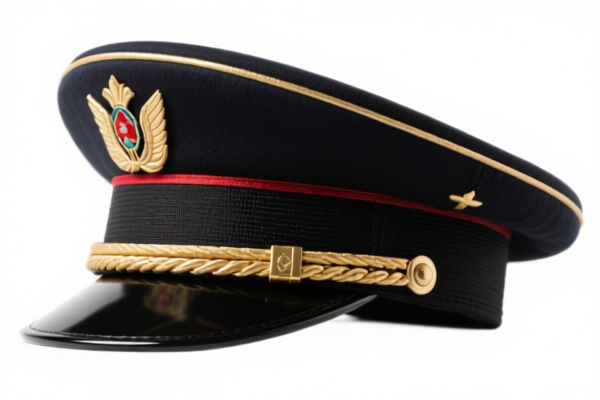
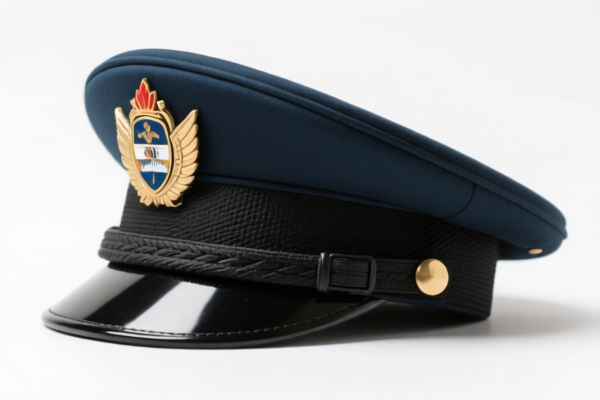
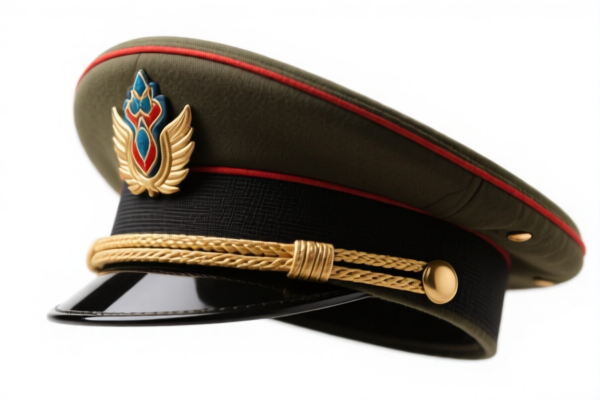

AI Analysis
🧢 Other Headgear (Hats & Headpieces)
🌐 HS Code Reference & Customs Clearance Guide | 2026 Latest Tariff Analysis | Professional Strategy
📌 I. Product Definition & Classification: What is "Other Headgear"?
In international trade, "Other Headgear" refers to articles worn on the head that do not fall under specific categories like helmets (head protection), hairnets, or wigs. This category is a "catch-all" for various fashion and functional headwear items.
Key Distinctions: * Textile Headgear: Caps, beanies, sun hats, berets (usually made of fabric, yarn, or felt). * Plastic/Rubber Headgear: Hard hats (non-safety), plastic rain hats, novelty items. * Material Uncertainty: If the material is not clearly specified, customs may default to the most specific or "other" category based on the substance (Textile vs. Plastic/Rubber).
⚠️ Critical Note:
- The tax rate varies significantly depending on whether the item is classified as Textile (Chapter 65) or Plastic/Rubber (Chapter 65 heading 6506). - Textile items generally have higher base duties but face similar additional tariffs. - Plastic/Rubber items have lower base duties but are still subject to additional tariffs.
📦 II. HS Code Classification Details (2026 Latest Tariff Authority)
Based on the provided data, here are the valid HS Codes for "Other Headgear" and their corresponding tax implications.
| HS Code | Product Description | Material Basis | Total Tax Rate | Base Duty | Additional Tariffs |
|---|---|---|---|---|---|
| 6505.00.25.90 | Other headgear, other | Textile/Felt/Other (No specific material conflict) | 42.5% | 7.5% | +25% (Sec. 301) + 10% (Sec. 122) |
| 6505.00.15.40 | Other headgear, other | Textile (Inferred from fabric type) | 42.9% | 7.9% | +25% (Sec. 301) + 10% (Sec. 122) |
| 6506.91.00.60 | Other headgear, rubber/plastic | Rubber or Plastic Material | 35.0% | 0.0% | +25% (Sec. 301) + 10% (Sec. 122) |
| 6506.99.60.00 | Other headgear, other | Other materials (Fallback category) | 43.5% | 8.5% | +25% (Sec. 301) + 10% (Sec. 122) |
🔍 Key Insight:
- 6505.00.25.90 and 6505.00.15.40 are the most common classifications for standard fashion hats (textiles). - 6506.91.00.60 is the optimal choice if the headgear is clearly made of rubber or plastic, as it has 0% base duty, lowering the total tax to 35.0%. - 6506.99.60.00 is a fallback for materials not specified, resulting in the highest tax rate (43.5%).
💰 III. 2026 Latest Tariff Rate Breakdown (With Surcharges & Policy Add-ons)
✅ Applicable Country: United States (US)
✅ Origin: China (CN)
✅ Effective Date: From November 10, 2025 (including subsequent imports)
🎯 1. 6505.00.25.90 & 6505.00.15.40 —— Textile/Felt Headgear
| Item | Content |
|---|---|
| Base Duty | 7.5% (for .25.90) / 7.9% (for .15.40) |
| USITC Additional Tariff (Section 301) | +25.0% |
| Section 122 Tariff | +10.0% |
| Total Tax Rate | 42.5% – 42.9% |
| Calculation Method | CIF Value × Total Rate |
| De Minimis Exemption | ❌ Not Applicable (Cannot use $800 de minimis exemption if subject to these tariffs) |
| Legal Basis Path | USITC:6505.00.25.90 → FOOTNOTE:301 → IEEPA:122 |
📌 Explanation:
- The 25% additional tariff is under the U.S. Trade Act Section 301. - The 10% Section 122 tariff applies to certain goods imported under specific circumstances (note: verify current applicability for your specific shipment, as Section 122 is often applied to broad categories). - Total tax is high (~42.5%), significantly impacting profit margins.
🎯 2. 6506.91.00.60 —— Rubber/Plastic Headgear
| Item | Content |
|---|---|
| Base Duty | 0.0% |
| USITC Additional Tariff (Section 301) | +25.0% |
| Section 122 Tariff | +10.0% |
| Total Tax Rate | 35.0% |
| Calculation Method | CIF Value × 35% |
| De Minimis Exemption | ❌ Not Applicable |
| Legal Basis Path | USITC:6506.91.00.60 → FOOTNOTE:301 → IEEPA:122 |
📌 Advantage:
- Since the base duty is 0%, the total tax is 7.5–8.5% lower than textile headgear. - Ideal for plastic rain hats, hard hats (non-safety), or rubber headbands.
🎯 3. 6506.99.60.00 —— Other Headgear (Fallback)
| Item | Content |
|---|---|
| Base Duty | 8.5% |
| USITC Additional Tariff (Section 301) | +25.0% |
| Section 122 Tariff | +10.0% |
| Total Tax Rate | 43.5% |
| Calculation Method | CIF Value × 43.5% |
| De Minimis Exemption | ❌ Not Applicable |
📌 Warning:
- This is the highest tax rate among the options. - Only use this if the material is truly unique and doesn't fit 6505 or 6506.91.
🛠️ IV. Customs Clearance Practical Advice (Pitfall Avoidance Guide)
✅ 1. Preparation Checklist (Essential Documents)
| Document | Required? | Description |
|---|---|---|
| ✅ Product Specification Sheet | ✔️ | Must clearly state material composition (e.g., 100% Cotton, PVC, Rubber). |
| ✅ Product Photos | ✔️ | Clear images of the headgear, label, and any packaging. |
| ✅ Commercial Invoice | ✔️ | Must specify "Headgear" and HS Code. |
| ✅ Packing List | ✔️ | Details on quantity and weight. |
| ✅ Material Test Report | ✔️ | If claimed as "Plastic/Rubber," a lab test may be requested to justify 6506.91.00.60 (0% base duty). |
| ✅ Certificate of Origin | ✔️ | If claiming any preference (though unlikely for China origin with these tariffs). |
✅ 2. Declaration Strategy (Key Tips)
🔥 "Material Determines Cost, Classification Determines Success!"
| Scenario | Correct HS Code | Incorrect Action | Consequence |
|---|---|---|---|
| Cotton/Cap | 6505.00.25.90 |
Declare as Plastic | Overpaid duty? No, Underpaid → Penalty & Back Taxes |
| Plastic Rain Hat | 6506.91.00.60 |
Declare as Textile | Pay 42.5% instead of 35.0% → Higher Cost |
| Unknown Material | 6506.99.60.00 |
Guessing | Pay 43.5% → Highest Cost, Risk of Misclassification |
| Helmet (Safety) | Not in Data | Declaring as "Other Headgear" | Wrong Category → Potential seizure or reclassification |
✅ 3. Special Cases
| Case | Recommendation |
|---|---|
| Mixed Materials | If hat has plastic brim + fabric body, declare based on essential character or consult a customs broker. Often, textile dominates → 6505. |
| Novelty Headgear | If made of non-textile, non-plastic material (e.g., metal, wood), it may fall under 6506.99.60.00. |
| OEM Custom Hats | Provide design specs. If the material is unique, ensure the invoice accurately reflects it to avoid disputes. |
| Small Quantity (De Minimis) | ⚠️ Caution: With tariffs >15%, the $800 de minimis exemption may still apply unless the item is specifically excluded under Section 301/122. However, high-risk goods are often scrutinized. Verify current CBP enforcement on "Other Headgear" for de minimis. |
🌍 V. Global Market Comparison (2026 Latest)
| Country/Region | Recommended HS Code | Estimated Tax (China Origin) | Certification | Notes |
|---|---|---|---|---|
| 🇺🇸 United States | 6505.00.25.90 / 6506.91.00.60 |
35.0% – 43.5% | None specific | High tariffs due to Section 301 & 122 |
| 🇨🇳 China | 6505.00 / 6506.90 |
9.0% – 10.0% | None | Lower base duties, no additional surcharges |
| 🇪🇺 European Union | 6505.00 / 6506.90 |
0% – 4.0% | CE (if safety) | No Section 301 equivalent; competitive |
| 🇬🇧 United Kingdom | 6505.00 / 6506.90 |
0% – 5.0% | UKCA | Post-Brexit, lower tariffs than US |
| 🇦🇺 Australia | 6505.00 / 6506.90 |
5.0% – 10.0% | None | Moderate tariffs |
📌 Conclusion:
- The US is the most expensive market for "Other Headgear" due to additional tariffs. - Plastic/Rubber headgear (6506.91.00.60) is the most cost-effective classification in the US, saving ~7.5% compared to textile.
📌 VI. Common Errors & Pitfalls (Lessons Learned)
❌ Error 1: Declaring a Plastic Hat as Textile (6505)
👉 Consequence: Overpaying 7.5%–8.5% in base duties unnecessarily.
❌ Error 2: Declaring a Textile Cap as Plastic (6506)
👉 Consequence: Misclassification Penalty, Back Taxes, and Potential Seizure. Customs will inspect and reject.
❌ Error 3: Using vague descriptions like "Hat" without material details
👉 Consequence: Customs assigns default HS Code (6506.99.60.00), resulting in the highest tax rate (43.5%).
✅ Correct Practice:
"Headgear, Knit, 100% Acrylic, Size M, Color Red" →
6505.00.25.90
"Rain Hat, PVC Material, Clear" →6506.91.00.60
🎯 VII. Conclusion: Professional Declaration, Cost Optimization!
🎯 Remember the Rule:
🔹 "Material First, HS Code Second, Tax Rate Third!"
🔹 "Plastic is Cheaper (35%), Textile is Standard (42.5%), Unknown is Expensive (43.5%)."
🔹 "Declare accurately to avoid penalties and overpayment!"
📌 Pro Tip:
If your headgear is made of rubber or plastic, ensure your invoice and specification clearly state "Rubber" or "Plastic" to qualify for 6506.91.00.60 (35% total tax). This can save you significant cost compared to textile headgear.
📣 Immediate Action:
📞 Contact your Customs Broker + Provide Material Composition + Apply for Advance Ruling
🚀 Ensure smooth customs clearance, optimize costs, and boost profitability!
✨ Professional Clearance Starts with Accurate Classification!
💼 Every Cent Counts in International Trade!
Customer Reviews
About HS Code Classification
The Harmonized System (HS) is an internationally standardized nomenclature developed by the World Customs Organization (WCO) to classify traded products. Over 200 countries use the HS system as the basis for customs tariffs, trade statistics, and import/export regulations.
Each HS code follows a hierarchical structure:
- Chapter (2 digits) — Broad category of goods (e.g., Chapter 84: Machinery and Mechanical Appliances)
- Heading (4 digits) — More specific grouping within the chapter
- Subheading (6 digits) — Internationally standardized breakdown, used by all WCO member countries
- National subdivisions (8-10 digits) — Country-specific extensions for further classification, such as US HTSUS 10-digit codes
Correct HS code classification is essential for smooth customs clearance, accurate duty payment, and compliance with trade regulations. Misclassification can lead to customs delays, overpayment of duties, or penalties.
When importing from CN to US, the applicable tariff rates may include:
- Most-Favored-Nation (MFN) rate — The standard duty rate applied to WTO members
- General rate — Applied to countries without trade agreements
- Trade remedy duties — Additional tariffs such as Section 301 (anti-dumping), Section 232 (national security), or countervailing duties
The information provided on this page is for reference purposes only. For official classification, please consult with your local customs authority or a licensed customs broker.