other paper and paperboard for packaging
CN → US| HS Code | Tariff Rate | Origin | Destination | Doc |
|---|---|---|---|---|
| 4805924040 | 35.0% | CN | US | Official Doc |
| 4805934060 | 35.0% | CN | US | Official Doc |
| 4819504060 | 35.0% | CN | US | Official Doc |
| 4811512040 | 35.0% | CN | US | Official Doc |
| 4819100040 | 35.0% | CN | US | Official Doc |
| 4811594020 | 35.0% | CN | US | Official Doc |
Product Images
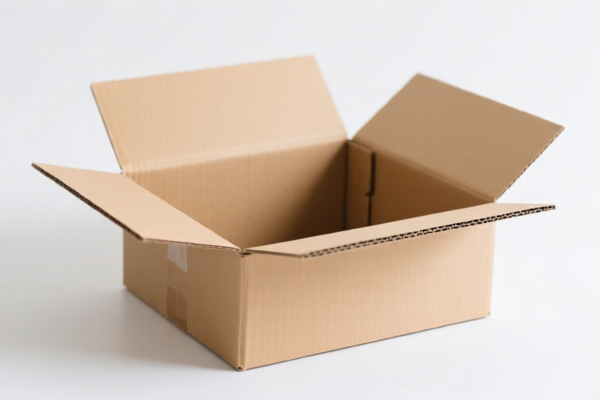
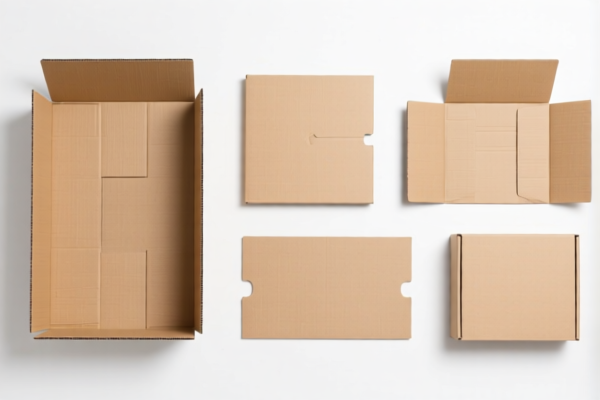
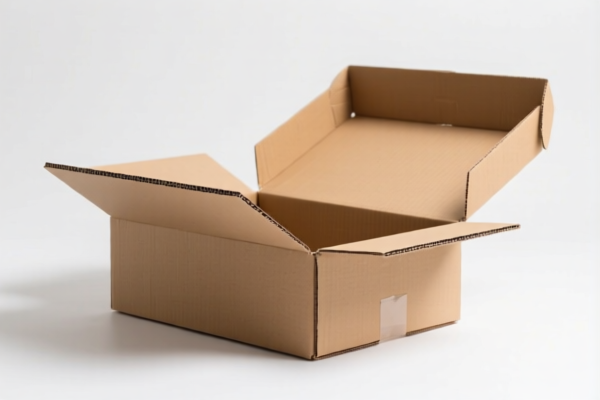
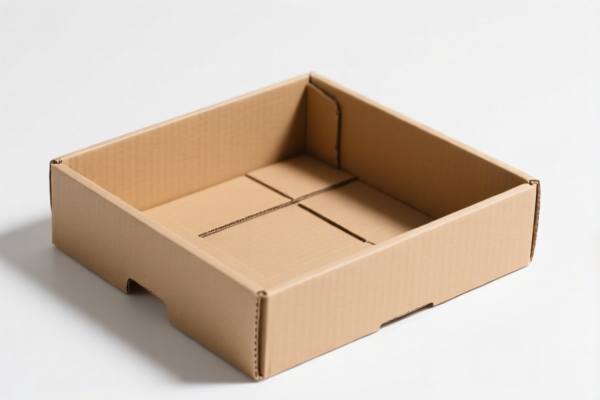
AI Analysis
📦 Other Paper and Paperboard for Packaging
🌐 HS Code Reference & Customs Clearance Guide | 2026 Latest Tariff Analysis | Professional Clearance Strategy
📌 I. Product Definition and Classification: Do You Truly Understand "Paper Packaging"?
Paper and paperboard products for packaging represent a critical category in global trade, ranging from raw materials to finished containers. In international trade, these goods are classified based on material composition (coated vs. uncoated), physical form (rolls vs. sheets vs. containers), and intended use.
Uncoated Paper & Paperboard (Raw Material Stage):
- Basic fibers, newsprint, kraft paper, or cardboard without surface treatment.
- Used for manufacturing boxes, bags, or further processing.
Paper Containers & Packaging Materials (Finished/Semi-Finished Stage):
- Folding cartons, sacks, bags, other containers, or treated paperboards.
- Directly used for packing goods or ready-to-use packaging solutions.
⚠️ Key Distinction Points:
- If the item is uncoated, non-folding, and used as raw material → Classify under Chapter 48 (e.g., 4805, 4811).
- If the item is a formed container (box, bag, sack) or folding carton → Classify under 4819.
- "Packaging Purpose" is a strong indicator, but the physical state dictates the HS Code. Misclassification leads to significant tax discrepancies due to specific "Section 301" and "Section 122" tariffs.
📦 II. HS Code Classification Details (2026 Latest Tariff Authority Reference)
Based on the provided data, the following HS Codes are relevant for "Other Paper and Paperboard for Packaging":
| HS Code | Product Description | Application Scenario | Material/Usage Match |
|---|---|---|---|
4805.92.40.40 |
Other uncoated paper/paperboard, used for packaging, material & usage match. | Uncoated raw paper/board for packaging manufacturing. | ✅ High Match |
4805.93.40.60 |
Other uncoated paper/paperboard, used for packaging, high match. | Similar to above, potentially different thickness/spec. | ✅ High Match |
4819.50.40.60 |
Other paper/paperboard packaging containers. Material: Paper/Cardboard. Use: Packaging. | Finished containers (e.g., boxes, sacks, bags). | ✅ Perfect Match |
4811.51.20.40 |
Other packaging materials of paper/paperboard. Material/Usage consistent, catch-all classification. | Treated or coated paperboards specifically for packaging. | ✅ Catch-All |
4819.10.00.40 |
Paper/paperboard packaging containers. Material/Usage consistent, other category. | Specific types of formed containers (e.g., cartons). | ✅ Perfect Match |
4811.59.40.20 |
Folding carton boards. Material: Paper/Cardboard. Use: Packaging, other catch-all. | Folding cartons (corrugated or solid board). | ✅ Catch-All |
🔍 Key Reminder:
- All listed HS Codes carry a 35.0% Total Tax Rate.
- The breakdown includes 0% Base Tariff, 25% Additional Tariff (Section 301), and 10% Section 122 Tariff.
- "Uncoated" (4805) vs. "Treated/Folding" (4811/4819) determines the specific subheading, but the final tariff impact is identical in this dataset.
💰 III. 2026 Latest Tariff Rate Breakdown (Including Additional Taxes & Policy Levies)
✅ Applicable Country: United States (US)
✅ Country of Origin: China (CN)
✅ Effective Date: Current (Applicable to imports after previous policy implementations)
🎯 General Tariff Structure for All Listed HS Codes
| Item | Content |
|---|---|
| Base Tariff Rate | 0% (Ad Valorem) |
| Section 301 Additional Tariff | +25% (Applicable to Chinese-origin goods under USITC rules) |
| Section 122 Tariff | +10% (Specific levy on certain paper/paperboard products from China) |
| Total Effective Tax Rate | 35.0% |
| Tax Calculation Basis | CIF Value (Cost, Insurance, and Freight) × 35% |
| De Minimis Exemption Available? | ❌ No (High-value commercial shipments cannot use the $800 de minimis rule for these categories) |
| Legal Basis Path | USITC:48xx.xx.xx.xx → Section 301: Footnote 9903.88.01 → Section 122: 19 U.S.C. § 1677j |
📌 Explanation:
- "Base Tariff 0%": Many paper products have zero base MFN (Most Favored Nation) duties.
- "Section 301 25%": This is the core punitive tariff imposed on a wide range of Chinese manufactured goods, including paper products, under the Trade Promotion Authority Act.
- "Section 122 10%": A specific tariff targeting certain paper and paperboard imports from China, often related to safeguard measures or specific trade remedies.
- Total 35%: This is a high cost burden. Importers must price accordingly or seek exemptions/alternative supply chains.
🛠️ IV. Customs Clearance Operational Suggestions (Practical Pitfall Avoidance)
✅ 1. Required Documentation Checklist (All are Mandatory)
| Document | Must Provide | Description |
|---|---|---|
| ✅ Commercial Invoice | ✔️ | Must clearly state "Paper/Paperboard for Packaging," HS Code, and Country of Origin. |
| ✅ Packing List | ✔️ | Detail dimensions, weight, and number of packages. Ensure consistency with invoice. |
| ✅ Bill of Lading/Air Waybill | ✔️ | Standard transport document. |
| ✅ Product Description & Specs | ✔️ | Specify if coated/uncoated, GSM (grams per square meter), type of paper (kraft, cardboard, etc.). |
| ✅ Certificate of Origin (CO) | ✔️ | Essential for proving Chinese origin to apply (or be subject to) the specific tariffs. |
| ✅ Import Security Filing (ISF) | ✔️ | Must be filed 24 hours before loading at foreign port for ocean freight. |
✅ 2. Declaration Tips (Key Mantra)
🔥 "Accurate Description, Clear HS, No Splitting, Tariff Clarity!"
| Scenario | Correct Declaration Method | Wrong Action |
|---|---|---|
| Raw Uncoated Paper Rolls | 4805.92.40.40 or 4805.93.40.60 |
Misdeclare as "finished boxes" to avoid taxes → Severe Penalty |
| Finished Folding Cartons | 4811.59.40.20 or 4819.10.00.40 |
Declare as "uncoated paper" → Underpayment Risk |
| Packaging Containers (Bags/Sacks) | 4819.50.40.60 |
Combine with general goods → Confusion at Customs |
| Mixed Shipment (Paper + Plastic) | Separate HS Codes | Combine into one line item → Clearance Delay |
✅ 3. Special Case Handling
| Situation | Handling Advice |
|---|---|
| OEM Custom Packaging | Provide customer PO and design specs. Ensure description matches the physical product exactly. |
| Paperboard for Export Re-import | Verify if any drawback claims are possible, though unlikely with 35% total tax. |
| Small Sample Shipments | Even small quantities are subject to the 35% tax if not covered by de minimis (check current thresholds). |
| Origin Change (Non-China) | If paper is made in Vietnam/Malaysia from Chinese raw materials, verify Rules of Origin to potentially avoid Section 301/122 tariffs. |
🌍 V. Global Market Comparison for Paper Packaging (2026)
| Country/Region | Recommended HS Code | Approx. Tariff | Certification/Notes | Remarks |
|---|---|---|---|---|
| 🇺🇸 USA | 4819.50.40.60 etc. |
35% | No special certs needed for basic paper | Highest cost due to 301+122 tariffs. |
| 🇨🇳 China | 4819.50.40.60 etc. |
~5-12% | Standard | Domestic production avoids export tariffs. |
| 🇪🇺 EU | 4819.50.40.60 etc. |
0-6.5% | CE/REACH (if treated) | No Section 301 equivalent. |
| 🇬🇧 UK | 4819.50.40.60 etc. |
0-5% | Post-Brexit Trade Act | Generally lower than US. |
| 🇦🇺 Australia | 4819.50.40.60 etc. |
5% | No major non-tariff barriers | Moderate cost. |
📌 Conclusion:
- The USA imposes a unique 35% tariff burden on Chinese paper packaging products.
- EU/UK/AU are significantly more cost-effective for importing similar goods.
- Strategic Recommendation: If targeting the US market, consider supply chain diversification (sourcing from non-China origins) or cost absorption in pricing models.
📌 VI. Common Mistakes & Pitfall Guide (Lessons Learned)
❌ Mistake 1: Declaring "Uncoated Paper" for "Folding Cartons"
👉 Consequence: Customs may reclassify, leading to audits and penalties. Even if the tax rate is the same, the HS Code must reflect the physical form (sheet vs. container).
❌ Mistake 2: Ignoring the 10% Section 122 Tariff
👉 Consequence: Many importers only plan for 25% (Section 301). Forgetting the extra 10% results in unexpected cost overruns.
❌ Mistake 3: Vague Product Descriptions ("Paper Package")
👉 Consequence: Customs brokers may guess the HS Code, leading to inaccurate classification. Always specify: "Uncoated Kraft Paper" vs. "Folding Carton Board."
❌ Mistake 4: Assuming De Minimis Applies to Large Shipments
👉 Consequence: Commercial shipments of paper products do not qualify for $800 de minimis. Expect full customs entry and 35% tax.
✅ Correct Approach:
"Uncoated Kraft Paper Board, for Packaging, Roll Form, 500 GSM, HS 4805.92.40.40"
OR
"Folding Carton Board, Coated, for Consumer Packaging, Sheet Form, HS 4811.59.40.20"
🎯 VII. Conclusion: Precision in Classification, Savings in Costs
🎯 Remember the Mantra:
🔹 "Uncoated vs. Container, Tax is 35%, Don't Split, Don't Guess!"
🔹 "301 is 25%, 122 is 10%, Total 35%, Plan Your Budget!"
📌 Pro Tip:
- If your paper packaging is sourced from Vietnam, India, or Thailand, you may avoid Section 301 and 122 tariffs, reducing the rate to 0-6% (base tariff only).
- Apply for a Pre-Ruling from US Customs (CBP) if you have complex product mixes to ensure correct HS Code assignment.
📣 Immediate Action:
📞 Contact your freight forwarder + Provide detailed product specs + Verify HS Codes
🚀 Ensure compliant clearance, avoid delays, and manage costs effectively!
✨ Professional Customs Clearance Starts with Accurate Classification!
💼 Every percentage point of tariff matters in high-volume packaging trade!
Customer Reviews
About HS Code Classification
The Harmonized System (HS) is an internationally standardized nomenclature developed by the World Customs Organization (WCO) to classify traded products. Over 200 countries use the HS system as the basis for customs tariffs, trade statistics, and import/export regulations.
Each HS code follows a hierarchical structure:
- Chapter (2 digits) — Broad category of goods (e.g., Chapter 84: Machinery and Mechanical Appliances)
- Heading (4 digits) — More specific grouping within the chapter
- Subheading (6 digits) — Internationally standardized breakdown, used by all WCO member countries
- National subdivisions (8-10 digits) — Country-specific extensions for further classification, such as US HTSUS 10-digit codes
Correct HS code classification is essential for smooth customs clearance, accurate duty payment, and compliance with trade regulations. Misclassification can lead to customs delays, overpayment of duties, or penalties.
When importing from CN to US, the applicable tariff rates may include:
- Most-Favored-Nation (MFN) rate — The standard duty rate applied to WTO members
- General rate — Applied to countries without trade agreements
- Trade remedy duties — Additional tariffs such as Section 301 (anti-dumping), Section 232 (national security), or countervailing duties
The information provided on this page is for reference purposes only. For official classification, please consult with your local customs authority or a licensed customs broker.