other pine wood unplaned or roughly squared
CN → US| HS Code | Tariff Rate | Origin | Destination | Doc |
|---|---|---|---|---|
| 4407110052 | 35.0% | CN | US | Official Doc |
| 4407110053 | 35.0% | CN | US | Official Doc |
| 4407110044 | 35.0% | CN | US | Official Doc |
| 4407110042 | 35.0% | CN | US | Official Doc |
Product Images
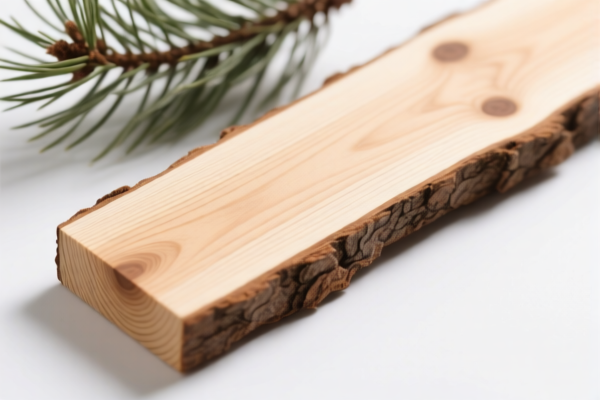
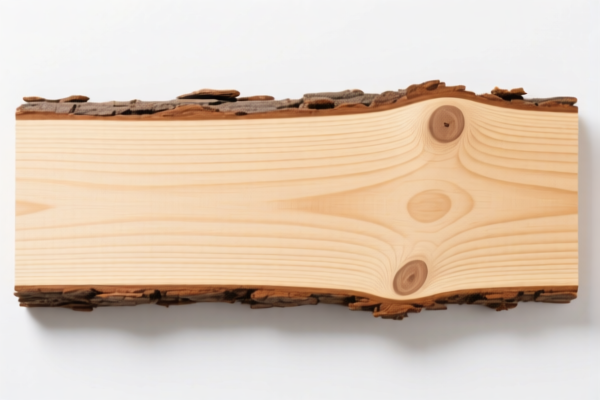
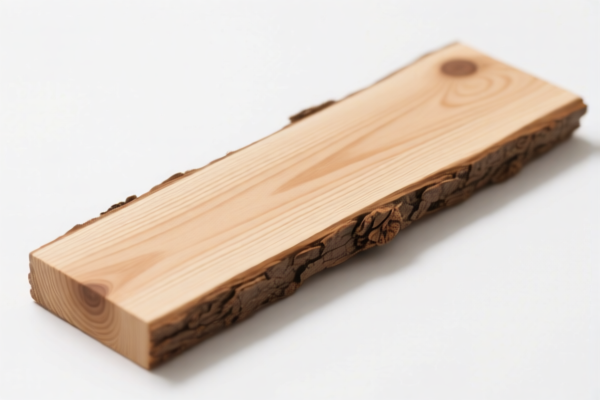
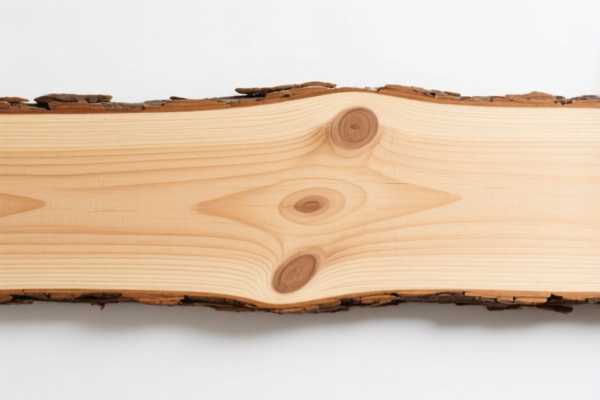
AI Analysis
🪵 Pine Wood (Unplaned/Roughly Squared): The "Rough & Ready" Importer’s Guide
🌐 HS Code Reference & Customs Clearance Strategy | 2024-2026 Tariff Analysis | US-China Trade Update
📌 Part I: Product Definition – What Exactly Are We Talking About?
"Pine wood, unplaned or roughly squared" refers to timber that has been cut to size but lacks final finishing. It is the raw material for furniture, construction, and packaging. In international trade, precision is key:
Key Characteristics: 1. Material: Must be Pine (Pinus genus). If it’s Fir, Spruce, or Larch, this HS Code is wrong. 2. State: Unplaned (no smooth surface) or Roughly Squared (cut into rectangular shapes, but edges/surfaces remain rough from sawing). 3. Exclusions: It does not include planed, sanded, or tongued/grooved wood (which fall under different subheadings).
⚠️ Critical Distinction:
- If the wood is smoothed/sanded → It is NO LONGER "unplaned." It may fall under 4407.11.00.50 (Planed/Sawn Smoothly) or other categories.
- If the wood is Chips/Scraps → It falls under 4401.21.00.00 (Wood Chips).
- If the wood is Plywood/Veneer → It falls under Chapter 44 or 48, not this solid wood code.
📦 Part II: HS Code Classification Details (2024-2026 US Tariff Schedule)
Based on the provided data, all variants of "Other Pine Wood, Unplaned/Roughly Squared" share the same tariff structure. Below is the breakdown:
| HS Code | Product Description | Key Features |
|---|---|---|
| 4407.11.00.52 | Other Pine Wood, Unplaned or Roughly Squared | Material: Pine. Shape: Unplaned/Roughly Squared. |
| 4407.11.00.53 | Other Pine Wood, Unplaned or Roughly Squared (Catch-all) | Material: Pine. No specific conflicts. Used for "Other" pine types not covered elsewhere. |
| 4407.11.00.44 | Other Unplaned/Roughly Sawn Pine Wood | Material: Pine. Shape: Unplaned/Roughly Sawn. |
| 4407.11.00.42 | Other Unplaned/Roughly Sawn Pine Wood (Other Category) | Material: Pine. Shape: Rough/Cut. Fits "Other" classification. |
🔍 Key Insight:
- All four HS codes above belong to HTS 4407.11 (Pine, Sawn/Chipped Lengthwise).
- The last 4 digits (.52, .53, .44, .42) distinguish specific sub-categories based on slight variations in processing (e.g., "Sawn" vs. "Squaring") or generic "Other" status.
- For Customs Purposes: If your product matches the description "Unplaned or Roughly Squared Pine," any of these codes may apply depending on the exact physical state. However, 4407.11.00.52 is commonly used for standard "rough pine lumber."
💰 Part III: 2024-2026 Tariff Rate Breakdown (USA Imports from China)
✅ Applicable Country: United States (US)
✅ Origin: China (CN)
✅ Effective Period: Current (Post-2025 Policy Updates)
🎯 1. 4407.11.00.52 / .53 / .44 / .42 – Pine Wood (Unplaned/Rough)
| Item | Detail |
|---|---|
| Base Duty Rate | 0.0% (General Free) |
| Section 301 Tariff | +25.0% (Additional Duty on Chinese Goods) |
| Section 122 Tariff | +10.0% (Additional Duty under 122 Act) |
| Total Effective Duty | 35.0% |
| Tax Calculation | CIF Value × 35% |
| De Minimis Exemption | ❌ NOT Available (Deny de minimis) |
| Legal Basis Path | Section 301: 9903.88.01 → Section 122: 9903.12.01 → HTS: 4407.11.xxxx |
📌 Explanation:
- Base Rate (0%): Wood products often enjoy low base duties to support manufacturing.
- Section 301 (+25%): The primary trade war tariff on Chinese goods.
- Section 122 (+10%): An additional national security tariff under Section 232/122 provisions.
- Total (35%): This is a HIGH duty rate. Importers must budget for this cost.
- No De Minimis: Since 2024, de minimis (under $800) exemptions have been tightened for Chinese goods, especially in wood/paper categories. Do not assume small shipments are tax-free.
🛠️ Part IV: Customs Clearance Practical Advice (Avoiding Delays & Penalties)
✅ 1. Documentation Checklist (Must-Have)
| Document | Required? | Notes |
|---|---|---|
| Commercial Invoice | ✔️ | Must clearly state: "Pine Wood, Unplaned, Roughly Squared" + Quantity + Weight. |
| Packing List | ✔️ | Detail palletizing, wood treatment status. |
| Phytosanitary Certificate | ✔️ | CRITICAL: Wood must be ISPM 15 compliant (fumigated/heat-treated). |
| Wood Treatment Certificate | ✔️ | Proof of debarking and treatment to prevent pests. |
| Bill of Lading/Air Waybill | ✔️ | Standard shipping document. |
| Fumigation Label Photos | ✔️ | Customs may request photos of marks on pallets/wood. |
✅ 2. Declaration Tips (Golden Rules)
🔥 "Treat, Mark, Declare, Avoid Rejection!"
| Scenario | Correct Declaration | Wrong Practice |
|---|---|---|
| Rough Pine Lumber | HS 4407.11.00.52, Qty: 10,000 board feet, Weight: 5,000 kg | Declaring as "Wood Panels" or "Furniture Parts" |
| Untreated Wood | STOP! Cannot clear. Must treat first. | Attempting to clear without Phytosanitary Cert |
| Planed Wood | Use 4407.11.00.50 (if planed). | Using 4407.11.00.52 for smooth wood → Misclassification |
| Mixed Species | Declare only Pine. Separate Fir/Spruce. | Mixing Pine with other woods → Audit risk |
✅ 3. Special Cases
| Situation | Handling Advice |
|---|---|
| ISPM 15 Mark Missing | Goods will be rejected or re-exported. Ensure pallets and wood have the IPPC stamp. |
| High Moisture Content | Must declare moisture %. Customs may inspect for mold/pests if >20%. |
| OEM Pine for Furniture | Still classified as raw wood. Do not declare as "Furniture Components" to avoid misclassification. |
| Small Samples (< $800) | Risk Alert: De minimis may be denied for Chinese wood products. Better to file formal entry. |
🌍 Part V: Global Market Comparison (2024-2026)
| Country/Region | Recommended HS Code | Duty Rate | Certification | Notes |
|---|---|---|---|---|
| 🇺🇸 USA | 4407.11.00.52 |
35% (incl. 301/122) | ISPM 15, Fumigation | High duty. Strict phytosanitary rules. |
| 🇨🇳 China | 4407.11.00.52 |
0% (if imported) / 5-10% (if exported) | Phytosanitary | Low base duty. |
| 🇪🇺 EU | 4407.11.00.00 |
0% (if FSC certified) | FSC/PEFC, EUTR | EUTR Regulation: Must prove legal origin. |
| 🇯🇵 Japan | 4407.11.00.90 |
3-5% | Phytosanitary | Moderate duty. Strict pest checks. |
| 🇰🇷 South Korea | 4407.11.00.90 |
0% (if KORUS FTA) | KORUS FTA Certificate | Check for Free Trade Agreement benefits. |
📌 Conclusion:
- USA has the highest duty burden (35%) due to Section 301/122.
- EU is duty-free but has the strictest legal origin checks (EUTR).
- Asia markets generally have lower duties but require strict phytosanitary compliance.
📌 Part VI: Common Mistakes & Pitfalls (Learn from Others’ Failures)
❌ Mistake 1: Declaring "Pine Wood" but providing no Phytosanitary Certificate.
👉 Consequence: Goods held at port, fines, or re-export. Cost: $500-$2,000/day in storage.
❌ Mistake 2: Using "Wood Chips" (4401.21) for solid lumber.
👉 Consequence: Misclassification penalty + Back taxes.
❌ Mistake 3: Ignoring Section 122 (10%).
👉 Consequence: Underpaying duties by 10%. Customs audits will recover this + interest.
❌ Mistake 4: Mixing Pine with Fir/Spruce in one shipment.
👉 Consequence: Customs may reject the entire shipment if species aren't clearly separated.
✅ Correct Approach:
"Pine Wood, Unplaned, Roughly Squared, ISPM 15 Treated, Fumigated, HS 4407.11.00.52, Origin: China"
🎯 Part VII: Conclusion – Smart Importing Saves Money!
🎯 Remember the Formula:
🔹 "35% Duty is Non-Negotiable for US Imports from China."
🔹 "No Phytosanitary Certificate = No Entry."
🔹 "Unplaned = Raw Material, Not Finished Good."
📌 Pro Tip:
- If you are importing large volumes, consider using a Customs Broker to pre-classify goods.
- For non-Chinese origin pine (e.g., from Canada, Russia, EU), duties may be 0% (check FTAs).
- Always keep Photos of Pallets/Marks and Fumigation Certificates for 5 years.
📣 Immediate Action:
📞 Hire a licensed Customs Broker
📄 Prepare ISPM 15 Certification
📦 Verify "Unplaned" Status (No sanding!)
✨ Smooth Clearance Starts with Accurate HS Codes!
💼 35% Duty is High – Don’t Let Errors Cost You More!
Customer Reviews
About HS Code Classification
The Harmonized System (HS) is an internationally standardized nomenclature developed by the World Customs Organization (WCO) to classify traded products. Over 200 countries use the HS system as the basis for customs tariffs, trade statistics, and import/export regulations.
Each HS code follows a hierarchical structure:
- Chapter (2 digits) — Broad category of goods (e.g., Chapter 84: Machinery and Mechanical Appliances)
- Heading (4 digits) — More specific grouping within the chapter
- Subheading (6 digits) — Internationally standardized breakdown, used by all WCO member countries
- National subdivisions (8-10 digits) — Country-specific extensions for further classification, such as US HTSUS 10-digit codes
Correct HS code classification is essential for smooth customs clearance, accurate duty payment, and compliance with trade regulations. Misclassification can lead to customs delays, overpayment of duties, or penalties.
When importing from CN to US, the applicable tariff rates may include:
- Most-Favored-Nation (MFN) rate — The standard duty rate applied to WTO members
- General rate — Applied to countries without trade agreements
- Trade remedy duties — Additional tariffs such as Section 301 (anti-dumping), Section 232 (national security), or countervailing duties
The information provided on this page is for reference purposes only. For official classification, please consult with your local customs authority or a licensed customs broker.