other plastic foam boards
CN → US| HS Code | Tariff Rate | Origin | Destination | Doc |
|---|---|---|---|---|
| 3926904800 | 13.4% | CN | US | Official Doc |
| 3921110000 | 40.3% | CN | US | Official Doc |
| 3921190010 | 41.5% | CN | US | Official Doc |
| 3926901000 | 20.9% | CN | US | Official Doc |
| 3926909989 | 22.8% | CN | US | Official Doc |
Product Images
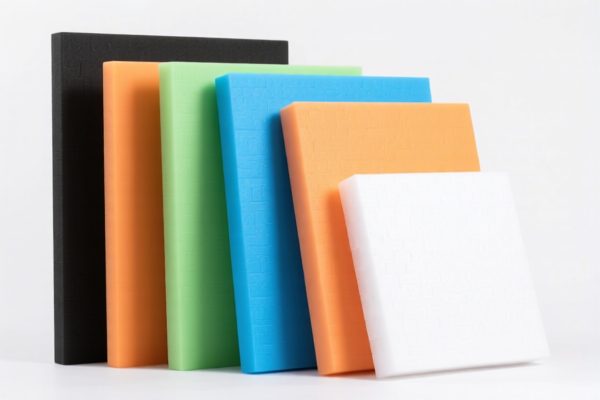
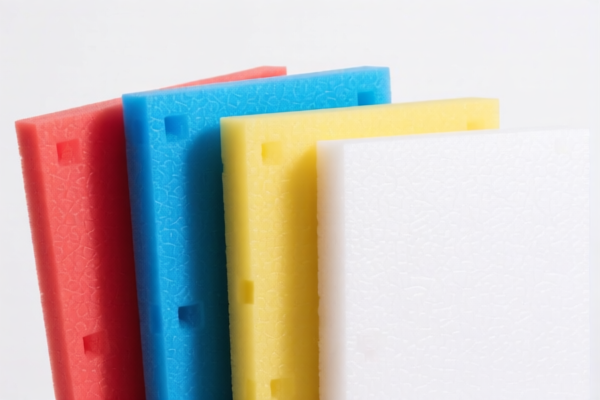
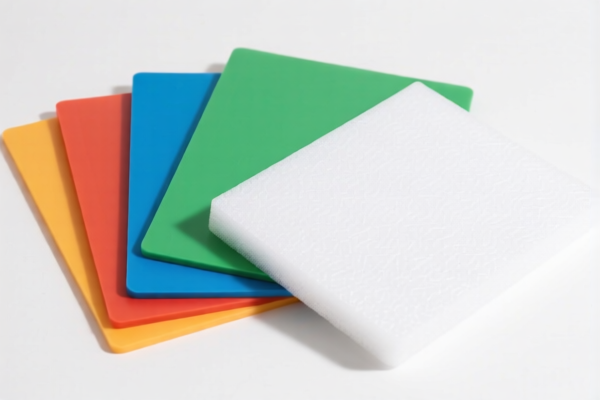
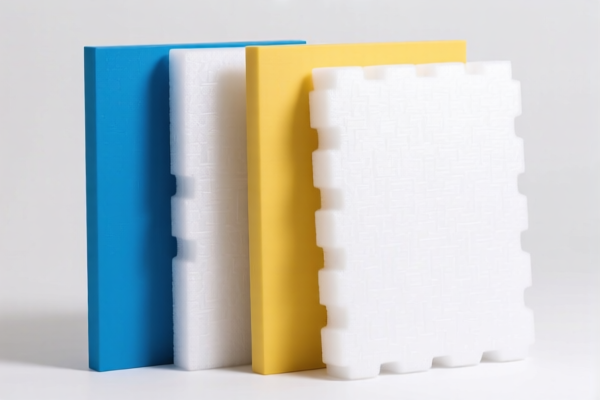
AI Analysis
📦 Other Plastic Foam Boards: The Ultimate HS Code & Tariff Breakdown
🌐 HS Code Reference & Customs Clearance Guide | 2026 Latest Tariff Analysis | Strategic Clearance Strategies
📌 1. Product Definition & Classification: What Exactly Are "Other Plastic Foam Boards"?
In international trade, "Plastic Foam Boards" are rigid or semi-rigid sheets made from polymeric materials where the structure contains a high volume of gas cells. However, not all foam boards are created equal. The critical distinction lies in:
- Material Composition: Are they Polystyrene (PS), Polyethylene (PE), Polyurethane (PU), or other plastics?
- Form & Structure: Are they "foamed" (cellular structure) or just "hard plastic sheets" (dense)?
- Application: Are they used for packaging, construction insulation, or industrial fabrication?
⚠️ Key Distinction Point:
- Chapter 39.21 typically covers plastic plates, sheets, and films (including foamed/plastic foams).
- Chapter 39.26 covers other articles of plastic (finished items, not plates/sheets).
- Crucial Trap: If the product is strictly a "board/sheet" shape, it likely belongs in 39.21. If it is a finished molded item (like a decorative sign or a specific container part), it may fall under 39.26.
- Origin & Trade Policy: All items below are subject to US Section 301 (25%) and Section 122/IEEPA (10%) tariffs if originating from China.
📊 2. HS Code Classification Details (2026 Latest Tariff Reference)
Based on the provided data, here is the precise breakdown for "Other Plastic Foam Boards" and related plastic articles.
| HS Code | Product Description | Key Characteristics | Typical Use Case |
|---|---|---|---|
| 3926.90.48.00 | Other plastic hard foam boards, material: plastic, form: hard foam board. | Classified under "Other articles of plastic" (3926) rather than plates (3921). Suggests a finished or semi-finished foam article not strictly defined as a "plate." | Specialized foam inserts, custom-cut foam shapes, non-standard foam boards. |
| 3921.11.00.00 | Other plastic hard foam boards, material: plastic hard foam, form: plate, inferred as Polystyrene (PS) foam-like. | Specifically Polystyrene (PS) based foam plates. "11" indicates PS. | Packaging foam, insulation boards, craft materials (Styrofoam sheets). |
| 3921.19.00.10 | Other plastic hard foam boards, material: plastic, form: plate. | Other plastic foams (not PS, PVC, etc.). "19" indicates other plastics in heading 3921. | Polyethylene (PE) foam sheets, EVA foam boards, specialized industrial foam plates. |
| 3926.90.10.00 | Other plastic hard foam boards, material: plastic, form: board. | Falls under "Other articles of plastic" (3926). Likely a specific type of finished plastic board not classified as a raw sheet. | Decorative plastic boards, finished components made of foam/plastic blends. |
| 3926.90.99.89 | Other plastic two-color boards, material: plastic, form: other articles. | Two-color/Multi-layer plastic boards. Classified as "Other" finished articles. | Signage, architectural cladding, decorative laminates. |
🔍 Critical Note:
- 3921.xxxx = Plates, Sheets, Film (Raw/Intermediate form).
- 3926.90.xxxx = Other Articles of Plastic (Finished/Specific items).
- Misclassification between 3921 and 3926 can lead to severe penalties, as the tariff implications differ slightly due to additional duties.
💰 3. 2026 Latest Tariff Rate Breakdown (Including Surcharges & Policy Add-ons)
✅ Applicable Country: United States (US)
✅ Origin: China (CN)
✅ Effective Time: 2025/2026 Current Tariff Structure
🎯 1. HS Code 3926.90.48.00 – Other Plastic Hard Foam Boards
| Item | Detail |
|---|---|
| Base Tariff | 3.4% |
| Section 301 Surcharge | 0.0% |
| Section 122/IEEPA Surcharge | 10.0% |
| Total Tariff Rate | 13.4% |
| Tax Calculation | CIF Value × 13.4% |
| De Minimis Exemption? | ❌ No (Deny De Minimis for Section 301/122 items) |
| Legal Basis | USITC HTS 3926.90.48.00 + IEEPA/Section 122 Orders |
📌 Explanation:
- This classification benefits from a lower surcharge (0% Section 301) compared to other foam boards.
- The 10% is a specific policy surcharge (often referred to as Section 122 or similar emergency tariffs).
- Total cost impact: Moderate (13.4%).
🎯 2. HS Code 3921.11.00.00 – Polystyrene (PS) Foam Plates
| Item | Detail |
|---|---|
| Base Tariff | 5.3% |
| Section 301 Surcharge | 25.0% |
| Section 122/IEEPA Surcharge | 10.0% |
| Total Tariff Rate | 40.3% |
| Tax Calculation | CIF Value × 40.3% |
| De Minimis Exemption? | ❌ No |
| Legal Basis | USITC HTS 3921.11.00.00 + Section 301 + IEEPA |
📌 Explanation:
- High Tariff Zone: PS foam is heavily scrutinized.
- The 25% Section 301 tariff is standard for most Chinese plastic plates/sheets.
- Total cost impact: High (40.3%). Significant margin erosion.
🎯 3. HS Code 3921.19.00.10 – Other Plastic Foam Plates
| Item | Detail |
|---|---|
| Base Tariff | 6.5% |
| Section 301 Surcharge | 25.0% |
| Section 122/IEEPA Surcharge | 10.0% |
| Total Tariff Rate | 41.5% |
| Tax Calculation | CIF Value × 41.5% |
| De Minimis Exemption? | ❌ No |
| Legal Basis | USITC HTS 3921.19.00.10 + Section 301 + IEEPA |
📌 Explanation:
- Even higher base rate than PS foam.
- Applies to non-PS foams (e.g., PE, EVA, PU sheets).
- Total cost impact: Very High (41.5%).
🎯 4. HS Code 3926.90.10.00 – Other Plastic Boards (Finished Articles)
| Item | Detail |
|---|---|
| Base Tariff | 3.4% |
| Section 301 Surcharge | 7.5% |
| Section 122/IEEPA Surcharge | 10.0% |
| Total Tariff Rate | 20.9% |
| Tax Calculation | CIF Value × 20.9% |
| De Minimis Exemption? | ❌ No |
| Legal Basis | USITC HTS 3926.90.10.00 + Section 301 + IEEPA |
📌 Explanation:
- Strategic Advantage: Lower Section 301 rate (7.5%) compared to 3921 (25%).
- If the product can be argued as a "finished article" (3926) rather than a "raw plate" (3921), savings are significant.
- Total cost impact: Moderate (20.9%).
🎯 5. HS Code 3926.90.99.89 – Other Plastic Two-Color Boards
| Item | Detail |
|---|---|
| Base Tariff | 5.3% |
| Section 301 Surcharge | 7.5% |
| Section 122/IEEPA Surcharge | 10.0% |
| Total Tariff Rate | 22.8% |
| Tax Calculation | CIF Value × 22.8% |
| De Minimis Exemption? | ❌ No |
| Legal Basis | USITC HTS 3926.90.99.89 + Section 301 + IEEPA |
📌 Explanation:
- Multi-layer or decorative plastic boards.
- Benefits from lower Section 301 rate (7.5%) as a "finished article."
- Total cost impact: Moderate-High (22.8%).
🛠️ 4. Customs Clearance Practical Advice (Battle-Tested Tips)
✅ 1. Documentation Checklist (Non-Negotiable)
| Document | Required? | Purpose |
|---|---|---|
| Product Specification Sheet | ✅ | Must clearly state material composition (e.g., "Expanded Polystyrene" vs. "Polyethylene"). |
| Cross-Sectional Photos | ✅ | Proves the "foamed" cellular structure (for 3921) or dense/fibrous structure (for 3926). |
| Commercial Invoice | ✅ | Must not say "Plastic Foam Board" only. Use precise HS-aligned description (e.g., "PS Foam Sheet"). |
| Country of Origin Certificate | ✅ | To confirm China origin and apply correct surcharges. |
| Bill of Lading | ✅ | Must match invoice quantity and weight. |
✅ 2. Classification Strategy (Key Mantra)
🔥 "Sheet vs. Article: The 25% Difference!"
| Scenario | Correct Classification | Tariff Rate | Why? |
|---|---|---|---|
| Raw/Unprocessed Foam Sheet | 3921.11.00.00 | 40.3% | It is a "plate/sheet." Subject to 25% Section 301. |
| Custom-Cut Foam Insert | 3926.90.48.00 | 13.4% | It is a "finished article." Subject to 0% Section 301. |
| Decorative Two-Color Panel | 3926.90.99.89 | 22.8% | It is a "finished article." Subject to 7.5% Section 301. |
| Insulation Foam Board (House) | 3921.19.00.10 | 41.5% | It is a "plate." Subject to 25% Section 301. |
⚠️ Warning:
- Do NOT misdeclare a raw PS sheet (3921) as a finished article (3926) to save 25%. US Customs (CBP) requires physical evidence (photos, specs) that the item is not just a sheet.
- If the item is just a cut-to-size sheet, it is still a "plate" (3921).
- If the item is molded, printed, framed, or finished with edges/handles, it may qualify as 3926.
✅ 3. Special Circumstances & Mitigation
| Situation | Strategy |
|---|---|
| High Tariff Sensitivity | Consider Substantial Transformation in a third country (e.g., Vietnam, Mexico) to change origin. |
| Material Ambiguity | Provide Lab Test Reports (FTIR) to prove if it is PS, PE, or other plastic. This affects base rate (5.3% vs 6.5%). |
| Two-Color Boards | Highlight decorative function and finished edges to support 3926.90.99.89 classification. |
| De Minimis Loophole? | ❌ Blocked. Section 301 and IEEPA tariffs apply to all shipments, regardless of value. No $800 exemption. |
🌍 5. Global Market Comparison (2026)
| Market | Recommended HS Code | Approx. Total Tariff (China Origin) | Key Requirement |
|---|---|---|---|
| 🇺🇸 USA | 3921.11.00.00 / 3926.90.48.00 |
13.4% – 41.5% | Strict Origin & Section 301 Compliance |
| 🇨🇳 China | 3921.11.00.00 / 3926.90.48.00 |
5.3% – 6.5% | No Surcharges |
| 🇪🇺 EU | 3921.11.00.00 / 3926.90.48.00 |
6.5% – 7.2% | CE Marking, REACH Compliance |
| 🇬🇧 UK | 3921.11.00.00 / 3926.90.48.00 |
6.5% – 7.2% | UKCA Marking |
| 🇯🇵 Japan | 3921.11.00.00 / 3926.90.48.00 |
3.9% – 5.3% | JIS Standards (if applicable) |
📌 Conclusion:
- The USA is the only major market with additive surcharges (Section 301 + IEEPA).
- Tariff Savings Strategy: If possible, classify as 3926 (finished article) instead of 3921 (plate) to reduce tariff by ~20-25%.
📌 6. Common Mistakes & Pitfalls (Learn from Others’ Pain)
❌ Mistake 1: Declaring all foam boards as 3926.90.99.89 to avoid 25% tariff.
👉 Consequence: CBP audit reveals raw sheets → 25% penalty + Interest.
❌ Mistake 2: Ignoring the 10% IEEPA/Section 122 surcharge.
👉 Consequence: Underpayment by 10% → Seizure or Heavy Penalty.
❌ Mistake 3: Using "Plastic Board" without specifying Material (PS vs. PE).
👉 Consequence: Classification error → Base rate jumps from 3.4% to 6.5% + higher surcharge.
❌ Mistake 4: Assuming De Minimis ($800) applies.
👉 Consequence: Shipment held at port until tariffs paid. No exemption for Chinese-origin plastic foam.
✅ Correct Practice:
"Polystyrene Foam Sheet, 10mm Thick, Unfinished, for Packaging Use, HS 3921.11.00.00"
OR
"Finished Decorative Plastic Board, Two-Tone, Cut to Size, HS 3926.90.99.89"
🎯 7. Conclusion: Precision Pays Off!
🎯 Remember the Mantra:
🔹 "Sheet vs. Article: The 25% Cliff!"
🔹 "Base Rate + 25% (301) + 10% (IEEPA) = High Cost!"
🔹 "Prove it's Finished, Save 25%: Classify as 3926!"
📌 Pro Tip:
If your product is exported to the US, consider:
1. Engineering Change: Can the product be finished (e.g., printed, framed, molded) before export?
2. Third-Country Processing: Can minor assembly be done in Vietnam/Mexico to change origin?
3. Advance Ruling: Apply for a CBP Binding Ruling to lock in the HS Code and avoid post-clearance audits.
📣 Immediate Action:
📞 Consult your customs broker with product photos and material specs.
🚀 Don’t guess your HS Code. Cost $500 in legal fees vs. $50,000 in penalties!
✨ Professional Clearance Starts with Precise Classification!
💼 Your Margins Depend on It!
Customer Reviews
About HS Code Classification
The Harmonized System (HS) is an internationally standardized nomenclature developed by the World Customs Organization (WCO) to classify traded products. Over 200 countries use the HS system as the basis for customs tariffs, trade statistics, and import/export regulations.
Each HS code follows a hierarchical structure:
- Chapter (2 digits) — Broad category of goods (e.g., Chapter 84: Machinery and Mechanical Appliances)
- Heading (4 digits) — More specific grouping within the chapter
- Subheading (6 digits) — Internationally standardized breakdown, used by all WCO member countries
- National subdivisions (8-10 digits) — Country-specific extensions for further classification, such as US HTSUS 10-digit codes
Correct HS code classification is essential for smooth customs clearance, accurate duty payment, and compliance with trade regulations. Misclassification can lead to customs delays, overpayment of duties, or penalties.
When importing from CN to US, the applicable tariff rates may include:
- Most-Favored-Nation (MFN) rate — The standard duty rate applied to WTO members
- General rate — Applied to countries without trade agreements
- Trade remedy duties — Additional tariffs such as Section 301 (anti-dumping), Section 232 (national security), or countervailing duties
The information provided on this page is for reference purposes only. For official classification, please consult with your local customs authority or a licensed customs broker.