other plastic foils for decoration
CN → US| HS Code | Tariff Rate | Origin | Destination | Doc |
|---|---|---|---|---|
| 3926909989 | 22.8% | CN | US | Official Doc |
| 3919905060 | 40.8% | CN | US | Official Doc |
| 3919102055 | 40.8% | CN | US | Official Doc |
| 3920992000 | 39.2% | CN | US | Official Doc |
| 3920991000 | 41.0% | CN | US | Official Doc |
Product Images

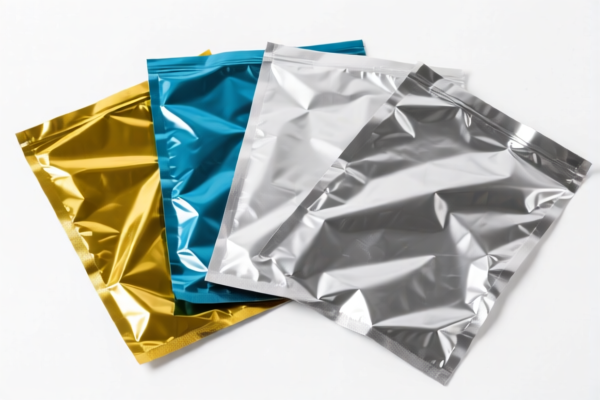
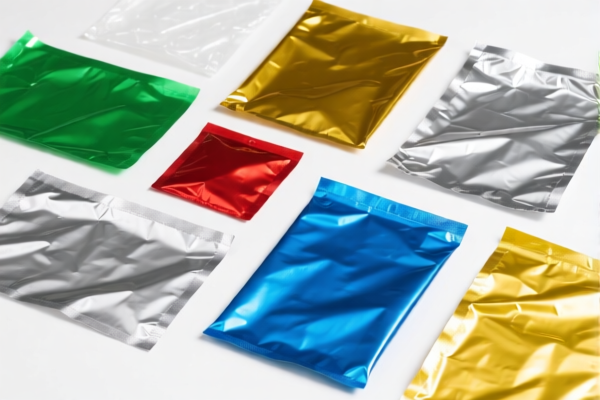
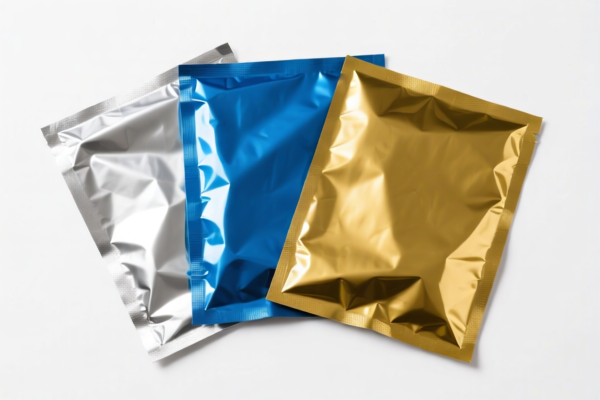
AI Analysis
🎨 Plastic Decorative Foils (Wall Decor Films & Decorative Plastics)
🌐 HS Code Reference & Customs Clearance Guide | 2026 Latest Tariff Analysis | Professional Clearance Strategy
📌 I. Product Definition & Classification: What Exactly Are "Decorative Plastic Foils"?
Plastic decorative foils, often referred to as Wall Decor Films, Decorative Membranes, or Flexible Plastic Sheets, are thin, flexible plastic products used primarily for interior decoration, surface finishing, and aesthetic enhancement of walls, furniture, and fixtures.
In international trade, these products are broadly categorized based on their physical form (sheet, film, or other制品) and chemical structure. The key distinction lies in whether they are classified as: 1. Plastic Films/Sheets (Chapter 39, Headings 3919 or 3920): Self-adhesive or non-adhesive rolls/sheets. 2. Other Plastic Articles (Chapter 39, Heading 3926): Finished decorative items or specific "catch-all" categories for plastics not elsewhere specified.
⚠️ Key Distinction Point:
- If the product is a roll or sheet intended for application (peeling/sticking or gluing) → Typically falls under 3919 (Self-adhesive/Flat shapes) or 3920 (Non-cellular, flexible sheets).
- If the product is a finished decorative item or a specific "other" plastic article not fitting film definitions → May fall under 3926.90 (Other articles of plastics).
📦 II. HS Code Classification Details (2026 Latest Tariff Authority Comparison)
| HS Code | Product Description | Application Scenario | Classification Logic |
|---|---|---|---|
3926.90.99.89 |
Other plastic articles – Plastic wall decor films | Finished decorative accessories, specific "catch-all" for plastic decor items | ❌ Not a standard film/sheet; categorized as "other plastic articles" |
3919.90.50.60 |
Plastic sheets, plates, film, foil & strip – Other flat plastic products | Non-self-adhesive plastic films used for decoration, general flat shapes | ✅ Flat shape, plastic material, not elsewhere specified |
3919.10.20.55 |
Plastic sheets, plates, film, foil & strip – Other, self-adhesive or not (film characteristics) | Films with specific "film" characteristics, belonging to "other" subcategories | ✅ Meets "film" definition, self-adhesive or not, specific subheading |
3920.99.20.00 |
Plastic sheets, plates, film, foil & strip – Other non-cellular, non-reinforced flexible sheets/plates/strips | Flexible plastic films/sheets for decoration, non-cellular, non-reinforced | ✅ Flexible, non-cellular, non-reinforced plastic sheet/film |
3920.99.10.00 |
Plastic sheets, plates, film, foil & strip – Other, based on thickness & composite structure | Decorative films with specific thickness or composite plastic properties | ✅ Fits "other" category based on thickness/composite attributes |
🔍 Important Reminder:
- 3919 codes generally apply to flat plastic products (films, sheets, strips), especially if self-adhesive or with specific flat-shape characteristics.
- 3920 codes apply to non-cellular, flexible plastic sheets/films that are not reinforced, self-adhesive, or of specific thickness/composite types.
- 3926.90 is a "catch-all" for other plastic articles that do not fit the strict definitions of films or sheets in 3919/3920. Misclassification here can lead to incorrect tariff rates.
💰 III. 2026 Latest Tariff Rate Details (Including Surtaxes & Policy Add-ons)
✅ Applicable Country: United States (US)
✅ Origin: China (CN)
✅ Effective Date: From November 10, 2025 (including subsequent imports)
🎯 1. 3926.90.99.89 —— Other Plastic Articles (Catch-All Category)
| Item | Detail |
|---|---|
| Base Tariff | 5.3% (ad valorem) |
| Section 301 Surcharge | +7.5% |
| Section 301/Other Surtaxes (e.g., 122 Section) | +10% |
| Total Effective Tariff Rate | 22.8% |
| Tax Calculation | CIF Value × 22.8% |
| De Minimis Exemption | ❌ Not Eligible (High risk of denial due to surtaxes) |
| Legal Basis Path | HTSUS:3926.90.99.89 → USITC Surtaxes → IEEPA/Section 301 |
📌 Explanation:
- This code is considered a "bottom-tier" category for plastic articles not otherwise specified.
- The 22.8% total rate includes the base duty (5.3%) plus the 7.5% Section 301 surcharge and an additional 10% policy surcharge (often referred to as "122 Section" or similar administrative tariffs).
- Lower total rate compared to film categories, but requires precise justification that the item is not a standard film/sheet.
🎯 2. 3919.90.50.60 —— Other Plastic Flat-Shape Products
| Item | Detail |
|---|---|
| Base Tariff | 5.8% |
| Section 301 Surcharge | +25.0% |
| Section 122/Other Surtaxes | +10% |
| Total Effective Tariff Rate | 40.8% |
| Tax Calculation | CIF Value × 40.8% |
| De Minimis Exemption | ❌ Not Eligible |
| Legal Basis Path | HTSUS:3919.90.50.60 → USITC 301 → IEEPA Surtaxes |
📌 Explanation:
- Classified under "Other plastic flat-shape products."
- The 40.8% total rate is significantly higher due to the 25% Section 301 surcharge (standard for many plastic films/sheets from China).
- Applicable when the product is clearly a flat plastic film/sheet but doesn't fit specific self-adhesive or reinforced categories.
🎯 3. 3919.10.20.55 —— Other Plastic Films (Specific Subcategory)
| Item | Detail |
|---|---|
| Base Tariff | 5.8% |
| Section 301 Surcharge | +25.0% |
| Section 122/Other Surtaxes | +10% |
| Total Effective Tariff Rate | 40.8% |
| Tax Calculation | CIF Value × 40.8% |
| De Minimis Exemption | ❌ Not Eligible |
| Legal Basis Path | HTSUS:3919.10.20.55 → USITC 301 → IEEPA Surtaxes |
📌 Explanation:
- This code applies to plastic films with specific "film" characteristics that are "other" (not elsewhere specified).
- Same 40.8% total rate as above.
- Use this if the product is explicitly a film (thin, flexible) and meets the "film" definition in HTSUS, but doesn't fit more specific self-adhesive codes.
🎯 4. 3920.99.20.00 —— Other Non-Cellular, Non-Reinforced Flexible Sheets/Films
| Item | Detail |
|---|---|
| Base Tariff | 4.2% |
| Section 301 Surcharge | +25.0% |
| Section 122/Other Surtaxes | +10% |
| Total Effective Tariff Rate | 39.2% |
| Tax Calculation | CIF Value × 39.2% |
| De Minimis Exemption | ❌ Not Eligible |
| Legal Basis Path | HTSUS:3920.99.20.00 → USITC 301 → IEEPA Surtaxes |
📌 Explanation:
- Applies to non-cellular (not foamed) and non-reinforced flexible plastic sheets/films.
- 39.2% total rate. Slightly lower base tariff (4.2%) but still subject to the full 35% surcharges.
- Ideal for decorative films that are simple plastic sheets without foaming or reinforcement.
🎯 5. 3920.99.10.00 —— Other Plastic Sheets/Films (Based on Thickness/Composite Structure)
| Item | Detail |
|---|---|
| Base Tariff | 6.0% |
| Section 301 Surcharge | +25.0% |
| Section 122/Other Surtaxes | +10% |
| Total Effective Tariff Rate | 41.0% |
| Tax Calculation | CIF Value × 41.0% |
| De Minimis Exemption | ❌ Not Eligible |
| Legal Basis Path | HTSUS:3920.99.10.00 → USITC 301 → IEEPA Surtaxes |
📌 Explanation:
- This is another "catch-all" under Chapter 39 for plastic sheets/films that don't fit specific subcategories, often determined by thickness or composite structure.
- 41.0% total rate.
- Use this if the decorative foil has specific thickness attributes or is a composite plastic sheet not covered by other 3920 subheadings.
🛠️ IV. Customs Clearance Practical Advice (Battle-Tested Pitfall Avoidance)
✅ 1. Required Documentation Checklist (All Mandatory)
| Document | Mandatory | Explanation |
|---|---|---|
| ✅ Product Specification Sheet | ✔️ | Must detail material composition (e.g., PVC, PET, PE), thickness, width, length, and whether it is self-adhesive. |
| ✅ Product Photos (Clear & Detailed) | ✔️ | Show the product in roll/sheet form, labels, and any packaging indicating "Wall Decor Film" or "Decorative Foil." |
| ✅ Commercial Invoice | ✔️ | Clearly state the HTSUS code, product description (e.g., "Decorative Plastic Film, PVC, Non-Adhesive"), and CIF value. |
| ✅ Packing List | ✔️ | Detail weight, dimensions, and quantity. Ensure consistency with the invoice. |
| ✅ Declaration of Non-Cellular/Non-Reinforced | ✔️ | If claiming 3920.99.20.00, explicitly declare that the product is non-cellular and non-reinforced. |
| ✅ Origin Certificate (CO) | ✔️ | Required to determine surtax applicability (China origin triggers high surtaxes). |
✅ 2. Declaration Strategy (Key Mantras)
🔥 "Shape Determines Code, Composition Determines Tax!"
| Scenario | Correct Declaration | Incorrect Practice |
|---|---|---|
| Finished decorative wall panel/fixture | 3926.90.99.89 (22.8%) |
Declaring as "Film" → 40.8%+ |
| Roll of decorative PVC film, non-adhesive | 3920.99.20.00 (39.2%) |
Declaring as "Finished Article" → 22.8% (if audited, risk of misclassification penalty) |
| Self-adhesive decorative film | 3919.10.20.55 (40.8%) |
Declaring as "Non-adhesive" → Wrong code, risk of audit |
| Composite decorative sheet (multi-layer) | 3920.99.10.00 (41.0%) |
Declaring as simple single-layer film → Misclassification |
| Small sample pieces (under De Minimis) | ❌ Not Eligible for De Minimis due to surtaxes | Assuming low-value items can bypass tariffs → Seizure risk |
📌 Critical Note:
- Do not declare decorative foils as "De Minimis" (under $800) to avoid tariffs. Section 301 and IEEPA surtaxes explicitly deny De Minimis exemptions for Chinese-origin goods in most plastic categories.
- Be precise in describing whether the product is adhesive or non-adhesive, as this can shift codes between 3919 and 3920.
✅ 3. Special Cases Handling
| Scenario | Handling Advice |
|---|---|
| Self-Adhesive vs. Non-Adhesive | Self-adhesive films often fall under 3919. Non-adhesive fall under 3920. Misclassification leads to significant tax differences. |
| Composite/Multi-Layer Foils | If layers include paper, metal, or other materials, classification may change. For pure plastic composites, 3920.99.10.00 may apply. |
| Custom-Cut Pieces | If cut to size but still in sheet form, they are generally treated as sheets/films (3920 or 3919), not finished articles (3926). |
| Wallcovering vs. Decorative Film | If it includes a fabric backing or paper base, it may fall under Heading 48 (Paper) or 59 (Textile). For pure plastic, stick to 39xx. |
🌍 V. Global Market Comparison (2026 Latest)
| Country/Region | Recommended HS Code | Tariff Rate (China Origin) | Certification Requirements | Remarks |
|---|---|---|---|---|
| 🇺🇸 USA | 3920.99.20.00 |
39.2% (incl. surtaxes) | None specific | High surtaxes apply; De Minimis not available. |
| 🇨🇳 China | 3920.99.20.00 |
5.0% | RoHS (if applicable) | No surtaxes. Lower cost for domestic trade. |
| 🇪🇺 EU | 3920.99.10 |
6.5% | REACH, RoHS | No Section 301-style surtaxes. |
| 🇬🇧 UK | 3920.99.10 |
6.5% | UKCA, REACH | Post-Brexit rules align with EU for plastics. |
| 🇦🇺 Australia | 3920.99.10 |
5.0% | C-Badge (if electrical) | No major surtaxes. |
📌 Conclusion:
- USA is the most challenging market due to high surtaxes (35-45%) on plastic decorative films.
- EU/UK offer more competitive tariffs (~6.5%) but require strict REACH compliance for chemical substances in plastics.
- De Minimis exemption is NOT a strategy for US imports from China for these goods.
📌 VI. Common Errors & Pitfall Guide (Lessons Learned the Hard Way)
❌ Mistake 1: Declaring decorative foils as "De Minimis" ($800)
👉 Consequence: Seizure, penalties, and back-taxes. Surtxes explicitly deny De Minimis for Chinese plastics.
❌ Mistake 2: Mixing "Self-Adhesive" and "Non-Adhesive" codes
👉 Consequence: Audit risk, potential duty underpayment/overpayment, and delays.
❌ Mistake 3: Using vague descriptions like "Plastic Decor" without specifying form
👉 Consequence: CBP may reclassify to the highest possible rate or demand extensive documentation.
❌ Mistake 4: Assuming all plastic sheets are 3920
👉 Consequence: If it has adhesive backing, it should be 3919. Misclassification leads to incorrect tax calculation.
✅ Correct Practice:
"Decorative PVC Film, Non-Adhesive, Roll, 0.5mm Thickness, Pure Plastic, No Cell Structure, Model DEC-001"
🎯 VII. Conclusion: Precision in Classification Saves Money!
🎯 Remember the Mantra:
🔹 "Shape & Adhesion Determine the Code, Surtaxes Determine the Cost!"
🔹 "3926 is for finished articles (22.8%), 3920/3919 are for films (39-41%) – Choose Wisely!"
🔹 "No De Minimis for China-Plastics in the US – Plan Ahead!"
📌 Pro Tip:
If your decorative foils are painted, coated, or printed, ensure this is declared. While it may not change the HS code, it can affect REACH compliance in the EU and FDA considerations in the US if used for food-adjacent surfaces.
📣 Immediate Action:
📞 Contact a licensed customs broker to review your product specifications.
📋 Request a Binding Tariff Ruling (BTR) from CBP if unsure about the correct HS code.
🚀 Optimize your supply chain to mitigate the 35-45% surtax impact by exploring alternative origins or product designs.
✨ Professional clearance starts with accurate classification!
💼 Every percentage point matters in global trade!
Customer Reviews
About HS Code Classification
The Harmonized System (HS) is an internationally standardized nomenclature developed by the World Customs Organization (WCO) to classify traded products. Over 200 countries use the HS system as the basis for customs tariffs, trade statistics, and import/export regulations.
Each HS code follows a hierarchical structure:
- Chapter (2 digits) — Broad category of goods (e.g., Chapter 84: Machinery and Mechanical Appliances)
- Heading (4 digits) — More specific grouping within the chapter
- Subheading (6 digits) — Internationally standardized breakdown, used by all WCO member countries
- National subdivisions (8-10 digits) — Country-specific extensions for further classification, such as US HTSUS 10-digit codes
Correct HS code classification is essential for smooth customs clearance, accurate duty payment, and compliance with trade regulations. Misclassification can lead to customs delays, overpayment of duties, or penalties.
When importing from CN to US, the applicable tariff rates may include:
- Most-Favored-Nation (MFN) rate — The standard duty rate applied to WTO members
- General rate — Applied to countries without trade agreements
- Trade remedy duties — Additional tariffs such as Section 301 (anti-dumping), Section 232 (national security), or countervailing duties
The information provided on this page is for reference purposes only. For official classification, please consult with your local customs authority or a licensed customs broker.