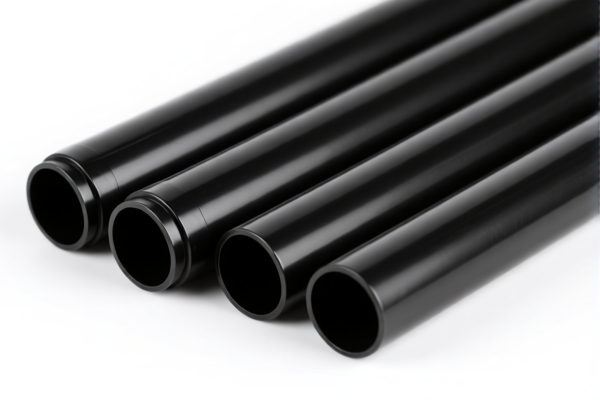
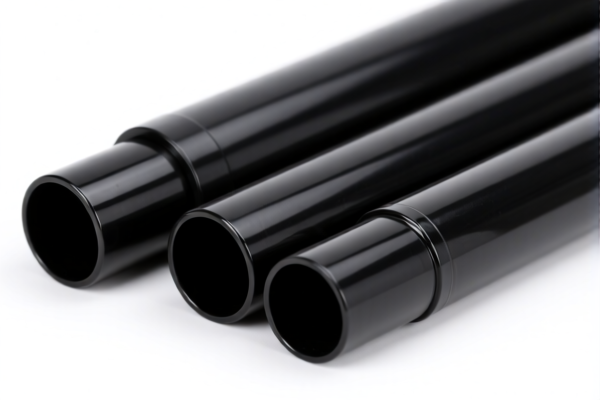
other plastic hard black tubes
CN → US| HS Code | Tariff Rate | Origin | Destination | Doc |
|---|---|---|---|---|
| 3917290090 | 38.1% | CN | US | Official Doc |
| 3917290050 | 38.1% | CN | US | Official Doc |
| 3926909910 | 22.8% | CN | US | Official Doc |
| 9027898060 | 35.0% | CN | US | Official Doc |
| 9027898030 | 35.0% | CN | US | Official Doc |
Product Images


AI Analysis
🏗️ Other Plastic Hard Black Tubes (Other Plastic Hard Tubing)
🌐 HS Code Reference & Customs Clearance Guide | 2026 Latest Tariff Analysis | Professional Clearance Strategy
📌 I. Product Definition and Classification: Do You Really Know "Other Plastic Hard Black Tubes"?
Other Plastic Hard Black Tubes refer to rigid tubular products made primarily from plastic materials, characterized by their black coloration. In international trade, these are typically used for construction, industrial piping, drainage, or protective sheathing.
The classification hinges on two critical factors: 1. Material Composition: Specifically plastic (e.g., PVC, PE, PP). 2. Rigidity: Must be "hard" (rigid), distinguishing them from flexible hoses or tubing.
⚠️ Key Distinction:
- If the tube is rigid and made of plastic → It falls under Chapter 39 (Plastics and Articles Thereof).
- If it is flexible → It may fall under different subheadings or even Chapter 40 (Rubber).
- If it contains metal reinforcement → It may shift to Chapter 73 (Iron/Steel) or 76 (Aluminum).
📦 II. HS Code Classification Details (2026 Latest Tariff Authority Comparison)
| HS Code | Product Description | Application Scenario | Rigidity |
|---|---|---|---|
3917.29.00.90 |
Other plastic hard black tubes, material: plastic, form: rigid tube, categorized under "other" categories | General industrial black rigid plastic pipes (non-standard or uncategorized specific types) | ✅ Rigid |
3917.29.00.50 |
Other plastic hard black tubes, material: plastic, form: tube, categorized under "other" scope | Broad category for other rigid plastic tubes not specified elsewhere | ✅ Rigid |
🔍 Important Reminder:
- Both codes3917.29.00.90and3917.29.00.50apply to plastic materials that are rigid.
- The distinction between.90and.50often lies in specific national sub-classifications or historical tariff line adjustments. For US Customs (HTSUS),.90is commonly used for "Other" rigid plastics tubes.
- Color Note: While the summary mentions "black," HS codes themselves do not explicitly code for color. However, commercial descriptions must match the physical goods. If the product is indeed black, this description aligns with the provided data context.
💰 III. 2026 Latest Tariff Rate Details (Including Surtaxes, Policy Add-ons)
✅ Applicable Country: United States (US)
✅ Origin: China (CN)
✅ Effective Date: November 10, 2025 onwards (and subsequent imports)
🎯 1. 3917.29.00.90 —— Other Plastic Hard Black Tubes (Rigid)
| Item | Content |
|---|---|
| Base Tariff Rate | 3.1% (ad valorem) |
| Section 301 Surtax | +25.0% (from USITC Footnote 9903.88.01) |
| Section 122 Tariff | +10.0% (Specific policy tariff) |
| Total Tariff Rate | 38.1% |
| Tax Calculation | CIF Value × 38.1% |
| De Minimis Eligibility | ❌ Not Allowed (deny_de_minimis) |
| Legal Basis Path | USITC:3917.29.00.90 → FOOTNOTE:9903.88.01 → Section 122 Provision |
📌 Explanation:
- The 3.1% is the standard MFN (Most Favored Nation) base duty for plastic tubes.
- The 25.0% is the additional duty imposed under Section 301 of the Trade Act of 1974, targeting Chinese goods.
- The 10.0% is an additional tariff under Section 122 of the Trade Act of 1962, often applied to national security or economic interests.
- Total 38.1% is a high-cost barrier. Importers must factor this into their landed cost calculations immediately.
🎯 2. 3917.29.00.50 —— Other Plastic Hard Black Tubes (General Scope)
| Item | Content |
|---|---|
| Base Tariff Rate | 3.1% |
| Section 301 Surtax | +25.0% |
| Section 122 Tariff | +10.0% |
| Total Tariff Rate | 38.1% |
| Tax Calculation | CIF Value × 38.1% |
| De Minimis Eligibility | ❌ Not Allowed |
| Legal Basis Path | USITC:3917.29.00.50 → FOOTNOTE:9903.88.01 → Section 122 Provision |
📌 Note:
- Identical tariff structure to.90.
- Use.50if the specific product fits the "other" general category better in your jurisdiction's specific HTSUS interpretation, but be prepared for the same 38.1% liability.
🛠️ IV. Customs Clearance Practical Advice (Combat Pitfalls Guide)
✅ 1. Preparation Checklist (All Required)
| Document | Mandatory | Description |
|---|---|---|
| ✅ Product Specification Sheet | ✔️ | Must state: Material (e.g., PVC/PE), Rigidity (Hard), Color (Black), Diameter/Thickness. |
| ✅ Material Test Report | ✔️ | ISO/ASTM tests proving it is rigid plastic, not flexible rubber or PVC-U vs PVC-C distinctions if applicable. |
| ✅ Product Photos | ✔️ | Clear images showing the tube cross-section, length, and black color. Label must be visible. |
| ✅ Commercial Invoice | ✔️ | Must explicitly state: "Hard Plastic Tube, Black, PVC, For [Use]" |
| ✅ Packing List | ✔️ | Show net/gross weight. Bundles must be identified correctly. |
| ✅ Certificate of Origin (CO) | ✔️ | Crucial for proving CN origin, which triggers the 301/122 tariffs. |
✅ 2. Declaration Tips (Key Mantra)
🔥 "Rigid vs. Flexible, Material Matters, Color is Descriptive, Not Code!"
| Scenario | Correct Declaration | Wrong Practice |
|---|---|---|
| Black Rigid PVC Pipe | 3917.29.00.90 |
Misclassify as "Flexible Hose" → Wrong Chapter |
| Black Rigid PE Tube | 3917.29.00.90 |
Misclassify as "Metal Pipe" → High Duty + Penalties |
| Clear Rigid Tube | 3917.29.00.90 |
Do not declare "Black" if it's clear → Misrepresentation |
| Flexible Black Tubing | Check Chapter 39/40 other headings | Force into "Rigid" → Seizure |
📌 Critical Warning:
- Do not use "Black" as the primary identifier in the HS Code itself (HS codes don't use color). However, the description must accurately reflect the physical item. If you declare "Black" but the item is white, you risk customs inspection for misdeclaration.
- Ensure the "Hard" (Rigid) nature is clearly defined in the spec sheet. Flexible tubing is classified differently (e.g., 3917.21-27).
✅ 3. Special Circumstances Handling
| Situation | Handling Advice |
|---|---|
| Co-extruded Tubes (e.g., Black outer, clear inner) | Declare based on essential character. Usually outer material/color dominates visual inspection. |
| Reinforced Tubes (Plastic + Mesh/Metal) | If metal/mesh provides structural rigidity, it may move to Chapter 73/76. Confirm with lab test. |
| Sample Imports | No De Minimis Exemption. Even for samples, 38.1% duty applies. Do not use "gift" or "sample" to avoid tax. |
| Drop Shipping | Ensure the importer of record is aware of the high duty. Costs will erode margin significantly. |
🌍 V. Global Main Market Comparison (2026 Latest)
| Country/Region | Recommended HS Code | Tariff (China Origin) | Certification Required | Notes |
|---|---|---|---|---|
| 🇺🇸 USA | 3917.29.00.90 |
38.1% (3.1% Base + 25% Sec 301 + 10% Sec 122) | ASTM/ISO Specs | High duty barrier. No de minimis. |
| 🇨🇳 China | 3917.29.00.90 |
~1-2% (Typically) | CCC (if applicable) | Low duty, focus on quality standards. |
| 🇪🇺 EU | 3917.29.00.00 |
~0-5% | REACH, RoHS | No Section 301/122 equivalent surcharges usually. |
| 🇬🇧 UK | 3917.29.00.00 |
~0-5% | UKCA, REACH | Post-Brexit rules apply. |
| 🇦🇺 Australia | 3917.29.00.00 |
~5% | ACCC Standards | No major anti-dumping on generic plastics. |
📌 Conclusion:
- The USA imposes a 38.1% effective tariff on these goods from China.
- EU and Asia markets are significantly cheaper in terms of duty, but may have stricter environmental certifications (REACH, etc.).
- Strategy: If shipping to the US, consider supply chain diversification (e.g., Vietnam, Mexico) to mitigate Section 301/122 tariffs, subject to current trade rules.
📌 VI. Common Errors & Pitfall Guide (Lessons Learned)
❌ Error 1: Declaring "Plastic Pipe" without specifying Rigidity
👉 Consequence: Customs may classify as "Flexible" (different duty) or request more info → Delay.
❌ Error 2: Ignoring the 122 Section Tariff
👉 Consequence: Budgeting only for 3.1% + 25% = 28.1%, missing the extra 10% → Profit Loss.
❌ Error 3: Mixing "Black" and "Colorless" in one shipment without segregation
👉 Consequence: Misdeclaration risk. If 10% is actually clear, it’s still 3917.29, but inconsistency in documentation raises flags.
❌ Error 4: Using "Tube" vs "Pipe" interchangeably without technical specs
👉 Consequence: While often similar in HS, "Pipe" might imply pressure rating standards. Provide ASTM D1785 (PVC) or ASTM D2146 (PE) specs to prove rigid industrial use.
✅ Correct Practice:
"Rigid Plastic Tube, Black, PVC-U, ASTM D1785, Schedule 40, 2-inch Diameter, for Industrial Drainage, HS Code 3917.29.00.90"
🎯 VII. Conclusion: Professional Declaration, Save Time, Reduce Costs!
🎯 Remember the Mantra:
🔹 "Rigid is Key, Section 301 is Heavy, Section 122 is the Extra Bag, 38.1% is the Price Tag!"
🔹 "HS Code Defines the Path, Tax Rate Defines the Cost, Documentation Defines the Success!"
📌 Pro Tip:
- If your product is not from China (e.g., sourced from Malaysia or India), the 25% Section 301 and potentially the 10% Section 122 may not apply.
- Always request a Certificate of Origin and apply for duty drawback or exclusion if eligible under current US trade laws.
- Pre-classification Ruling: For large shipments, consider applying for a binding ruling from CBP to confirm the 38.1% liability and avoid surprises.
📣 Immediate Action:
📞 Contact a Licensed Customs Broker + Provide Technical Data Sheet (TDS) + Verify Origin Country
🚀 Let your plastic tubes clear smoothly, maximize profit margins, and reach your customers faster!
✨ Professional Customs Clearance Starts with Accurate Classification!
💼 Every Percent of Duty Counts – Know Your 38.1%!
Customer Reviews
About HS Code Classification
The Harmonized System (HS) is an internationally standardized nomenclature developed by the World Customs Organization (WCO) to classify traded products. Over 200 countries use the HS system as the basis for customs tariffs, trade statistics, and import/export regulations.
Each HS code follows a hierarchical structure:
- Chapter (2 digits) — Broad category of goods (e.g., Chapter 84: Machinery and Mechanical Appliances)
- Heading (4 digits) — More specific grouping within the chapter
- Subheading (6 digits) — Internationally standardized breakdown, used by all WCO member countries
- National subdivisions (8-10 digits) — Country-specific extensions for further classification, such as US HTSUS 10-digit codes
Correct HS code classification is essential for smooth customs clearance, accurate duty payment, and compliance with trade regulations. Misclassification can lead to customs delays, overpayment of duties, or penalties.
When importing from CN to US, the applicable tariff rates may include:
- Most-Favored-Nation (MFN) rate — The standard duty rate applied to WTO members
- General rate — Applied to countries without trade agreements
- Trade remedy duties — Additional tariffs such as Section 301 (anti-dumping), Section 232 (national security), or countervailing duties
The information provided on this page is for reference purposes only. For official classification, please consult with your local customs authority or a licensed customs broker.