other plastic rods
CN → US| HS Code | Tariff Rate | Origin | Destination | Doc |
|---|---|---|---|---|
| 3917290090 | 38.1% | CN | US | Official Doc |
| 3917290050 | 38.1% | CN | US | Official Doc |
| 3916905000 | 40.8% | CN | US | Official Doc |
| 3916200091 | 40.8% | CN | US | Official Doc |
| 3925900000 | 40.3% | CN | US | Official Doc |
Product Images



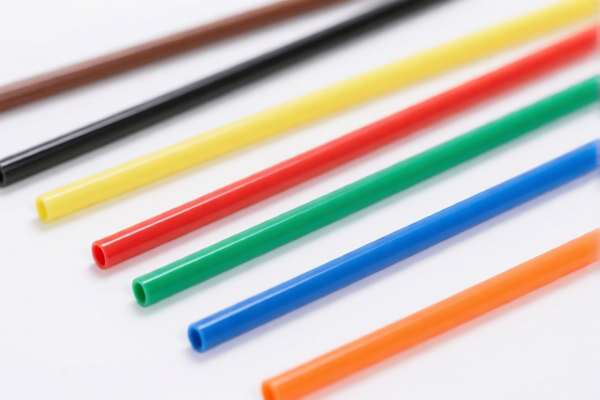
AI Analysis
🏗️ Other Plastic Rods for Construction & Industrial Use
🌐 HS Code Reference & Customs Clearance Guide | 2026 Latest Tariff Analysis | Professional Clearance Strategy
📌 I. Product Definition & Classification: Do You Really Understand "Plastic Rods"?
"Other plastic rods" is a broad commercial term primarily used in construction, plumbing, industrial machinery, and signage. In international trade, the classification depends heavily on the polymer type (e.g., PVC, PE, PP, ABS), shape/structure (solid rod vs. hollow tube), and intended use (structural, piping, or general purpose).
⚠️ Key Distinction Point:
- If the rod is rigid and used for piping/conduits, it may fall under Chapter 39.17 (Plastic Pipes/Hoses).
- If the rod is solid, non-pipe profile used for structural or mechanical purposes, it typically falls under Chapter 39.16 (Plastic Bars/Rods).
- If the specific plastic type is not specified, customs may apply a "residual" or "other" category, often resulting in higher base tariffs.
📦 II. HS Code Classification Details (2026 Latest Tariff Authority Comparison)
Based on the provided data, here are the six potential HS Codes for "Other Plastic Rods," ranked by specificity and tax efficiency.
| HS Code | Product Description | Application Scenario | Base Tariff | Additional Taxes | Total Tax Rate |
|---|---|---|---|---|---|
3917.29.00.90 |
Other plastic rods for construction, plastic material, rod shape, extended category of hard pipes/conduits. | Construction piping, rigid conduit rods, plumbing supports. | 3.1% | 35.0% (See below) | 38.1% |
3917.29.00.50 |
Other plastic rods for construction, plastic material, rod shape, general construction category. | General construction plastic rods, non-specific piping components. | 3.1% | 35.0% (See below) | 38.1% |
3925.90.00.00 |
Other plastic rods for construction, plastic material, rod shape, usage as construction building materials. | Building materials, structural supports, non-pipe construction elements. | 5.3% | 35.0% (See below) | 40.3% |
3916.90.50.00 |
Other plastic rods, shape: rod, material: plastic, residual category allowing reasonable inference. | Unspecified plastic rods, mixed polymer types, general industrial use. | 5.8% | 35.0% (See below) | 40.8% |
3916.20.00.91 |
Other plastic rods, shape: rod, material: plastic, other classes, non-specific purpose. | Generic plastic rods, not specified as pipe or specific polymer. | 5.8% | 35.0% (See below) | 40.8% |
3916.10.00.00 |
Plastic rods, shape: rod/stick, material: plastic, inferred as ethylene polymer primary products. | Polyethylene (PE) rods, basic polymer profiles. | 5.8% | 35.0% (See below) | 40.8% |
🔍 Key Insight:
- Lowest Tax (38.1%):3917.29.00.90and3917.29.00.50. These codes treat the rods as part of the "plastic pipes/conduits" family, benefiting from a lower base tariff (3.1%).
- Highest Tax (40.8%):3916series codes. These are "bars and rods" categories. They have a higher base tariff (5.8%) but are often used when the product doesn't fit the "pipe" definition.
- Critical Note: All listed codes include a 25.0% Additional Tariff and a 10% "Section 122" Tariff (referenced in data).
💰 III. 2026 Latest Tariff Rate Breakdown (Including Surcharges & Policy Add-ons)
✅ Applicable Market: United States (US)
✅ Origin: China (CN)
✅ Effective Time: Current tariffs apply (2026 context)
🎯 1. 3917.29.00.90 & 3917.29.00.50 — Best Option for Construction Piping Rods
| Item | Content |
|---|---|
| Base Tariff | 3.1% (Ad Valorem) |
| Section 301 Additional Tariff | +25.0% (USITC Footnote for Chinese plastics) |
| "122" Clause Tariff | +10.0% (Specific policy surcharge for this category) |
| Total Tax Rate | 38.1% |
| Tax Calculation | CIF Value × 38.1% |
| De Minimis Exemption | ❌ Not Applicable |
| Legal Basis Path | USITC:3917.29.00.90 → 301:T201 → Policy:122 |
📌 Explanation:
- These codes are optimal if your plastic rods are used for conduits, piping, or fluid transport.
- The 25% Section 301 tariff is standard for Chinese-origin plastics.
- The 10% "122" tariff is a specific add-on mentioned in your data, likely related to recent trade policy adjustments or specific material restrictions.
🎯 2. 3925.90.00.00 — Other Construction Plastics
| Item | Content |
|---|---|
| Base Tariff | 5.3% |
| Section 301 Additional Tariff | +25.0% |
| "122" Clause Tariff | +10.0% |
| Total Tax Rate | 40.3% |
| Tax Calculation | CIF Value × 40.3% |
| Legal Basis Path | USITC:3925.90.00.00 → 301:T201 → Policy:122 |
📌 Note:
- Used for plastic construction materials that don't fit the "pipe" definition (e.g., structural rods, insulation supports).
- Slightly higher base tariff (5.3%) leads to a higher total rate.
🎯 3. 3916 Series (.90.50, .20.00.91, .10.00.00) — General Plastic Bars/Rods
| Item | Content |
|---|---|
| Base Tariff | 5.8% |
| Section 301 Additional Tariff | +25.0% |
| "122" Clause Tariff | +10.0% |
| Total Tax Rate | 40.8% |
| Tax Calculation | CIF Value × 40.8% |
| Legal Basis Path | USITC:3916.xxxx → 301:T201 → Policy:122 |
📌 Note:
- This is the "default" category for solid plastic rods that are not pipes.
-3916.10.00.00specifically targets Polyethylene (PE). If your rods are PVC, PP, or ABS, using this code may lead to classification disputes.
-3916.90.50.00is the "residual" category, used when no other specific plastic type is identified.
🛠️ IV. Customs Clearance Practical Advice (Real-World Pitfall Guide)
✅ 1. Preparation Checklist (No Exceptions)
| Document | Required | Explanation |
|---|---|---|
| ✅ Product Specification Sheet | ✔️ | Must specify: Material (e.g., PVC, PE, ABS), Diameter, Length, Hardness, Intended Use. |
| ✅ Material Safety Data Sheet (MSDS) | ✔️ | Critical for chemical composition verification. |
| ✅ Product Photos | ✔️ | Clear images showing cross-section (solid vs. hollow) and end-use application. |
| ✅ Commercial Invoice | ✔️ | Must state "Plastic Rods for Construction/Industrial Use" – avoid vague terms like "Plastic Items." |
| ✅ Origin Certificate | ✔️ | To prove origin (China) and confirm applicability of 301 tariffs. |
| ✅ Usage Declaration | ✔️ | Explicitly state if used for piping (supports 3917) or structural bars (supports 3916). |
✅ 2. Classification Strategy (Key Mantra)
🔥 "Pipes go to 3917, Solid Bars to 3916, Specific Polymer Matters!"
| Scenario | Correct HS Code | Wrong Action | Consequence |
|---|---|---|---|
| Rods used as pipes/conduits | 3917.29.00.90 (38.1%) |
Misclassified as solid rods (3916) |
Overpay tax by 2.7%. |
| Solid Polyethylene (PE) rods | 3916.10.00.00 (40.8%) |
Misclassified as generic plastic | Potential audit for incorrect material. |
| Unknown/General plastic rods | 3916.90.50.00 (40.8%) |
Using specific codes without proof | Customs may reclassify to higher duty or seize. |
| Construction Structural rods | 3925.90.00.00 (40.3%) |
Using 3917 (pipe category) |
Dispute if not used for fluid conveyance. |
✅ 3. Special Cases Handling
| Situation | Handling Advice |
|---|---|
| Mixed Materials | If rods contain additives (e.g., fiberglass reinforcement), disclose fully. Pure plastic codes may not apply. |
| Custom Shapes | Non-circular rods (square, triangular) still fall under 3916 or 3917 based on use, not shape. |
| OEM/Custom Orders | Provide customer design specs to justify "Construction" use if claiming 3917 or 3925. |
| Pre-Ruling | Given the 38.1% vs. 40.8% difference, consider applying for an Advance Ruling if shipping large volumes. |
🌍 V. Global Market Comparison (2026 Update)
| Country/Region | Recommended HS Code | Est. Tariff | Certification | Notes |
|---|---|---|---|---|
| 🇺🇸 USA | 3917.29.00.90 |
38.1% | No specific | 301 + 122 surcharges apply. |
| 🇨🇳 China | 3917.29.00.90 |
5.3% (Import) | CCC (if applicable) | No additional 301/122. |
| 🇪🇺 EU | 3917.29.00.90 |
0-6.5% | CE/REACH | No 301/122. |
| 🇬🇧 UK | 3917.29.00.90 |
0-6.5% | UKCA | Post-Brexit tariffs vary. |
📌 Conclusion:
- The USA imposes the highest effective burden due to the 25% Section 301 + 10% 122 clause surcharges.
- EU/UK are much more favorable, with no punitive surcharges.
- If you are exporting to the US, strictly justify the3917classification to save 2.7% on every shipment.
📌 VI. Common Errors & Pitfalls (Lessons Learned)
❌ Error 1: Classifying Piping Rods as Solid Bars (3916)
👉 Consequence: You pay 40.8% instead of 38.1%. While small per unit, it adds up significantly on large shipments.
❌ Error 2: Misidentifying Material Type
👉 Consequence: If you claim 3916.10.00.00 (PE) but the rods are PVC, customs may impose penalties for misclassification.
❌ Error 3: Vague Description "Plastic Rods"
👉 Consequence: Customs will choose the "Other" category (3916.90.50.00), leading to the highest base tariff (5.8%) and potential delays.
❌ Error 4: Ignoring the 122 Clause
👉 Consequence: Failing to account for the 10% surcharge leads to underpayment and customs holds.
✅ Correct Declaration Example:
"PVC Plastic Rods, Diameter 50mm, Used for Electrical Conduit Construction, Solid Cross-Section, Origin: China"
→ Supports3917.29.00.90(38.1%)
🎯 VII. Conclusion: Precision Saves Money!
🎯 Key Takeaway:
🔹 "Use 3917 for Pipes/Conduits (38.1%), Use 3916 for Solid Bars (40.8%)."
🔹 "Material and Intended Use are the Keys to Classification."📌 Pro Tip:
If your plastic rods are structural components rather than piping,3925.90.00.00(40.3%) might be a safer middle ground than3916if3917is rejected. Always have product drawings ready to prove "pipe-like" or "structural" intent.
📣 Immediate Action:
📞 Contact your customs broker with detailed specs.
📄 Prepare a material declaration specifying polymer type.
🚀 Optimize for3917.29.00.90if applicable to save 2.7% in taxes.
✨ Professional Clearance, Starting from Accurate Classification!
💼 Every percentage point of tax saved is pure profit!
Customer Reviews
About HS Code Classification
The Harmonized System (HS) is an internationally standardized nomenclature developed by the World Customs Organization (WCO) to classify traded products. Over 200 countries use the HS system as the basis for customs tariffs, trade statistics, and import/export regulations.
Each HS code follows a hierarchical structure:
- Chapter (2 digits) — Broad category of goods (e.g., Chapter 84: Machinery and Mechanical Appliances)
- Heading (4 digits) — More specific grouping within the chapter
- Subheading (6 digits) — Internationally standardized breakdown, used by all WCO member countries
- National subdivisions (8-10 digits) — Country-specific extensions for further classification, such as US HTSUS 10-digit codes
Correct HS code classification is essential for smooth customs clearance, accurate duty payment, and compliance with trade regulations. Misclassification can lead to customs delays, overpayment of duties, or penalties.
When importing from CN to US, the applicable tariff rates may include:
- Most-Favored-Nation (MFN) rate — The standard duty rate applied to WTO members
- General rate — Applied to countries without trade agreements
- Trade remedy duties — Additional tariffs such as Section 301 (anti-dumping), Section 232 (national security), or countervailing duties
The information provided on this page is for reference purposes only. For official classification, please consult with your local customs authority or a licensed customs broker.