other plastic self adhesive packaging film
CN → US| HS Code | Tariff Rate | Origin | Destination | Doc |
|---|---|---|---|---|
| 3919905060 | 40.8% | CN | US | Official Doc |
| 3919905010 | 40.8% | CN | US | Official Doc |
| 4811594040 | 35.0% | CN | US | Official Doc |
| 3919102055 | 40.8% | CN | US | Official Doc |
| 3926909989 | 22.8% | CN | US | Official Doc |
Product Images
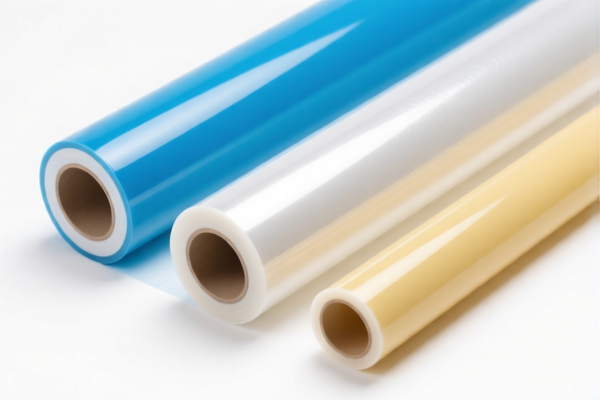
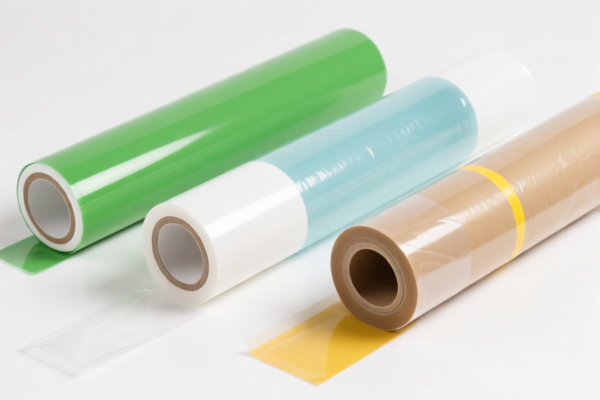
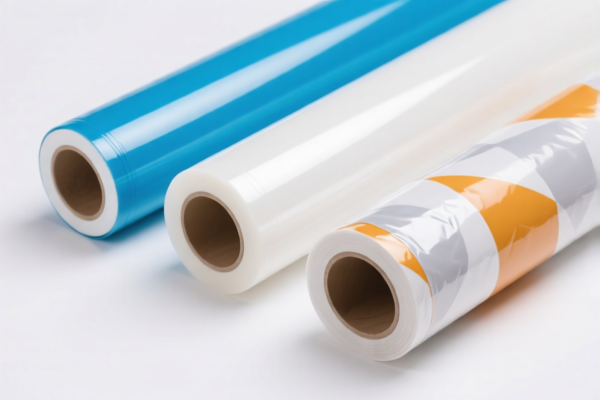
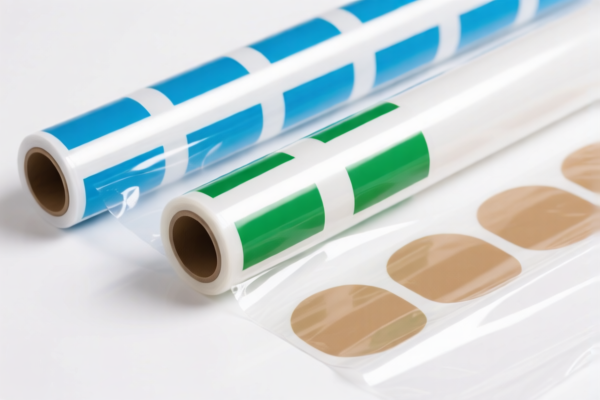
AI Analysis
🏷️ Other Plastic Self-Adhesive Packaging Film (Self-Adhesive Plastic Products)
🌐 HS Code Reference & Customs Clearance Guide | 2026 Latest Tariff Analysis | Professional Clearance Strategy
📌 One, Product Definition and Classification: Do You Really Understand "Self-Adhesive Plastic Films"?
"Other plastic self-adhesive packaging films" are versatile industrial and consumer goods used for labeling, sealing, wrapping, and decorating. In international trade, they are primarily classified under Chapter 39 (Plastics and articles thereof) or Chapter 48 (Paper and paperboard), depending on their material composition and physical form (sheet vs. strip/tape).
The core distinction lies in two factors: 1. Material: Is it pure plastic (polymer-based) or a composite (e.g., paper with plastic coating)? 2. Form: Is it a wide sheet/roll (cuttable) or a narrow strip/tape (pre-cut width)?
⚠️ Key Distinction Point:
- If it is a pure plastic film in a sheet-like form →归入 3919 (Plastic plates, sheets, film, foil and strip, self-adhesive).
- If it is a pure plastic film in a strip/tape form → Also归入 3919, but different subheading based on specific width/structure.
- If it is paper-based with plastic coating/adhesive →归入 4811 (Paper, paperboard, cardboard...).
- If it is a miscellaneous plastic article not fitting other specific descriptions →归入 3926 (Other articles of plastics).
📦 Two, HS Code Classification Details (2026 Latest Tariff Authority Cross-Reference)
| HS Code | Product Description | Application Scenario | Material/Form |
|---|---|---|---|
3919.90.50.60 |
Other plastic self-adhesive colored sheets/plates | Wide rolls, custom-shaped plastic labels, decorative plastic sheets | ✅ Plastic, Sheet-like |
3919.90.50.10 |
Other plastic self-adhesive colored sheets/plates (flat) | Flat plastic films, wide rolls for slitting, general packaging films | ✅ Plastic, Flat Shape |
4811.59.40.40 |
Other self-adhesive strips (paper-based with plastic cover) | Paper labels with plastic backing, adhesive tapes on paper base | ⚠️ Paper + Plastic |
3919.10.20.55 |
Other plastic self-adhesive strips/tapes | Narrow adhesive tapes, masking tapes, purely plastic adhesive strips | ✅ Plastic, Strip/Tape Form |
3926.90.99.89 |
Other plastic self-adhesive strips (miscellaneous) | Niche plastic adhesive items, unlisted plastic articles with adhesive | ✅ Plastic, Misc. Form |
🔍 Critical Reminder:
- Chapter 39 (3919) is for plastic-based self-adhesive products.
- Chapter 48 (4811) is for paper-based products even if they have plastic coatings.
- Chapter 39 (3926) is a "catch-all" for plastic articles that don't fit specific headings like 3919. Misclassification here can lead to significant tariff differences.
💰 Three, 2026 Latest Tariff Rate Details (Including Surtaxes & Policy Add-ons)
✅ Applicable Country: United States (US)
✅ Origin: China (CN)
✅ Effective Date: Current rates apply (25% Section 301 + 10% IEEPA)
🎯 1. 3919.90.50.60 & 3919.90.50.10 —— Plastic Self-Adhesive Sheets/Plates (Pure Plastic)
| Item | Content |
|---|---|
| Basic Tariff | 5.8% (ad valorem) |
| Section 301 Surtax | +25.0% (USITC Footnote, China-origin) |
| IEEPA Surtax | +10.0% (Section 122 / IEEPA, China-origin) |
| Total Tax Rate | 40.8% |
| Tax Calculation | CIF Value × 40.8% |
| De Minimis Exemption | ❌ Not Eligible (Subject to all surtaxes) |
| Legal Basis Path | Section 301: 9903.01.25 → IEEPA: 9903.01.10 → USITC: 3919.90.50.x0 |
📌 Explanation:
- These codes cover plastic films/sheets that are self-adhesive.
- The 40.8% rate is high. It includes the base MFN rate (5.8%), the massive Section 301 tariff (25%), and the additional IEEPA/Section 122 tariff (10%).
- Note: Both 50.60 (colored/other shape) and 50.10 (flat) carry the same effective tax burden due to identical surtax structures.
🎯 2. 4811.59.40.40 —— Self-Adhesive Strips (Paper-Based with Plastic Coating)
| Item | Content |
|---|---|
| Basic Tariff | 0.0% |
| Section 301 Surtax | +25.0% |
| IEEPA Surtax | +10.0% |
| Total Tax Rate | 35.0% |
| Tax Calculation | CIF Value × 35.0% |
| De Minimis Exemption | ❌ Not Eligible |
| Legal Basis Path | Section 301: 9903.01.24 → IEEPA: 9903.01.10 → USITC: 4811.59.40.40 |
📌 Note:
- Even though the basic tariff is 0%, the surtaxes push the total to 35%.
- This code is often used for paper labels or adhesive tapes with a paper backing coated in plastic.
- Cost Saving: 35% is 5.8% lower than pure plastic sheets. If your product is paper-based, this is the correct code.
🎯 3. 3919.10.20.55 —— Plastic Self-Adhesive Strips/Tapes (Narrow Form)
| Item | Content |
|---|---|
| Basic Tariff | 5.8% |
| Section 301 Surtax | +25.0% |
| IEEPA Surtax | +10.0% |
| Total Tax Rate | 40.8% |
| Tax Calculation | CIF Value × 40.8% |
| De Minimis Exemption | ❌ Not Eligible |
| Legal Basis Path | Section 301: 9903.01.25 → IEEPA: 9903.01.10 → USITC: 3919.10.20.55 |
📌 Explanation:
- This code is for narrow adhesive tapes (like packing tape, masking tape) made of plastic.
- The rate is identical to the sheet forms (40.8%) because the surtax structure for plastic products from China remains consistent across these subheadings.
🎯 4. 3926.90.99.89 —— Other Plastic Self-Adhesive Articles (Miscellaneous)
| Item | Content |
|---|---|
| Basic Tariff | 5.3% |
| Section 301 Surtax | +7.5% (Note: Reduced rate in some contexts, but check latest) |
| IEEPA Surtax | +10.0% |
| Total Tax Rate | 22.8% |
| Tax Calculation | CIF Value × 22.8% |
| De Minimis Exemption | ❌ Not Eligible |
| Legal Basis Path | Section 301: 9903.01.24 → IEEPA: 9903.01.10 → USITC: 3926.90.99.89 |
📌 Critical Note:
- This code has a significantly lower total tax rate of 22.8%.
- However, it is only applicable if the product cannot be classified under 3919 (standard self-adhesive plastic sheets/strips).
- Risk: Customs may reclassify this as 3919 (40.8%) if they determine it fits the definition of "self-adhesive plastic plates/sheets/strips." Use only for truly "other" plastic adhesive articles.
🛠️ Four, Customs Clearance Practical Advice (Real-World Pitfall Guide)
✅ 1. Required Documentation Checklist (Mandatory)
| Document | Must Provide | Description |
|---|---|---|
| ✅ Product Specification Sheet | ✔️ | Material (PP, PET, PVC, Paper), Adhesive Type, Dimensions, Width, Length |
| ✅ Product Photos | ✔️ | Clear images of the roll, label, and packaging showing dimensions |
| ✅ Composition Statement | ✔️ | Explicitly state % of Plastic vs. Paper. Crucial for distinguishing 3919 vs. 4811 |
| ✅ Commercial Invoice | ✔️ | Must list HS Code and detailed description (e.g., "Self-Adhesive PET Film") |
| ✅ Packing List | ✔️ | Weight, quantity, and dimensions of each package |
| ✅ Certificate of Origin | ✔️ | Required to prove origin and apply surtaxes |
✅ 2. Declaration Tips (Key Mantras)
🔥 "Material Determines Chapter, Form Determines Subheading!"
| Scenario | Correct Declaration | Wrong Practice |
|---|---|---|
| Wide plastic film/label rolls | 3919.90.50.x0 |
Misdeclare as 3926 to save tax → Audit Risk |
| Paper-based labels with plastic backing | 4811.59.40.40 |
Misdeclare as 3919 → Overpaying 5.8% |
| Narrow plastic adhesive tape | 3919.10.20.55 |
Misdeclare as 4811 → Underpaying 5.8% |
| Niche plastic adhesive item | 3926.90.99.89 |
Must prove it doesn't fit 3919 |
✅ 3. Special Case Handling
| Situation | Handling Advice |
|---|---|
| Composite Materials | If it's paper + plastic, it's usually 4811. If it's pure plastic, it's 3919. Provide a material breakdown in the spec sheet. |
| Multi-Layer Products | The material that gives the product its essential character determines the code. For adhesive films, the plastic layer usually dominates. |
| OEM Custom Labels | Provide design files and material specs. Ensure the description matches the physical product (e.g., "Self-Adhesive Vinyl Sticker"). |
| Small Samples | Even samples are subject to 22.8%~40.8% taxes. Do not assume "gift" or "sample" exemptions apply to Chinese-origin goods under current IEEPA rules. |
🌍 Five, Global Market Comparison (2026 Latest)
| Country/Region | Recommended HS Code | Tariff Rate (China Origin) | Notes |
|---|---|---|---|
| 🇺🇸 United States | 3919.90.50.60 / 3919.10.20.55 |
40.8% | High surtaxes. Use 3926 only if justified (22.8%). |
| 🇺🇸 United States | 4811.59.40.40 |
35.0% | Lower rate if paper-based. |
| 🇪🇺 EU | 3919.90 |
~6% | No Section 301/IEEPA. Lower cost. |
| 🇨🇳 China | 3919.90 |
~5.8% | Import into China benefits from FTAs if applicable. |
📌 Conclusion:
- The US market is the most challenging due to surtaxes.
- Cost Optimization: If your product can be legally classified as paper-based (4811), you save 5.8% in total taxes.
- Risk Management: Do not misdeclare3919as3926solely to save taxes unless the product is truly not a standard self-adhesive plastic sheet/strip. Customs audits are strict.
📌 Six, Common Errors & Pitfall Guide (Blood and Tears Lessons)
❌ Error 1: Declaring plastic film as 3926 without justification
👉 Consequence: Customs may reject and reclassify to 3919 (40.8%), leading to penalties + back taxes.
❌ Error 2: Misidentifying material (Paper vs. Plastic)
👉 Consequence: Using 3919 for paper-based products leads to overpayment (40.8% vs. 35.0%). Use 4811 to save money.
❌ Error 3: Vague description ("Plastic Tape")
👉 Consequence: Customs cannot determine if it's 3919 or 3926. Hold-up at port.
❌ Error 4: Ignoring Surtaxes
👉 Consequence: Budgeting only for base duty (5.8%) results in unpaid taxes upon import. Total cost is ~40%.
✅ Correct Practice:
"Self-Adhesive PET Film, 12 inches wide, 500 yards length, clear color, pure plastic material, for packaging."
OR
"Self-Adhesive Paper Label, with acrylic adhesive, paper backing, for shipping cartons."
🎯 Seven, Conclusion: Professional Declaration Saves Money!
🎯 Remember the Mantras:
🔹 "Plastic Sheet/Strip → 3919 (40.8%)"
🔹 "Paper-Based → 4811 (35.0%)"
🔹 "Miscellaneous Plastic → 3926 (22.8%) – Use with Caution"
📌 Tips:
- If your product is pure plastic, expect 40.8% total tax in the US.
- If your product has a paper backing, shift to 4811 to save 5.8%.
- Always provide material composition in your invoice and spec sheet.
📣 Immediate Action:
📞 Consult with a customs broker to verify your material composition.
📄 Prepare detailed specification sheets before shipment.
🚀 Accurate classification = Lower cost + Faster clearance!
✨ Professional Clearance, Starting with Precise Classification!
💼 Every cent of tax saved is pure profit!
Customer Reviews
About HS Code Classification
The Harmonized System (HS) is an internationally standardized nomenclature developed by the World Customs Organization (WCO) to classify traded products. Over 200 countries use the HS system as the basis for customs tariffs, trade statistics, and import/export regulations.
Each HS code follows a hierarchical structure:
- Chapter (2 digits) — Broad category of goods (e.g., Chapter 84: Machinery and Mechanical Appliances)
- Heading (4 digits) — More specific grouping within the chapter
- Subheading (6 digits) — Internationally standardized breakdown, used by all WCO member countries
- National subdivisions (8-10 digits) — Country-specific extensions for further classification, such as US HTSUS 10-digit codes
Correct HS code classification is essential for smooth customs clearance, accurate duty payment, and compliance with trade regulations. Misclassification can lead to customs delays, overpayment of duties, or penalties.
When importing from CN to US, the applicable tariff rates may include:
- Most-Favored-Nation (MFN) rate — The standard duty rate applied to WTO members
- General rate — Applied to countries without trade agreements
- Trade remedy duties — Additional tariffs such as Section 301 (anti-dumping), Section 232 (national security), or countervailing duties
The information provided on this page is for reference purposes only. For official classification, please consult with your local customs authority or a licensed customs broker.