other plastic self adhesive pet tape
CN → US| HS Code | Tariff Rate | Origin | Destination | Doc |
|---|---|---|---|---|
| 3926909905 | 22.8% | CN | US | Official Doc |
| 3919102055 | 40.8% | CN | US | Official Doc |
| 3926909989 | 22.8% | CN | US | Official Doc |
| 4811594040 | 35.0% | CN | US | Official Doc |
| 3919905060 | 40.8% | CN | US | Official Doc |
Product Images
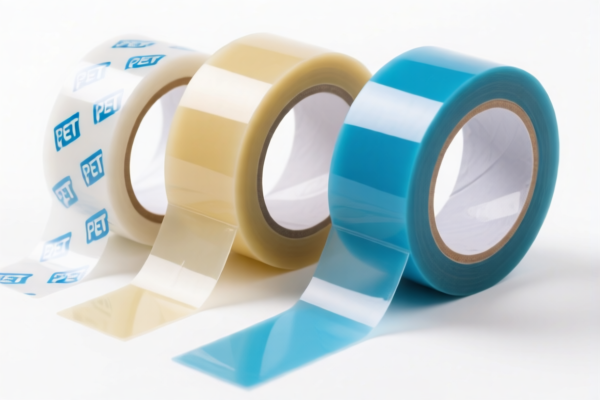
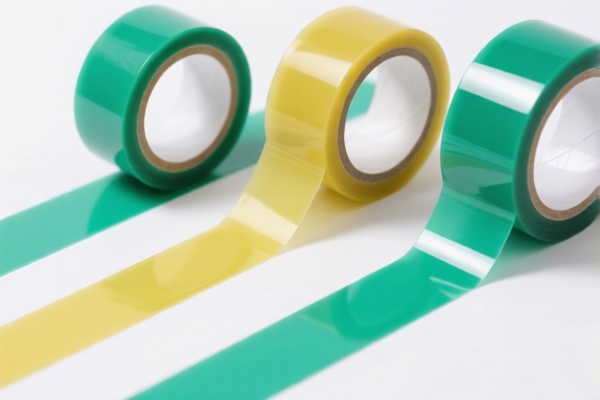
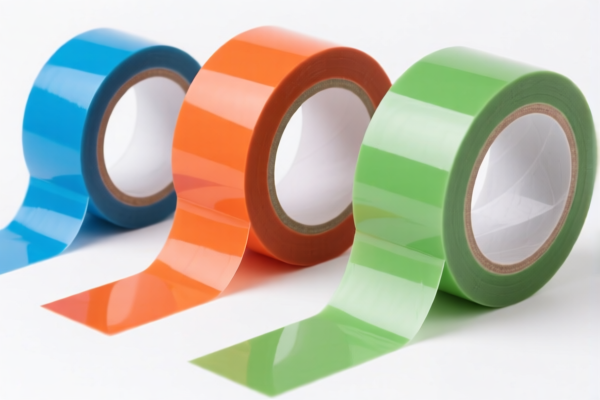
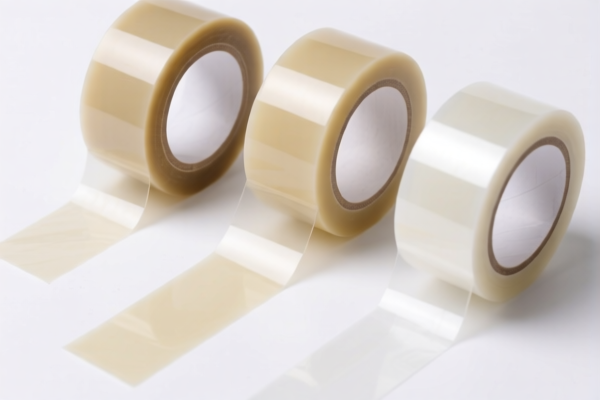
AI Analysis
📦 Other Plastic Self-Adhesive PET Tape
🏷️ HS Code Classification & Customs Clearance Guide | 2024-2026 Tax Analysis | Strategic Compliance Strategy
🌐 Introduction: Understanding "Other Plastic Self-Adhesive PET Tape"
"Other Plastic Self-Adhesive PET Tape" refers to adhesive tapes made from Polyethylene Terephthalate (PET) film. Unlike standard pressure-sensitive tapes (like Scotch tape or masking tape), PET tapes are known for their high tensile strength, thermal stability, and chemical resistance.
In international trade, the classification depends heavily on: 1. Material Composition: Is it 100% plastic, or does it have a paper backing? 2. Form: Is it a roll, a sheet, or a specific shaped strip? 3. End-Use: Is it an insulating material, a decorative strip, or a generic fastener?
⚠️ Critical Warning: Misclassification can lead to significant tariff discrepancies (up to 18% difference!) due to US Trade War tariffs (Section 301 & Section 122). Always verify the exact material layering and primary function.
📊 HS Code Classification Matrix (Based on Provided Data)
| HS Code | Product Description | Key Attributes | Total Tax Rate |
|---|---|---|---|
| 3926.90.99.05 | Other plastic self-adhesive strips | Matches plastic material & strip morphology; Catch-all category | 22.8% |
| 3919.10.20.55 | Other plastic self-adhesive strips | Matches plastic material & strip morphology; Other category | 40.8% |
| 3926.90.99.89 | Other plastic self-adhesive strips | Matches plastic material & unclassified articles; Catch-all definition | 22.8% |
| 4811.59.40.40 | Other plastic self-adhesive strips | Paper-based with plastic coating/layer; Strip morphology | 35.0% |
| 3919.90.50.60 | Other plastic self-adhesive colored sheets | Matches plastic material, Sheet morphology, Other category | 40.8% |
💰 Detailed Tax Breakdown & Legal Basis
All classifications assume Origin: China (CN) and Destination: USA (US).
🎯 1. The "22.8%" Tier (HS 3926.90.99.05 / .89)
Best for: General purpose PET strips not specifically listed elsewhere.
| Tax Component | Rate | Source/Legal Basis |
|---|---|---|
| Base Duty | 5.3% | General Harmonized Tariff Schedule (HTSUS) |
| Section 301 Tariff | 7.5% | US Trade Representative (USTR) List 3/4 adjustments |
| Section 122 Tariff | 10.0% | Specific administrative trade measures |
| Total Effective Rate | 22.8% | Lower Risk Tier |
📌 Explanation: - These codes fall under Chapter 39 (Plastics and Articles Thereof) and Heading 3926 (Other articles of plastics). - They are considered "Other" because they don't fit neatly into the primary adhesive tape heading (3919) or have specific exclusions. - Strategy: If your tape is a standard adhesive strip with no special electrical or decorative function, this is often the most favorable classification if accepted by CBP.
🎯 2. The "40.8%" Tier (HS 3919.10.20.55 / 3919.90.50.60)
Best for: Specific adhesive tapes (3919) or colored sheets.
| Tax Component | Rate | Source/Legal Basis |
|---|---|---|
| Base Duty | 5.8% | General HTSUS for Headings 3919 |
| Section 301 Tariff | 25.0% | USTR List 3/4 (Higher tier for certain plastic tapes) |
| Section 122 Tariff | 10.0% | Specific administrative trade measures |
| Total Effective Rate | 40.8% | High Risk Tier |
📌 Explanation: - 3919.10: Covers "Self-adhesive plates, sheets, film, foil, tape, strip and other shapes of plastics." - 3919.90: Covers "Other" plastic self-adhesive products. - Why so high? The 25% Section 301 tariff is applied here because certain plastic tapes are explicitly targeted in trade lists. - Note on 3919.90.50.60: Specifically notes "Colored Sheets." If your PET tape is clear/white, ensure it doesn't fall here. If it is colorful, this code may be technically accurate but tax-punitive.
🎯 3. The "35.0%" Tier (HS 4811.59.40.40)
Best for: Paper-backed tapes with plastic coating.
| Tax Component | Rate | Source/Legal Basis |
|---|---|---|
| Base Duty | 0.0% | Chapter 48 (Paper/Paperboard) often has lower base duties |
| Section 301 Tariff | 25.0% | USTR List 3/4 |
| Section 122 Tariff | 10.0% | Specific administrative trade measures |
| Total Effective Rate | 35.0% | Medium Risk Tier |
📌 Explanation: - Chapter 48 covers paper. If your "PET Tape" is actually a paper tape coated with plastic or has a paper core/backing that defines its essential character, it may be classified here. - Critical Check: Is the backing paper or plastic? - 100% Plastic Film → Chapters 39. - Paper with Plastic Coating → Chapter 48. - Misclassifying a plastic tape as paper can lead to severe penalties for fraud. Only use if the product is genuinely paper-based.
🛠️ Customs Clearance Strategy & Action Plan
✅ 1. Documentation Requirements
| Document | Requirement | Purpose |
|---|---|---|
| Technical Data Sheet | ✔️ Mandatory | Must specify: Substrate (PET vs. Paper), Adhesive Type, Thickness, Width, Liner Type. |
| Product Photos | ✔️ Mandatory | Clear images of the roll, cross-section (to show layers), and label. |
| Statement of Composition | ✔️ Mandatory | Explicit statement: "100% Polyethylene Terephthalate (PET) Film with Acrylic Adhesive." |
| Commercial Invoice | ✔️ Mandatory | HS Code must match the declared product. Use precise descriptions (e.g., "PET Adhesive Tape, Clear, 1mm thick"). |
| Bill of Lading | ✔️ Mandatory | Consistent weight and dimensions with invoice. |
✅ 2. Classification Decision Tree
🔥 "Material First, Form Second, Function Third!"
| Scenario | Recommended HS Code | Why? |
|---|---|---|
| 100% PET Film, Clear/White, Standard Adhesive | 3926.90.99.05 | Lowest tax (22.8%). Falls under "Other plastic articles." Avoid 3919 if possible to save 17.5%. |
| 100% PET Film, Colored/Patterned, Specialty Use | 3919.90.50.60 | Higher tax (40.8%). If the "colored sheet" description fits best, but be prepared for higher duty. |
| 100% PET Film, Generic Strip | 3926.90.99.89 | Alternative catch-all (22.8%). Similar to .05, check CBP rulings for consistency. |
| Paper Backing + Plastic Coating | 4811.59.40.40 | Medium tax (35.0%). Only if paper is essential character. Do not use for pure plastic tapes. |
| Standard Self-Adhesive Tape (General) | 3919.10.20.55 | Highest tax risk (40.8%). Avoid unless the tape is explicitly defined as "plates/sheets/film/foil/tape" under 3919 and not "other articles" under 3926. |
✅ 3. Pro-Tips for Cost Optimization
- Avoid HS 3919.10 if Possible:
- Heading 3919 (Self-adhesive tapes) attracts a 25% Section 301 tariff.
- Heading 3926 (Other plastic articles) attracts only 7.5% Section 301.
-
Argument: If your tape is not a standard "adhesive tape" used for sealing/packaging (e.g., it's a specialized industrial strip, insulating strip, or decorative element), argue for Chapter 3926. This can save 17.5% on the ad valorem duty portion!
-
Verify "Strip" vs. "Sheet":
- Strip (long, narrow) → Often 3926.
- Sheet (large, flat) → Often 3919 or 3920/3921 depending on processing.
-
Your data specifies "Strip" for 22.8% codes and "Sheet" for 40.8% code. Ensure your product matches the morphology.
-
Pre-Ruling Application:
- Submit an Advance Ruling Request to US CBP.
-
Highlight: "Product is PET film, not paper. Primary function is [X]. Recommend 3926.90.99.05 due to lower duty and fit for 'other plastic articles'."
-
Section 122 Tariff Note:
- The 10% Section 122 tariff applies to all these codes. There is no exemption currently visible for these HS codes in the provided data. Factor this into all cost calculations.
🌍 Global Market Comparison (2024-2026)
| Market | Recommended HS Code | Est. Duty (China Origin) | Key Requirement |
|---|---|---|---|
| 🇺🇸 USA | 3926.90.99.05 | 22.8% | Detailed composition proof to avoid 3919. |
| 🇨🇳 China | 3926.90.99.00 | ~5-10% | Standard import duties. |
| 🇪🇺 EU | 3926.90.97 | 6.5% | REACH compliance for adhesives. |
| 🇬🇧 UK | 3926.90.90 | 6.5% | Post-Brexit import rules apply. |
| 🇯🇵 Japan | 3926.90.90 | 5-6% | JIS standards for industrial tapes. |
📌 Conclusion: The US market is the most complex due to the dual-tier tariff structure (Base + Section 301). Strategic classification into Chapter 3926 (22.8%) vs. 3919 (40.8%) is the single biggest lever for cost reduction.
📌 Common Pitfalls & Avoidance Guide
❌ Pitfall 1: Calling it "Adhesive Tape" and using HS 3919. 👉 Result: 40.8% Tax. 👉 Fix: If it's a specialized strip, use "Other Plastic Article" (3926) and justify why it's not a standard tape.
❌ Pitfall 2: Ignoring the backing material. 👉 Result: If it's paper-backed, using a 3926 code will be flagged as fraud. 👉 Fix: Verify if paper constitutes the "essential character." If yes, use 4811 (35.0%).
❌ Pitfall 3: Assuming "PET" always means Chapter 39. 👉 Result: While likely true, some processed PET articles might fall elsewhere if they become machinery parts. 👉 Fix: Confirm end-use. If it's just a tape/strip, 3926 is safe.
✅ Best Practice:
Description: "Industrial PET Adhesive Strip, Clear, 1mm Thick, Acrylic Adhesive, Roll Form" HS Code:
3926.90.99.05Declaration: "Not a standard sealing tape; classified as other plastic article for specialized use."
🎯 Final Recommendation
For "Other Plastic Self-Adhesive PET Tape":
- 首选 (Primary Choice): HS 3926.90.99.05 (22.8% Total Tax).
- Why: Lowest duty, fits "Other plastic articles," avoids the 25% Section 301 tariff of Chapter 3919.
-
Condition: Ensure the product is not a standard packaging tape. Emphasize its specialized nature (industrial, electronic, decorative).
-
备选 (Secondary Choice): HS 3926.90.99.89 (22.8% Total Tax).
-
Why: Similar tax to .05. Use if .05 is restricted or if the product is an "unclassified" plastic item.
-
Avoid (If Possible): HS 3919.10.20.55 and 3919.90.50.60 (40.8% Total Tax).
-
Why: Highest tax burden. Only use if the product is strictly defined as a self-adhesive plate/sheet/film/tape under 3919 and cannot be argued as "other."
-
Only If Paper-Based: HS 4811.59.40.40 (35.0% Total Tax).
- Why: Mid-range tax. Use only if the backing is paper and essential to the product's character.
✨ Professional Clearance Tip:
"Classify by Substance, Not Just Name."
Don't let the word "Tape" force you into the 40.8% bracket. If it's a "Strip" of "Plastic," argue for Chapter 3926.
Save 18% on duty = Immediate Profit Increase!
📞 Next Step:
📦 Prepare a Technical Spec Sheet highlighting "PET Film" and "Specialized Strip Form."
📝 Draft a Cover Letter explaining why HS 3926 is more appropriate than 3919.
🚀 Submit for Pre-Ruling if the shipment value is significant.
✨ Precise Classification Saves Money.
💼 Your Supply Chain Efficiency Starts with the Right HS Code.
Customer Reviews
About HS Code Classification
The Harmonized System (HS) is an internationally standardized nomenclature developed by the World Customs Organization (WCO) to classify traded products. Over 200 countries use the HS system as the basis for customs tariffs, trade statistics, and import/export regulations.
Each HS code follows a hierarchical structure:
- Chapter (2 digits) — Broad category of goods (e.g., Chapter 84: Machinery and Mechanical Appliances)
- Heading (4 digits) — More specific grouping within the chapter
- Subheading (6 digits) — Internationally standardized breakdown, used by all WCO member countries
- National subdivisions (8-10 digits) — Country-specific extensions for further classification, such as US HTSUS 10-digit codes
Correct HS code classification is essential for smooth customs clearance, accurate duty payment, and compliance with trade regulations. Misclassification can lead to customs delays, overpayment of duties, or penalties.
When importing from CN to US, the applicable tariff rates may include:
- Most-Favored-Nation (MFN) rate — The standard duty rate applied to WTO members
- General rate — Applied to countries without trade agreements
- Trade remedy duties — Additional tariffs such as Section 301 (anti-dumping), Section 232 (national security), or countervailing duties
The information provided on this page is for reference purposes only. For official classification, please consult with your local customs authority or a licensed customs broker.