other plastic sheet for medical use
CN → US| HS Code | Tariff Rate | Origin | Destination | Doc |
|---|---|---|---|---|
| 3921190090 | 41.5% | CN | US | Official Doc |
| 3921905050 | 39.8% | CN | US | Official Doc |
| 3005901000 | 10.0% | CN | US | Official Doc |
| 3920591000 | 41.0% | CN | US | Official Doc |
| 3005905090 | 10.0% | CN | US | Official Doc |
Product Images
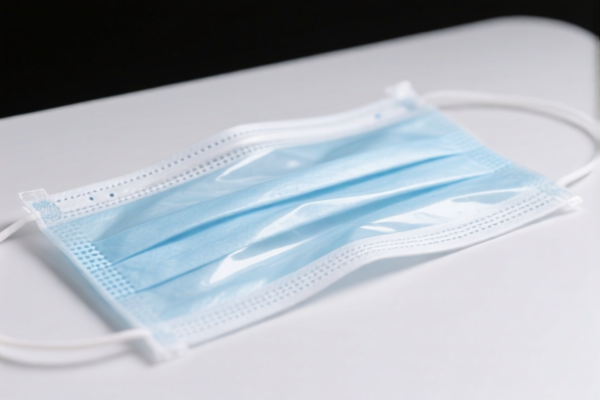

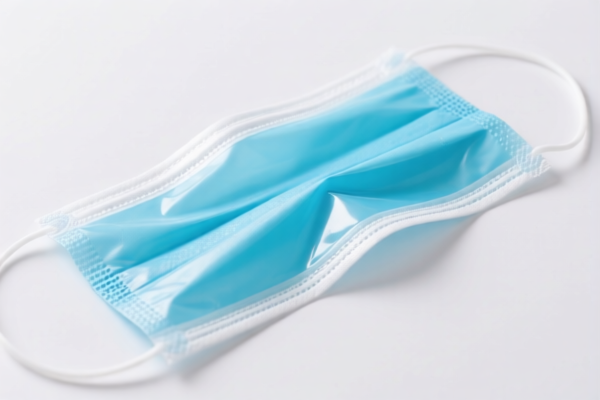
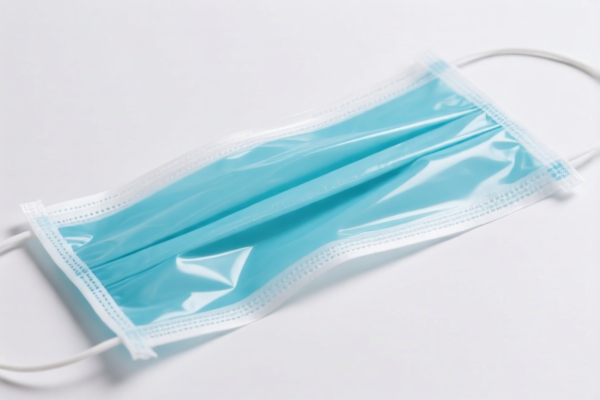
AI Analysis
🏥 Other Plastic Sheets for Medical Use
🌐 HS Code Reference & Customs Clearance Guide | 2026 Latest Tariff Analysis | Professional Compliance Strategy
📌 I. Product Definition and Classification: Do You Really Understand "Other Plastic Sheets for Medical Use"?
"Other plastic sheets for medical use" is a broad category in international trade. It typically refers to plastic films, membranes, or foils used in healthcare settings. The critical distinction in classification lies in whether the plastic is purely structural/protective (classified as plastic products) or medically active/functionalized (classified as medical dressings/impressions).
Two Main Classification Paths:
- Plastic Products Chapter (Ch. 39):
If the sheet is merely a barrier, packaging material, or non-medicated structural component (e.g., sterile barrier packaging film, non-adhesive plastic backing), it falls under HS 3920 or 3921. - Medical Articles Chapter (Ch. 30):
If the sheet is impregnated, coated, or covered with pharmaceuticals, antiseptics, or medicaments, OR if it is specifically designed as a medical dressing (e.g., hydrocolloid dressings, medicated bandages), it falls under HS 3005.
⚠️ Key Distinction Point:
- If it is just plastic film without active pharmaceutical ingredients → HS 392x / 3921 (Higher Tariffs).
- If it is medicated, impregnated, or a specific medical dressing → HS 3005 (Lower Tariffs).
- Customs often scrutinize this boundary strictly. Misclassifying a medicated sheet as plain plastic can lead to severe penalties.
📦 II. HS Code Classification Details (2026 Latest Tariff Authority Comparison)
| HS Code | Product Description | Application Scenario | Tax Rate | Basis |
|---|---|---|---|---|
3921.19.00.90 |
Plastic sheets, foils, membranes, other than of cellular plastic; Other | General medical plastic sheets (non-medicated), protective packaging, non-adhesive backing | 41.5% | Base 6.5% + Section 301 (25%) + 122 Clauses (10%) |
3921.90.50.50 |
Other plastic plates, sheets, film, foil and strip; Other | Other plastic sheets for medical use not specified elsewhere in Ch. 39 | 39.8% | Base 4.8% + Section 301 (25%) + 122 Clauses (10%) |
3005.90.10.00 |
Wadding, gauze, bandages and similar articles for medical purposes... Other | Medically impregnated/coated plastic sheets, medicated dressings, pharmaceutical-impregnated foils | 10.0% | Base 0% + Section 301 (0%) + 122 Clauses (10%) |
3920.59.10.00 |
Plastic plates, sheets, film, foil and strip... Other | Plastic sheets made of acrylic polymers for medical use (structural) | 41.0% | Base 6.0% + Section 301 (25%) + 122 Clauses (10%) |
3005.90.50.90 |
Other wadding, gauze, bandages... Other | Other medical dressings (plastic-based but classified as medical articles) | 10.0% | Base 0% + Section 301 (0%) + 122 Clauses (10%) |
🔍 Key Reminder:
- Medicated vs. Non-Medicated is the deciding factor. If your "plastic sheet" contains antibiotics, antiseptics, or is intended for direct wound contact as a dressing, HS 3005 is usually the correct and cheaper classification.
- If it is just a sterile barrier or packaging film for medical devices, it falls under HS 3921/3920.
- Acrylic-based medical sheets have a specific subheading (3920.59.10.00).
💰 III. 2026 Latest Tariff Rate Details (Including Additional Taxes, Policy Surcharges)
✅ Applicable Country: United States (US)
✅ Origin: China (CN)
✅ Effective Date: November 10, 2025 onwards (including subsequent imports)
🎯 1. 3921.19.00.90 – Plastic Sheets, Foils, Membranes (General Medical Plastic)
| Item | Content |
|---|---|
| Base Tariff | 6.5% (ad valorem) |
| USITC Additional Tariff | +25% (from USITC Footnote 9903.88.01 - Section 301) |
| IEEPA Additional Tariff | +10% (for China/Hong Kong products, effective Nov 10, 2025) |
| Total Tariff | 41.5% |
| Tax Calculation | CIF Value × 41.5% |
| De Minimis Eligible? | ❌ No (deny_de_minimis) |
| Legal Basis Path | IEEPA:9903.01.25 → IEEPA:9903.01.24 → USITC:3921.19.00.90 → FOOTNOTE:9903.88.01 |
📌 Explanation:
- This is a high-tariff category for non-medicated plastic sheets.
- The 25% Section 301 tariff is applied on top of the base rate.
- The 10% IEEPA tariff is a new addition for 2025/2026 imports.
- Total burden: 41.5%. Must be factored into cost modeling.
🎯 2. 3921.90.50.50 – Other Plastic Plates, Sheets, etc.
| Item | Content |
|---|---|
| Base Tariff | 4.8% |
| USITC Additional Tariff | +25% |
| IEEPA Additional Tariff | +10% |
| Total Tariff | 39.8% |
| Tax Calculation | CIF × 39.8% |
| De Minimis Eligible? | ❌ No |
| Legal Basis Path | IEEPA:9901.25 → IEEPA:9903.01.24 → USITC:3921.90.50.50 → FOOTNOTE:9903.88.01 |
📌 Note:
- Slightly lower than3921.19.00.90due to a lower base rate (4.8% vs 6.5%).
- Applies to plastic sheets not specified in other subheadings (e.g., certain composite medical plastics).
🎯 3. 3005.90.10.00 – Medically Impregnated/Coated Sheets (Medicated Dressings)
| Item | Content |
|---|---|
| Base Tariff | 0.0% |
| USITC Additional Tariff | 0.0% (Exempt from Section 301 for certain medical articles) |
| IEEPA Additional Tariff | +10% |
| Total Tariff | 10.0% |
| Tax Calculation | CIF × 10.0% |
| De Minimis Eligible? | ❌ No |
| Legal Basis Path | IEEPA:9903.01.25 → USITC:3005.90.10.00 → FOOTNOTE:9903.88.01 |
📌 Critical Advantage:
- Massive Cost Saving! If your plastic sheet is medicated or a medical dressing, it falls here.
- Base 0% + 301 Exemption + 10% IEEPA = 10%.
- This is 31.5 percentage points cheaper than the general plastic sheet category.
- Requirement: Must provide evidence of medical impregnation/coating (e.g., COA, product description stating "antimicrobial," "medicated," etc.).
🎯 4. 3920.59.10.00 – Plastic Sheets of Acrylic Polymers
| Item | Content |
|---|---|
| Base Tariff | 6.0% |
| USITC Additional Tariff | +25% |
| IEEPA Additional Tariff | +10% |
| Total Tariff | 41.0% |
| Tax Calculation | CIF × 41.0% |
| De Minimis Eligible? | ❌ No |
| Legal Basis Path | IEEPA:9903.01.25 → USITC:3920.59.10.00 |
📌 Note:
- Specific to acrylic (PMMA) medical sheets.
- High tariff applies because it is classified as a plastic product, not a medical article.
🎯 5. 3005.90.50.90 – Other Medical Dressings (Plastic-based)
| Item | Content |
|---|---|
| Base Tariff | 0.0% |
| USITC Additional Tariff | 0.0% |
| IEEPA Additional Tariff | +10% |
| Total Tariff | 10.0% |
| Tax Calculation | CIF × 10.0% |
| De Minimis Eligible? | ❌ No |
| Legal Basis Path | IEEPA:9901.25 → USITC:3005.90.50.90 |
📌 Note:
- Another low-tariff option for medical dressings that are plastic-based but not impregnated (e.g., hydrocolloid dressings, transparent film dressings).
- Must be proven as a "medical dressing" under HTSUS Chapter 30.
🛠️ IV. Customs Clearance Practical Advice (Actionable Pitfall Avoidance Guide)
✅ 1. Required Documentation Checklist (Mandatory)
| Document | Required | Description |
|---|---|---|
| ✅ Product Specification Sheet | ✔️ | Must clearly state material composition (e.g., PE, PP, Acrylic) and whether it is medicated. |
| ✅ Labeling/Packaging Photos | ✔️ | Show "Medical Use," "Sterile," or "Medicated" claims. |
| ✅ Certificate of Analysis (COA) | ✔️ | Crucial for HS 3005. Must show active ingredients, impregnation levels, or medical functionality. |
| ✅ FDA Registration/Listing | ✔️ | If Class I/II medical device, FDA 510(k) or exemption documentation strengthens HS 3005 claim. |
| ✅ Commercial Invoice | ✔️ | Accurate description: e.g., "Medicated Wound Dressing Film" vs. "Plastic Packaging Film." |
| ✅ Packing List | ✔️ | Detail units, weight, and dimensions. |
✅ 2. Declaration Strategy (Key Mantra)
🔥 "Medicated = Ch. 30, Plain = Ch. 39. Prove the Medicine, Save 30%!"
| Scenario | Correct Declaration | Incorrect Declaration |
|---|---|---|
| Plastic sheet with antibiotic coating | HS 3005.90.10.00 (10%) | HS 3921.19.00.90 (41.5%) → Overpaid Tax + Audit Risk |
| Sterile plastic packaging film | HS 3921.19.00.90 (41.5%) | HS 3005 (10%) → Misdeclaration, Penalty |
| Transparent film dressing (hydrocolloid) | HS 3005.90.50.90 (10%) | HS 3921 (41.5%) → Overpaid Tax |
| Acrylic medical window sheet | HS 3920.59.10.00 (41.0%) | HS 3005 → Rejection |
✅ 3. Special Case Handling
| Situation | Handling Advice |
|---|---|
| "Dual-Use" Products (e.g., plastic sheet used in surgery but not medicated) | Provide surgical instrument manual proving it is a tool/accessory, not a dressing. May still fall under Ch. 39 if not a dressing. |
| Importing from Vietnam/Mexico | Check if IEEPA 10% tariff applies. If origin is USMCA, tariffs may be 0%. |
| Small Quantity (De Minimis) | ❌ Not Eligible. Both Ch. 39 and Ch. 30 medical/plastic imports from China are excluded from de minimis (Section 321) for tariffs. |
| FDA Pre-Market Notification | If claiming HS 3005, ensure the product is legally marketed in the US. Lack of FDA compliance can lead to seizure even if tariff is lower. |
🌍 V. Global Market Comparison (2026 Latest)
| Country/Region | Recommended HS Code | Tariff (China Origin) | Certification | Notes |
|---|---|---|---|---|
| 🇺🇸 USA | 3005.90.10.00 (if medicated) |
10% | FDA | Best option if medicated. |
| 🇺🇸 USA | 3921.19.00.90 (if plain) |
41.5% | N/A | High cost. Avoid if possible. |
| 🇨🇳 China | 3005 / 3921 |
0-6% | NMPA / GB | Lower base rates. |
| 🇪🇺 EU | 3005 / 3921 |
0-4.5% | CE / MDR | No Section 301 equivalent. |
| 🇬🇧 UK | 3005 / 3921 |
0-4.5% | UKCA | Post-Brexit rules apply. |
📌 Conclusion:
- USA is the highest-cost market due to Section 301 and IEEPA tariffs.
- Classification as a "Medical Article" (Ch. 30) is the primary cost-saving strategy.
- Do not assume "Plastic = Ch. 39." If it's for medical dressing/impregnation, Ch. 30 is likely correct and significantly cheaper.
📌 VI. Common Errors & Pitfall Guide (Lessons Learned)
❌ Error 1: Declaring "Medicated Dressing" as "Plastic Sheet"
👉 Consequence: Pay 41.5% instead of 10%. Loss of 31.5% margin.
👉 Fix: Submit COA proving medicated content.
❌ Error 2: Declaring "Plain Plastic Film" as "Medical Dressing"
👉 Consequence: Customs audit, penalty, seizure for misdeclaration.
👉 Fix: Ensure product has no active pharmaceutical ingredients. Use HS 3921.
❌ Error 3: Ignoring IEEPA 10% Tariff (2025+)
👉 Consequence: Underestimating landed cost by 10% on all imports.
👉 Fix: Include 10% in all cost models for China-origin goods.
❌ Error 4: Not Providing FDA Documentation for Ch. 30 Claims
👉 Consequence: CBP rejects Ch. 30 classification due to lack of regulatory proof.
👉 Fix: Include FDA listing number or 510(k) reference in shipment documents.
✅ Correct Practice:
"Medicated Wound Care Film, Impregnated with Povidone-Iodine, Sterile, 10cm x 10cm, HS 3005.90.10.00, FDA 510(k) #XXXXXXXXX"
🎯 VII. Conclusion: Professional Classification, Save Money, Stay Compliant!
🎯 Remember the Mantra:
🔹 "Medicated = Ch. 30 (10%), Plain = Ch. 39 (41.5%). Prove the Medicine!"
🔹 "IEEPA 10% is New. Factor it in!"
🔹 "No De Minimis. Full Duty Applies."
📌 Pro Tip:
If your product can be argued as both, consult a customs broker to prepare a Ruling Request with sample and COA. A proactive ruling can save you 31.5% in tariffs and avoid post-entry audits.
📣 Immediate Action:
📞 Contact your customs broker + Provide COA + Request HS Code Ruling
🚀 Maximize Profit, Minimize Risk, Clear Customs Smoothly!
✨ Professional Clearance Starts with Accurate Classification!
💼 Every Percentage Point Counts in 2026 Tariffs!
Customer Reviews
About HS Code Classification
The Harmonized System (HS) is an internationally standardized nomenclature developed by the World Customs Organization (WCO) to classify traded products. Over 200 countries use the HS system as the basis for customs tariffs, trade statistics, and import/export regulations.
Each HS code follows a hierarchical structure:
- Chapter (2 digits) — Broad category of goods (e.g., Chapter 84: Machinery and Mechanical Appliances)
- Heading (4 digits) — More specific grouping within the chapter
- Subheading (6 digits) — Internationally standardized breakdown, used by all WCO member countries
- National subdivisions (8-10 digits) — Country-specific extensions for further classification, such as US HTSUS 10-digit codes
Correct HS code classification is essential for smooth customs clearance, accurate duty payment, and compliance with trade regulations. Misclassification can lead to customs delays, overpayment of duties, or penalties.
When importing from CN to US, the applicable tariff rates may include:
- Most-Favored-Nation (MFN) rate — The standard duty rate applied to WTO members
- General rate — Applied to countries without trade agreements
- Trade remedy duties — Additional tariffs such as Section 301 (anti-dumping), Section 232 (national security), or countervailing duties
The information provided on this page is for reference purposes only. For official classification, please consult with your local customs authority or a licensed customs broker.