other plastic strip for electronics industry
CN → US| HS Code | Tariff Rate | Origin | Destination | Doc |
|---|---|---|---|---|
| 3921905050 | 39.8% | CN | US | Official Doc |
| 3919905030 | 40.8% | CN | US | Official Doc |
| 3919102020 | 40.8% | CN | US | Official Doc |
| 3921190090 | 41.5% | CN | US | Official Doc |
| 3919905060 | 40.8% | CN | US | Official Doc |
Product Images
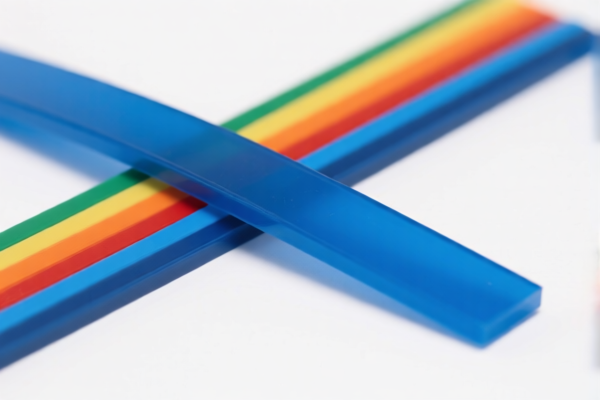
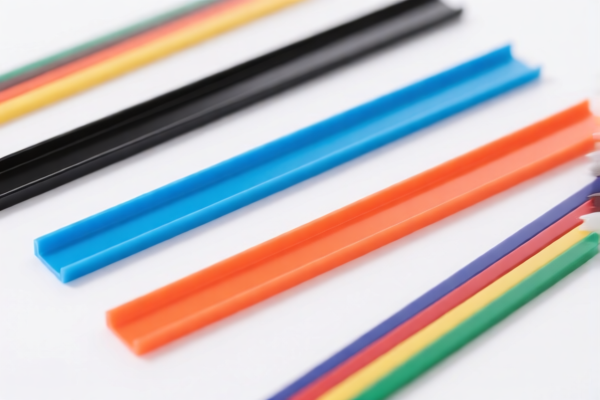
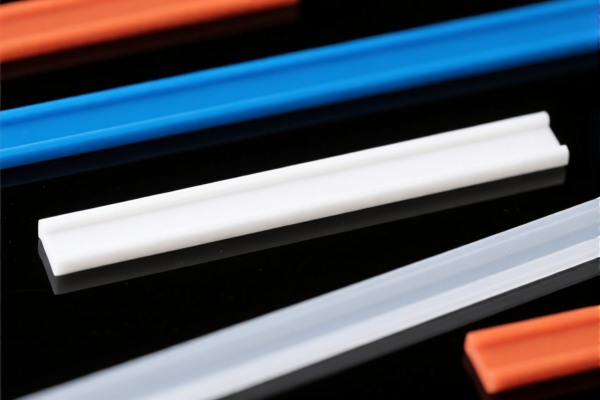
AI Analysis
🏭 Plastic Strips for the Electronics Industry
🌐 HS Code Reference & Customs Clearance Guide | 2026 Latest Tariff Analysis | Professional Clearance Strategy
📌 I. Product Definition: What Are "Other Plastic Strips for Electronics"?
In the electronics supply chain, "plastic strips" are critical auxiliary materials. They are not final electronic components but functional supports, insulators, or protectors. Common types include: * Electrical Tape (Insulation): Used for wrapping wires and joints. * Masking/Peeling Strips: Used in SMT (Surface Mount Technology) or PCB manufacturing to protect areas during soldering. * Protective Filmy/Band Strips: Used to cover connectors or sensitive components during shipping/assembly.
⚠️ Key Classification Point:
The correct HS Code depends heavily on form (strip vs. roll vs. board), specific function (electrical insulation vs. general protection), and material composition. Misclassification here leads to significant tariff discrepancies due to Section 32 (122 Clause) taxes.
📦 II. HS Code Classification Details (2026 Latest Tariff Alignment)
Based on the provided data, there are 5 specific HS Codes applicable to this product category. Below is the detailed breakdown.
| HS Code | Product Description & Summary | Key Characteristics | Tax Rate |
|---|---|---|---|
3921.90.50.50 |
Plastic Strip/Band | General-purpose electronic use; falls under "Other" categories. | 39.8% |
3919.90.50.30 |
Plastic Strip/Band | Electronic industry use; falls under "Other" categories. | 40.8% |
3919.10.20.20 |
Plastic Strip (Electrical Tape) | Specifically functions as electrical insulation tape. | 40.8% |
3921.19.00.90 |
Plastic Band/Sheet | Electronic industry use; falls under "Other" categories (self-adhesive nature implied by Chapter 39.21 structure). | 41.5% |
3919.90.50.60 |
Plastic Board/Plate | Electronic industry use; note: "Board-like" strips or rigid sheets. | 40.8% |
🔍 Important Distinction:
- Chapter 39.19 (Self-adhesive tapes, etc.): If the product is adhesive-backed (like electrical tape or masking tape), it likely falls under3919....
- Chapter 39.21 (Plates, sheets, film, etc.): If the product is a non-adhesive band, or a rigid plastic strip/plate used for structural or protective purposes, it likely falls under3921....
💰 III. 2026 Latest Tariff Rate Breakdown (Detailed Tax Clauses)
✅ Applicable Country: United States (US)
✅ Origin: China (CN)
✅ Effective Time: Current enforcement includes Section 301 & Section 122 clauses.
The total tax rate is composed of three distinct layers. It is crucial to understand each component for cost calculation.
🎯 1. 3921.90.50.50 – Plastic Strip (General Electronic Use)
| Item | Detail |
|---|---|
| Base Duty Rate | 4.8% (Most Favored Nation) |
| Section 301 Surcharge | +25.0% (Trade Remedy Tariff) |
| Section 122 Surcharge | +10.0% (Specific to certain Chinese goods, often applied to textiles/apparel but data shows it applied here) |
| Total Tax Rate | 39.8% |
| Tax Calculation | CIF Value × 39.8% |
| De Minimis Exemption | ❌ No (Valued over $800 threshold usually, plus Section 301 goods are ineligible for 801.25(a) exemption) |
| Legal Path | HTSUS:3921.90.50.50 → USITC:Footnote 122 → Section 301 |
📌 Explanation:
- Base 4.8%: Standard US customs duty for plastic articles.
- 25% Surcharge: Standard Section 301 tariff for Chinese-origin plastics in this category.
- 10% Surcharge: Additional penalty tax under Section 122 (or specific bilateral clauses).
- Total 39.8%: This is a high-cost item. You must factor this into your landed cost model.
🎯 2. 3919.90.50.30 – Plastic Strip (Electronic Industry, Other)
| Item | Detail |
|---|---|
| Base Duty Rate | 5.8% |
| Section 301 Surcharge | +25.0% |
| Section 122 Surcharge | +10.0% |
| Total Tax Rate | 40.8% |
| Tax Calculation | CIF Value × 40.8% |
| De Minimis Exemption | ❌ No |
| Legal Path | HTSUS:3919.90.50.30 → Section 301 → Section 122 |
📌 Explanation:
- Slightly higher base duty (5.8%) than3921...due to the self-adhesive nature implied by Chapter 39.19.
- Same punitive tariffs apply.
🎯 3. 3919.10.20.20 – Plastic Strip (Electrical Tape Function)
| Item | Detail |
|---|---|
| Base Duty Rate | 5.8% |
| Section 301 Surcharge | +25.0% |
| Section 122 Surcharge | +10.0% |
| Total Tax Rate | 40.8% |
| Tax Calculation | CIF Value × 40.8% |
| De Minimis Exemption | ❌ No |
| Legal Path | HTSUS:3919.10.20.20 → Section 301 → Section 122 |
📌 Critical Note:
If your product is Electrical Insulation Tape, this is the most precise code.
- Warning: Do not declare "Electrical Tape" as "Plastic Bag" or generic "Plastic Sheet" to avoid lower tariffs. Customs will verify the function. If it’s tape, the 40.8% rate is unavoidable.
🎯 4. 3921.19.00.90 – Plastic Band (Other)
| Item | Detail |
|---|---|
| Base Duty Rate | 6.5% |
| Section 301 Surcharge | +25.0% |
| Section 122 Surcharge | +10.0% |
| Total Tax Rate | 41.5% |
| Tax Calculation | CIF Value × 41.5% |
| De Minimis Exemption | ❌ No |
| Legal Path | HTSUS:3921.19.00.90 → Section 301 → Section 122 |
📌 Explanation:
- This has the highest base duty (6.5%) among the options.
- Total rate is 41.5%, the most expensive in this list.
- Use this only if the product is a non-adhesive plastic band/sheet and doesn’t fit the other "strip" definitions.
🎯 5. 3919.90.50.60 – Plastic Board/Plate (Electronic Industry)
| Item | Detail |
|---|---|
| Base Duty Rate | 5.8% |
| Section 301 Surcharge | +25.0% |
| Section 122 Surcharge | +10.0% |
| Total Tax Rate | 40.8% |
| Tax Calculation | CIF Value × 40.8% |
| De Minimis Exemption | ❌ No |
| Legal Path | HTSUS:3919.90.50.60 → Section 301 → Section 122 |
📌 Note:
Even if described as "strip," if it has a rigid, board-like structure, it may fall here. The tax rate is identical to3919.90.50.30.
🛠️ IV. Customs Clearance Practical Advice (Avoiding Pitfalls)
✅ 1. Documentation Checklist (Mandatory)
| Document | Required? | Purpose |
|---|---|---|
| ✅ Product Specification Sheet | ✔️ | Must specify: Material (PVC, PET, PE), Thickness, Width, Adhesive type, Heat resistance. |
| ✅ Function Description | ✔️ | Explicitly state: "Electrical Insulation," "PCB Masking," or "Protective Covering." |
| ✅ Product Photos | ✔️ | Show the product roll/strip, label, and application example. |
| ✅ Commercial Invoice | ✔️ | Description must match HS Code (e.g., "PVC Electrical Tape, 19mm x 10m"). |
| ✅ Bill of Lading/Air Waybill | ✔️ | Standard shipping docs. |
| ✅ Certificate of Origin | ✔️ | Confirm CN origin for Section 301 calculation. |
✅ 2. Declaration Tips (Golden Rules)
🔥 "Be Specific, Be Accurate, Avoid Ambiguity!"
| Scenario | Recommended Description | Wrong Description | Risk |
|---|---|---|---|
| Electrical Tape | "PVC Electrical Insulation Tape, 19mm x 10m" | "Plastic Tape" | High risk of re-classification & penalty. |
| PCB Masking Tape | "Peelable Masking Tape for PCB Assembly" | "Plastic Strip" | May be misclassified as general plastic, leading to audits. |
| Protective Film Strip | "PET Protective Film Strip for Connectors" | "Plastic Bag/Film" | Different HS, different tax. |
| Rigid Plastic Strip | "Polypropylene Structural Strip for Electronics" | "Plastic Board" | Ensure dimensions match "strip" vs "board" definitions. |
✅ 3. Special Considerations
| Situation | Advice |
|---|---|
| OEM Custom Colors | Declare "Standard Color" or list colors if limited. Do not use vague terms. |
| Combined Packaging | If tape is sold with a dispenser, the dispenser may be classified separately (e.g., as a tool). Ensure the invoice splits the value if necessary to avoid over-taxing the dispenser. |
| Small Samples (Under $800) | ⚠️ Section 301 tariffs (25%) still apply to most Chinese goods, even under de minimis, if not exempted by specific executive orders. However, Section 122 may or may not apply depending on current enforcement. Check latest CBP rulings. Usually, no base duty for under $800, but Section 301 tax is still collected. |
| Re-export | If re-exporting from a free trade zone, verify if the plastic strips are eligible for duty deferral. |
🌍 V. Global Market Comparison (2026)
| Market | Recommended HS Code | Base Duty | Additional Taxes | Total Est. Duty (CN Origin) |
|---|---|---|---|---|
| 🇺🇸 USA | 3919.90.50.30 / 3921.90.50.50 |
4.8% - 6.5% | 35% (301+122) | 39.8% - 41.5% |
| 🇨🇳 China | 3919.90.50 / 3921.90.50 |
4.0% - 6.0% | 0% | ~5% - 6% |
| 🇪🇺 EU | 3919.90 / 3921.90 |
6.5% | 0% | 6.5% |
| 🇬🇧 UK | 3919.90 / 3921.90 |
6.5% | 0% | 6.5% |
| 🇯🇵 Japan | 3919.90 / 3921.90 |
5.0% | 0% | 5.0% |
📌 Conclusion:
The US market is the most expensive due to Section 301 and Section 122 tariffs.
For US exports, consider:
1. Supply Chain Diversification: Sourcing from Vietnam/Malaysia to avoid CN origin taxes.
2. Pre-Ruling: Apply for an Advance Ruling from US Customs (CBP) to confirm the exact HS Code and ensure you are not over-declaring.
📌 VI. Common Mistakes & Pitfalls (Learn from Others)
❌ Mistake 1: Declaring "Electrical Tape" as "Plastic Sheet" to get a lower rate.
👉 Result: Customs audit, back-taxes, and penalties. Electrical tape has a specific subheading.
❌ Mistake 2: Ignoring the Section 122 (10%) tax.
👉 Result: Underestimating landed cost by 10%. Many importers only account for the 25% Section 301 tax.
❌ Mistake 3: Using generic names like "Plastic Stuff" on the Invoice.
👉 Result: CBP may assign a higher default rate or hold the shipment for examination.
✅ Correct Approach:
"Self-Adhesive PVC Electrical Insulation Tape, 19mm x 10m, Black, Rated 600V, Made in China"
🎯 VII. Conclusion: Optimize Your Costs
🎯 Remember the Formula:
Total Tax = Base Duty (4.8-6.5%) + Section 301 (25%) + Section 122 (10%)
Total = 39.8% - 41.5%
🔹 Action Items:
1. Verify Material: Is it adhesive (3919) or non-adhesive (3921)?
2. Verify Function: Is it electrical insulation (3919.10) or general protection?
3. Calculate Landed Cost: Include the full 40% tax in your pricing model for US sales.
4. Consult Customs Broker: For high-volume shipments, an Advance Ruling is highly recommended to avoid surprises.
📣 Immediate Action:
📞 Contact your customs broker with product samples and spec sheets.
🚀 Don’t let a 1% classification error cost you 40% in taxes.
✨ Professional clearance starts with precise classification!
💼 Your profit margin depends on it!
Customer Reviews
About HS Code Classification
The Harmonized System (HS) is an internationally standardized nomenclature developed by the World Customs Organization (WCO) to classify traded products. Over 200 countries use the HS system as the basis for customs tariffs, trade statistics, and import/export regulations.
Each HS code follows a hierarchical structure:
- Chapter (2 digits) — Broad category of goods (e.g., Chapter 84: Machinery and Mechanical Appliances)
- Heading (4 digits) — More specific grouping within the chapter
- Subheading (6 digits) — Internationally standardized breakdown, used by all WCO member countries
- National subdivisions (8-10 digits) — Country-specific extensions for further classification, such as US HTSUS 10-digit codes
Correct HS code classification is essential for smooth customs clearance, accurate duty payment, and compliance with trade regulations. Misclassification can lead to customs delays, overpayment of duties, or penalties.
When importing from CN to US, the applicable tariff rates may include:
- Most-Favored-Nation (MFN) rate — The standard duty rate applied to WTO members
- General rate — Applied to countries without trade agreements
- Trade remedy duties — Additional tariffs such as Section 301 (anti-dumping), Section 232 (national security), or countervailing duties
The information provided on this page is for reference purposes only. For official classification, please consult with your local customs authority or a licensed customs broker.