other plastic strips for protection
CN → US| HS Code | Tariff Rate | Origin | Destination | Doc |
|---|---|---|---|---|
| 3926909989 | 22.8% | CN | US | Official Doc |
| 3916905000 | 40.8% | CN | US | Official Doc |
| 3916903000 | 41.5% | CN | US | Official Doc |
| 3926909950 | 22.8% | CN | US | Official Doc |
| 3926206000 | 35.0% | CN | US | Official Doc |
Product Images
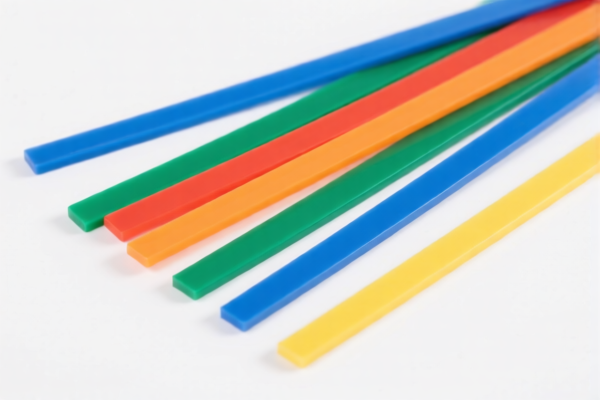

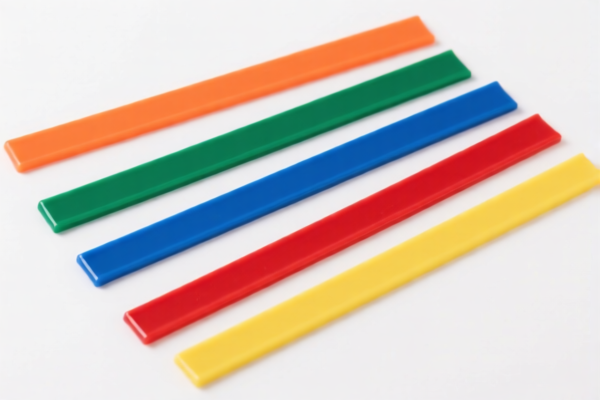
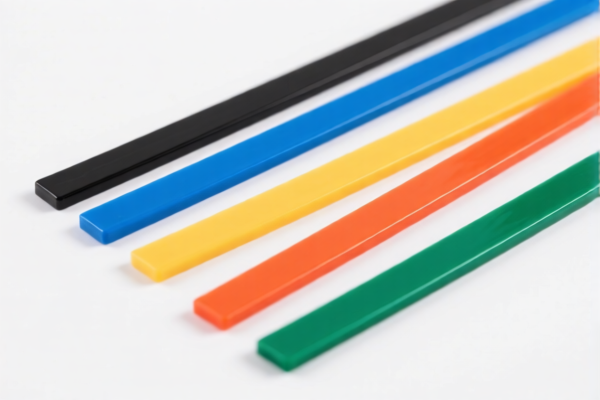
AI Analysis
🛡️ Other Plastic Strips for Protection (Plastic Medical/Industrial Protective Strips)
🌐 HS Code Reference & Customs Clearance Guide | 2026 Latest Tariff Analysis | Professional Clearance Strategy
📌 I. Product Definition & Classification: What Exactly Are "Plastic Protective Strips"?
"Plastic strips for protection" is a generic trade term that lacks specific regulatory precision. In international trade, customs authorities classify these items based on three critical factors: 1. Shape/Form: Is it a single filament, a profile, or a cut strip? 2. Usage: Is it for medical purposes (contact with patients/devices) or general industrial/consumer protection? 3. Material Composition: While all are "plastic," the specific polymer type often dictates the chapter.
⚠️ Key Distinction Points:
- If the item is a single filament or monofilament (thread-like) used for packaging or binding → It may fall under 3916 (Monofilaments/Profiles).
- If the item is a finished article made for a specific purpose (like medical use) → It falls under 3926 (Other articles of plastics).
- Crucial Note: The "Medical" vs. "Non-Medical" distinction significantly impacts the tax rate and regulatory requirements.
📦 II. HS Code Classification Details (2026 Latest Tariff Authority Comparison)
Based on the provided data, here are the 5 potential HS Codes for "Plastic Protective Strips."
| HS Code | Product Description | Application Scenario | Key Characteristics |
|---|---|---|---|
3926.90.99.89 |
Plastic medical strips; material: plastic; form: strip-like; classified as other plastic products. | General medical protective strips, non-specific medical plastic articles. | Generic medical/plastic strip. |
3916.90.50.00 |
Plastic medical strips; material: plastic; form: strip-like/profile. | Industrial or medical profiles, extruded plastic strips. | Classified as "Profile/Extruded" rather than finished article. |
3916.90.30.00 |
Plastic medical strips; material: plastic; form: monofilament/strip-like. | Plastic filaments, single strands used for binding or light protection. | Classified as "Monofilament" (single thread-like structure). |
3926.90.99.50 |
Plastic medical strips; material: plastic; usage: medical; classified as medical-related plastic products. | Dedicated medical use plastic strips (e.g., wound dressings strips, medical packaging strips). | Specific Medical Purpose classification. |
3926.20.60.00 |
Plastic protective suits; material: plastic; form: protective suit; classified as clothing & accessories. | Full-body protective garments (not just strips), but included for comparison. | Classified as Clothing/Apparel (Gloves, suits, etc.). |
🔍 Focus Analysis:
- Items3916.90.50.00and3916.90.30.00are classified under Chapter 39, Heading 16 (Articles of plastics for technical uses, monofilaments, profiles). This implies they are often seen as semi-finished or raw material forms rather than finished finished goods. - Items3926.90.99.89and3926.90.99.50are classified under Chapter 39, Heading 26 (Other articles of plastic). This implies they are finished articles. - Item3926.20.60.00is distinct as it refers to protective suits/clothing, which typically implies a larger form factor than a "strip." If your product is truly a "strip," this code may be incorrect unless it refers to a strip component of a suit.
💰 III. 2026 Latest Tariff Rate Breakdown (Including Additional Taxes & Policy Surcharges)
✅ Applicable Country: United States (US)
✅ Origin: China (CN)
✅ Effective Date: 2025/2026 (Current Trade Policy)
🎯 1. 3926.90.99.89 —— Plastic Medical Strips (Other Plastic Products)
| Item | Content |
|---|---|
| Base Tariff | 5.3% |
| Section 301 Additional Tariff | +7.5% |
| Section 122 Tariff (China Specific) | +10% |
| Total Tariff | 22.8% |
| Tax Calculation | CIF Value × 22.8% |
| De Minimis Exemption | ❌ Not Applicable (Section 122 typically negates de minimis for certain categories or requires strict origin verification) |
| Legal Basis Path | HTSUS:3926.90.99.89 → Section 301:7.5% → Section 122:10% |
📌 Explanation:
- This is the lowest tax rate among the medical-specific codes.
- It treats the product as a generic "other plastic product" with medical association, avoiding higher "monofilament" or "profile" duties.
- Advantage: Cost-effective if the product can be clearly defined as a finished article rather than a raw profile.
🎯 2. 3916.90.50.00 —— Plastic Medical Strips (Profile/Form)
| Item | Content |
|---|---|
| Base Tariff | 5.8% |
| Section 301 Additional Tariff | +25.0% |
| Section 122 Tariff (China Specific) | +10% |
| Total Tariff | 40.8% |
| Tax Calculation | CIF Value × 40.8% |
| De Minimis Exemption | ❌ Not Applicable |
| Legal Basis Path | HTSUS:3916.90.50.00 → Section 301:25% → Section 122:10% |
📌 Explanation:
- The Section 301 tariff jumps to 25% here because "Profiles" (Heading 3916) are often scrutinized more strictly as industrial inputs.
- High Cost: 40.8% is significantly higher than3926.90.99.89. Avoid this classification unless the product is strictly a raw extruded profile for further manufacturing.
🎯 3. 3916.90.30.00 —— Plastic Medical Strips (Monofilament)
| Item | Content |
|---|---|
| Base Tariff | 6.5% |
| Section 301 Additional Tariff | +25.0% |
| Section 122 Tariff (China Specific) | +10% |
| Total Tariff | 41.5% |
| Tax Calculation | CIF Value × 41.5% |
| De Minimis Exemption | ❌ Not Applicable |
| Legal Basis Path | HTSUS:3916.90.30.00 → Section 301:25% → Section 122:10% |
📌 Explanation:
- Similar to3916.90.50.00, this incurs the maximum Section 301 rate of 25%.
- If the "strip" is actually a single filament (like a heavy-duty tie or suture-like strand), it falls here.
- Warning: This is the most expensive classification. Ensure your product is not a simple filament.
🎯 4. 3926.90.99.50 —— Plastic Medical Strips (Medical Purpose)
| Item | Content |
|---|---|
| Base Tariff | 5.3% |
| Section 301 Additional Tariff | +7.5% |
| Section 122 Tariff (China Specific) | +10% |
| Total Tariff | 22.8% |
| Tax Calculation | CIF Value × 22.8% |
| De Minimis Exemption | ❌ Not Applicable |
| Legal Basis Path | HTSUS:3926.90.99.50 → Section 301:7.5% → Section 122:10% |
📌 Explanation:
- Same tax rate as3926.90.99.89(22.8%).
- Difference: The description explicitly states "Usage: Medical."
- Regulatory Impact: While the tariff is low, customs may require FDA documentation or proof of medical device status (Class I, II, or III) because of the "Medical" designation. If you lack FDA clearance, this code could lead to shipment detention for regulatory compliance checks, even if the tariff is low.
🎯 5. 3926.20.60.00 —— Plastic Protective Suits (Clothing)
| Item | Content |
|---|---|
| Base Tariff | 0.0% |
| Section 301 Additional Tariff | +25.0% |
| Section 122 Tariff (China Specific) | +10% |
| Total Tariff | 35.0% |
| Tax Calculation | CIF Value × 35.0% |
| De Minimis Exemption | ❌ Not Applicable |
| Legal Basis Path | HTSUS:3926.20.60.00 → Section 301:25% → Section 122:10% |
📌 Explanation:
- This code is for Protective Suits/Clothing.
- Misclassification Risk: If you are shipping "strips," using this code is incorrect unless the "strip" is part of a packaged protective garment.
- Tax Rate: 35.0%. While the base tariff is 0%, the Section 301 (25%) and Section 122 (10%) make it costly.
- Recommendation: Do not use this for strips unless it is a kit containing full protective wear.
🛠️ IV. Customs Clearance Practical Advice (Actionable Pitfall Guide)
✅ 1. Recommended HS Code Selection Strategy
| Scenario | Recommended HS Code | Total Tax | Reason |
|---|---|---|---|
| Best for Cost & Simplicity | 3926.90.99.89 |
22.8% | Low tax, classified as "Other Plastic Product." Avoids "Monofilament/Profile" scrutiny. |
| If Strictly Medical Device | 3926.90.99.50 |
22.8% | Same tax as above, but requires FDA/Regulatory proof. Use only if fully compliant. |
| If It's a Raw Profile/Filament | 3916.90.50.00 or 3916.90.30.00 |
40-41.5% | High Cost. Only use if the product is explicitly a raw extruded profile or monofilament for industrial use. |
| If It's a Full Suit/Kit | 3926.20.60.00 |
35.0% | Use only for protective clothing/garments, not simple strips. |
📌 Strategic Insight:
- Avoid3916Codes (3916.90.50.00/3916.90.30.00) unless necessary. The Section 301 rate of 25% makes them 18% more expensive than the3926codes.
- Prefer3926.90.99.89over3926.90.99.50if you do not have immediate FDA/medical device registration documents. The tax is identical, but the regulatory burden is lower.
✅ 2. Critical Documentation Requirements
| Document | Required? | Details |
|---|---|---|
| Product Specifications | ✔️ | Must clearly state: Material (e.g., PVC, PE, PP), Form (Strip, Film, Profile), and Non-Medical or Medical status. |
| Photos | ✔️ | Clear images showing the "strip" shape. If it looks like a suture, it may be regulated as a medical device. |
| FDA Registration (If Medical) | ✔️ | If using 3926.90.99.50, provide FDA establishment registration and device listing. |
| Commercial Invoice | ✔️ | Describe as "Plastic Protective Strip, Non-Medical, For Industrial Use" to support 3926.90.99.89. |
| Certificate of Origin | ✔️ | Required for Section 122 and 301 determinations. |
✅ 3. Clearance Tips & "Golden Rules"
🔥 "Don't be a 'Filament', Be a 'Product'!"
| Situation | Correct Declaration | Incorrect Declaration | Consequence |
|---|---|---|---|
| Plastic Strip for Packaging | 3926.90.99.89 |
3916.90.30.00 |
Avoid 41.5% tax by not labeling it as a "Monofilament." |
| Medical Strip (No FDA) | 3926.90.99.89 |
3926.90.99.50 |
Avoid regulatory detention by not claiming "Medical" without proof. |
| Industrial Protective Profile | 3916.90.50.00 |
3926.90.99.89 |
If it's truly a raw profile, use 3916 to avoid "Finished Article" misclassification, but accept higher tax. |
🌍 V. Global Market Comparison (2026 Latest)
| Country/Region | Recommended HS Code | Tariff (China Origin) | Notes |
|---|---|---|---|
| 🇺🇸 USA | 3926.90.99.89 |
22.8% | Low base, but 301+122 surcharges apply. |
| 🇪🇺 EU | 3926.90.99 |
6.5% | No Section 301/122. Lower overall cost. |
| 🇨🇳 China | 3926.90.99 |
6.5% | Base import tariff only. |
| 🇯🇵 Japan | 3926.90.99 |
6.0% | Stable tariff environment. |
📌 Conclusion:
- The US market is the most complex due to Section 301 (7.5% or 25%) and Section 122 (10%) tariffs.
- Optimization Strategy: Classify as3926.90.99.89(Other Plastic Products) to benefit from the lower 7.5% Section 301 rate instead of the 25% rate for monofilaments/profiles.
📌 VI. Common Errors & Pitfalls (Lessons Learned)
❌ Error 1: Calling a "Plastic Strip" a "Monofilament" (3916)
👉 Consequence: Tax jumps from 22.8% to 41.5%.
👉 Fix: If it's a finished article (even a thin strip), use 3926.
❌ Error 2: Using "Medical" HS Code (3926.90.99.50) without FDA docs
👉 Consequence: Shipment held at border for Regulatory Compliance Review.
👉 Fix: If not FDA-registered, use 3926.90.99.89 and describe as "Non-Medical Plastic Strip."
❌ Error 3: Misdeclaring Protective Suits as Strips (3926.20.60.00)
👉 Consequence: Misclassification penalty + 35% tax (vs. potential 22.8% if correctly classified as a strip component).
👉 Fix: Accurately describe the physical form.
✅ Correct Declaration Example:
"Plastic Protective Strip, PVC Material, Cut to Length, Non-Medical Use, For Industrial Packaging Protection, Model XYZ"
🎯 VII. Conclusion: Professional Classification, Save Costs!
🎯 Key Takeaway:
🔹 "Profile/Filament = 25% Surcharge (Expensive)"
🔹 "Finished Article (3926) = 7.5% Surcharge (Cheaper)"
🔹 "Medical Label = Regulatory Risk"
📌 Final Recommendation:
1. Verify Product Form: Is it a raw extruded profile (3916) or a cut/finished strip (3926)?
2. Choose 3926.90.99.89 if it is a finished strip and you want the lowest tax (22.8%) with minimal regulatory hassle.
3. Use 3926.90.99.50 only if you are a certified medical device supplier.
4. Avoid 3916 codes unless you are exporting raw materials to manufacturers who will further process them.
📣 Immediate Action:
📞 Contact your freight forwarder with photos and specs
🚀 Get an Advance Ruling from US CBP if the product is borderline between "Profile" and "Article"
💼 Save 18% in tariffs by correct classification!
✨ Customs Clearance Starts with the Right HS Code!
💰 Every Percent Saved is Pure Profit!
Customer Reviews
About HS Code Classification
The Harmonized System (HS) is an internationally standardized nomenclature developed by the World Customs Organization (WCO) to classify traded products. Over 200 countries use the HS system as the basis for customs tariffs, trade statistics, and import/export regulations.
Each HS code follows a hierarchical structure:
- Chapter (2 digits) — Broad category of goods (e.g., Chapter 84: Machinery and Mechanical Appliances)
- Heading (4 digits) — More specific grouping within the chapter
- Subheading (6 digits) — Internationally standardized breakdown, used by all WCO member countries
- National subdivisions (8-10 digits) — Country-specific extensions for further classification, such as US HTSUS 10-digit codes
Correct HS code classification is essential for smooth customs clearance, accurate duty payment, and compliance with trade regulations. Misclassification can lead to customs delays, overpayment of duties, or penalties.
When importing from CN to US, the applicable tariff rates may include:
- Most-Favored-Nation (MFN) rate — The standard duty rate applied to WTO members
- General rate — Applied to countries without trade agreements
- Trade remedy duties — Additional tariffs such as Section 301 (anti-dumping), Section 232 (national security), or countervailing duties
The information provided on this page is for reference purposes only. For official classification, please consult with your local customs authority or a licensed customs broker.