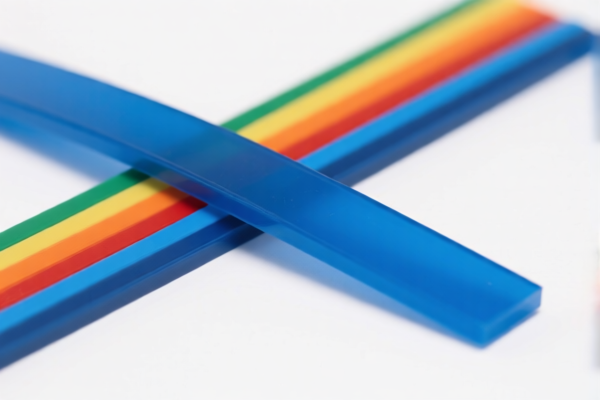
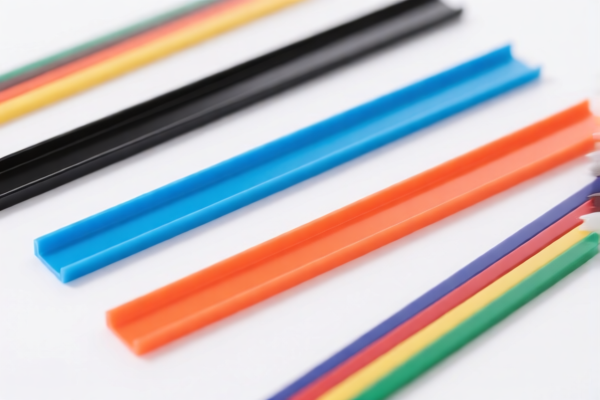
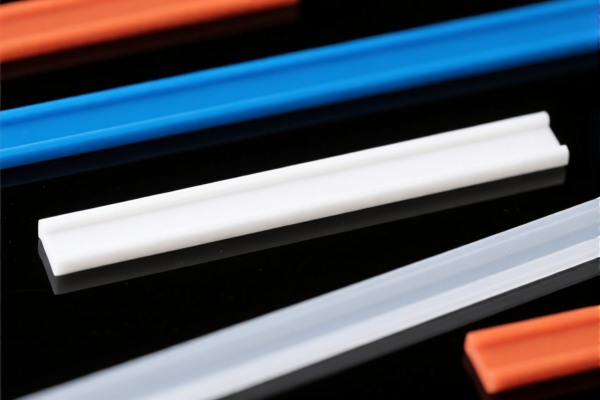
other plastic strips for the electronics industry
CN → US| HS Code | Tariff Rate | Origin | Destination | Doc |
|---|---|---|---|---|
| 3921905050 | 39.8% | CN | US | Official Doc |
| 3919905030 | 40.8% | CN | US | Official Doc |
| 3919102020 | 40.8% | CN | US | Official Doc |
| 3921190090 | 41.5% | CN | US | Official Doc |
| 3919905060 | 40.8% | CN | US | Official Doc |
Product Images
AI Analysis
🛡️ Other Plastic Strips for the Electronics Industry
🌐 HS Code Reference & Customs Clearance Guide | 2026 Latest Tariff Analysis | Professional Compliance Strategy
📌 I. Product Definition & Classification: What Are "Other Plastic Strips"?
In the electronics manufacturing supply chain, "other plastic strips" (often referred to as plastic tapes, films, or strips) are critical components used for insulation, protection, bonding, or temporary holding. Unlike standard adhesive tapes (which might fall under different headings), these products are characterized by their plastic material composition and strip-like form factor, specifically tailored for electronic applications.
⚠️ Key Distinction Points:
- If the product is a plain plastic strip/film without adhesive backing or specific electronic device integration → It falls under Chapter 39 (Plastics).
- If it is a complete electronic component (e.g., a capacitor or sensor) → It would fall under Chapter 85.
- Our Focus: Purely Plastic Material in Strip/Film/Board Form used as materials/auxiliaries in the electronics industry.
📦 II. HS Code Classification Details (2026 Latest Tariff Authority Comparison)
Based on the specific physical properties (Strip vs. Board/Flat) and exact usage, the following HS Codes are applicable. All are subject to high tariffs due to Section 301 and IEEPA measures.
| HS Code | Product Description | Application Scenario | Physical Form | Tax Rate (Total) |
|---|---|---|---|---|
3921.90.50.50 |
Other plates, sheets, film, foil, and strip of plastics | Electronic industry use (insulation, spacers, etc.) | Strip (Zhuangtai) | 39.8% |
3919.90.50.30 |
Other plates, sheets, film, foil, tape, and strip of plastics | Electronic industry use | Strip/Tape (Tiao Zhuang) | 40.8% |
3919.10.20.20 |
Plates, sheets, film, foil, tape, and other flat shapes, of plastics, self-adhesive | Used for functions consistent with electrical insulation tape | Strip/Tape (Tiao Zhuang) | 40.8% |
3921.19.00.90 |
Other plates, sheets, film, foil, and strip of plastics (Polymerized) | General "Other" category for plastic strips | Strip (Dai Xingtai) | 41.5% |
3919.90.50.60 |
Other plates, sheets, film, foil, tape, and other flat shapes of plastics | Electronic industry use (fallback category) | Board/Flat Shape (Ban/Xiapi) | 40.8% |
🔍 Critical Note:
- All these codes fall under Chapter 39 (Plastics and Articles Thereof).
- The difference between3919(Tape/Adhesive-like) and3921(Other Plates/Sheets/Strips) often depends on whether the product has an adhesive backing or is purely a structural/insulating plastic strip.
- All listed HS Codes are subject to aggressive US tariffs.
💰 III. 2026 Latest Tariff Rate Breakdown (Including Surcharges & Policy Add-ons)
✅ Applicable Country: United States (US)
✅ Country of Origin: China (CN)
✅ Effective Time: From November 10, 2025 onwards (for subsequent imports)
🎯 1. 3921.90.50.50 —— Plastic Strip (General Category)
| Item | Content |
|---|---|
| Base Duty Rate | 4.8% (Ad Valorem) |
| Section 301 Surcharge | +25.0% (USITC Footnote 9903.88.01 / Section 301) |
| Section 122 / IEEPA Surcharge | +10.0% (Targeting China/HK products) |
| Total Effective Rate | 39.8% |
| Calculation Method | CIF Value × 39.8% |
| De Minimis Exemption? | ❌ NO (Strictly denied; de minimis does not apply to Section 301 goods from China) |
| Legal Basis Path | IEEPA:9903.01.25 → Section 301: 9903.88.01 → USITC:3921.90.50.50 |
📌 Explanation:
- The 4.8% base duty is the standard Most Favored Nation (MFN) rate for this plastic subheading.
- The 25% Section 301 tariff is the primary penalty for Chinese-manufactured plastic goods in many categories.
- The 10% IEEPA/Section 122 tariff is an additional layer targeting specific Chinese imports.
- Total: 39.8%. This is a very high cost that must be factored into pricing strategies.
🎯 2. 3919.90.50.30 & 3919.10.20.20 —— Plastic Strips/Tapes (Adhesive/Functional)
| Item | Content |
|---|---|
| Base Duty Rate | 5.8% (Ad Valorem) |
| Section 301 Surcharge | +25.0% |
| Section 122 / IEEPA Surcharge | +10.0% |
| Total Effective Rate | 40.8% |
| Calculation Method | CIF Value × 40.8% |
| De Minimis Exemption? | ❌ NO |
| Legal Basis Path | IEEPA:9903.01.25 → Section 301: 9903.88.01 → USITC:3919.xxxx |
📌 Note:
- These codes apply if the plastic strip is in a tape form or has adhesive-like properties (even if not explicitly "self-adhesive" in the traditional sense, but used as such in electronics).
- The base rate is slightly higher (5.8% vs 4.8%), but the surcharges are identical, leading to a 40.8% total rate.
🎯 3. 3921.19.00.90 —— Other Plastic Strips (Polymerized)
| Item | Content |
|---|---|
| Base Duty Rate | 6.5% (Ad Valorem) |
| Section 301 Surcharge | +25.0% |
| Section 122 / IEEPA Surcharge | +10.0% |
| Total Effective Rate | 41.5% |
| Calculation Method | CIF Value × 41.5% |
| De Minimis Exemption? | ❌ NO |
| Legal Basis Path | IEEPA:9903.01.25 → Section 301: 9903.88.01 → USITC:3921.19.00.90 |
📌 Note:
- This is the highest tariff bracket among the options due to the higher base duty (6.5%).
- It serves as a "catch-all" for polymerized plastic strips that don't fit neatly into the self-adhesive or specific electronic component categories.
🎯 4. 3919.90.50.60 —— Plastic Board/Flat Shape (Fallback)
| Item | Content |
|---|---|
| Base Duty Rate | 5.8% (Ad Valorem) |
| Section 301 Surcharge | +25.0% |
| Section 122 / IEEPA Surcharge | +10.0% |
| Total Effective Rate | 40.8% |
| Calculation Method | CIF Value × 40.8% |
| De Minimis Exemption? | ❌ NO |
| Legal Basis Path | IEEPA:9903.01.25 → Section 301: 9903.88.01 → USITC:3919.90.50.60 |
📌 Note:
- If the product is physically a flat board or sheet rather than a narrow strip, this code may be more appropriate, but the rate remains 40.8%.
🛠️ IV. Customs Clearance Practical Advice (Avoid Pitfalls)
✅ 1. Documentation Checklist (Mandatory)
| Document | Required? | Explanation |
|---|---|---|
| ✅ Product Specification Sheet | ✔️ | Must detail material composition (e.g., PE, PVC, PET), dimensions, and intended use in electronics. |
| ✅ Product Photos | ✔️ | Clear images showing the strip form, color, and packaging. |
| ✅ Commercial Invoice | ✔️ | Must explicitly state "Plastic Strip for Electronics Industry" and not just "Plastic Parts." |
| ✅ Packing List | ✔️ | Detailed weight and volume to calculate CIF value accurately. |
| ✅ Certificate of Origin | ✔️ | Required to prove origin is China (to apply correct tariffs, though no benefit applies here). |
| ✅ Third-Party Test Report | ✔️ | RoHS/REACH compliance tests are often required for electronic accessories in the US. |
✅ 2. Declaration Strategy (Key Mnemonics)
🔥 "Form Dictates Code, Tariff is Fixed! No De Minimis!"
| Scenario | Correct Declaration | Wrong Approach |
|---|---|---|
| Narrow Plastic Strip | 3921.90.50.50 or 3919.90.50.30 |
Misdeclaring as "Electronic Component" (Chapter 85) → Severe Penalty/Seizure |
| Wide Plastic Sheet/Board | 3919.90.50.60 |
Misdeclaring as "Strip" → Audit Risk |
| Self-Adhesive Tape | 3919.10.20.20 |
Misdeclaring as "Non-adhesive Strip" → Underpayment Duty |
| Any Plastic Import from China | Expect ~40% Tax | Assuming low duties → Cash Flow Crisis |
✅ 3. Special Circumstances Handling
| Situation | Handling Advice |
|---|---|
| Mixed Shipment (Plastic + Electronics) | Declare separately! Do not bundle plastic strips with PCBs. Each item needs its own HS Code. |
| OEM Custom Strips | Provide design drawings to prove it is a "plastic article" and not a finished good. |
| Transshipment via Vietnam/Malaysia | ❌ High Risk. US Customs tracks origin closely. If it is substantially transformed in China, transshipping does not eliminate Section 301 tariffs. |
| Sample Shipments | ❌ De Minimis Exemption Denied. Even under $800, China-origin goods subject to Section 301/IEEPA are taxed. |
🌍 V. Global Market Comparison (2026 Latest)
| Country/Region | Recommended HS Code | Tariff (China Origin) | Certification | Remarks |
|---|---|---|---|---|
| 🇺🇸 USA | 3921.90.50.50 |
39.8% (Total) | RoHS/REACH | Highest Barrier. 40%+ effective rate. |
| 🇨🇳 China | 3921.90.50.50 |
5-6% (Import Duty) | CCC (if applicable) | Low duty, but export tax considerations apply. |
| 🇪🇺 EU | 3921.90.50.50 |
4-6.5% | CE/RoHS | No Section 301 equivalent, but Carbon Border Tax (CBAM) may apply later. |
| 🇦🇺 Australia | 3921.90.50.50 |
5% | RCM | FTA benefits may apply depending on exact material. |
| 🇯🇵 Japan | 3921.90.50.50 |
5% | PSE | Stable duty rates, no major political tariffs. |
📌 Conclusion:
- The USA is the most challenging market for these products due to the cumulative 39.8%-41.5% tariff.
- Europe, Japan, and Australia remain viable markets with significantly lower duties (5-7%).
📌 VI. Common Errors & Pitfall Guide (Lessons Learned)
❌ Error 1: Declaring plastic strips as "Electrical Insulators" under Chapter 85
👉 Consequence: If deemed incorrect, reclassified to Chapter 39 → Back taxes + Penalties.
👉 Reality: Pure plastic is Chapter 39. Only if it has specific electrical properties certified as components might it move, but usually still 39 for raw materials.
❌ Error 2: Assuming "De Minimis" ($800) applies to plastic strips from China
👉 Consequence: Package seized by CBP → 100% Duty + Handling Fees + Legal Costs.
👉 Reality: Section 301 and IEEPA tariffs exclude de minimis eligibility for Chinese goods.
❌ Error 3: Vague Description ("Plastic Parts")
👉 Consequence: Customs examiners will inspect physically → Delay in clearance.
👉 Solution: Use precise terms: "Plastic Strip, PET Material, Width 10mm, for Electronic Circuit Board Spacing."
🎯 VII. Conclusion: Precision is Profit
🎯 Remember the Key Takeaways:
🔹 "Plastic Strips from China to US? Expect ~40% Tax."
🔹 "No De Minimis! Even for samples, pay the duty."
🔹 "Correct HS Code Matters: Strip vs. Tape vs. Board changes the base rate by 1-2%."
📌 Pro Tip:
If you are sourcing these plastics, consider shifting supply chains to Vietnam, India, or Mexico. Goods originating from these countries may not be subject to the same Section 301/IEEPA tariffs, potentially reducing total duty from ~40% to <10%.
📣 Immediate Action Required:
📞 Consult a licensed US Customs Broker for an Advance Ruling if the product form is ambiguous.
🚀 Recalculate your landed cost including the 40% tariff buffer to ensure profitability in the US market.
✨ Professional Clearance, Starts with Accurate Classification!
💼 Every percentage point in tariff saves or costs you thousands!
Customer Reviews
About HS Code Classification
The Harmonized System (HS) is an internationally standardized nomenclature developed by the World Customs Organization (WCO) to classify traded products. Over 200 countries use the HS system as the basis for customs tariffs, trade statistics, and import/export regulations.
Each HS code follows a hierarchical structure:
- Chapter (2 digits) — Broad category of goods (e.g., Chapter 84: Machinery and Mechanical Appliances)
- Heading (4 digits) — More specific grouping within the chapter
- Subheading (6 digits) — Internationally standardized breakdown, used by all WCO member countries
- National subdivisions (8-10 digits) — Country-specific extensions for further classification, such as US HTSUS 10-digit codes
Correct HS code classification is essential for smooth customs clearance, accurate duty payment, and compliance with trade regulations. Misclassification can lead to customs delays, overpayment of duties, or penalties.
When importing from CN to US, the applicable tariff rates may include:
- Most-Favored-Nation (MFN) rate — The standard duty rate applied to WTO members
- General rate — Applied to countries without trade agreements
- Trade remedy duties — Additional tariffs such as Section 301 (anti-dumping), Section 232 (national security), or countervailing duties
The information provided on this page is for reference purposes only. For official classification, please consult with your local customs authority or a licensed customs broker.