other plastic strips for toys
CN → US| HS Code | Tariff Rate | Origin | Destination | Doc |
|---|---|---|---|---|
| 3926909989 | 22.8% | CN | US | Official Doc |
| 392690 | 0.0% | CN | US | Official Doc |
| 950300 | 0.0% | CN | US | Official Doc |
| 9503000090 | 10.0% | CN | US | Official Doc |
Product Images
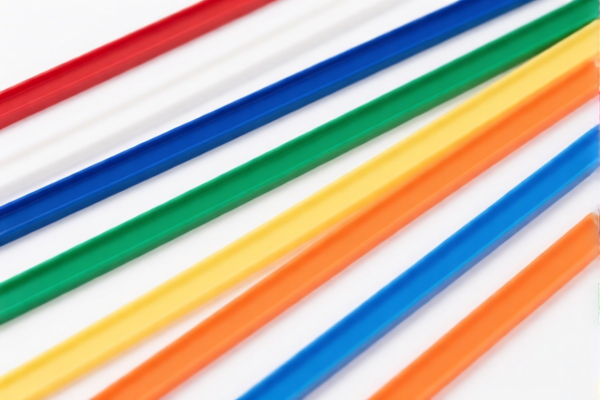
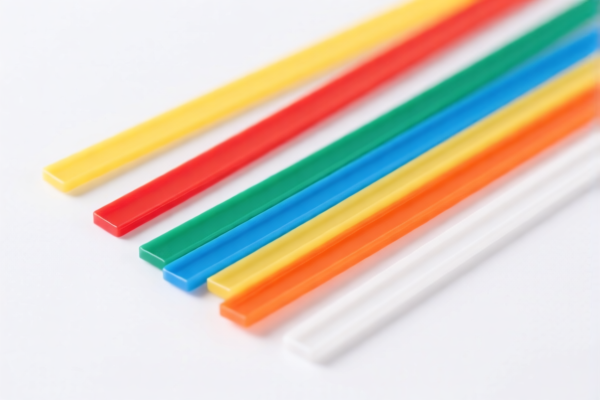
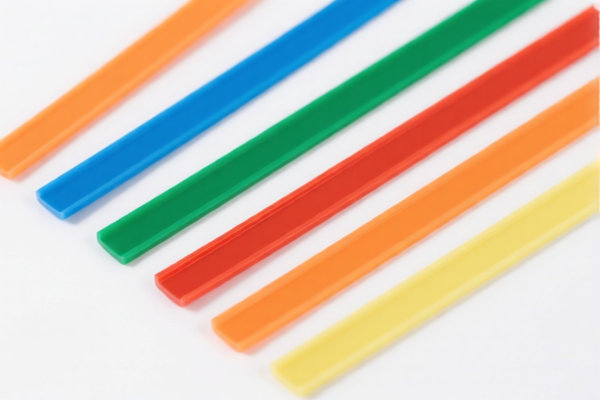
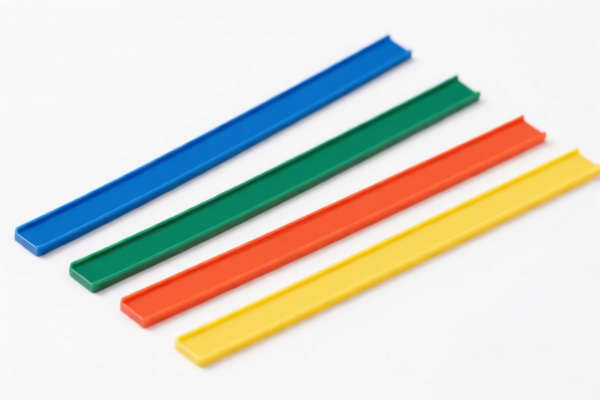
AI Analysis
🧸 Other Plastic Strips for Toys
🌐 HS Code Reference & Customs Clearance Guide | 2026 Latest Tariff Analysis | Professional-Level Strategy
📌 One, Product Definition & Classification: What Are "Other Plastic Strips for Toys"?
In international trade, "other plastic strips for toys" (HS Code 3926.90) refers to unfinished plastic components intended specifically for the manufacturing or assembly of toys. Unlike finished toys (HS Code 9503), these are raw materials or semi-finished goods in the form of strips, rods, or sheets.
Key Distinction: * If it’s a raw material/semi-finished strip: → Classified under Chapter 39 (Plastics and Articles Thereof). * If it’s a finished, ready-to-play toy: → Classified under Chapter 95 (Toys, Games, and Sports Requisites).
⚠️ Critical Clarification Point:
- If the plastic strips are general-purpose packaging materials (e.g., stretch wrap, shrink film) → Do NOT use3926.90. Use appropriate packaging codes.
- If the plastic strips are specifically shaped or designed for toy assembly (e.g., interlocking toy bricks raw material, toy vehicle bodies not yet assembled) → They can fall under3926.90only if they are not yet fitted with other materials (like motors, fabric, or batteries) and are not ready for play.
- Warning: US Customs (CBP) often reclassifies "plastic strips for toys" into9503.00if they are clearly identifiable as toy parts. Always verify intent.
📦 Two, HS Code Classification Details (2026 Latest Tariff Authority Comparison)
| HS Code | Product Description | Applicable Scenario | Is it a Finished Toy? |
|---|---|---|---|
3926.90.99.89 |
Other articles of plastics; Other; Other; Other | Raw plastic strips specifically for toy manufacturing (not yet assembled) | ❌ No (Raw Material) |
3926.90 |
Other articles of plastics (General Category) | Semi-finished plastic components | ❌ No (Semi-finished) |
9503.00.00.90 |
Tricycles, scooters, pedal cars; dolls; parts and accessories thereof | Finished toy parts or strips that are integral to a specific toy | ✅ Yes (Part of Toy) |
9503.00.00.73 |
"Children’s products" as defined in 15 U.S.C. § 2052: Labeled for ages 3–12 | If the strips are labeled as children’s products or clearly intended for direct play | ✅ Yes (Finished Product) |
🔍 Key Insight:
-3926.90is risky for toys. CBP may argue that "plastic strips for toys" are parts of toys (Chapter 95), not general plastic articles.
-9503.00is the safer, more common classification for toy-related plastic components, especially if they are recognizable as toy parts.
-9503.00.00.73triggers CPSC (Consumer Product Safety Commission) regulations if the product is intended for children aged 3–12.
💰 Three, 2026 Latest Tariff Rate Breakdown (Including Surcharges, Policy Additions)
✅ Applicable Country: United States (US)
✅ Country of Origin: China (CN)
✅ Effective Date: From November 10, 2025 onwards (for subsequent imports)
🎯 1. 3926.90.99.89 —— Other Articles of Plastics (Raw/Semi-finished)
| Item | Content |
|---|---|
| Base Tariff Rate | 5.3% (ad valorem) |
| Section 301 Surtax | +7.5% |
| Total Tariff Rate | 12.8% |
| Tax Calculation | CIF Value × 12.8% |
| De Minimis Eligibility | ❌ Not Eligible (Deny de minimis for China-origin goods under current rules) |
| Legal Basis Path | USITC:3926.90.99.89 → Section 301: Footnote 9903.88.01 |
📌 Explanation:
- This is the cheapest option if correctly classified as a "general plastic article."
- Risk: CBP may challenge this classification, arguing it’s a "toy part" (9503), which has a 0% base tariff but may trigger CPSC safety checks and potential anti-dumping duties if misdeclared.
- Note: If CBP reclassifies to9503.00, the base tariff is 0%, but you may face additional compliance costs (testing, labeling).
🎯 2. 9503.00.00.90 —— Toys, Parts, Accessories (Finished)
| Item | Content |
|---|---|
| Base Tariff Rate | 0.0% |
| Section 301 Surtax | 0.0% |
| Total Tariff Rate | 0.0% |
| Tax Calculation | CIF Value × 0% |
| De Minimis Eligibility | ⚠️ Check CPSC Requirements |
| Legal Basis Path | USITC:9503.00.00.90 |
📌 Explanation:
- 0% tariff is highly attractive.
- However: You MUST comply with CPSC (Consumer Product Safety Commission) regulations if intended for children.
- Costs: Testing, labeling, and certification may exceed the tariff savings.
- Warning: If misclassified as3926.90to avoid CPSC rules, you risk seizure, fines, or forced reclassification.
🎯 3. 9503.00.00.73 —— "Children’s Products" (Ages 3–12)
| Item | Content |
|---|---|
| Base Tariff Rate | 0.0% |
| Section 301 Surtax | 0.0% |
| Total Tariff Rate | 0.0% |
| CPSC Requirement | ✅ Mandatory (CPC - Children’s Product Certificate) |
| Legal Basis Path | 15 U.S.C. § 2052 |
📌 Explanation:
- If the product is labeled or determined by the importer as intended for children aged 3–12, it is a "Children’s Product."
- Mandatory CPC required.
- No tariff, but high compliance cost.
🛠️ Four, Customs Clearance Practical Advice (Real-World Pitfall Avoidance Guide)
✅ 1. Documentation Checklist (Non-negotiable)
| Document | Required | Description |
|---|---|---|
| ✅ Product Specification Sheet | ✔️ | Material composition, dimensions, intended use (toy part vs. raw material) |
| ✅ Product Photos (Including Packaging) | ✔️ | Show if strips are raw or pre-shaped for specific toys |
| ✅ Statement of Intent | ✔️ | Clearly state: "Plastic strips for toy manufacturing" or "Toy parts" |
| ✅ Certificate of Origin (CO) | ✔️ | For origin proof |
| ✅ Commercial Invoice | ✔️ | Must match HS Code and description |
| ✅ CPSC Test Reports (If 9503) | ✔️ | If classified as toy, CPC is mandatory |
| ✅ Packing List | ✔️ | Detail contents to avoid misinterpretation |
✅ 2. Declaration Strategy (Key Rules)
🔥 "Don’t hide as plastic; don’t fake as toy; declare accurately, pay less stress!"
| Scenario | Correct HS Code | Wrong Approach | Consequence |
|---|---|---|---|
| Raw plastic strips for toy molding | 3926.90.99.89 |
Declaring as 9503 → CPSC hassle |
Higher tariff (12.8%) but no CPSC |
| Pre-shaped toy parts (e.g., car bodies) | 9503.00.00.90 |
Declaring as 3926 → CBP reclassification |
0% tariff but risk of penalty for misdeclaration |
| Products labeled for children 3–12 | 9503.00.00.73 |
Ignoring CPC | Seizure, fines, CPSC enforcement |
| General plastic strips (no toy link) | 3926.90.99.89 |
Claiming toy status → No benefit | Unnecessary CPSC cost |
✅ 3. Special Cases
| Case | Handling Advice |
|---|---|
| OEM Custom Plastic Parts | Provide design drawings. If recognizable as toy parts, use 9503. If generic, use 3926. |
| Plastic Strips with Packaging | Declare separately. Packaging may have different HS codes. |
| Mixed Imports (Toys + Plastic Strips) | Separate HS Codes. Do not mix 3926 and 9503 on one line item. |
| Intended for Adults (e.g., Model Kits) | Use 9503 but specify "for adults." Avoid CPSC if not for children. |
🌍 Five, Global Market Comparison (2026 Latest)
| Country/Region | Recommended HS Code | Tariff | Certification | Notes |
|---|---|---|---|---|
| 🇺🇸 USA | 3926.90.99.89 or 9503.00.00.90 |
12.8% (3926) / 0% (9503) | CPSC (if 9503) | High risk of reclassification. |
| 🇨🇳 China | 3926.90 or 9503 |
5.3% / 0% | No special toy certs for import | Lower tariffs, easy clearance |
| 🇪🇺 EU | 3926.90 or 9503 |
0–6.5% / 0% | CE, REACH, EN71 | Strict toy safety standards. |
| 🇦🇺 Australia | 3926.90 or 9503 |
5% / 0% | AS/NZS standards | CPSC-equivalent rules apply |
| 🇯🇵 Japan | 3926.90 or 9503 |
0–5% / 0% | JIS standards | Toy safety laws enforced |
📌 Conclusion:
- USA is the most challenging due to Section 301 tariffs and CPSC enforcement.
- EU has strict safety standards but lower tariffs.
- China is a production hub, so importing plastic strips from China triggers US tariffs but exports from China are easier.
📌 Six, Common Mistakes & Pitfall Avoidance (Blood-Teaching Lessons)
❌ Mistake 1: Declaring "Plastic Strips for Toys" as 3926 to avoid CPSC, but CBP reclassifies to 9503.
👉 Consequence: Retroactive tax adjustment + penalties + CPSC retroactive compliance.
❌ Mistake 2: Using 9503 for raw plastic strips without CPSC certification.
👉 Consequence: Shipment held, delayed clearance, forced testing costs.
❌ Mistake 3: Mixing "Children’s Products" (3–12) with adult toys on one invoice.
👉 Consequence: CPSC enforcement action for the entire shipment.
❌ Mistake 4: Not providing a "Statement of Intent" for plastic strips.
👉 Consequence: CBP ambiguity → Highest possible tariff or reclassification.
✅ Correct Approach:
"Plastic Strips, Raw Material, For Toy Manufacturing Only, Not Ready for Play, Material: ABS Plastic, HS Code: 3926.90.99.89"
OR
"Toy Parts, Pre-shaped, For Model Kits, Not Intended for Children Under 14, HS Code: 9503.00.00.90"
🎯 Seven, Conclusion: Precision Classification, Cost Efficiency, Risk Reduction
🎯 Remember the Mantra:
🔹 "Raw Plastic = 3926 (12.8% Tariff, No CPSC)"
🔹 "Toy Parts = 9503 (0% Tariff, CPSC Mandatory)"
🔹 "Children’s Product = 9503.73 (0% Tariff, CPC Required, Ages 3–12)"
🔹 "Misclassification = Fines, Delays, Seizure!"
📌 Pro Tip:
If you are importing large volumes of plastic strips for toys, consider:
1. Pre-classification Ruling (CBP Advance Ruling) to confirm HS Code.
2. CPSC Testing if classifying as9503to avoid clearance delays.
3. Supplier Documentation proving material composition and non-toxicity.
📣 Immediate Action:
📞 Contact a licensed customs broker + Provide product photos + Request CBP Pre-Ruling
🚀 Ensure your plastic strips for toys clear customs smoothly, avoid CPSC traps, and optimize costs!
✨ Professional Customs Clearance Begins with Accurate Classification!
💼 Every cent saved in tariffs is profit earned!
Customer Reviews
About HS Code Classification
The Harmonized System (HS) is an internationally standardized nomenclature developed by the World Customs Organization (WCO) to classify traded products. Over 200 countries use the HS system as the basis for customs tariffs, trade statistics, and import/export regulations.
Each HS code follows a hierarchical structure:
- Chapter (2 digits) — Broad category of goods (e.g., Chapter 84: Machinery and Mechanical Appliances)
- Heading (4 digits) — More specific grouping within the chapter
- Subheading (6 digits) — Internationally standardized breakdown, used by all WCO member countries
- National subdivisions (8-10 digits) — Country-specific extensions for further classification, such as US HTSUS 10-digit codes
Correct HS code classification is essential for smooth customs clearance, accurate duty payment, and compliance with trade regulations. Misclassification can lead to customs delays, overpayment of duties, or penalties.
When importing from CN to US, the applicable tariff rates may include:
- Most-Favored-Nation (MFN) rate — The standard duty rate applied to WTO members
- General rate — Applied to countries without trade agreements
- Trade remedy duties — Additional tariffs such as Section 301 (anti-dumping), Section 232 (national security), or countervailing duties
The information provided on this page is for reference purposes only. For official classification, please consult with your local customs authority or a licensed customs broker.