other solid rubber tires
CN → US| HS Code | Tariff Rate | Origin | Destination | Doc |
|---|---|---|---|---|
| 4012118000 | 38.4% | CN | US | Official Doc |
| 4012124035 | 39.0% | CN | US | Official Doc |
| 4013100010 | 38.7% | CN | US | Official Doc |
| 4012904500 | 39.2% | CN | US | Official Doc |
| 4012901000 | 35.0% | CN | US | Official Doc |
Product Images
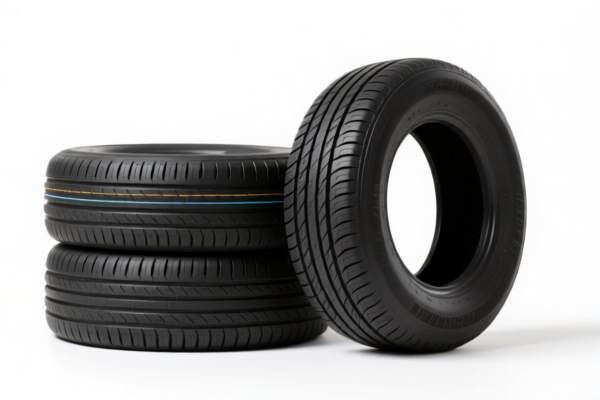
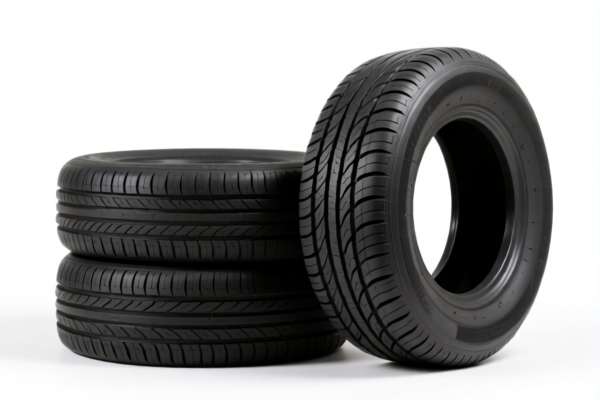
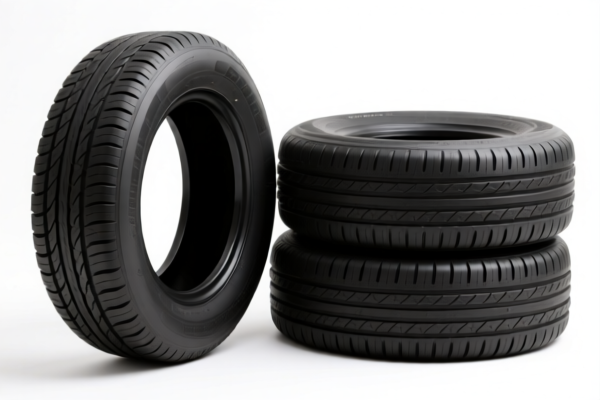
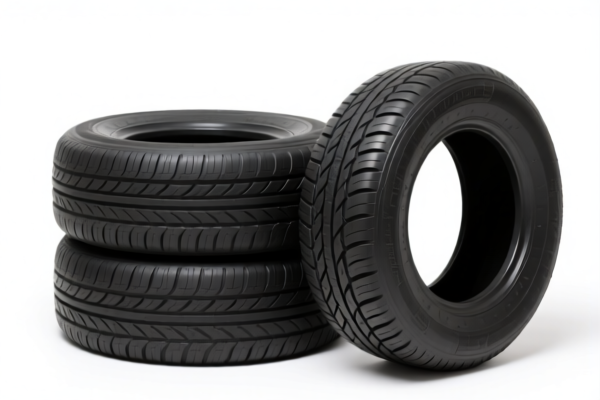
AI Analysis
🛞 "Other Solid Rubber Tires" Classification & Customs Clearance Guide (2026)
🌐 HS Code Reference & Customs Strategy | 2026 Tariff Full Analysis | Professional Clearance Guide
📌 I. Product Definition & Classification: Understanding "Other Solid Rubber Tires"
In international trade, "Other Solid Rubber Tires" generally refers to solid tires made of rubber, typically used for industrial vehicles such as forklifts, pallet jacks, or airport ground support equipment, as opposed to pneumatic (air-filled) tires. Unlike car tires, these have no inner tube and are solid throughout or composed of solid rubber compounds.
According to the provided data, these products are categorized under Chapter 40 (Rubber and Articles Thereof), specifically focusing on subheadings related to tires and retreads. The classification depends on specific nuances such as material composition (natural vs. synthetic), physical form (solid vs. general tire), and intended use (e.g., forklifts).
⚠️ Key Distinction Points:
- Material: Natural Rubber vs. Synthetic/Other Rubber
- Form: Solid Tire (Solid) vs. General Tire
- Use: Specific applications (e.g., Forklifts) may trigger specific subheadings.
- General Rule: If no specific description fits, the "other" category is used.
📦 II. HS Code Classification Details (Based on Provided Data)
The following table lists the specific HS Codes and their corresponding summaries and tax structures as provided in the data.
| HS Code | Product Description & Summary | Total Tax Rate | Tax Composition Detail |
|---|---|---|---|
| 4012.11.80.00 | Rubber tires, material is rubber, form is tire, matches the "other" category catch-all rule. | 38.4% | Base: 3.4%, Additional: 25.0%, Section 122: 10% |
| 4012.12.40.35 | Rubber tires, material is rubber, form is tire, determined by "other category" matching rules. | 39.0% | Base: 4.0%, Additional: 25.0%, Section 122: 10% |
| 4013.10.00.10 | Rubber tires, material is rubber, purpose is tire, core elements match the reference classification. | 38.7% | Base: 3.7%, Additional: 25.0%, Section 122: 10% |
| 4012.90.45.00 | Natural rubber forklift solid tire, material is natural rubber, form is solid tire, purpose is forklift. | 39.2% | Base: 4.2%, Additional: 25.0%, Section 122: 10% |
| 4012.90.10.00 | Natural rubber forklift solid tire, material is natural rubber, form is solid tire, purpose is forklift. | 35.0% | Base: 0.0%, Additional: 25.0%, Section 122: 10% |
🔍 Key Observation:
- There is a significant tax difference between 4012.90.45.00 (39.2%) and 4012.90.10.00 (35.0%) for similar "Natural rubber forklift solid tires." This suggests that subtle differences in declaration (e.g., specific material grade, manufacturing process, or precise HTS sub-subheading interpretation) can lead to a 4.2% difference in base duty. - Codes starting with 4012 generally refer to "Pneumatic or solid rubber tires, tires of rubberized textile, tread covers, and tread rubbers." Code 4013 refers to "Inner tubes." However, the summary for4013.10.00.10mentions "Rubber tires," which might be a data anomaly or a specific national sub-classification where inner tube-associated tires are grouped. Always verify with local customs.
💰 III. 2026 Tariff Rate Breakdown (Detailed Explanation)
✅ Applicable Context: Based on the tax details provided (Base + Additional + Section 122), this structure reflects a China-origin product imported into a market with Section 301-style Additional Duties and a specific Section 122 Provision (likely referring to a specific trade remedy or surcharge, often seen in US-China trade contexts).
🎯 1. General "Other Rubber Tires" (Codes: 4012.11.80.00, 4012.12.40.35, 4013.10.00.10)
| Item | Content |
|---|---|
| Base Duty | 3.4% - 4.0% (Varies by specific subheading) |
| Additional Duty (Section 301/Trade War) | +25.0% |
| Section 122 Surcharge | +10.0% |
| Total Effective Tax Rate | 38.4% - 39.0% |
| Calculation Base | CIF Value (Cost, Insurance, Freight) |
| De Minimis Exemption | ❌ Not Applicable (High tax rates usually exclude de minimis benefits) |
📌 Interpretation:
- The 25% Additional Duty is likely the standard Section 301 tariff applied to many Chinese rubber products.
- The 10% Section 122 Surcharge is a specific provision mentioned in the data. Note: In standard US tariff schedules, "Section 122" refers to the Trade Expansion Act of 1962, which allows for import restrictions or duties up to 15% for national security reasons. The data explicitly lists this as 10%.
- Total Burden: Importers must budget for nearly 40% of the product's value in taxes alone.
🎯 2. Natural Rubber Forklift Solid Tires (Code: 4012.90.45.00)
| Item | Content |
|---|---|
| Base Duty | 4.2% |
| Additional Duty (Section 301/Trade War) | +25.0% |
| Section 122 Surcharge | +10.0% |
| Total Effective Tax Rate | 39.2% |
| Calculation Base | CIF Value |
| De Minimis Exemption | ❌ Not Applicable |
📌 Interpretation:
- This code has the highest base duty (4.2%) among the listed options.
- It is explicitly defined as "Natural Rubber Forklift Solid Tire." Precision in declaring "Natural Rubber" and "Forklift" is critical to avoid being misclassified into a higher-tax "other" category or facing penalties for incorrect description.
🎯 3. Natural Rubber Forklift Solid Tires (Code: 4012.90.10.00) – Optimization Target
| Item | Content |
|---|---|
| Base Duty | 0.0% |
| Additional Duty (Section 301/Trade War) | +25.0% |
| Section 122 Surcharge | +10.0% |
| Total Effective Tax Rate | 35.0% |
| Calculation Base | CIF Value |
| De Minimis Exemption | ❌ Not Applicable |
📌 Interpretation:
- This is the most tax-efficient code for natural rubber forklift solid tires in the provided dataset.
- Savings: Compared to4012.90.45.00(39.2%), this code saves 4.2% in total tax.
- Condition: The base duty is 0%. This suggests that under specific HTS sub-subheadings (.10.00), these tires might be considered essential industrial equipment components or have a preferential base rate, despite the additional surcharges.
- Strategy: Importers should verify if their product qualifies for this specific subheading to maximize savings.
🛠️ IV. Customs Clearance Practical Advice (Battle-Tested Pitfall Guide)
✅ 1. Documentation Checklist (Non-Negotiable)
| Document | Required | Notes |
|---|---|---|
| ✅ Product Specification Sheet | ✔️ | Must detail: Material (Natural/Synthetic), Hardness (Shore A), Diameter, Width, Load Capacity. |
| ✅ Material Composition Proof | ✔️ | Certificate of Analysis (CoA) showing % of Natural Rubber vs. Synthetic. Critical for distinguishing between 39.2% and 35.0% codes. |
| ✅ Product Photos | ✔️ | Clear images of the tire, including tread pattern, sidewall markings (size, type), and any branding. |
| ✅ Commercial Invoice | ✔️ | Must clearly state "Solid Rubber Tire" or "Forklift Solid Tire," NOT just "Rubber Part." |
| ✅ Packing List | ✔️ | Include weight and dimensions. Ensure no prohibited contaminants. |
| ✅ Country of Origin Certificate | ✔️ | Proof that the product is made in China (to trigger the correct 25%+10% surcharges accurately). |
✅ 2. Declaration Tips (Key Mantras)
🔥 "Declare Material, Declare Use, Declare Form. Precision Saves 4.2%!"
| Scenario | Correct Declaration | Incorrect Declaration | Consequence |
|---|---|---|---|
| Forklift Tire (Natural Rubber) | "Solid Rubber Tire, Natural Rubber, for Forklift, HS 4012.90.10.00" | "Rubber Tire, General Purpose" | Risk of misclassification to 4012.90.45.00 (Higher Tax) or audit. |
| Solid Tire (Synthetic/Other) | "Solid Rubber Tire, Synthetic, HS 4012.11.80.00" | "Forklift Tire" | If not for forklift, wrong use declaration leads to penalties. |
| Inner Tube (If present) | "Inner Tube, HS 4013.10.00.10" | Grouped with tire | If the product is only a tire, do not mention inner tube. If sold separately, classify separately. |
| Retreaded Tire | "Retreaded Rubber Tire, HS 4012.20.xx.xx" | "New Tire" | Criminal fraud if new is declared as retreaded or vice versa. |
✅ 3. Special Circumstances Handling
| Situation | Recommendation |
|---|---|
| Mixed Shipments (New & Retreaded) | Must declare separately. New tires go to 4012.1x/4012.9x; Retreads go to 4012.2x. Mixing them causes customs holds. |
| "Natural Rubber" Verification | Customs may request lab tests. If the rubber is 90% synthetic but labeled "Natural," it will be reclassified to a higher-tax general code. Be honest. |
| Forklift vs. General Vehicle | If a solid tire fits both, declare the primary intended use. "Forklift" often has specific subheadings that might offer better base rates (like 0% in 4012.90.10.00). |
| Section 122 Applicability | Confirm with your customs broker if the 10% "Section 122" surcharge is currently active and applicable to your specific entry type. |
🌍 V. Global Market Comparison (2026)
| Country/Region | Recommended HS Code | Est. Total Tax | Certification | Notes |
|---|---|---|---|---|
| 🇺🇸 USA | 4012.90.10.00 |
35.0% | None specific for rubber | Highest burden due to 25% + 10% surcharges. |
| 🇨🇳 China | 4012.90.10.00 |
Low (e.g., 5-10%) | CCC (if applicable) | Domestic trade or export from China has different duties. |
| 🇪🇺 EU | 4012.10.00 / 4012.90 |
0% - 2.5% | REACH, RoHS | No Section 301-style surcharges. Much more competitive. |
| 🇬🇧 UK | 4012.10.00 / 4012.90 |
0% - 2.5% | UKCA | Post-Brexit rules. Generally lower than US. |
| 🇯🇵 Japan | 4012.10.00 / 4012.90 |
0% - 10% | JIS | Variable based on FTAs. |
📌 Conclusion:
- The US market is the most expensive for these goods due to the layered surcharges (25% + 10%).
- EU and Japan offer significantly lower tariff barriers, making them more attractive markets if supply chain allows.
- For US imports, HS Code selection is critical. A 4.2% difference in base duty translates to significant savings on large volumes.
📌 VI. Common Mistakes & Pitfalls (Lessons Learned)
❌ Mistake 1: Declaring "Natural Rubber Forklift Tire" under a general "Solid Tire" code without specifying the 0% base duty subheading.
👉 Result: Paying 39.2% instead of 35.0%. Loss of 4.2% per unit.
❌ Mistake 2: Failing to prove "Natural Rubber" content.
👉 Result: Customs reclassifies to "Other Rubber" (higher base duty), leading to back taxes and penalties.
❌ Mistake 3: Ignoring the "Section 122" surcharge in cost calculations.
👉 Result: Underquoting landed cost, leading to budget overruns.
❌ Mistake 4: Mixing "Pneumatic Tires" (4011) with "Solid Tires" (4012).
👉 Result: Customs rejection. Solid tires are NOT pneumatic. They must be clearly identified as solid.
✅ Best Practice:
"Specify: 'Solid Tire, Natural Rubber, Forklift Application' + Provide Material Certificate + Target HS 4012.90.10.00 for 0% Base Duty."
🎯 VII. Conclusion: Precision in Classification, Profit in Logistics
🎯 Key Takeaways:
🔹 Code Matters:
4012.90.10.00(35%) is better than4012.90.45.00(39.2%) for natural rubber forklift tires.
🔹 Surcharges are Fixed: The 25% + 10% surcharges are likely unavoidable for China-origin goods in this specific trade context. Focus on optimizing the Base Duty.
🔹 Documentation is King: Material certificates and clear product descriptions are essential to justify the lower tax rate.
📌 Pro Tip:
If your solid tires are not made in China (e.g., sourced from Vietnam or Thailand), they may be exempt from the 25% + 10% surcharges, reducing the total tax to just the Base Duty (0% - 4.2%).
✅ Action:
📞 Consult a licensed customs broker.
📄 Prepare Material Composition Reports.
🚀 Optimize HS Code selection to minimize the 35%-39% tax burden.
✨ Smart Classification, Lower Costs, Faster Clearance!
💼 Every percentage point saved is pure profit!
Customer Reviews
About HS Code Classification
The Harmonized System (HS) is an internationally standardized nomenclature developed by the World Customs Organization (WCO) to classify traded products. Over 200 countries use the HS system as the basis for customs tariffs, trade statistics, and import/export regulations.
Each HS code follows a hierarchical structure:
- Chapter (2 digits) — Broad category of goods (e.g., Chapter 84: Machinery and Mechanical Appliances)
- Heading (4 digits) — More specific grouping within the chapter
- Subheading (6 digits) — Internationally standardized breakdown, used by all WCO member countries
- National subdivisions (8-10 digits) — Country-specific extensions for further classification, such as US HTSUS 10-digit codes
Correct HS code classification is essential for smooth customs clearance, accurate duty payment, and compliance with trade regulations. Misclassification can lead to customs delays, overpayment of duties, or penalties.
When importing from CN to US, the applicable tariff rates may include:
- Most-Favored-Nation (MFN) rate — The standard duty rate applied to WTO members
- General rate — Applied to countries without trade agreements
- Trade remedy duties — Additional tariffs such as Section 301 (anti-dumping), Section 232 (national security), or countervailing duties
The information provided on this page is for reference purposes only. For official classification, please consult with your local customs authority or a licensed customs broker.