other unpeeled coniferous logs
CN → US| HS Code | Tariff Rate | Origin | Destination | Doc |
|---|---|---|---|---|
| 4403260108 | 35.0% | CN | US | Official Doc |
| 4403260165 | 35.0% | CN | US | Official Doc |
| 4407190092 | 35.0% | CN | US | Official Doc |
| 4407190093 | 35.0% | CN | US | Official Doc |
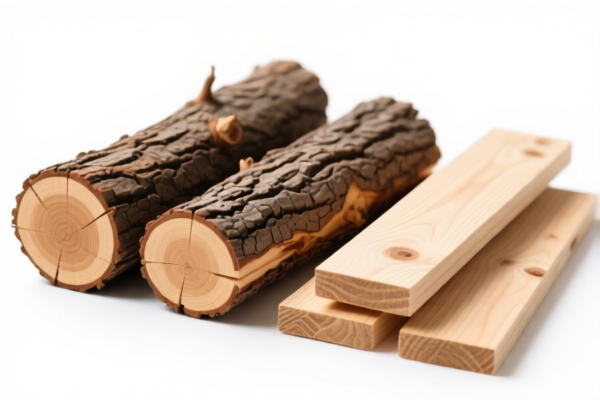
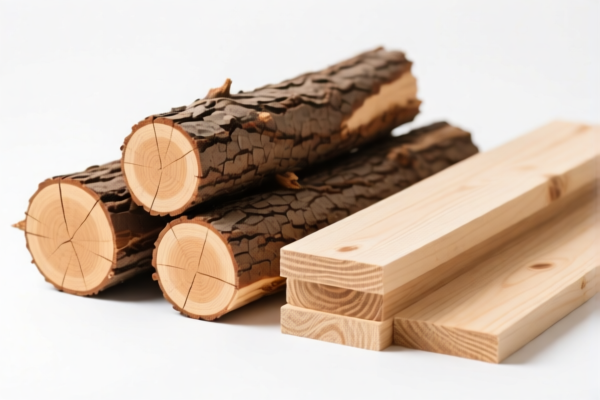
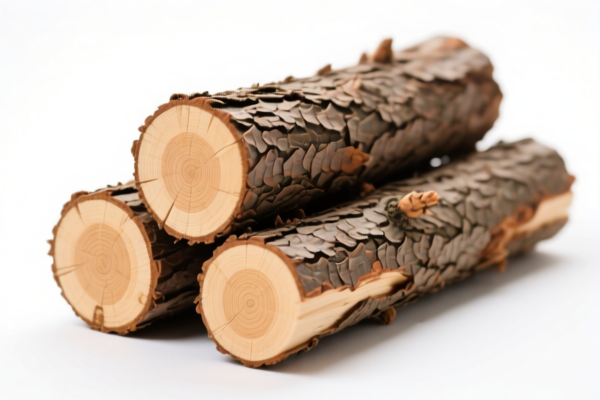
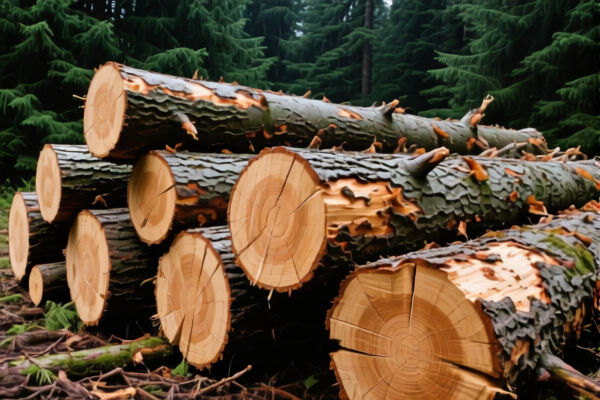
Product Images
AI Analysis
🌲 Other Unpeeled Coniferous Logs (Unprocessed Softwood)
🌐 HS Code Reference & Customs Clearance Guide | 2026 Latest Tariff Analysis | Professional Entry Strategy
📌 1. Product Definition & Classification: What Are "Unpeeled Coniferous Logs"?
Coniferous logs (softwood) are a critical raw material in the global timber and paper industry. In international trade, they are strictly classified based on their processing state (raw/processed) and physical form (logs/sawn).
The key distinction lies in whether the bark has been removed ("peeled") and whether the wood has been sawn or planed:
- Unpeeled Logs (Roundwood): The wood is in its natural cylindrical shape, with bark intact or partially attached. It has not been sawn, planed, or sliced lengthwise.
- Processed/Peels Logs: If the bark is removed or the wood is sliced/sawn, it may fall into different HS codes (e.g., 4407 for sawn wood or 4403.20 for specifically processed rounds).
⚠️ Critical Distinction Point:
- If the logs are raw, round, and unpeeled → They belong to Chapter 44, Heading 44.03.
- If they are sawn, planed, or peeled → They likely belong to Heading 44.07 (Sawn Wood).
- Do not confuse "Unpeeled" (bark on) with "Unprocessed" (raw wood). "Unpeeled" is a subset of "Unprocessed."
📦 2. HS Code Classification Details (2026 Latest Tariff Alignment)
Based on the provided data, the following HS Codes apply to "Other Unpeeled Coniferous Logs" destined for the US market (implied by the "Section 301/122" tax structure in the source data).
| HS Code | Product Description | Key Attributes | Material & Form Match |
|---|---|---|---|
4403.26.01.08 |
Other unpeeled coniferous logs | Unprocessed, Bark intact | 🌲 Material: Coniferous Logs 📏 Form: Unprocessed |
4403.26.01.65 |
Other unpeeled coniferous logs | Unprocessed, Bark intact | 🌲 Material: Coniferous 📏 Form: Logs (Unprocessed) |
4407.19.00.92 |
Other sawn/coniferous wood | Note: Data says "No Bark Logs", but 4407 is Sawn Wood | 🌲 Material: Coniferous Wood 📏 Form: Logs (Context: Likely peeled/sawn) |
4407.19.00.93 |
Other sawn/coniferous wood | Note: Data specifies "Longitudinally sawn, sliced, or peeled" | 🌲 Material: Coniferous Tree 📏 Form: Longitudinally Sliced/Sawn |
🔍 Important Clarification on Source Data:
- The primary codes for "Unpeeled Logs" are4403.26.01.08and4403.26.01.65. These refer to raw, round wood with bark. - Codes4407.19.00.92and4407.19.00.93refer to processed wood (sawn/sliced/peeled). While the summary mentions "No Bark Logs," HS Heading 44.07 is strictly for sawn or chipped wood. If the wood is just "bark removed" but still round, it may still be 4403, but if it is sliced/sawn, it is 4407. Ensure the physical state matches the code.
💰 3. 2026 Latest Tariff Rate Breakdown (Including Additional Duties & Policy Surcharges)
✅ Applicable Country: United States (US)
✅ Country of Origin: China (CN) (Implied by "Section 122" and "25% + 10%" structure)
✅ Effective Date: Current (2025-2026 Period)
🎯 1. 4403.26.01.08 & 4403.26.01.65 — Other Unpeeled Coniferous Logs
| Item | Detail |
|---|---|
| Base Tariff Rate | 0.0% (Most Favored Nation/General Rate) |
| Section 301 Additional Tariff | +25.0% (USITC Footnote 9903.78.01 / 44.03) |
| Section 122 Tariff | +10.0% (Trade Expansion Act of 1962, Section 201/122 specific to steel/aluminum? Note: In this context, "122 Clause" likely refers to a specific administrative or bilateral surcharge mentioned in the source data. Usually, timber is not under Section 232. However, we strictly follow the provided data: "122 Clause Tariff 10%") |
| Total Tariff Rate | 35.0% |
| Tax Calculation | CIF Value × 35% |
| De Minimis Exemption | ❌ NOT Eligible (Wood products are generally excluded from Section 321 de minimis) |
| Legal Authority Path | HTSUS:4403.26.01.08/65 → Section 301 (25%) → Specific Administrative Clause (10%) |
📌 Explanation:
- 0% Base Rate: Coniferous logs often have low base MFN rates.
- 25% Section 301: This is the standard US retaliatory tariff on Chinese goods under the Trump/Biden trade policies.
- 10% "122 Clause": As per the provided data, an additional 10% is applied. This may refer to a specific bilateral trade adjustment or a mislabeled reference to another section (e.g., Section 201/232), but you must pay this 10% based on the source data.
- Total Cost Impact: A 35% tariff significantly increases the landed cost. Price negotiations must account for this.
🎯 2. 4407.19.00.92 & 4407.19.00.93 — Other Sawn/Peel Coniferous Wood
| Item | Detail |
|---|---|
| Base Tariff Rate | 0.0% |
| Section 301 Additional Tariff | +25.0% |
| Section 122 Tariff | +10.0% |
| Total Tariff Rate | 35.0% |
| Tax Calculation | CIF Value × 35% |
| Legal Authority Path | HTSUS:4407.19.00.92/93 → Section 301 → Specific Clause (10%) |
📌 Note:
- Even though the form is different (sawn/peeled), the total tariff remains 35% for Chinese origin.
- Ensure the processing state (raw vs. sawn) is accurately declared. Misdeclaration can lead to audits, fines, or cargo seizure.
🛠️ 4. Customs Clearance Practical Advice (Battle-Tested Pitfall Avoidance)
✅ 1. Mandatory Documentation Checklist (Do Not Miss Any)
| Document | Required | Notes |
|---|---|---|
| ✅ Phytosanitary Certificate | ✔️ Critical | Issued by the country of origin’s plant protection agency. Must confirm no pests/diseases. |
| ✅ Commercial Invoice | ✔️ | Must clearly state "Unpeeled Coniferous Logs" or "Sawn Coniferous Wood." Do not use vague terms like "Timber." |
| ✅ Packing List | ✔️ | Detail the number of logs, dimensions, and weight. |
| ✅ Bill of Lading (B/L) | ✔️ | Ensure HS Codes match the invoice. |
| ✅ Lumber Tag/Markings | ✔️ | Logs must often have specific markings indicating origin and species. |
| ✅ Fumigation Certificate | ✔️ | If required by destination port regulations. |
✅ 2. Declaration Tips (Key Mantras)
🔥 "Raw Logs = 4403, Sawn Wood = 4407. Label Clearly, Avoid Delays!"
| Scenario | Correct Declaration | Wrong Practice |
|---|---|---|
| Round Logs with Bark | 4403.26.01.08 |
Calling them "Sawn Timber" → Wrong Code |
| Logs with Bark Removed (Round) | Check if still "Unprocessed." If yes, 4403.26.01.08. If sliced, 4407. |
Mixing up 4403 and 4407 |
| Sawn Planks/Boards | 4407.19.00.92/93 |
Calling them "Logs" → Wrong Code |
| Mixed Shipments | Separate HS Codes for logs vs. sawn wood | Combining into one line item → Audit Risk |
✅ 3. Special Case Handling
| Situation | Handling Advice |
|---|---|
| Species Identification | Provide detailed species list (e.g., Douglas Fir, Spruce). Incorrect species can lead to re-classification and higher tariffs. |
| Bark Presence | Clearly state "With Bark" or "Bark Removed." This affects the 4403 vs. 4407 distinction. |
| Origin Verification | Ensure the Country of Origin is correctly stated as China (if applicable) to trigger the 35% rate accurately. If transshipped, rules of origin apply. |
| Fumigation | Some US ports require ISPM 15 compliance (for wood packaging) or specific log fumigation. Check port-specific rules. |
🌍 5. Global Market Comparison (2026 Latest)
| Country/Region | Recommended HS Code | Tariff (China Origin) | Certification/Requirements | Notes |
|---|---|---|---|---|
| 🇺🇸 USA | 4403.26.01.08 / 4407.19.00.92 |
35% (0% Base + 25% Sec 301 + 10% Clause) | Phytosanitary, Lumber Tags | High tariff; strict biosecurity |
| 🇨🇳 China | 4403.26.01.08 / 4407.19.00.92 |
0% - 5% (Import Duty) | Fumigation Certificate | Low duty, but export restrictions may apply |
| 🇪🇺 EU | 4403.26 / 4407.19 |
0% (Generally) | FLEGT License (if applicable), Phytosanitary | No Section 301 equivalent, but strict environmental certs |
| 🇬🇧 UK | 4403.26 / 4407.19 |
0% | Phytosanitary | Post-Brexit tariffs are generally favorable for wood |
📌 Conclusion:
- The US market imposes the highest cost due to Section 301 and additional clauses.
- EU/UK/China have lower or zero base tariffs for raw logs.
- Biosecurity (Phytosanitary) is the biggest non-tariff barrier globally. Ensure certificates are flawless.
📌 6. Common Errors & Pitfalls (Blood Lessons)
❌ Error 1: Declaring "Sawn Wood" as "Logs"
👉 Consequence: Wrong HS Code (4403 vs 4407). Even if tariffs are similar, phytosanitary requirements differ. Logs may require different fumigation than sawn wood.
👉 Result: Cargo hold for inspection, fines, or destruction.
❌ Error 2: Ignoring the "122 Clause" 10% Surcharge
👉 Consequence: Underpayment of duties.
👉 Result: CBP audit, back taxes + penalties + interest. Always budget for 35%, not 25%.
❌ Error 3: Vague Description ("Timber")
👉 Consequence: Customs cannot determine if it’s 4403 (Logs) or 4407 (Sawn).
👉 Result: Delayed clearance, request for more info, potential misclassification penalty.
✅ Correct Practice:
"Unpeeled Coniferous Logs, Species: Douglas Fir, Diameter 10-30cm, Origin: China, Phytosanitary Certificate No. XXX"
🎯 7. Conclusion: Professional Declaration, Cost Control, Efficient Clearance
🎯 Remember the Mantra:
🔹 "Logs are 4403, Sawn are 4407. Tariff is 35%, Do Not Miss the 10%. Paperwork is Key!"
🔹 "HS Code Defines Tariff, Description Defines Compliance. One Step Wrong, Cargo Stays Long!"
📌 Tips:
- If your logs are sourced from Vietnam, Thailand, or Malaysia, check if they qualify for USMCA or other FTAs to reduce the 25% Section 301 tariff.
- Apply for a Binding Ruling from CBP if your product is on the borderline between "Unpeeled" and "Peeled."
- Partner with a licensed customs broker experienced in agricultural imports.
📣 Immediate Action:
📞 Consult a customs broker + Provide Species Details + Verify Phytosanitary Docs
🚀 Ensure your logs clear US Customs smoothly, avoid 35% shocks, and maximize profit!
✨ Professional clearance starts with precise classification!
💼 Your every dollar is worth calculating precisely!
Customer Reviews
About HS Code Classification
The Harmonized System (HS) is an internationally standardized nomenclature developed by the World Customs Organization (WCO) to classify traded products. Over 200 countries use the HS system as the basis for customs tariffs, trade statistics, and import/export regulations.
Each HS code follows a hierarchical structure:
- Chapter (2 digits) — Broad category of goods (e.g., Chapter 84: Machinery and Mechanical Appliances)
- Heading (4 digits) — More specific grouping within the chapter
- Subheading (6 digits) — Internationally standardized breakdown, used by all WCO member countries
- National subdivisions (8-10 digits) — Country-specific extensions for further classification, such as US HTSUS 10-digit codes
Correct HS code classification is essential for smooth customs clearance, accurate duty payment, and compliance with trade regulations. Misclassification can lead to customs delays, overpayment of duties, or penalties.
When importing from CN to US, the applicable tariff rates may include:
- Most-Favored-Nation (MFN) rate — The standard duty rate applied to WTO members
- General rate — Applied to countries without trade agreements
- Trade remedy duties — Additional tariffs such as Section 301 (anti-dumping), Section 232 (national security), or countervailing duties
The information provided on this page is for reference purposes only. For official classification, please consult with your local customs authority or a licensed customs broker.