other vacuum tubes
CN → US| HS Code | Tariff Rate | Origin | Destination | Doc |
|---|---|---|---|---|
| 8540890080 | 38.7% | CN | US | Official Doc |
Product Images
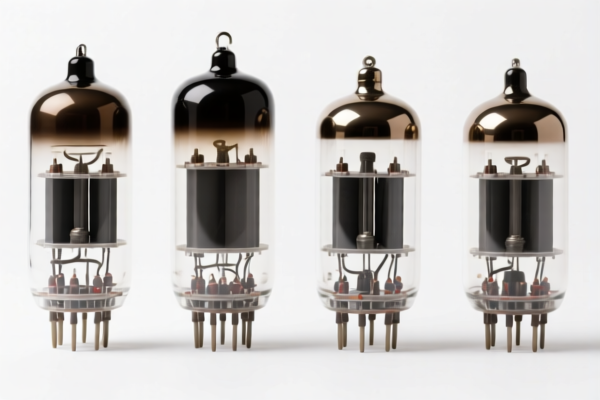
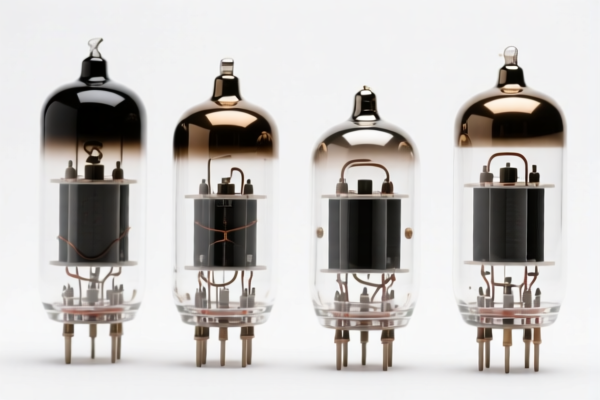
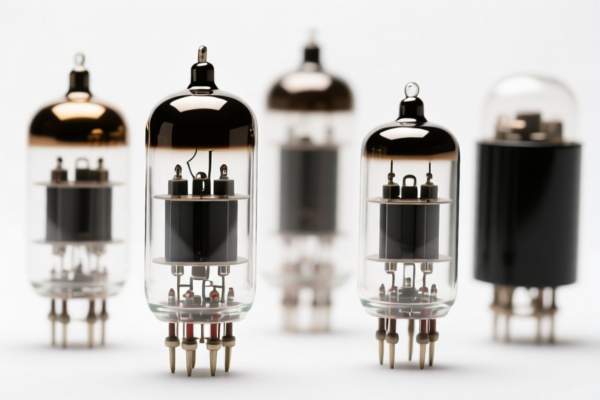
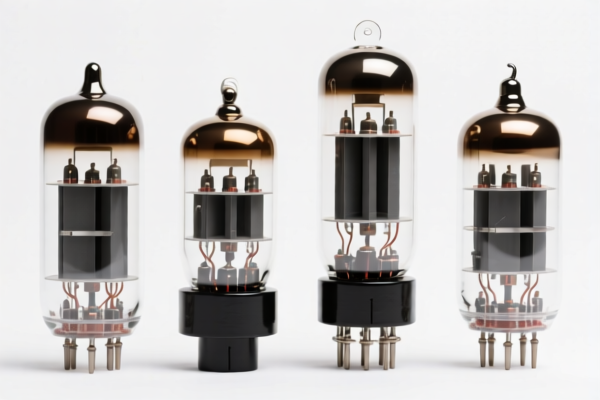
AI Analysis
🔮 Other Vacuum Tubes (Thermionic, Cold Cathode, Photocathode)
🌐 HS Code Reference & Customs Clearance Guide | 2026 Latest Tariff Analysis | Professional-Level Strategy
📌 Part 1: Product Definition & Classification: Do You Really Understand "Other Vacuum Tubes"?
"Other Vacuum Tubes" refer to a broad category of electronic components that control electron flow in a vacuum or gas environment. They are not standard diodes, transistors, or integrated circuits. In international trade, this category is primarily divided into two distinct groups:
1. Specialized/Industrial Tubes: Including mercury arc rectifiers, cathode-ray tubes (CRTs) for specialized uses, television camera tubes, and high-power RF tubes.
2. "Other" Generic Tubes: Any thermionic, cold cathode, or photocathode tube that does not fit into the more specific sub-categories (like standard electron tubes for radios or TVs).
⚠️ Key Distinction Point:
- If the tube is a standard electron tube (e.g., for audio amplification, radio transmission) → It may fall under 8540.10 or 8540.20.
- If the tube is a specialty device (e.g., mercury arc, camera tube, CRT for non-TV use) or simply "other" without a more specific sub-heading → It falls under 8540.89.00.80.
📦 Part 2: HS Code Classification Details (2026 Latest Tariff Authority)
Based on the provided data, the specific classification for "Other Vacuum Tubes" is:
| HS Code | Product Description | Applicable Scenario | Key Characteristics |
|--------|--------------------------|-----------------------------|
| 8540.89.00.80 | Other tubes: Other Other | Generic thermionic, cold cathode, or photocathode tubes not listed elsewhere | - Includes mercury arc rectifiers
- Includes certain CRTs
- Includes camera tubes
- General purpose specialty tubes |
🔍 Critical Reminder:
- This code excludes standard electron tubes (like radio valves) which have their own sub-codes (8540.10, 8540.20, etc.).
- It includes parts of these tubes. If you are importing only parts (e.g., bases, pins, glass envelopes), they may also fall under 8540.89.00.80.
- Ensure the product is not a solid-state device (like a thyristor or diode), which would fall under Chapter 85 (8541).
💰 Part 3: 2026 Latest Tariff Rate Breakdown (Detailed Tax Clauses)
✅ Applicable Country: United States (US)
✅ Country of Origin: China (CN) (Assumed based on the 25% additional tariff context)
✅ Effective Date: Current regulations apply
🎯 1. 8540.89.00.80 —— Other Vacuum Tubes / Parts Thereof
| Item | Content |
|---|---|
| Basic Tariff | 3.7% |
| Additional Tariff (Section 301) | +25.0% |
| Total Tax Rate | 28.7% |
| Tax Calculation | CIF Value × 28.7% |
| De Minimis Exemption | ❌ Not Applicable (High-value industrial goods typically excluded) |
📌 Explanation of Tax Clauses:
- Basic Tariff (3.7%): This is the standard Most Favored Nation (MFN) rate for general electronic components under HTSUS 8540.89.
- Additional Tariff (25.0%): This is the Section 301 Tariff, imposed on specific Chinese imports under the US Trade Representative (USTR). Most vacuum tubes, being electronic components, are subject to this.
- Total Effective Rate (28.7%): This is a significant duty burden. It must be factored into your landed cost calculation immediately.
🛠️ Part 4: Customs Clearance Practical Advice (Battle-Proven Pitfall Avoidance)
✅ 1. Document Checklist (Must-Haves)
| Document | Required? | Details |
|---|---|---|
| ✅ Product Specification Sheet | ✔️ | Must specify: Type (Thermionic/Cold Cathode), Voltage, Current, Frequency, and Application (e.g., "Rectifier," "Amplifier"). |
| ✅ Datasheet / Circuit Diagram | ✔️ | Critical to prove it is NOT a solid-state device (diode/transistor). |
| ✅ Product Photos | ✔️ | Clear images of the tube, including any markings (e.g., "5U4G," "MER-400"). |
| ✅ Commercial Invoice | ✔️ | Must clearly state: "Vacuum Tube, Model XYZ, HS 8540.89.00.80." |
| ✅ Packing List | ✔️ | Detail packaging to ensure tubes are not damaged (glass is fragile). |
✅ 2. Declaration Tips (Key Mnemonics)
🔥 "Vacuum Tube? Check the Type. Solid State? Look for Diodes. Don't Mix Codes!"
| Scenario | Correct Declaration | Incorrect Declaration |
|---|---|---|
| Mercury Arc Rectifier | 8540.89.00.80 |
8504.40 (Power Supplies) |
| Cold Cathode Tube (e.g., Neon) | 8540.89.00.80 |
9405.40 (Lamps) |
| Parts of Vacuum Tubes | 8540.89.00.80 |
8538.10 (Parts of PCBs) |
| Solid-State Diode/Thyristor | 8541.10/8541.90 |
8540.89.00.80 (WRONG CODE) |
📌 Note:
- Parts vs. Whole: The code8540.89.00.80explicitly includes "parts thereof." Do not declare parts separately under different codes if they are specifically for these tubes.
- Avoid "Light Bulbs": Cold cathode tubes are sometimes confused with lighting. If the primary function is electron flow control (not just light), it is a vacuum tube. If it is purely for illumination, it might be9405. Be precise in description.
✅ 3. Special Case Handling
| Situation | Handling Advice |
|---|---|
| High-Power RF Tubes | Clearly state "RF Power Tube" in description. May require FCC certification if for radio transmission. |
| Medical/X-Ray Tubes | If specifically for X-ray generation, verify if it falls under 9022 (Medical Apparatus) instead. However, general "vacuum tubes" for other uses remain in 8540. |
| CRT Tubes (Obsolete) | If importing old CRTs for restoration, ensure they are declared correctly. Some may face environmental restrictions. |
🌍 Part 5: Global Market Clearance Comparison (2026 Latest)
| Country/Region | Recommended HS Code | Tariff Rate (China Origin) | Certification Requirements | Remarks |
|---|---|---|---|---|
| 🇺🇸 USA | 8540.89.00.80 |
28.7% (3.7% + 25%) | FCC (if applicable) | High tariff due to Section 301. |
| 🇨🇳 China | 8540.89.00.80 |
~5-7% (Import Tariff) | CCC (if applicable) | Lower barrier for import. |
| 🇪🇺 EU | 8540.89.00.80 |
~0-3% | CE RoHS | Generally low duties. |
| 🇬🇧 UK | 8540.89.00.80 |
~0-3% | UKCA | Post-Brexit rules apply. |
📌 Conclusion:
- The USA is the most challenging market for vacuum tubes due to the 25% additional tariff.
- For other markets, the duty burden is minimal (<5%).
- Strategy: If exporting to the US, consider supply chain diversification (e.g., sourcing from non-China origins) to mitigate the 25% hit.
📌 Part 6: Common Errors & Pitfall Avoidance (Lessons Learned)
❌ Error 1: Declaring Solid-State Diodes as Vacuum Tubes
👉 Consequence: Code mismatch → Customs audit → Backpay + Penalties.
💡 Fix: Check if the device uses a vacuum/gas. If it's silicon-based, it's Chapter 8541, not 8540.
❌ Error 2: Missing FCC Certification for RF Tubes
👉 Consequence: Goods detained or destroyed at US border.
💡 Fix: If the tube is used in radio transmitters, ensure FCC ID is provided.
❌ Error 3: Improper Packaging for Fragile Glass Tubes
👉 Consequence: High damage rate → Customer disputes + Insurance claims.
💡 Fix: Use custom foam inserts and "Fragile" labeling.
🎯 Part 7: Conclusion: Precision Classification Saves Money!
🎯 Remember the Mnemonic:
🔹 "Vacuum Tube? Check the Type. Solid State? Look for Diodes. USA Tariff 28.7%, Plan Ahead!"
🔹 "HS Code 8540.89.00.80 is the Key. Parts Included. Don't Mix with Lamps!"
📌 Pro Tip:
If your vacuum tubes are used in critical industrial applications (e.g., semiconductor manufacturing equipment), ensure they are classified correctly under 8540 and not under the equipment itself (which may be 8486). The tube itself is a component, not the machine.
📣 Immediate Action:
📞 Consult a licensed customs broker.
📄 Provide datasheets and circuit diagrams to prove classification.
🚀 Accurate HS Codes prevent costly delays and unexpected taxes!
✨ Professional Clearance Starts with Accurate Classification!
💼 Every penny counts in global trade!
Customer Reviews
About HS Code Classification
The Harmonized System (HS) is an internationally standardized nomenclature developed by the World Customs Organization (WCO) to classify traded products. Over 200 countries use the HS system as the basis for customs tariffs, trade statistics, and import/export regulations.
Each HS code follows a hierarchical structure:
- Chapter (2 digits) — Broad category of goods (e.g., Chapter 84: Machinery and Mechanical Appliances)
- Heading (4 digits) — More specific grouping within the chapter
- Subheading (6 digits) — Internationally standardized breakdown, used by all WCO member countries
- National subdivisions (8-10 digits) — Country-specific extensions for further classification, such as US HTSUS 10-digit codes
Correct HS code classification is essential for smooth customs clearance, accurate duty payment, and compliance with trade regulations. Misclassification can lead to customs delays, overpayment of duties, or penalties.
When importing from CN to US, the applicable tariff rates may include:
- Most-Favored-Nation (MFN) rate — The standard duty rate applied to WTO members
- General rate — Applied to countries without trade agreements
- Trade remedy duties — Additional tariffs such as Section 301 (anti-dumping), Section 232 (national security), or countervailing duties
The information provided on this page is for reference purposes only. For official classification, please consult with your local customs authority or a licensed customs broker.