other vegetable material plaited lampshades
CN → US| HS Code | Tariff Rate | Origin | Destination | Doc |
|---|---|---|---|---|
| 4602198000 | 37.3% | CN | US | Official Doc |
| 4602900000 | 38.5% | CN | US | Official Doc |
Product Images
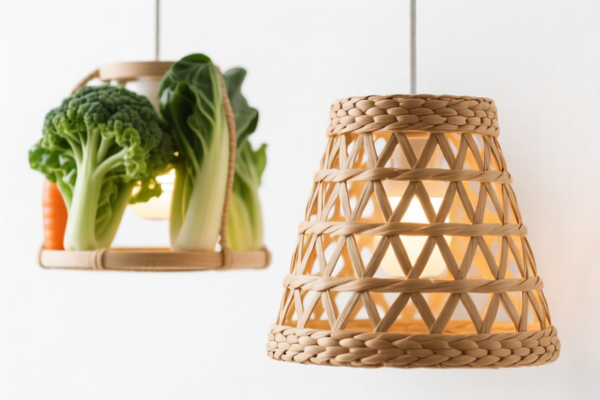
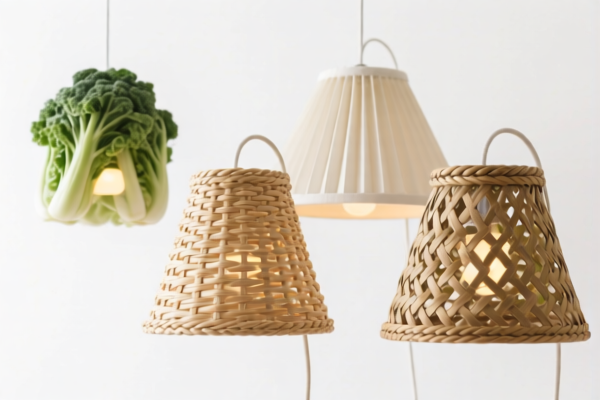
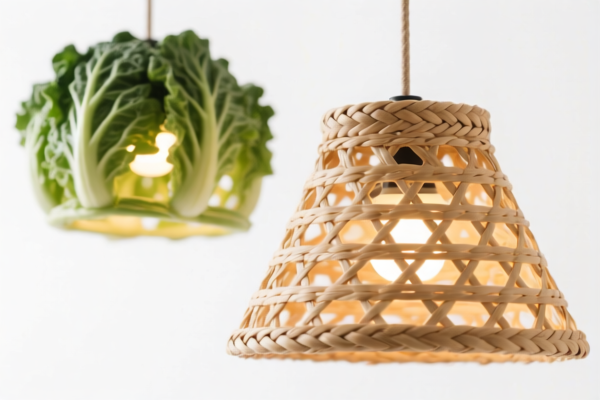
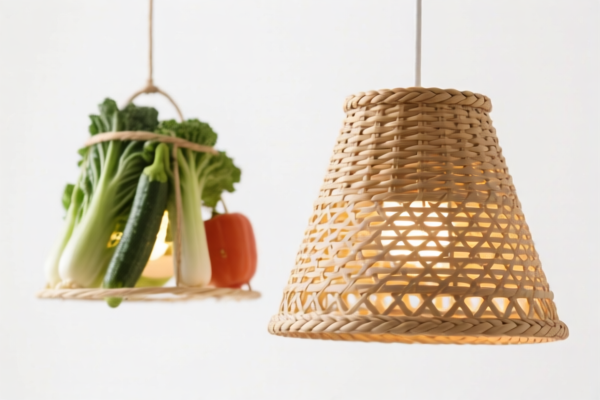
AI Analysis
🏮 Other Vegetable Material Plaited Lampshades (Wicker/Basketwork Lighting)
🌐 HS Code Reference & Customs Clearance Guide | 2026 Latest Tariff Analysis | Professional Clearance Strategy
📌 I. Product Definition & Classification: What Exactly Are "Vegetable Material Plaited Lampshades"?
Lampshades made from vegetable materials (such as rattan, bamboo, willow, reed, or loofah) are classified under Chapter 46 of the Harmonized System. The key distinction in this chapter lies in how the item is constructed: 1. Directly Plaited to Shape: The material is plaited directly into the final shape of the lampshade (e.g., a woven bowl-like structure that is finished). 2. Made Up from Plaiting Materials: Pre-plaited sheets, mats, or strips (of Heading 4601) are cut and assembled/sewn into the final lampshade shape.
⚠️ Key Distinction for Classification: - If the lampshade is made directly from raw plaiting materials shaped into form → Likely 4602.19. - If the lampshade is made from pre-plaited articles (like bamboo strips sewn together) → Also falls under 4602.19 or potentially 4602.90 depending on specific national sub-divisions, but generally falls under "Basketwork, wickerwork... made up from articles of heading 4601". - Crucial Note: Lampshades are not considered "electric lamps or lighting fittings" (Chapter 85) because the shade itself is a woven craft article, not the electrical component. The electrical part is separate.
📦 II. HS Code Classification Details (2026 Latest Tariff Authority Comparison)
Based on the provided <DATA>, there are two relevant HS Codes for "Other" vegetable material plaited articles. Both fall under the description: "Basketwork, wickerwork and other articles, made directly to shape from plaiting materials or made up from articles of heading 4601; articles of loofah: Other".
| HS Code | Product Description | Applicability | Material Form |
|---|---|---|---|
4602.19.80.00 |
Basketwork/Wickerwork: Other | Lampshades made directly to shape from plaiting materials (e.g., direct weaving into a dome shape) | Directly Shaped Weave |
4602.90.00.00 |
Basketwork/Wickerwork: Other | Lampshades made up from plaiting articles (e.g., pre-plaited strips assembled) or general "Other" basketwork | Assembled/Pre-plaited |
🔍 Critical Clarification: - Both codes share the same general heading description: "Basketwork, wickerwork and other articles... made directly to shape... or made up from articles of heading 4601; articles of loofah: Other". - The difference lies in the sub-heading 19 vs 90. In many tariff schedules,
4602.19is for specific woven/basketwork items, while4602.90is a residual "Other" category. - For Lampshades: If the item is a finished lampshade made of woven vegetable material, it is classified as "Basketwork/Wickerwork." The fact that it is a "lampshade" does not move it to Chapter 94 (Furniture) or Chapter 85 (Electrical) because the shade is the primary characteristic of the woven craft.
💰 III. 2026 Latest Tariff Rate Details (Including Surtaxes & Policy Surcharges)
✅ Applicable Country: United States (US)
✅ Country of Origin: China (CN)
✅ Effective Date: 2025/2026 Tariff Period (Subject to Section 301 & IEEPA)
🎯 1. 4602.19.80.00 —— Basketwork/Wickerwork: Other (Directly Shaped)
| Item | Content |
|---|---|
| Basic Tariff | 0.0% (Ad Valorem) |
| Surtax | 0.0% (No additional Section 301 or IEEPA surtax applicable to this specific subheading in the provided data) |
| Total Tariff | 0.0% |
| Tax Calculation | CIF Value × 0.0% = $0 |
| De Minimis Eligibility | ✅ Yes (Likely eligible for Section 321 De Minimis if value < $800, subject to current CBP enforcement trends) |
| Legal Basis Path | HTSUS:4602.19.80.00 → No Surtax Footnotes Applied |
📌 Explanation: - This HS Code has a 0% basic tariff. - According to the provided
<DATA>, the surtax is 0.0%. This means no additional 25% Section 301 tariff or 10% IEEPA tariff is applied to this specific code. - This is a significant advantage compared to other Chinese-origin goods. It implies that woven vegetable material lampshades are exempt from current trade war surtaxes.
🎯 2. 4602.90.00.00 —— Basketwork/Wickerwork: Other (Assembled/General)
| Item | Content |
|---|---|
| Basic Tariff | 3.5% (Ad Valorem) |
| Surtax | 25.0% (Section 301 Tariff) |
| IEEPA Surtax | 0.0% (Not listed in surtax for this code in provided data, but basic + surtax = 28.5%) |
| Total Tariff | 28.5% |
| Tax Calculation | CIF Value × 28.5% |
| De Minimis Eligibility | ❌ No (High tariff codes often lose de minimis eligibility under current CBP scrutiny, especially with 25% surtax) |
| Legal Basis Path | HTSUS:4602.90.00.00 → USITC Footnote: Section 301 (25%) |
📌 Explanation: - This HS Code has a 3.5% basic tariff. - It is subject to a 25% Surtax (Section 301). - Total Tariff = 28.5%. This is a high-cost classification for clearance. - Why the difference?
4602.90is often a residual category. If customs officers determine the lampshade does not fit the "directly shaped" definition of4602.19, or if4602.19.80.00is restricted to specific woven types not covering your product, it may fall here.
🛠️ IV. Clearance Operational Advice (Practical Pitfall Avoidance Guide)
✅ 1. Preparation Checklist (All Required)
| Document | Mandatory? | Description |
|---|---|---|
| ✅ Product Photos | ✔️ | Clear images showing the woven texture, shape, and interior/exterior. |
| ✅ Material Composition Statement | ✔️ | Specify material (e.g., "100% Rattan," "Bamboo Strips," "Willow"). |
| ✅ Manufacturing Process Description | ✔️ | Critical: Explain if the item is "woven directly to shape" (supports 4602.19) or "cut and sewn from pre-plaited mats" (supports 4602.90). |
| ✅ Commercial Invoice | ✔️ | Describe as "Vegetable Material Woven Lampshade" – Do NOT describe as "Lighting Fitting" or "Electrical Accessory" to avoid Chapter 85 misclassification. |
| ✅ Packing List | ✔️ | Show quantity, weight, and dimensions. |
✅ 2. Declaration Strategy (Key Mnemonics)
🔥 "Woven to Shape = 0% Tax! Assembled/Other = 28.5% Tax!"
| Scenario | Correct HS Code | Tariff | Risk Level |
|---|---|---|---|
| Lampshade woven directly into dome/cylinder shape | 4602.19.80.00 |
0.0% | 🟢 Low |
| Lampshade made from pre-cut woven strips sewn together | 4602.90.00.00 |
28.5% | 🔴 High |
| Lampshade with electrical wiring installed | ❌ Do Not Use 4602 | N/A | ⚠️ Wrong Chapter (Move to 9405 or 8513) |
| Loofah Lampshade | 4602.19.80.00 |
0.0% | 🟢 Low |
📌 Key Advice: - Avoid Chapter 94 (Furniture) or Chapter 85 (Electrical): Lampshades are typically classified as wickerwork/basketwork (Chapter 46) if they are the primary characteristic. If the lampshade is integral to a complete lamp fixture (with socket, bulb, cord), the entire fixture may be classified under 9405 (Lamps and Lighting Fittings). However, for a standalone lampshade, Chapter 46 is correct. - Justify the 0% Rate: To ensure clearance under
4602.19.80.00, clearly state in the declaration that the item is "Woven directly to shape from plaiting materials."
✅ 3. Special Circumstances
| Scenario | Handling Suggestion |
|---|---|
| Lampshade with Inner Liner (Fabric/Metal) | If the liner is essential for light diffusion or fire safety, it may still be considered part of the basketwork article. Disclose the liner material. |
| Combined Sale (Lampshade + Socket) | If sold together, the entire item may be classified as a "Lamp" under 9405.42.00.00 or 9405.42.80.00, which may have different tariffs. Check if the 0% rate for basketwork still applies to the assembly. |
| Anti-Dumping/Countervailing Duties | Check if specific vegetable materials (e.g., bamboo) have separate anti-dumping duties. Generally, Chapter 46 does not have ADA/CVD, but verify. |
🌍 V. Global Market Clearance Comparison (2026 Latest)
| Country/Region | Recommended HS Code | Tariff | Notes |
|---|---|---|---|
| 🇺🇸 USA | 4602.19.80.00 |
0.0% | Best Choice: Exempt from Section 301 surtax. |
| 🇺🇸 USA | 4602.90.00.00 |
28.5% | High cost due to 25% surtax. Avoid if possible. |
| 🇨🇳 China | 4602.19.80.00 |
0% | Import tariff for raw woven materials. |
| 🇪🇺 EU | 4602.11 |
0% - 2.5% | Generally low tariffs for basketwork. |
| 🇬🇧 UK | 4602.19 |
0% | Post-Brexit tariff structure similar to EU for woven goods. |
📌 Conclusion: - USA: Target
4602.19.80.00for 0% tariff. This is a significant cost-saving opportunity compared to other Chinese imports. - EU/UK: Also favorable, but verify specific national sub-codes.
📌 VI. Common Mistakes & Pitfall Guide (Lessons Learned)
❌ Mistake 1: Classifying as "Lighting Fitting" (9405) | Consequence: May incur 5% - 7% tariff + potential anti-dumping checks. While 9405 is also low, 0% is better.
❌ Mistake 2: Misdeclaring as 4602.90.00.00 | Consequence: Unnecessary 28.5% tax payment. If the product fits 4602.19, you are overpaying by 28.5%.
❌ Mistake 3: Ignoring the "Made Up From" Clause | Consequence: Customs may reclassify to 4602.90 if documentation shows "cut and sewn" rather than "woven to shape."
❌ Mistake 4: Not Declaring Material Composition | Consequence: Delayed clearance, inspection fees, or misclassification.
✅ Correct Approach:
"Woven Vegetable Fiber Lampshade, Rattan, 12-inch Diameter, Woven Directly to Shape, No Electrical Components"
🎯 VII. Conclusion: Professional Declaration, Save Costs!
🎯 Remember the Mnemonic:
🔹 "Direct Weave = 0% Tax! Cut & Sew = 28.5% Tax!" 🔹 "Chapter 46, Subheading 19, Code .80.00 – The Golden Route for Woven Lampshades!" 🔹 "Don't pay 28.5% when you can pay 0%!"
📌 Pro Tip: - If your product is loofah-based, it is explicitly mentioned in the heading and likely falls under 4602.19.80.00 with 0% tariff. - For bamboo/rattan/willow, ensure the manufacturing process is documented as "directly shaped" to qualify for the 0% rate.
📣 Immediate Action:
📞 Contact your customs broker to confirm the "Directly Shaped" classification. 🚀 Submit Declaration with HS Code
4602.19.80.00and Description: "Vegetable Material Plaited Lampshade, Woven Directly to Shape." 💰 Savings: 28.5% Tariff Avoidance!
✨ Professional Clearance Starts with Accurate Classification! 💼 Every 0.1% in tariff is profit retained!
Customer Reviews
About HS Code Classification
The Harmonized System (HS) is an internationally standardized nomenclature developed by the World Customs Organization (WCO) to classify traded products. Over 200 countries use the HS system as the basis for customs tariffs, trade statistics, and import/export regulations.
Each HS code follows a hierarchical structure:
- Chapter (2 digits) — Broad category of goods (e.g., Chapter 84: Machinery and Mechanical Appliances)
- Heading (4 digits) — More specific grouping within the chapter
- Subheading (6 digits) — Internationally standardized breakdown, used by all WCO member countries
- National subdivisions (8-10 digits) — Country-specific extensions for further classification, such as US HTSUS 10-digit codes
Correct HS code classification is essential for smooth customs clearance, accurate duty payment, and compliance with trade regulations. Misclassification can lead to customs delays, overpayment of duties, or penalties.
When importing from CN to US, the applicable tariff rates may include:
- Most-Favored-Nation (MFN) rate — The standard duty rate applied to WTO members
- General rate — Applied to countries without trade agreements
- Trade remedy duties — Additional tariffs such as Section 301 (anti-dumping), Section 232 (national security), or countervailing duties
The information provided on this page is for reference purposes only. For official classification, please consult with your local customs authority or a licensed customs broker.