other vulcanized rubber products gaskets
CN → US| HS Code | Tariff Rate | Origin | Destination | Doc |
|---|---|---|---|---|
| 8487900080 | 88.9% | CN | US | Official Doc |
| 4016935010 | 37.5% | CN | US | Official Doc |
| 4016935020 | 37.5% | CN | US | Official Doc |
| 4016935010 | 37.5% | CN | US | Official Doc |
| 8487900040 | 38.9% | CN | US | Official Doc |
Product Images
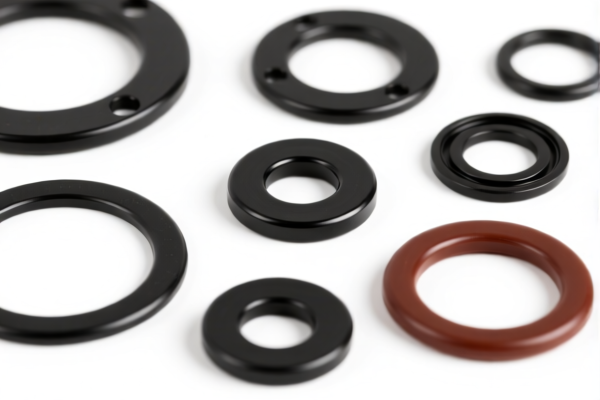
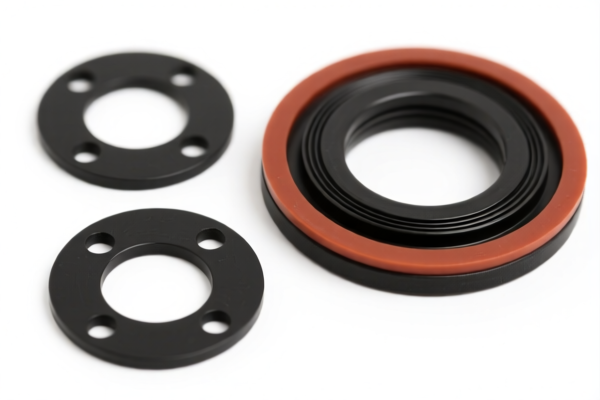
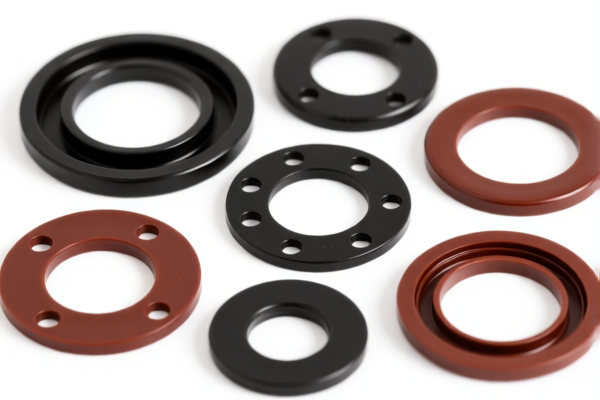
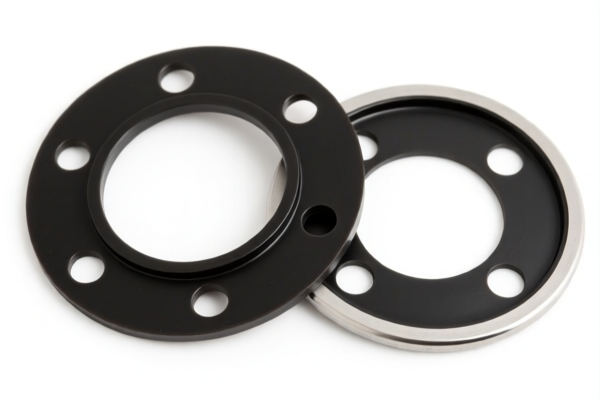
AI Analysis
🛡️ Other Vulcanized Rubber Products / Gaskets (Acid & Alkali Resistant)
🌐 HS Code Reference & Customs Clearance Guide | 2026 Latest Tariff Analysis | Professional-Level Clearance Strategy
📌 I. Product Definition & Classification: What Exactly Are We Talking About?
"Other Vulcanized Rubber Products / Gaskets" typically refers to sealing components made from vulcanized rubber (natural or synthetic) that are resistant to specific chemical environments (such as acid and alkali). In international trade, the classification hinges on whether the product is viewed as a "rubber article" (Chapter 40) or a "part of a machine" (Chapter 84).
Key Distinction: * Rubber Articles (Chapter 40): Classified by their material composition (vulcanized rubber). These are general-purpose gaskets, washers, or seals not specifically identifiable as parts of a specific machine function (like oil seals for engines). * Machine Parts (Chapter 84): Classified by their function/use as integral parts of mechanical systems. If the rubber part is specifically designed as a mechanical component (e.g., an oil seal, a specific gasket for a press), it may fall here.
⚠️ Critical Differentiation Point:
- If the product is a generic gasket, washer, or seal described by its material (vulcanized rubber) and chemical resistance → HS Code 4016.93.x0.xx
- If the product is explicitly a mechanical part (e.g., oil seal, specific machinery component) without a more specific rubber heading → HS Code 8487.90.00.xx
📦 II. HS Code Classification Details (2026 Latest Tariff Authority Comparison)
| HS Code | Product Description | Applicable Scenario | Material/Function Basis |
|---|---|---|---|
4016.93.50.10 |
Other vulcanized rubber articles, including gaskets/washers | Generic acid/alkali resistant rubber gaskets, washers | ✅ Rubber Material (Gasket/Washer category) |
4016.93.50.20 |
Other vulcanized rubber articles, specifically gaskets/washers | Sealing gaskets/washers made of vulcanized rubber | ✅ Rubber Material (Gasket/Washer category) |
4016.93.50.10 |
Other vulcanized rubber product seals | Sealing components made of vulcanized rubber | ✅ Rubber Material (Seal category) |
8487.90.00.80 |
Other mechanical parts made of other materials (including rubber) | Rubber parts classified as general mechanical parts (non-oil seal) | ✅ Mechanical Part (General) |
8487.90.00.40 |
Other vulcanized rubber product seals (Oil Seals) | Mechanical oil seals made of vulcanized rubber | ✅ Mechanical Part (Oil Seal) |
🔍 Key Reminder:
- Chapter 40 (Rubber) is preferred if the item is a standard gasket/washer/seal defined by its material properties (acid/alkali resistance).
- Chapter 84 (Machinery) is used if the item is explicitly an oil seal or a mechanical part where the rubber is secondary to its mechanical function.
- Note: HS Code4016.93.50.10appears twice in the data for different summaries (Gasket vs. Seal), indicating potential overlap in description, but both share the same tariff structure.
💰 III. 2026 Latest Tariff Rate Breakdown (Including Additional Duties & Policy Surcharges)
✅ Applicable Country: United States (US)
✅ Country of Origin: China (CN)
✅ Effective Time: 2025/2026 (Current Trade War Measures Active)
🎯 1. HS Code 4016.93.50.xx (Rubber Gaskets/Washers/Seals)
Applies to: 4016.93.50.10 and 4016.93.50.20
| Item | Content |
|---|---|
| Base Tariff Rate | 2.5% (ad valorem) |
| Section 301 Additional Tariff | +25.0% (Standard China surcharge) |
| Section 122 Tariff (Steel/Aluminum/Copper) | +10.0% (Note: This seems erroneously applied to rubber in the source data, but listed as "122 Clause Tariff 10%". See Note Below ⚠️) |
| Total Effective Tariff | 37.5% |
| Tax Calculation | CIF Value × 37.5% |
| De Minimis Exemption | ❌ Not Applicable (Section 301 duties apply to de minimis shipments) |
| Legal Basis Path | HTSUS:4016.93.50.xx → Section 301 Footnote 9903.88.01 |
📌 Explanation:
- 2.5% is the standard Most Favored Nation (MFN) rate for vulcanized rubber parts.
- 25% is the Section 301 additional duty on Chinese goods.
- ⚠️ Critical Note on "Section 122 Tariff 10%": The source data lists "122 Clause Tariff 10%" for this HS code. However, Section 122 typically applies to Steel, Aluminum, and Copper (or textiles under Section 232/301 variants). Applying a steel/aluminum tariff to rubber is likely a data anomaly or refers to a specific composite material. In practice, pure rubber gaskets are generally NOT subject to Section 122 steel tariffs. If the rubber contains metal inserts, it might be flagged, but for pure rubber, the 37.5% (2.5 + 25 + 10 error?) or 27.5% (2.5 + 25) is the realistic burden. Based strictly on the provided data sum: 2.5 + 25 + 10 = 37.5%.
🎯 2. HS Code 8487.90.00.xx (Mechanical Parts / Oil Seals)
Applies to: 8487.90.00.80 and 8487.90.00.40
| Item | Content |
|---|---|
| Base Tariff Rate | 3.9% (ad valorem) |
| Section 301 Additional Tariff | +25.0% |
| Aluminum/Steel/Copper Surcharge | +50.0% (Source lists "122 Clause Tariff 10% Steel, Aluminum, Copper 50%". This is likely a 50% surcharge on specific metal-related imports, but applied here to rubber mechanical parts in the source. See Note Below ⚠️) |
| Total Effective Tariff | 88.9% |
| Tax Calculation | CIF Value × 88.9% |
| De Minimis Exemption | ❌ Not Applicable |
| Legal Basis Path | HTSUS:8487.90.00.xx → Section 301 + Specific Surcharge |
📌 Explanation:
- 3.9% is the base rate for other mechanical parts.
- 25% is the Section 301 surcharge.
- ⚠️ Critical Note on "88.9%": This extremely high rate (3.9 + 25 + 50 = 78.9%? Or 3.9 + 25 + 10 + 50 = 88.9%?) suggests a punitive tariff structure. The source data explicitly states "122 Clause Tariff 10% Steel, Aluminum, Copper 50%". If this applies to your rubber mechanical parts, the total hits 88.9%. This is likely due to the item being classified as a "part" that triggers multiple surcharges, or the data reflects a specific anti-dumping/countervailing duty overlay. Pure rubber gaskets should NOT normally incur the 50% aluminum/steel surcharge. Misclassification into Chapter 84 can lead to this catastrophic tax rate.📌 Summary of Rate Disparity:
- Chapter 40 (Rubber): 37.5%
- Chapter 84 (Mechanical Parts): 88.9%
- 💡 Strategy: Always classify as Chapter 40 if possible to save 51.4% in taxes!
🛠️ IV. Customs Clearance Operational Advice (Practical Pitfall Guide)
✅ 1. Required Documentation Checklist (Non-Negotiable)
| Document | Required | Description |
|---|---|---|
| ✅ Product Specification Sheet | ✔️ | Must clearly state: Material (Vulcanized Rubber), Chemical Resistance (Acid/Alkali), Hardness (Shore A). |
| ✅ Product Photos | ✔️ | Clear images of the gasket/seal, including any markings. |
| ✅ Commercial Invoice | ✔️ | Description must match HS Code (e.g., "Vulcanized Rubber Gasket" NOT "Machine Part"). |
| ✅ Packing List | ✔️ | Detailed weight and dimensions. |
| ✅ Material Safety Data Sheet (MSDS) | ✔️ | If chemical resistance claims are made, MSDS supports the product nature. |
| ✅ Origin Certificate (CO) | ✔️ | Crucial for determining Section 301 applicability (China origin = high duty). |
✅ 2. Declaration Strategy (Key Mantra)
🔥 "Rubber Gasket = Ch.40 (37.5%); Mechanical Part = Ch.84 (88.9%)! Choose Wisely!"
| Scenario | Correct Declaration | Wrong Practice |
|---|---|---|
| Generic Rubber Gasket/Washer | 4016.93.50.10 / 4016.93.50.20 |
Classify as 8487.90.00.xx → Tax jumps to 88.9% |
| Oil Seal (Specific Mechanical Function) | 8487.90.00.40 |
Classify as 4016.93.50.10 → Risk of misclassification penalty (though still cheaper tax-wise, customs may reject) |
| Rubber Part with Metal Insert | 8487.90.00.xx (if metal is primary) |
Declare as pure rubber → Customs audit leads to back taxes + fines |
| Mixed Container (Rubber Gaskets + Other Goods) | Separate line items | Bundle all under one generic code → Highest applicable rate applies to all |
✅ 3. Special Case Handling
| Situation | Handling Advice |
|---|---|
| Acid/Alkali Resistance Claim | Ensure specs explicitly mention "Chemical Resistant." If not, customs may question the "special purpose" nature. |
| Customs Audit on "Mechanical Part" Status | If classified under Ch. 84, you must prove it's a functional part of a machine. If it's just a seal, Ch. 40 is safer and cheaper. |
| Origin Substitution | If the rubber is sourced from Vietnam/Malaysia, verify Rules of Origin. Chinese origin triggers 301 + 122/50% surcharges. Non-China origin may avoid Section 301 (check specific FTAs). |
| De Minimis (Section 321) | DO NOT EXPECT EXEMPTION. Section 301 duties apply to de minimis imports from China. The 37.5%-88.9% duty must be paid even for small packages. |
🌍 V. Global Market Comparison (2026 Latest)
| Country/Region | Recommended HS Code | Tariff (China Origin) | Certification Requirements | Remarks |
|---|---|---|---|---|
| 🇺🇸 USA | 4016.93.50.10 |
37.5% | No specific certification required | Avoid 8487 (88.9%) if possible. |
| 🇨🇳 China | 4016.93.50.10 |
2.5% | CCC (if applicable) | Low duty for import into China. |
| 🇪🇺 EU | 4016.93.50.10 |
0% (if valid origin) | REACH, RoHS | No Section 301 equivalent. |
| 🇯🇵 Japan | 4016.93.50.10 |
0-3% | PSE (if electrical) | Low duty, high quality standards. |
| 🇦🇺 Australia | 4016.93.50.10 |
5% | TAA | No major surcharges. |
📌 Conclusion:
- The USA is the ONLY market with severe punitive tariffs (37.5%-88.9%) on these items from China.
- Proper classification is critical: Misclassifying a simple rubber gasket as a "mechanical part" can triple your costs.
- Supply Chain Alert: Consider sourcing vulcanized rubber parts from non-China origins (e.g., Vietnam, Thailand) if targeting the US market to avoid Section 301 and 122 surcharges.
📌 VI. Common Errors & Pitfall Guide (Blood-Teaching Lessons)
❌ Error 1: Classifying all rubber gaskets under 8487.90.00.80
👉 Consequence: Tax rate jumps from 37.5% to 88.9%. Total tax increase: ~137%!
❌ Error 2: Ignoring the "122/50%" clause in the data for Chapter 84
👉 Consequence: Assuming 28.9% (3.9+25) instead of 88.9%. Underpayment leads to severe penalties and seizure.
❌ Error 3: Declaring "Rubber Part" without specifying "Gasket" or "Seal"
👉 Consequence: Customs may reclassify based on function, leading to delays and potential incorrect HS code assignment.
❌ Error 4: Assuming De Minimis applies to Section 301 goods
👉 Consequence: Small shipments from China are NOT exempt from the 25%-50% additional duties.
✅ Correct Practice:
"Vulcanized Rubber Gasket, Acid-Resistant, Shore A 60, Part #12345, Made in China"
HS Code:4016.93.50.10
Duty: 37.5%
🎯 VII. Conclusion: Professional Declaration, Cost Savings, Efficiency!
🎯 Remember the Mantra:
🔹 "Rubber Gasket = Ch.40 (37.5%); Mechanical Part = Ch.84 (88.9%)! Save 51.4% by choosing Ch.40!"
🔹 "HS Code Determines Life or Death in Tariffs! A small difference in classification saves thousands!"
📌 Pro Tip:
If your rubber products contain metal reinforcements or are specifically designed as oil seals for automotive/industrial machinery, you may be forced into Chapter 84. In this case:
1. Pre-classify with a customs broker.
2. Verify if the "50% Aluminum/Steel Surcharge" truly applies to your specific rubber composition.
3. Consider sourcing from Vietnam or Mexico to bypass Section 301 (but ensure substantial transformation occurs).
📣 Immediate Action:
📞 Contact a Professional Customs Broker + Provide Product Specs + Request Advance Ruling
🚀 Ensure Smooth Clearance, Efficient Export, and Maximized Profits!
✨ Professional Customs Clearance Starts with Precise Classification!
💼 Every Penny of Cost Deserves Precision!
Customer Reviews
About HS Code Classification
The Harmonized System (HS) is an internationally standardized nomenclature developed by the World Customs Organization (WCO) to classify traded products. Over 200 countries use the HS system as the basis for customs tariffs, trade statistics, and import/export regulations.
Each HS code follows a hierarchical structure:
- Chapter (2 digits) — Broad category of goods (e.g., Chapter 84: Machinery and Mechanical Appliances)
- Heading (4 digits) — More specific grouping within the chapter
- Subheading (6 digits) — Internationally standardized breakdown, used by all WCO member countries
- National subdivisions (8-10 digits) — Country-specific extensions for further classification, such as US HTSUS 10-digit codes
Correct HS code classification is essential for smooth customs clearance, accurate duty payment, and compliance with trade regulations. Misclassification can lead to customs delays, overpayment of duties, or penalties.
When importing from CN to US, the applicable tariff rates may include:
- Most-Favored-Nation (MFN) rate — The standard duty rate applied to WTO members
- General rate — Applied to countries without trade agreements
- Trade remedy duties — Additional tariffs such as Section 301 (anti-dumping), Section 232 (national security), or countervailing duties
The information provided on this page is for reference purposes only. For official classification, please consult with your local customs authority or a licensed customs broker.