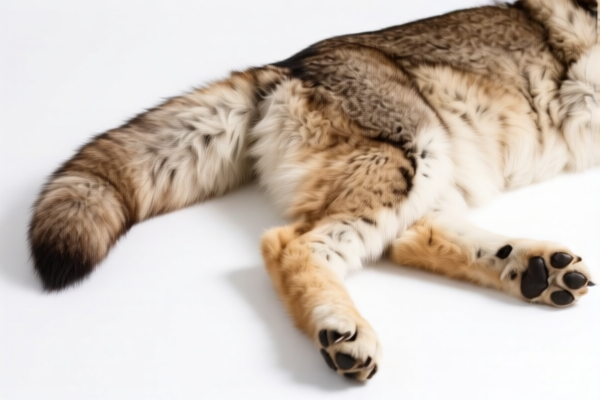
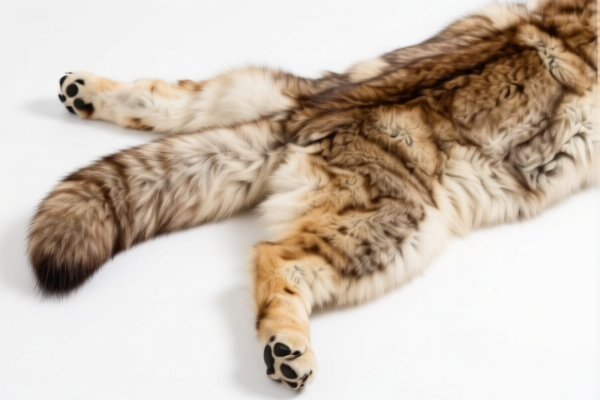
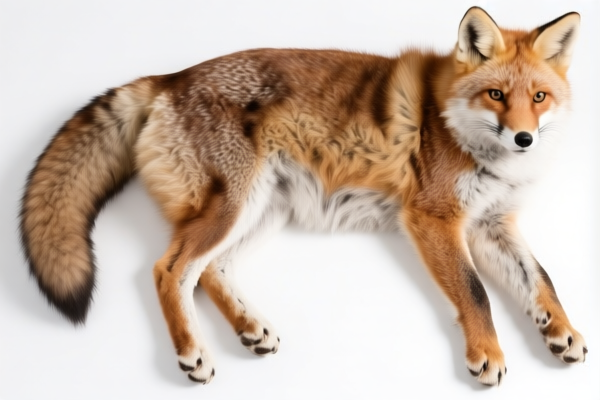
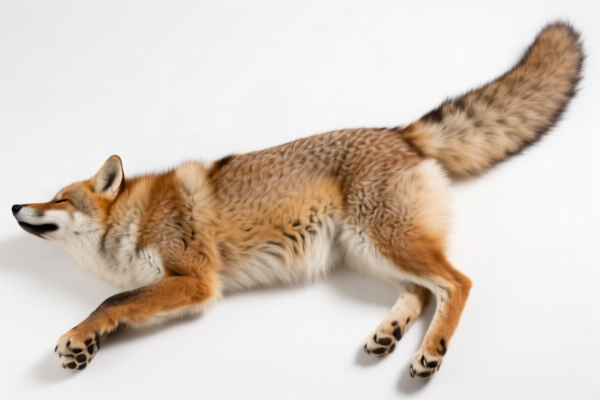
other whole furskins with tail and paws
CN → US| HS Code | Tariff Rate | Origin | Destination | Doc |
|---|---|---|---|---|
| 4302196000 | 38.5% | CN | US | Official Doc |
| 4302197500 | 36.7% | CN | US | Official Doc |
Product Images
AI Analysis
🧥 Other Whole Furskins with Tail and Paws (Dressed/Tanned)
🌐 HS Code Reference & Customs Clearance Guide | 2026 Latest Tariff Analysis | Professional Clearance Strategy
📌 I. Product Definition and Classification: Do You Truly Understand "Furskins"?
"Furskins" refer to animal pelts that have undergone tanning or dressing processes. In international trade, the classification hinges on two critical factors: Assembly Status and Treatment Method.
The input "Other whole furskins with tail and paws" specifically refers to: 1. Whole Skins: Not assembled into garments (Heading 4302). 2. With Tail and Paws: These parts are included as integral parts of the whole skin. 3. Other/Unspecified Treatment: The input does not specify "dyed" or "undyed," so we must distinguish between the two primary sub-categories under HS Code 4302.19.
⚠️ Key Distinction Point:
- If the furskin is not colored after tanning → Classified under Undyed (4302.19.60.00).
- If the furskin is colored/dyed after tanning → Classified under Dyed (4302.19.75.00).
- Note: "Whole skin" means it is not cut into pieces (like collars or cuffs). It includes the head, tail, and paws as presented.
📦 II. HS Code Classification Details (2026 Latest Tariff Authority Comparison)
| HS Code | Product Description | Applicable Scenario | Treatment Status |
|---|---|---|---|
4302.19.60.00 |
Whole skins, unassembled, with/without head, tail, paws: Other: Not dyed | Natural-colored tanned pelts, untreated in color, raw dressed skins | ✅ Undyed |
4302.19.75.00 |
Whole skins, unassembled, with/without head, tail, paws: Other: Dyed | Colored tanned pelts, fashion-grade furs, pre-dyed ready-to-use skins | ✅ Dyed |
🔍 Important Reminder:
- Both codes fall under Heading 4302: "Tanned or dressed furskins."
- The phrase "Other" in the description refers to furskins not specifically listed in preceding sub-headings (e.g., specific species like mink or fox might have more specific codes in some national tariffs, but under this general structure, they fall here if not explicitly separated).
- Do not confuse with Heading 4303 (Manufactures of furskins, e.g., coats, jackets). These are unassembled skins.
💰 III. 2026 Latest Tariff Rate Breakdown (Detailed Tax Clauses)
✅ Applicable Jurisdiction: United States (US)
✅ Origin: China (CN) (Assumed based on typical trade context; adjust if origin differs)
✅ Effective Time: Current 2026 Tariff Schedule
🎯 1. 4302.19.60.00 —— Whole Furskins, Undyed
| Item | Content |
|---|---|
| Base Duty Rate | 0.0% (ad valorem) |
| Section 301 / Additional Duty | 0.0% (as per current data provided) |
| Total Tax Rate | 0.0% |
| Tax Calculation | CIF Value × 0.0% = $0 |
| De Minimis Eligibility | ❌ No (Furskins often fall under special restrictions or require detailed documentation; check specific de minimis rules for textiles/furs) |
| Legal Basis Path | HTSUS:4302.19.60.00 → USTR:301_Footnote (if applicable) |
📌 Explanation:
- The base tariff for dressed furskins in this category is 0%.
- Crucial Note: While the tax is 0%, furskins are subject to strict regulatory scrutiny under:
- Lacey Act (US Fish & Wildlife Service): Proof of legal harvest.
- Endangered Species Act (ESA): CITES permits may be required for protected species.
- PUPA (Pet Animal Protection): Restrictions on certain animal types.
- Zero tax does NOT mean zero compliance. Misclassification or lack of documentation can lead to seizure and heavy fines, not just back taxes.
🎯 2. 4302.19.75.00 —— Whole Furskins, Dyed
| Item | Content |
|---|---|
| Base Duty Rate | 0.0% (ad valorem) |
| Section 301 / Additional Duty | 0.0% (as per current data provided) |
| Total Tax Rate | 0.0% |
| Tax Calculation | CIF Value × 0.0% = $0 |
| De Minimis Eligibility | ❌ No (Same regulatory constraints as above) |
| Legal Basis Path | HTSUS:4302.19.75.00 → USTR:301_Footnote (if applicable) |
📌 Note:
- The duty rate is identical to the undyed version (0%).
- The difference lies in commercial labeling and customs inspection. Dyed skins may require additional proof of chemical treatment compliance (e.g., REACH in EU, but in US, focus is on origin and species legality).
🛠️ IV. Customs Clearance Practical Advice (Battle-Tested Pitfall Guide)
✅ 1. Required Documentation Checklist (Non-Negotiable)
| Document | Mandatory? | Description |
|---|---|---|
| ✅ Commercial Invoice | ✔️ | Must clearly state: "Whole Furskins, Tanned, With Tail and Paws," plus Species (e.g., Rabbit, Fox, Sheep). |
| ✅ Bill of Lading/Air Waybill | ✔️ | Consistency with invoice is critical. |
| ✅ CITES Permit / Wildlife Document | ✔️ | If the species is listed in CITES Appendix I or II. |
| ✅ Lacey Act Declaration | ✔️ | Required for most wildlife/fur products entering the US. Must declare species name and harvest country. |
| ✅ Product Photos | ✔️ | Show entire skin, including tail and paws, to prove "Whole" status. |
| ✅ Dye Certification | ✔️ | For 4302.19.75.00, provide proof of dyeing if requested by CBP to confirm classification. |
✅ 2. Declaration Tips (Key Mantras)
🔥 "Species Named, Whole Proven, Tax Zero, Compliance High!"
| Scenario | Correct Declaration Method | Incorrect Practice |
|---|---|---|
| Undyed Skins | 4302.19.60.00 – "Whole Rabbit Skins, Tanned, Undyed, With Tail" |
Labeling as "Fur Patches" → Wrong code, potential penalty |
| Dyed Skins | 4302.19.75.00 – "Whole Fox Skins, Tanned, Dyed Red, With Tail" |
Labeling as "Garment Parts" → Heading 4303 misclassification |
| Mixed Shipment | Split invoices by species and treatment | Mixing undyed and dyed in one line item → CBP confusion |
| Protected Species | Attach CITES permit to declaration | Assuming 0% tax means no permits needed → Seizure Risk |
✅ 3. Special Situation Handling
| Situation | Handling Advice |
|---|---|
| OEM Custom Dyed Skins | Provide dye lot numbers and supplier certification for 4302.19.75.00. |
| Skins with Head Attached | Ensure description says "With Head, Tail, Paws." If head is removed, code may change depending on national tariff nuance. |
| Endangered Species (e.g., Mink, Fox) | Mandatory CITES Permit. Even if tax is 0%, illegal trade leads to criminal charges. |
| Sheep/Lamb Skins | Often fall under "Other." Ensure correct species name (e.g., "Ovis aries") for Lacey Act. |
🌍 V. Global Market Comparison (2026 Latest)
| Country/Region | Recommended HS Code | Duty Rate | Regulatory Focus | Remarks |
|---|---|---|---|---|
| 🇺🇸 USA | 4302.19.60.00 / 75.00 |
0% | Lacey Act, ESA, CITES | Zero duty, but high compliance barrier. |
| 🇪🇺 EU | 4302 19 60 / 75 |
0% | REACH, Animal By-Products Regulation | Requires veterinary health certificates for some species. |
| 🇨🇳 China | 4302.19.60 / 75 |
0% | CITES, Wildlife Protection Law | Import quotas may apply for certain species. |
| 🇬🇧 UK | 4302.19.60 / 75 |
0% | UK CITES, Wildlife Trade Regulations | Post-Brexit, specific UK permits required. |
📌 Conclusion:
- USA offers 0% duty for these specific furskin codes.
- Compliance is the real cost: Legal sourcing documentation is far more critical than the tariff itself.
📌 VI. Common Errors & Pitfall Guide (Lessons Learned)
❌ Error 1: Calling "Furskins" as "Garment Parts"
👉 Consequence: Misclassified under 4303 (manufactures), leading to incorrect duty and regulatory violations.
❌ Error 2: Ignoring Species Name in Declaration
👉 Consequence: Lacey Act violation → Ship seized, fines up to $10,000+.
❌ Error 3: Confusing "Undyed" vs. "Dyed"
👉 Consequence: Although both are 0% duty, CBP may hold shipment for clarification, causing delay and storage fees.
❌ Error 4: Assuming De Minimis Applies
👉 Consequence: Furskins are often excluded from de minimis thresholds if they contain wildlife products. Always declare.
✅ Correct Practice:
"Whole Rabbit Skins, Tanned, Undyed, With Head, Tail, and Paws, Lacey Act Compliant, Species: Oryctolagus cuniculus"
🎯 VII. Conclusion: Precision in Declaration, Safety in Compliance
🎯 Remember the Mantra:
🔹 "0% Tax is not 0% Risk."
🔹 "Name the Species, Prove the Whole, Follow the Law."
🔹 "HS Code 4302 is for Skins, 4303 is for Garments."
📌 Pro Tip:
- If you are importing protected species, apply for Pre-Ruling (CBP Ruling Letter) to confirm classification and CITES requirements before shipment.
- Maintain Chain of Custody Documentation from farm/tanner to port of entry.
📣 Immediate Action:
📞 Consult with a Wildlife Compliance Specialist or experienced customs broker.
📄 Prepare Lacey Act Declarations and CITES Permits in advance.
🚀 Ensure your furskins clear customs smoothly, avoiding costly delays or seizures.
✨ Professional Clearance Starts with Accurate Classification!
💼 Your Product’s Value is Protected by Compliance, Not Just Tariff Rates!
Customer Reviews
About HS Code Classification
The Harmonized System (HS) is an internationally standardized nomenclature developed by the World Customs Organization (WCO) to classify traded products. Over 200 countries use the HS system as the basis for customs tariffs, trade statistics, and import/export regulations.
Each HS code follows a hierarchical structure:
- Chapter (2 digits) — Broad category of goods (e.g., Chapter 84: Machinery and Mechanical Appliances)
- Heading (4 digits) — More specific grouping within the chapter
- Subheading (6 digits) — Internationally standardized breakdown, used by all WCO member countries
- National subdivisions (8-10 digits) — Country-specific extensions for further classification, such as US HTSUS 10-digit codes
Correct HS code classification is essential for smooth customs clearance, accurate duty payment, and compliance with trade regulations. Misclassification can lead to customs delays, overpayment of duties, or penalties.
When importing from CN to US, the applicable tariff rates may include:
- Most-Favored-Nation (MFN) rate — The standard duty rate applied to WTO members
- General rate — Applied to countries without trade agreements
- Trade remedy duties — Additional tariffs such as Section 301 (anti-dumping), Section 232 (national security), or countervailing duties
The information provided on this page is for reference purposes only. For official classification, please consult with your local customs authority or a licensed customs broker.