other wood kitchen utensils
CN → US| HS Code | Tariff Rate | Origin | Destination | Doc |
|---|---|---|---|---|
| 4420908000 | 38.2% | CN | US | Official Doc |
| 4420110090 | 13.2% | CN | US | Official Doc |
| 9403608093 | 35.0% | CN | US | Official Doc |
| 9403608040 | 35.0% | CN | US | Official Doc |
| 4419909100 | 20.7% | CN | US | Official Doc |
Product Images
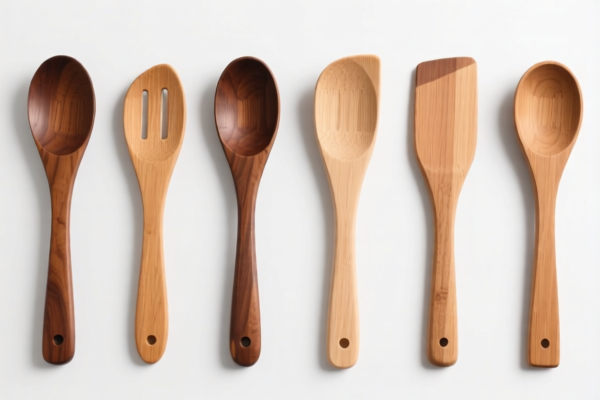
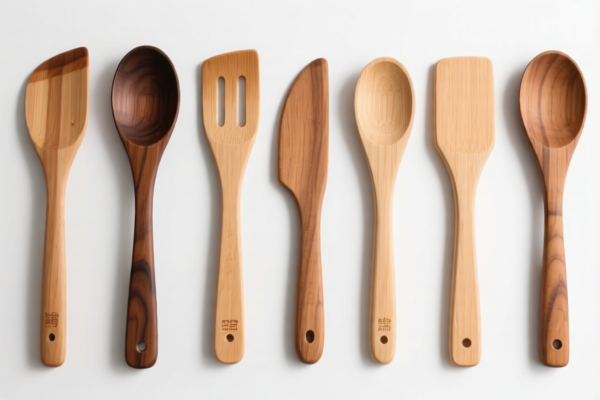
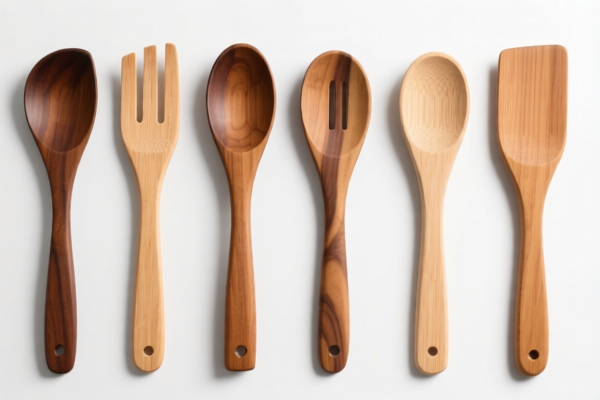
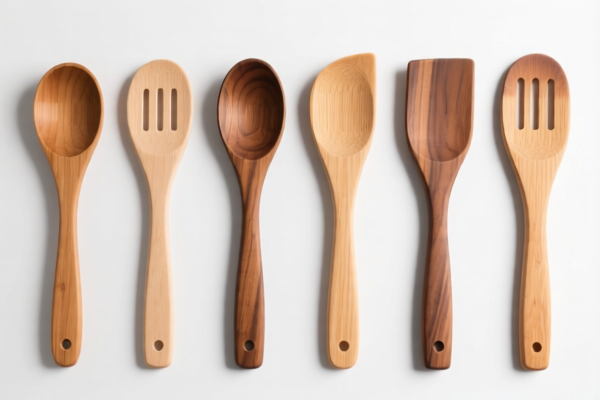
AI Analysis
🍽️ Wooden Kitchen Utensils & Accessories (Other Wood Products)
🌐 HS Code Reference & Customs Clearance Guide | 2026 Latest Tariff Analysis | Professional Clearance Strategy
📌 I. Product Definition & Classification: Understanding "Other Wood Kitchen Utensils"
"Other wood kitchen utensils" typically refer to items made of wood that are used in food preparation, serving, or storage but do not fall under the primary categories of cutlery (knives, forks, spoons) or major furniture. Common examples include wooden racks for cutlery/dishes, serving trays, chopping boards (if not classified elsewhere), and decorative wooden holders.
In international trade, classification is critical because the intended use and structural composition dictate the HS Code, which directly impacts the tariff burden (especially for US imports from China).
⚠️ Key Distinction Points:
- If the item is primarily a storage/display rack for kitchenware → Consider Chapters 44 (Wood Articles) or 94 (Furniture).
- If the item is strictly a food-contact tool (e.g., spatula, spoon) → Consider HS 4419.
- Note: The data provided specifically highlights Wooden Utensil Racks (餐具架) as the primary product scenario.
📦 II. HS Code Classification Details (2026 Latest Tariff Authority Comparison)
The following HS Codes are derived from the provided dataset. Each code represents a different regulatory interpretation of "Other Wood Kitchen Utensils" (specifically focusing on racks/holders).
| HS Code | Product Description | Primary Classification Category | Total Tax Rate |
|---|---|---|---|
4419.90.91.00 |
Wooden Kitchen Utensils (General Purpose) | Wood articles for table/kitchen use | 20.7% |
4420.11.00.90 |
Wooden Utensil Racks (Specific Utility) | Wood articles for household use (Utensil Racks) | 13.2% |
4420.90.80.00 |
Other Wood Utensil Racks (Decorative/General) | Wood carvings or other wood articles (Decorative) | 38.2% |
9403.60.80.93 |
Wooden Utensil Racks (Furniture Category) | Wooden furniture of all kinds | 35.0% |
9403.60.80.40 |
Wooden Utensil Racks (Furniture Category) | Wooden furniture of all kinds | 35.0% |
🔍 Critical Insight:
-4419.90.91.00is the standard code for general wooden kitchen tools (spoons, spatulas, etc.).
-4420.11.00.90is the most favorable option for Utensil Racks (餐具架), as it attracts significantly lower additional tariffs compared to the "Decorative" or "Furniture" codes.
- Codes starting with9403classify the item as Furniture. If a small rack is deemed "furniture" rather than an "article of wood," the tariff jumps significantly due to the 25% Additional Tariff.
💰 III. 2026 Latest Tariff Rate Breakdown (Including Additional Taxes & Policy Surcharges)
✅ Applicable Country: United States (US)
✅ Origin: China (CN)
✅ Effective Time: Current trade policies (2025-2026)
🎯 1. 4419.90.91.00 —— Wooden Kitchen Utensils (General)
| Item | Content |
|---|---|
| Basic Tariff | 3.2% (ad valorem) |
| Additional Tariff (Section 301) | 7.5% |
| IEEPA Surcharge (Section 122/Other) | 10% |
| Total Effective Tax Rate | 20.7% |
| Tax Calculation | CIF Value × 20.7% |
| De Minimis Exemption | ❌ Not Applicable (Subject to full tariff assessment) |
| Legal Basis Path | HTSUS 4419.90.91 → Section 301 Footnote → IEEPA Surcharge |
📌 Explanation:
- This is the standard rate for functional wooden kitchen items.
- The 7.5% additional tariff reflects the current status under Section 301 for certain wood products.
- The 10% IEEPA surcharge is a mandatory addition for Chinese-origin goods.
🎯 2. 4420.11.00.90 —— Wooden Utensil Racks (Best Optimization)
| Item | Content |
|---|---|
| Basic Tariff | 3.2% |
| Additional Tariff (Section 301) | 0.0% |
| IEEPA Surcharge (Section 122/Other) | 10% |
| Total Effective Tax Rate | 13.2% |
| Tax Calculation | CIF Value × 13.2% |
| De Minimis Exemption | ❌ Not Applicable |
| Legal Basis Path | HTSUS 4420.11.00 → Section 301 Exclusion (if applicable) → IEEPA Surcharge |
📌 Explanation:
- This is the optimal code for Utensil Racks.
- The 0% Section 301 additional tariff is a significant advantage over other codes.
- Only the 10% IEEPA surcharge applies on top of the basic 3.2%.
- Strategy: Ensure product descriptions explicitly state "Utensil Rack" (餐具架) and "Household Use" to justify this classification.
🎯 3. 4420.90.80.00 —— Other Wood Utensil Racks (Decorative/General)
| Item | Content |
|---|---|
| Basic Tariff | 3.2% |
| Additional Tariff (Section 301) | 25.0% |
| IEEPA Surcharge (Section 122/Other) | 10% |
| Total Effective Tax Rate | 38.2% |
| Tax Calculation | CIF Value × 38.2% |
| De Minimis Exemption | ❌ Not Applicable |
| Legal Basis Path | HTSUS 4420.90.80 → Section 301 Standard Rate → IEEPA Surcharge |
📌 Explanation:
- If customs views the rack as a decorative wood carving or general "other wood article" rather than a specific kitchen utensil holder, it falls here.
- The 25% additional tariff is the standard high rate for many Chinese wood products under Section 301.
- High Risk: Misclassification here increases costs by 25% compared to4420.11.00.90.
🎯 4. 9403.60.80.93 & 9403.60.80.40 —— Wooden Utensil Racks (Furniture Category)
| Item | Content |
|---|---|
| Basic Tariff | 0.0% |
| Additional Tariff (Section 301) | 25.0% |
| IEEPA Surcharge (Section 122/Other) | 10% |
| Total Effective Tax Rate | 35.0% |
| Tax Calculation | CIF Value × 35.0% |
| De Minimis Exemption | ❌ Not Applicable |
| Legal Basis Path | HTSUS 9403.60.80 → Section 301 Standard Rate → IEEPA Surcharge |
📌 Explanation:
- If the rack is large, heavy, or intended for display in a way that resembles furniture (e.g., a tall standing rack), it may be classified under Chapter 94.
- Although the basic tariff is 0%, the 25% Section 301 rate makes it more expensive than the optimal utensil code (13.2%).
🛠️ IV. Customs Clearance Practical Advice (Battle-Proven Pitfall Guide)
✅ 1. Documentation Checklist (Non-Negotiable)
| Document | Must Provide | Explanation |
|---|---|---|
| ✅ Product Specification Sheet | ✔️ | Dimensions, material (type of wood), weight, intended use (kitchen rack vs. decor). |
| ✅ Product Photos | ✔️ | Clear images showing the item in a kitchen setting (holding cutlery/dishes) to prove "utensil" function. |
| ✅ Commercial Invoice | ✔️ | Must explicitly use terms like "Wooden Utensil Rack" or "Kitchen Cutlery Holder". Avoid vague terms like "Wooden Holder." |
| ✅ Packing List | ✔️ | Detail contents accurately. If packed with other items, declare separately. |
| ✅ Proof of Origin (CO) | ✔️ | To confirm CN origin and ensure correct application of additional tariffs. |
✅ 2. Declaration Strategy (Key Mnemonics)
🔥 "Function First, Description Precise, Rack vs. Furniture!"
| Scenario | Correct Declaration Approach | Incorrect Action |
|---|---|---|
| Small wooden rack for spoons/forks | Use 4420.11.00.90 |
Declare as "Furniture" → 35% Tax |
| Large wooden stand/display | Consider 9403.60.80.93 |
Declare as "Utensil" → Risk of reclassification |
| Decorative wooden holder (no kitchen use) | Use 4420.90.80.00 |
Try to claim "Utensil" status → Audit risk |
| Mixed batch (Racks + Spoons) | Split Declaration | Mixed HS Codes in one line item → Customs seizure |
✅ 3. Special Case Handling
| Scenario | Handling Advice |
|---|---|
| OEM Custom Racks | Provide design files showing the specific function (holding utensils) to justify 4420.11.00.90. |
| Racks with Non-Wood Parts | If the rack has metal hinges or plastic inserts, ensure wood is the principal material (>50% by weight) to stay in Chapter 44. |
| Kit Sets (Rack + Utensils) | Declare as a set if they meet GRI 3(b) criteria, but often it’s safer to declare Utensils (4419) and Racks (4420) separately to optimize rates. |
| Misclassification Risk | If unsure, apply for an Advance Ruling from CBP before shipment. |
🌍 V. Global Market Customs Comparison (2026 Latest)
| Country/Region | Recommended HS Code | Tariff Rate (China Origin) | Certification Requirements | Notes |
|---|---|---|---|---|
| 🇺🇸 USA | 4420.11.00.90 (Optimal) |
13.2% | No specific cert, but FDA food-contact safe for utensils | High Section 301 impact |
| 🇺🇸 USA | 4419.90.91.00 (General) |
20.7% | FDA Food-Contact Notification | Higher tax than rack code |
| 🇪🇺 EU | 4420.11.00 |
3.2% (MFN) | CE (if electrical), Food-Contact Compliance | No Section 301 |
| 🇨🇳 China | 4420.11.00 |
3.2% | CCC (if applicable) | Low tariff |
| 🇬🇧 UK | 4420.11.00 |
3.2% (MFN) | UKCA (if applicable) | Post-Brexit rules apply |
📌 Conclusion:
- USA is the most challenging market due to Section 301 and IEEPA surcharges.
-4420.11.00.90is the sweet spot for wooden utensil racks, offering the lowest total tax rate (13.2%).
- EU/UK offer much lower tariffs but require strict food-contact safety documentation.
📌 VI. Common Mistakes & Pitfall Guide (Blood & Tears Lessons)
❌ Mistake 1: Classifying a simple utensil rack as Furniture (9403)
👉 Consequence: Tax rate jumps from 13.2% to 35.0%.
👉 Fix: Emphasize "Household Utensil" function in the invoice.
❌ Mistake 2: Declaring all wood items as 4419.90.91.00
👉 Consequence: If the item is a rack, it might be reclassified to 4420.90.80.00 (38.2%) if not specific enough.
👉 Fix: Use specific subheadings like 4420.11 for "Utensil Racks."
❌ Mistake 3: Ignoring IEEPA 10% Surcharge
👉 Consequence: Underestimating landed cost by 10%.
👉 Fix: Include IEEPA in all cost models for US imports.
❌ Mistake 4: Vague Product Names ("Wooden Holder")
👉 Consequence: Customs delays, additional inspections, potential reclassification.
👉 Fix: Use precise terms: "Wooden Cutlery Rack, Kitchen Storage".
✅ Correct Practice:
"Wooden Utensil Rack, for Kitchen Storage, Made of Bamboo/Wood, Designed to Hold Forks, Spoons, and Knives, Model XYZ, Food-Safe Finish"
🎯 VII. Conclusion: Professional Declaration, Time-Saving, Cost-Effective!
🎯 Key Takeaways:
🔹 "Rack vs. Furniture: Choose
4420.11for 13.2%, avoid9403at 35%!"
🔹 "IEEPA 10% is Mandatory for US Imports, regardless of HS Code!"
🔹 "Specific Descriptions Prevent Re-classification and Save Thousands!"
📌 Pro Tip:
If your wooden utensil racks are packaged as sets with actual utensils (spoons/forks), consider declaring them as a set under the most duty-beneficial code, or declare separately if the value split is clear.
Always apply for a CBP Advance Ruling if the product design is novel or ambiguous.
📣 Immediate Action:
📞 Consult Customs Brokers + Provide Clear Product Photos + Apply for Advance Ruling
🚀 Ensure your invoices say "Utensil Rack" to unlock the 13.2% rate!
✨ Professional Clearance Starts with Precise Classification!
💼 Every Cent Saved in Tariffs is Pure Profit!
Customer Reviews
About HS Code Classification
The Harmonized System (HS) is an internationally standardized nomenclature developed by the World Customs Organization (WCO) to classify traded products. Over 200 countries use the HS system as the basis for customs tariffs, trade statistics, and import/export regulations.
Each HS code follows a hierarchical structure:
- Chapter (2 digits) — Broad category of goods (e.g., Chapter 84: Machinery and Mechanical Appliances)
- Heading (4 digits) — More specific grouping within the chapter
- Subheading (6 digits) — Internationally standardized breakdown, used by all WCO member countries
- National subdivisions (8-10 digits) — Country-specific extensions for further classification, such as US HTSUS 10-digit codes
Correct HS code classification is essential for smooth customs clearance, accurate duty payment, and compliance with trade regulations. Misclassification can lead to customs delays, overpayment of duties, or penalties.
When importing from CN to US, the applicable tariff rates may include:
- Most-Favored-Nation (MFN) rate — The standard duty rate applied to WTO members
- General rate — Applied to countries without trade agreements
- Trade remedy duties — Additional tariffs such as Section 301 (anti-dumping), Section 232 (national security), or countervailing duties
The information provided on this page is for reference purposes only. For official classification, please consult with your local customs authority or a licensed customs broker.