oven
CN → US| HS Code | Tariff Rate | Origin | Destination | Doc |
|---|---|---|---|---|
| 8516604070 | 35.0% | CN | US | Official Doc |
| 8516604074 | 35.0% | CN | US | Official Doc |
| 8438800000 | 35.0% | CN | US | Official Doc |
Product Images
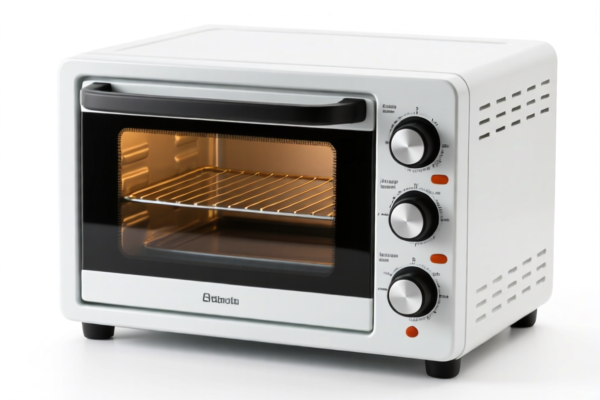
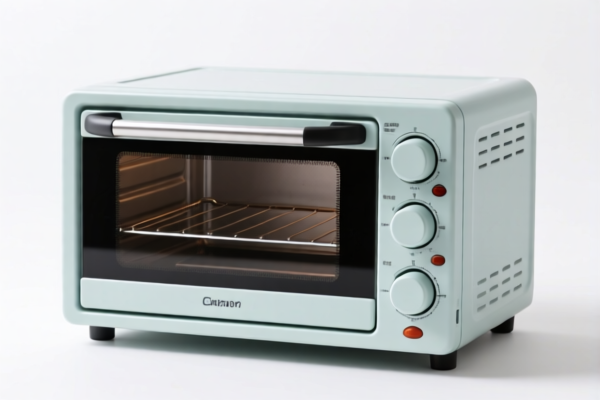
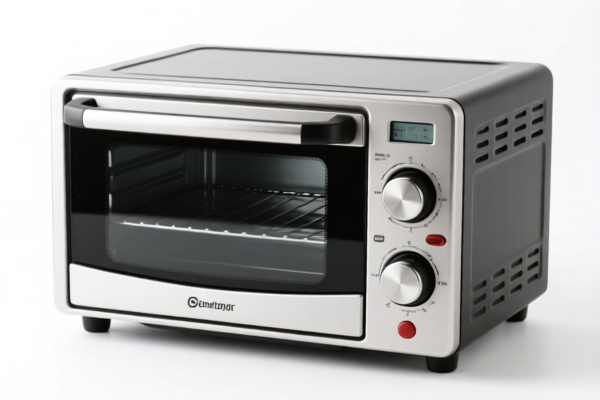
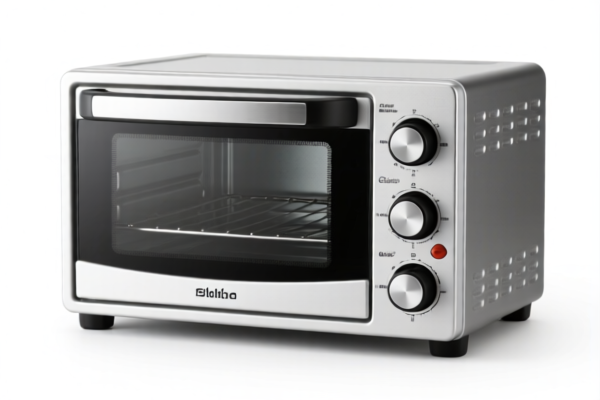
AI Analysis
🏠 Oven (Electric & Heating Appliances)
🌐 HS Code Reference & Customs Clearance Guide | 2026 Latest Tariff Analysis | Professional Entry Strategy
📌 I. Product Definition & Classification: What Exactly is an "Oven"?
In international trade, the term "Oven" is not a single unified category. It is strictly divided based on function, power source, and end-use. Misclassification is the most common cause of customs delays or penalty duties for this product.
There are two primary paths for Ovens: 1. Household/Portable Electric Appliances: Designed for kitchen use, powered by electricity, enclosed in a casing. → Chapter 85 2. Industrial Food Processing Machinery: Designed for commercial kitchens, factories, or bulk processing. → Chapter 84
⚠️ Critical Distinction:
- If it is a consumer product (home kitchen, camping, portable) → It is an Electrical Appliance.
- If it is a machine for manufacturing food (large scale, industrial) → It is a Food Processing Machine.
📦 II. HS Code Classification Details (2026 Latest Tariff Authority)
Based on the provided data, here are the three valid HS Codes for "Oven" with their specific logic and tax implications.
✅ Path A: Household/Portable Electric Ovens (Chapter 85)
These are electrical heating appliances used for cooking or baking. They fall under Heading 85.16 (Electrical instantaneous or storage water heaters; space heating apparatus and soil heating apparatus; electro-thermic space heating apparatus; electro-thermic hair-processing apparatus; hand dryers; electro-thermic appliances for cooking, heating or toasting...).
| HS Code | Product Description | Applicability | Key Feature |
|---|---|---|---|
8516.60.40.70 |
Portable/Stove-type Oven | Household, Camping, Portable | Explicitly identified as "Stoves, cookers and ovens" (portable type). |
8516.60.40.74 |
General Electric Heating Appliance | Household, Fixed Installation | "Electrical Appliances" with no material/shape conflict. Broad category for electric ovens. |
🔍 Logic Explanation:
Both8516.60.40.70and8516.60.40.74are classified as "Electrical Heating Appliances for Cooking".
-.70is more specific to portable units or specific stove/oven configurations.
-.74is a broader catch-all for electric ovens that do not fit other specific sub-categories.
- Conflict Check: The data confirms "no material/shape conflict" for.74, meaning it accepts standard metal/glass ovens.
✅ Path B: Industrial Food Processing Machinery (Chapter 84)
If the oven is part of a manufacturing line or a commercial food processing machine, it falls under Heading 84.38 (Machinery, plant or laboratory equipment, whether or not electrically heated, suitable for cooking or processing food or drink).
| HS Code | Product Description | Applicability | Key Feature |
|---|---|---|---|
8438.80.00.00 |
Other Food/Bev Processing Machinery | Industrial, Commercial Kitchen | Infers "machinery for food processing." |
🔍 Logic Explanation:
This code is used when the "oven" is a machine rather than a simple appliance. It is inferred by its use in food/drink manufacturing.
- Key Indicator: Is it automated? Is it part of a production line? Is it for bulk commercial use? If yes, use 8438.80.00.00.
💰 III. 2026 Latest Tariff Rate Breakdown (Including Surcharges & Policies)
✅ Applicable Country: United States (US)
✅ Origin: China (CN)
✅ Effective Time: Current Trade Policy (Post-2025 Adjustments)
✅ Total Tax Rate: 35.0% for ALL listed HS Codes
🎯 1. 8516.60.40.70 & 8516.60.40.74 (Electrical Ovens)
| Component | Rate | Legal Basis / Policy Source |
|---|---|---|
| Base Tariff | 0.0% | General Duty Rate (GSR) for electrical cooking appliances |
| Section 301 Surcharge | +25.0% | USITC Footnote 9903.88.01 (Section 301 Investigation) |
| Section 122 Tariff | +10.0% | IEEPA Section 122 (Specific China Trade Action) |
| Total Effective Rate | 35.0% | Sum of Base + Surcharge + Section 122 |
📌 Detailed Breakdown:
- Base 0%: The underlying WTO/USITC tariff for electric ovens is low to encourage consumer goods import.
- 25% Surcharge: This is the Section 301 tariff, applied to a wide range of Chinese manufactured goods, including electrical appliances.
- 10% Section 122: This is an additional punitive tariff under IEEPA Section 122, specifically targeting imports from China to address trade imbalances.
- Result: No matter which "Oven" HS code you pick (8516...), the total cost impact is 35% of the CIF value.
🎯 2. 8438.80.00.00 (Industrial Machinery)
| Component | Rate | Legal Basis / Policy Source |
|---|---|---|
| Base Tariff | 0.0% | General Duty Rate for food processing machinery |
| Section 301 Surcharge | +25.0% | USITC Footnote 9903.88.01 (Section 301 Investigation) |
| Section 122 Tariff | +10.0% | IEEPA Section 122 (Specific China Trade Action) |
| Total Effective Rate | 35.0% | Sum of Base + Surcharge + Section 122 |
📌 Detailed Breakdown:
- Even though industrial machinery often enjoys lower base rates, the 301 and Section 122 surcharges apply uniformly to this category from China.
- Result: Despite being a different chapter (84 vs 85), the final tax burden is identical (35%).
🛠️ IV. Customs Clearance Practical Advice (Real-World Pitfall Guide)
✅ 1. Documentation Checklist (Must-Haves)
| Document | Required | Purpose |
|---|---|---|
| ✅ Product Specification Sheet | ✔️ | Must state: Power (V/W), Type (Portable/Industrial), Material. |
| ✅ Product Photos | ✔️ | Must show brand, model, and intended use (e.g., home kitchen vs. factory floor). |
| ✅ Commercial Invoice | ✔️ | Clearly describe as "Electric Oven, Model XYZ" or "Food Processing Oven, Model ABC". Avoid vague terms like "Heating Device." |
| ✅ Packing List | ✔️ | Detail contents to prove it is a complete unit (no missing parts that might trigger parts classification). |
| ✅ Origin Certificate | ✔️ | Critical for proving CN origin (which triggers the 35% tax). |
✅ 2. Classification Strategy (The "Right Way" to Declare)
| Scenario | Correct HS Code | Reasoning | Risk if Wrong |
|---|---|---|---|
| Home Kitchen Oven (Toaster Oven, Convection Oven) | 8516.60.40.70 or .74 |
It is an electrical appliance for consumer use. | Misdeclaring as machinery could lead to higher scrutiny or denial of entry if not certified as industrial equipment. |
| Camping/RV Oven | 8516.60.40.70 |
Explicitly portable. | If declared as fixed industrial, it may require different safety certifications. |
| Commercial Bakery Oven (Large, bolted to floor) | 8438.80.00.00 |
It is food processing machinery. | If declared as household appliance, it may lack FCC/UL/CE certifications required for consumer goods, leading to detention. |
🔥 Golden Rule:
"Consumer = 8516 (Electrical); Industrial = 8438 (Machinery)."
The tax rate is the same (35%), but the compliance requirements differ drastically.
✅ 3. Special Compliance Notes
| Issue | Recommendation |
|---|---|
| Safety Certification | For 8516 codes: Must have UL, ETL, or FCC compliance for the US market. For 8438: May require CE or industrial safety standards. |
| Labeling | Must include English warnings, voltage ratings, and manufacturer info. |
| Section 122 Impact | Since 10% is added under Section 122, ensure your Incoterms (e.g., DDP) account for this full 35% cost. Do not assume it is covered by standard duties. |
🌍 V. Global Market Comparison (2026 Context)
| Region | Recommended HS Code | Estimated Total Duty | Key Requirement |
|---|---|---|---|
| 🇺🇸 USA | 8516.60.40.70 / 8438.80.00.00 |
35.0% | FCC/UL + Section 301 & 122 Compliance |
| 🇪🇺 EU | 8516.60.40 (approx.) |
0% - 4.5% | CE Marking + RoHS |
| 🇨🇳 China | 8516.60.40 |
8% - 10% | CCC Certification |
| 🇬🇧 UK | 8516.60.40 |
0% - 4.5% | UKCA Marking |
📌 Conclusion:
- The US market is significantly more expensive due to the 35% combined tariff.
- EU and UK are much more competitive (0-4.5%), provided you have CE/UKCA certification.
- Strategy: If exporting to the US, ensure accurate classification to avoid penalties, as the 35% is non-negotiable for CN origin.
📌 VI. Common Mistakes & Pitfalls (Lessons Learned)
❌ Mistake 1: Declaring a Home Oven as "Heating Element" (Part)
👉 Consequence: If classified as a "part" (e.g., 8516.90), you might face different regulatory checks or misinterpretation of the product's nature.
✅ Fix: Always declare the complete appliance.
❌ Mistake 2: Ignoring Section 122
👉 Consequence: Assuming only 25% (301) is applicable.
✅ Fix: Budget for the full 35% (0% Base + 25% 301 + 10% 122).
❌ Mistake 3: Confusing Portable vs. Industrial
👉 Consequence: Using 8438 for a toaster oven.
✅ Fix: Check power source and scale. Home appliances go to 8516.
🎯 VII. Conclusion: Smart Classification for Cost Control
🎯 Key Takeaways:
🔹 Total Tax = 35% for all "Oven" classifications from China to the US.
🔹 Choose HS Code based on USE, not just to save tax (since tax is same, but compliance differs).
🔹 Consumer Goods (8516): Need UL/FCC.
🔹 Industrial Machines (8438): Need Industrial Safety Certs.
📌 Pro Tip:
If you are importing Ovens to the US, pre-apply for an Advance Ruling if the product is borderline (e.g., "Commercial-Grade Home Oven"). This prevents post-clearance audits and unexpected penalties.
📣 Immediate Action:
📞 Contact your customs broker with:
1. Product Photos
2. Spec Sheet (Power, Type)
3. Intended Use (Home vs. Factory)
🚀 Ensure your invoice reflects the true nature to avoid 35% surprises at the border!
✨ Professional Clearance, Precise Classification, Cost Efficiency!
💼 Every Duty Percentage Matters!
Customer Reviews
About HS Code Classification
The Harmonized System (HS) is an internationally standardized nomenclature developed by the World Customs Organization (WCO) to classify traded products. Over 200 countries use the HS system as the basis for customs tariffs, trade statistics, and import/export regulations.
Each HS code follows a hierarchical structure:
- Chapter (2 digits) — Broad category of goods (e.g., Chapter 84: Machinery and Mechanical Appliances)
- Heading (4 digits) — More specific grouping within the chapter
- Subheading (6 digits) — Internationally standardized breakdown, used by all WCO member countries
- National subdivisions (8-10 digits) — Country-specific extensions for further classification, such as US HTSUS 10-digit codes
Correct HS code classification is essential for smooth customs clearance, accurate duty payment, and compliance with trade regulations. Misclassification can lead to customs delays, overpayment of duties, or penalties.
When importing from CN to US, the applicable tariff rates may include:
- Most-Favored-Nation (MFN) rate — The standard duty rate applied to WTO members
- General rate — Applied to countries without trade agreements
- Trade remedy duties — Additional tariffs such as Section 301 (anti-dumping), Section 232 (national security), or countervailing duties
The information provided on this page is for reference purposes only. For official classification, please consult with your local customs authority or a licensed customs broker.