over the door shoe organizers
CN → US| HS Code | Tariff Rate | Origin | Destination | Doc |
|---|---|---|---|---|
| 9403896015 | 35.0% | CN | US | Official Doc |
| 7326908688 | 87.9% | CN | US | Official Doc |
| 4421999880 | 38.3% | CN | US | Official Doc |
| 4421919880 | 38.3% | CN | US | Official Doc |
| 9403200082 | 85.0% | CN | US | Official Doc |
Product Images
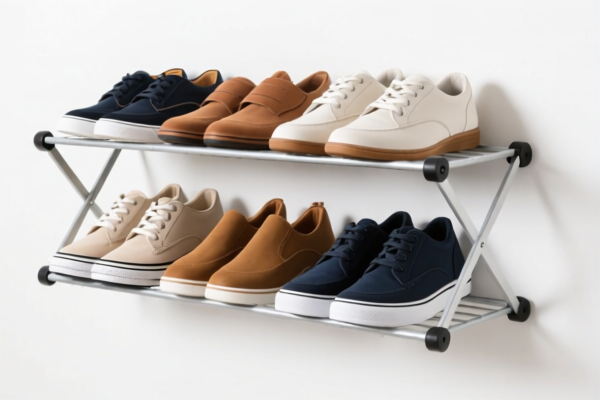
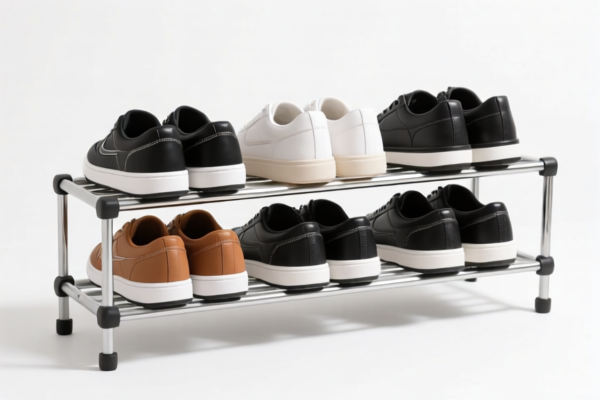
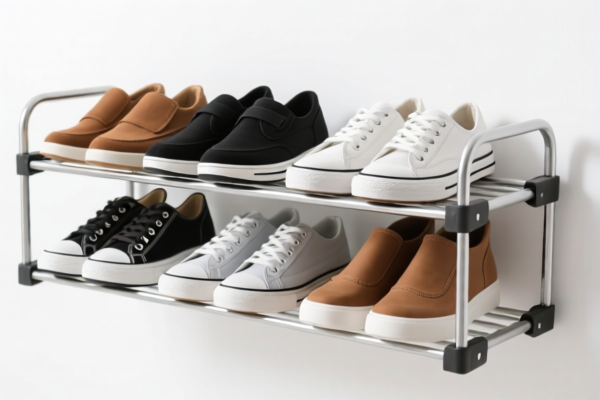
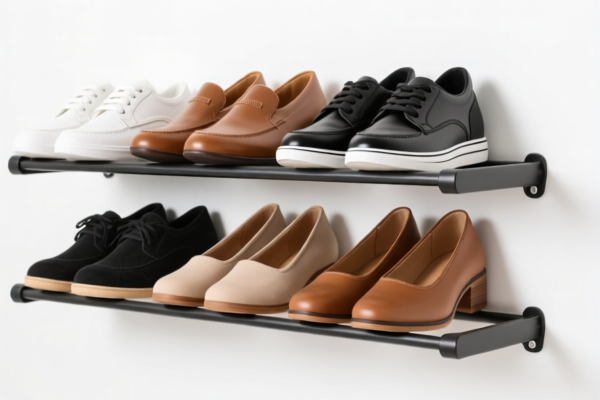
AI Analysis
🚪 Over-the-Door Shoe Organizers (Door-Mounted Storage Systems)
🌐 HS Code Reference & Customs Clearance Guide | 2026 Latest Tariff Analysis | Professional Logistics Strategy
📌 I. Product Definition & Classification: What Exactly Is an "Over-the-Door Shoe Organizer"?
Over-the-door shoe organizers are hanging storage solutions designed to utilize vertical space on the back of doors in closets, bedrooms, or entryways. In international trade, their classification is material-dependent. They are not a single unified category but are split into three main branches based on their primary structural material:
1. Wooden/Wicker/Bamboo Types (Wood Products):
Frames made of wood, rattan, willow, or bamboo, often with fabric or plastic pockets.
2. Metal Types (Iron/Steel/Aluminum):
Frames made of welded wire, iron bars, or aluminum, often with fabric or plastic pockets.
3. Purely Plastic/Textile Types:
While often grouped with wood in broad "household furniture" categories if rigid, strictly plastic versions may fall under different household goods chapters. However, for the provided data, they are grouped under Wood/Other Household Goods.
⚠️ Critical Distinction Point:
- If the frame is Wood/Rattan/Bamboo → Goes to Chapter 44 (Wood) or 9403 (Wooden Furniture).
- If the frame is Iron/Steel → Goes to Chapter 73 (Iron/Steel Articles) or 9403 (Metal Furniture).
- Do NOT mix materials in one HS Code entry. A "Wooden Frame with Fabric Pockets" is primarily classified by the wooden frame.
📦 II. HS Code Classification Details (2026 Latest Tariff Authority Mapping)
Based on the provided <DATA>, here are the five specific HS Codes applicable to Over-the-Door Shoe Organizers, sorted by material logic:
| HS Code | Product Description | Material Basis | Applicable Scenario |
|---|---|---|---|
9403.89.60.15 |
Wicker/Rattan/Bamboo Shoe Rack | Wicker, Willow, Bamboo | Organic material frames; often perceived as "natural furniture." |
7326.90.86.88 |
Other Articles of Iron/Steel | Iron, Steel, Aluminum | Wire-frame or solid metal bars; non-specific listed metal articles. |
4421.99.98.80 |
Other Wooden Articles for Household Use | Wood, Plastic (Composite) | General wooden household items; broader category for wood-based organizers. |
4421.91.98.80 |
Other Wooden Articles (Other) | Wood | Wooden frame without specific furniture classification; generic wood item. |
9403.20.00.82 |
Other Metal Furniture | Metal (Iron/Steel/Aluminum) | Metal frames classified specifically as "Furniture" (storage unit). |
🔍 Key Takeaway:
- Wooden frames enjoy lower base tariffs (3.3%) compared to Metal frames (2.9% base + high steel tariffs).
- However, the Total Tax Rate varies drastically due to Section 301 (25%) and 122 Clause (10%) additions, plus specific Steel/Aluminum/Copper surcharges (50%) for metal products.
💰 III. 2026 Latest Tariff Rate Breakdown (Including Surcharges & Policy Add-ons)
✅ Applicable Country: United States (US)
✅ Origin: China (CN)
✅ Effective Time: Current trade policies (Section 301 & 122 Clause active)
🎯 1. Wooden & Organic Frames (Lower Base, Moderate Total)
A. 9403.89.60.15 (Wicker/Rattan/Bamboo)
| Item | Content |
|---|---|
| Base Tariff | 0.0% |
| Section 301 Surcharge | +25.0% |
| 122 Clause Surcharge | +10.0% |
| Total Tax Rate | 35.0% |
| Calculation | CIF Value × 35% |
| De Minimis Exemption | ❌ Not Eligible (High risk of audit) |
| Legal Path | 9403.89.60.15 → Section 301: 25% + 122 Clause: 10% |
📌 Explanation:
- No Base Tariff: Recognized as common household goods from specific subheadings.
- Add-ons: The 25% (Section 301) and 10% (122 Clause) apply universally to Chinese origin wood/wicker goods.
- Result: 35% Total. This is the most cost-effective option among the list.
B. 4421.99.98.80 & 4421.91.98.80 (General Wood)
| Item | Content |
|---|---|
| Base Tariff | 3.3% |
| Section 301 Surcharge | +25.0% |
| 122 Clause Surcharge | +10.0% |
| Total Tax Rate | 38.3% |
| Calculation | CIF Value × 38.3% |
| De Minimis Exemption | ❌ Not Eligible |
| Legal Path | 4421.99.98.80 → Base 3.3% + Sec 301 25% + 122 Clause 10% |
📌 Explanation:
- Base Tariff: Slightly higher than wicker/rattan.
- Add-ons: Same 35% total surcharge.
- Result: 38.3% Total. Slightly more expensive than9403.89.60.15.
🎯 2. Metal Frames (Higher Base, Heavy Steel Surcharges)
C. 7326.90.86.88 (Other Iron/Steel Articles)
| Item | Content |
|---|---|
| Base Tariff | 2.9% |
| Section 301 Surcharge | +25.0% |
| 122 Clause Surcharge | +10.0% |
| Steel/Aluminum/Copper Surcharge | +50.0% |
| Total Tax Rate | 87.9% |
| Calculation | CIF Value × 87.9% |
| De Minimis Exemption | ❌ Not Eligible |
| Legal Path | 7326.90.86.88 → Base 2.9% + Sec 301 25% + 122 Clause 10% + Steel Surcharge 50% |
📌 Explanation:
- Base Tariff: Low (2.9%).
- The Killer: 50% Steel/Aluminum Surcharge. This is the critical factor.
- Result: 87.9% Total. Extremely High. This makes metal organizers nearly prohibitive for direct import unless duty-paid by buyer.
D. 9403.20.00.82 (Other Metal Furniture)
| Item | Content |
|---|---|
| Base Tariff | 0.0% |
| Section 301 Surcharge | +25.0% |
| 122 Clause Surcharge | +10.0% |
| Steel/Aluminum/Copper Surcharge | +50.0% |
| Total Tax Rate | 85.0% |
| Calculation | CIF Value × 85.0% |
| De Minimis Exemption | ❌ Not Eligible |
| Legal Path | 9403.20.00.82 → Base 0.0% + Sec 301 25% + 122 Clause 10% + Steel Surcharge 50% |
📌 Explanation:
- Base Tariff: 0% (Favorable).
- The Killer: Same 50% Steel/Aluminum Surcharge.
- Result: 85.0% Total. Slightly better than7326...due to 0% base, but still prohibitively high.
🛠️ IV. Customs Clearance Practical Advice (Real-World Pitfall Avoidance)
✅ 1. Material Verification Checklist (Must Have)
| Document | Required | Purpose |
|---|---|---|
| ✅ Bill of Materials (BOM) | ✔️ | Clearly states % of Wood vs. Metal vs. Fabric. Crucial for HS Code selection. |
| ✅ Product Photos | ✔️ | Show frame material close-up. Does it look like wood grain or welded steel? |
| ✅ Commercial Invoice | ✔️ | Must match HS Code description. "Wooden Shoe Rack" vs. "Metal Shoe Rack." |
| ✅ Origin Certificate (CO) | ✔️ | To prove CN origin for surcharge calculations. |
| ✅ Assembly Instructions | ✔️ | Helps prove it’s a "finished article" not a kit of parts. |
✅ 2. Declaration Strategy (Key Mnemonics)
🔥 "Wood Wins, Metal Sinks! Check the Frame, Not the Pockets!"
| Scenario | Correct Declaration | Wrong Declaration | Consequence |
|---|---|---|---|
| Wicker/Rattan Frame | 9403.89.60.15 |
4421.99... |
Overpay by 3.3% (Minor) |
| Solid Wood Frame | 4421.91.98.80 |
7326... |
Avoid Steel Tax! |
| Iron Wire Frame | 7326.90.86.88 |
9403.89... |
Huge Penalty: Wrong HS + Underpayment |
| Mixed Material (Wood + Metal) | Primary Material Rule: If >50% value/structure is wood, use Wood HS Code. If metal is structural core, use Metal HS Code. | Splitting into two HS Codes | Complex valuation & potential seizure |
⚠️ Warning:
- If the organizer has a wooden top shelf but metal legs, you must determine the essential character.
- Do NOT declare a metal-framed unit as "Wooden" to save 50% tax. Customs will inspect, find the steel, and impose fraud penalties + back taxes.
✅ 3. Special Handling for "Over-the-Door" Feature
| Feature | Clearance Note |
|---|---|
| Hooks/Straps | If hooks are plastic or fabric, they do not change the HS Code of the main frame. |
| Hooks are Metal | If the entire structure is metal, including hooks, it falls under Metal (85-87% tax). |
| Hooks are Wood | If the entire structure is wood, it falls under Wood (35-38% tax). |
| Detachable Parts | Do not separate hooks and frame in declaration. Declare as one unit. |
🌍 V. Global Market Comparison (2026)
| Market | Recommended HS Code | Total Tax (China Origin) | Notes |
|---|---|---|---|
| 🇺🇸 USA | 9403.89.60.15 (Wood) |
35.0% | Best Option. Avoid Metal (85%+). |
| 🇺🇸 USA | 7326.90.86.88 (Metal) |
87.9% | Avoid. High steel surcharge. |
| 🇨🇳 China | 4421.99.98.80 |
~3-5% | Low base, no US surcharges. |
| 🇪🇺 EU | 4421.99.98.80 |
0-5% | No Section 301/122 Clause. |
| 🇬🇧 UK | 4421.99.98.80 |
0-5% | Post-Brexit tariffs favorable. |
📌 Conclusion:
- USA Market: Wood/Bamboo/Wicker organizers are highly competitive due to 35% tax. Metal organizers are uncompetitive at 85-88% due to steel surcharges.
- Strategy: If importing to the US, strongly recommend sourcing wooden, bamboo, or wicker frames. Avoid iron/steel wire frames unless you can absorb the 50% steel tariff.
📌 VI. Common Mistakes & Pitfalls (Blood Lessons)
❌ Mistake 1: Declaring a Metal Frame as 9403.89.60.15 (Wood)
👉 Consequence: Customs inspection reveals steel hooks/legs. Penalty + Back Taxes + Seizure Risk.
❌ Mistake 2: Ignoring the 50% Steel Surcharge
👉 Consequence: Budgeting for 10% tariff, but facing 85%+. Profit Margin Destroyed.
❌ Mistake 3: Claiming "De Minimis" for Shipment under $800
👉 Consequence: Invalid. These goods are subject to Section 301 and 122 Clause. No De Minimis Exemption.
❌ Mistake 4: Mixing Wood and Metal in One Line Item Without Clarification
👉 Consequence: Customs may apply the highest tax rate of any component or request reclassification. Delays.
✅ Correct Action:
"Wooden Over-the-Door Shoe Organizer, 6-Pocket, Natural Rattan Frame, Fabric Pockets, Model XYZ, No Metal Parts"
🎯 VII. Conclusion: Smart Sourcing for Profit Maximization!
🎯 Remember the Golden Rule:
🔹 "Wood is Low, Metal is High! 35% vs. 85% is the Key!"
🔹 "Check the Frame, Not the Pockets! Steel Surcharge is the Trap!"
📌 Pro Tip:
If you must import Metal organizers:
1. Consider shifting supply chain to Vietnam or Mexico to avoid Section 301 (but check Steel Surcharge rules for non-CN origin).
2. Apply for Exclusions (if available) for Section 301 duties.
3. Do not attempt to misclassify as Wood. The risk is too high.
📣 Immediate Action:
📞 Verify Material Composition with Supplier
📊 Calculate Landed Cost with 35% (Wood) vs. 88% (Metal)
🚀 Choose Wood/Bamboo for US Market Profitability!
✨ Professional Clearance Starts with Accurate HS Codes!
💼 Your Bottom Line Depends on Your Material Choice!
Customer Reviews
About HS Code Classification
The Harmonized System (HS) is an internationally standardized nomenclature developed by the World Customs Organization (WCO) to classify traded products. Over 200 countries use the HS system as the basis for customs tariffs, trade statistics, and import/export regulations.
Each HS code follows a hierarchical structure:
- Chapter (2 digits) — Broad category of goods (e.g., Chapter 84: Machinery and Mechanical Appliances)
- Heading (4 digits) — More specific grouping within the chapter
- Subheading (6 digits) — Internationally standardized breakdown, used by all WCO member countries
- National subdivisions (8-10 digits) — Country-specific extensions for further classification, such as US HTSUS 10-digit codes
Correct HS code classification is essential for smooth customs clearance, accurate duty payment, and compliance with trade regulations. Misclassification can lead to customs delays, overpayment of duties, or penalties.
When importing from CN to US, the applicable tariff rates may include:
- Most-Favored-Nation (MFN) rate — The standard duty rate applied to WTO members
- General rate — Applied to countries without trade agreements
- Trade remedy duties — Additional tariffs such as Section 301 (anti-dumping), Section 232 (national security), or countervailing duties
The information provided on this page is for reference purposes only. For official classification, please consult with your local customs authority or a licensed customs broker.