overvoltage protection module
CN → US| HS Code | Tariff Rate | Origin | Destination | Doc |
|---|---|---|---|---|
| 8536308000 | 35.0% | CN | US | Official Doc |
Product Images
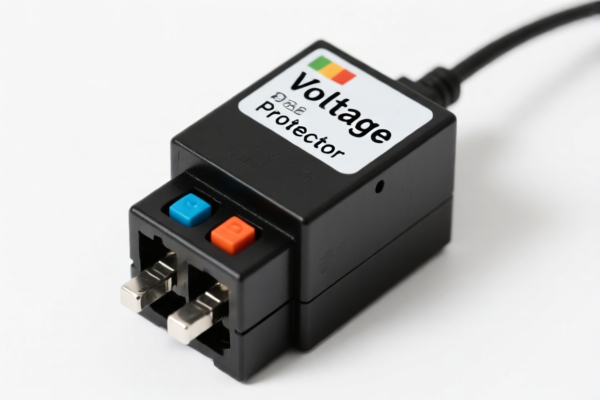
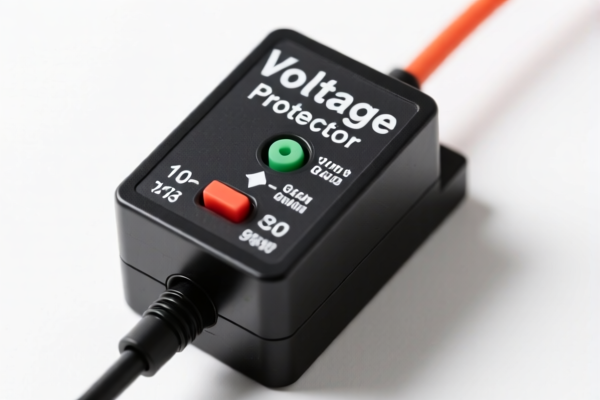
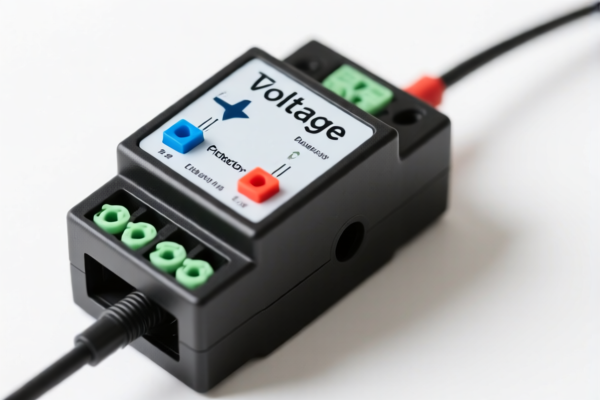
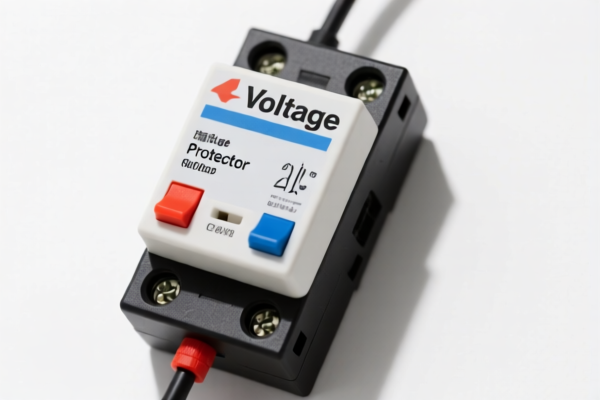
AI Analysis
⚡ Overvoltage Protection Module (Surge Suppressor / SPD)
🌐 HS Code 101 Reference & Customs Clearance Guide | 2026 Latest Tariff Analysis | Professional Customs Strategy
📌 I. Product Definition & Classification: Do You Really Understand "Overvoltage Protection"?
An Overvoltage Protection Module (often referred to as a Surge Protective Device, SPD, or Surge Suppressor) is a critical electrical safety component designed to protect electrical equipment and circuits from voltage spikes. These spikes can be caused by lightning strikes, power grid switching, or internal electrical faults.
In international trade, these devices are specifically classified under Chapter 85: Electrical machinery and equipment, specifically within heading 8536, which covers electrical apparatus for switching or protecting electrical circuits.
⚠️ Key Distinction Point:
- If the device is designed for voltages exceeding 1,000 V (high voltage industrial grid protection), it may fall under different subheadings (e.g., 8536.90).
- If the device is for voltages not exceeding 1,000 V (standard household, commercial, or low-voltage industrial use), it falls under 8536.30 (Other apparatus for protecting electrical circuits).
- Crucially, if the device is a fuse specifically, it goes to 8536.10. If it is a circuit breaker, it goes to 8536.20. If it is a generic "surge suppressor" or "varistor-based protection module," it typically falls under "Other" (8536.30.80).
📦 II. HS Code Classification Details (2026 Latest Tariff Authority Comparison)
| HS Code | Product Description | Applicable Scenario | Voltage Limit | Protection Mechanism |
|---|---|---|---|---|
8536.30.80.00 |
Other apparatus for protecting electrical circuits (e.g., Surge Suppressors, Varistors, SPDs) | Residential panels, data center power distribution, industrial control cabinets | ≤ 1,000 V | Non-linear resistors (MOVs), Gas Discharge Tubes (GDTs), TVS Diodes |
8536.10.40.00 |
Fuses (current rating ≤ 1 A) | Small electronics, consumer goods | ≤ 1,000 V | Melting link |
8536.20.40.00 |
Circuit Breakers (current rating ≤ 12.5 A) | Home mains, small AC units | ≤ 1,000 V | Magnetic/Thermal trip |
8536.30.10.00 |
Relays for protecting electrical circuits | Industrial automation, motor protection | ≤ 1,000 V | Electronic switching |
🔍 Key Reminder:
- Most commercial Surge Protection Modules (SPDs) for socket strips, server racks, or distribution boxes fall under8536.30.80.00because they are "other apparatus" not specifically classified as fuses or breakers.
- Ensure the declared voltage is ≤ 1,000 V. If it is a high-voltage outdoor line protector, it may be classified differently.
💰 III. 2026 Latest Tariff Rate Details (Including Additional Taxes & Policies)
✅ Applicable Country: United States (US)
✅ Country of Origin: China (CN)
✅ Effective Date: November 10, 2025 (and subsequent imports)
🎯 1. 8536.30.80.00 —— Overvoltage Protection Modules / Surge Suppressors
| Item | Content |
|---|---|
| Base Tariff Rate | 0% (ad valorem) |
| Section 301 Additional Tariff | +25.0% (From USITC Footnote 9903.88.01 / HTSUS 8536.30.80.00) |
| Total Tariff Rate | 25.0% |
| Tax Calculation | CIF Value × 25% |
| De Minimis Exemption? | ❌ NO (Not eligible for Section 321 de minimis exemption due to 301 tariff applicability) |
| Legal Basis Path | USITC:8536.30.80.00 → FOOTNOTE:9903.88.01 → Section 301: 25% |
📌 Explanation:
- The Base Tariff for this category is generally 0% under normal MFN (Most Favored Nation) rates.
- However, due to Section 301 tariffs on Chinese goods, an additional 25% is applied.
- Total Effective Rate: 25%.
- No IEEPA Additional Tax: Unlike displays or semiconductors, this specific HS code does not currently have an additional IEEPA (International Emergency Economic Powers Act) surcharge in the provided data. It is strictly the 25% Section 301 rate.
- De Minimis Alert: Because Section 301 tariffs apply, small packages (under $800) are NOT exempt from this 25% duty if the goods are from China.
🛠️ IV. Customs Clearance Operational Advice (Practical Pitfall Avoidance Guide)
✅ 1. Required Document Checklist (Non-Negotiable)
| Document | Must Provide | Explanation |
|---|---|---|
| ✅ Product Specification Sheet | ✔️ | Must state Voltage Rating (e.g., 120V/240V AC), Clamping Voltage, Energy Absorption (Joules), and Interface Type (Plug-in, DIN-Rail, Terminal Block). |
| ✅ Circuit Diagram / Internal Structure | ✔️ | To prove it is a "Surge Suppressor" (varistors/GDTs) and not a "Voltage Regulator" or "Converter" (which might have different duties). |
| ✅ Product Photos (with Label) | ✔️ | Clear view of input/output terminals, voltage labels, and certification marks (UL, ETL, CE). |
| ✅ Certification Reports | ✔️ | UL 1449 is the standard for SPDs in the US. Without this, customs may question the safety classification. |
| ✅ Commercial Invoice | ✔️ | Description should be precise: "Overvoltage Protection Module, Type SPD, Voltage ≤ 1000V, Model XYZ". Avoid vague terms like "Electrical Parts." |
| ✅ Packing List | ✔️ | Detail the quantity and net/gross weight. |
✅ 2. Declaration Tips (Critical Mantras)
🔥 "Be Precise, Avoid Ambiguity, Declare Voltage!"
| Scenario | Correct Declaration | Incorrect Practice |
|---|---|---|
| Plug-in Surge Protector (e.g., power strip with SPD) | 8536.30.80.00 |
Declare as "Power Strip" (8536.50) → May trigger different inspection or higher duty if misclassified. |
| DIN-Rail Surge Module (Industrial) | 8536.30.80.00 |
Declare as "Relay" (8536.50) → Wrong function, risk of penalty. |
| Voltage Regulator/AVR | Different HS Code (e.g., 8504.40) | Declare as "Surge Protector" → Major Misclassification, potential audit. |
| High Voltage (>1000V) Protector | 8536.90.00.00 |
Declare as 8536.30.80.00 → Customs will inspect voltage rating, causing delays. |
✅ 3. Special Cases Handling
| Scenario | Handling Advice |
|---|---|
| Integrated with Socket/Plug | If the surge protection is built into the plug/socket (like a surge protector strip), it may still fall under 8536.30.80.00 if the primary function is protection, but verify if it's classified as a "Connector" (8536.69). Best practice: Declare as Protection Module. |
| OEM / White Label | Provide the original manufacturer's UL 1449 report. Even if white-labeled, the electrical safety standards remain the same. |
| Combo Devices | If it combines SPD + USB Charging, declare the primary function (Protection) under 8536.30.80.00, but clearly list USB ports in the description. |
🌍 V. Global Market Comparison (2026 Latest)
| Country/Region | Recommended HS Code | Duty Rate | Certification Required | Notes |
|---|---|---|---|---|
| 🇺🇸 USA | 8536.30.80.00 |
25% (Section 301) | UL 1449, FCC (if electronic) | High duty due to 301 tariffs. |
| 🇨🇳 China | 8536.30.80.00 |
0% - 5% | CCC (if applicable) | Low entry barrier. |
| 🇪🇺 EU | 8536.30.80.00 |
0% | CE, RoHS | No additional tariffs for China. |
| 🇬🇧 UK | 8536.30.80.00 |
0% - 5% | UKCA | Post-Brexit alignment with EU trends. |
| 🇨🇦 Canada | 8536.30.80.00 |
0% - 6% | CSA | Check for anti-dumping if specific materials are involved. |
📌 Conclusion:
- The US market is the most expensive for Chinese-origin overvoltage protection modules due to the flat 25% Section 301 tariff.
- EU and Asia offer more favorable tariff conditions.
- UL 1449 Certification is non-negotiable for US market entry; without it, customs clearance will likely fail or result in refusal.
📌 VI. Common Mistakes & Pitfall Guide (Lessons from Experience)
❌ Mistake 1: Declaring as "Electrical Accessories" or "Parts" without specifying function.
👉 Consequence: Customs may apply a higher general duty rate or demand extensive documentation to prove function.
❌ Mistake 2: Confusing "Surge Protector" with "Voltage Regulator (AVR)".
👉 Consequence: AVR protects against low voltage; SPD protects against high voltage. Different HS codes, different duties. Misclassification leads to audits.
❌ Mistake 3: Ignoring the Voltage Rating.
👉 Consequence: If the device is rated > 1,000 V, 8536.30.80.00 is incorrect. It should be 8536.90.00.00. This error causes shipment holds.
❌ Mistake 4: Assuming De Minimis ($800) applies.
👉 Consequence: Section 301 goods from China are EXCLUDED from de minimis exemption. Small B2B samples or shipments will still be charged 25% duty and require formal entry.
✅ Correct Practice:
"Surge Protective Device (SPD), DIN-Rail Mount, 2-Mode, 120V AC, UL 1449 Listed, Model XYZ"
🎯 VII. Conclusion: Professional Declaration Saves Money!
🎯 Remember the Mantra:
🔹 "Voltage ≤ 1000V? Check 8536.30.80."
🔹 "China Origin? Prepare for 25% Section 301."
🔹 "No UL 1449? No Entry to USA."
📌 Tips:
- If you are shipping to the US, calculate the landed cost including the 25% duty early in your pricing model.
- Consider pre-classification rulings if you are launching a new type of SPD (e.g., hybrid SPD+Breaker) to avoid post-clearance adjustments.
- For B2B shipments, ensure the invoice clearly states the HS Code 8536.30.80.00 to speed up customs processing.
📣 Immediate Action:
📞 Verify your UL 1449 certificate is valid and matches the model number.
📝 Update your commercial invoice with the precise HS Code8536.30.80.00.
🚀 Ensure smooth clearance, avoid 25% surprises, and protect your supply chain!
✨ Professional Customs Clearance Starts with Accurate Classification!
💼 Your cost efficiency depends on precise tariff management!
Customer Reviews
About HS Code Classification
The Harmonized System (HS) is an internationally standardized nomenclature developed by the World Customs Organization (WCO) to classify traded products. Over 200 countries use the HS system as the basis for customs tariffs, trade statistics, and import/export regulations.
Each HS code follows a hierarchical structure:
- Chapter (2 digits) — Broad category of goods (e.g., Chapter 84: Machinery and Mechanical Appliances)
- Heading (4 digits) — More specific grouping within the chapter
- Subheading (6 digits) — Internationally standardized breakdown, used by all WCO member countries
- National subdivisions (8-10 digits) — Country-specific extensions for further classification, such as US HTSUS 10-digit codes
Correct HS code classification is essential for smooth customs clearance, accurate duty payment, and compliance with trade regulations. Misclassification can lead to customs delays, overpayment of duties, or penalties.
When importing from CN to US, the applicable tariff rates may include:
- Most-Favored-Nation (MFN) rate — The standard duty rate applied to WTO members
- General rate — Applied to countries without trade agreements
- Trade remedy duties — Additional tariffs such as Section 301 (anti-dumping), Section 232 (national security), or countervailing duties
The information provided on this page is for reference purposes only. For official classification, please consult with your local customs authority or a licensed customs broker.