packaging material
CN → US| HS Code | Tariff Rate | Origin | Destination | Doc |
|---|---|---|---|---|
| 3923900080 | 38.0% | CN | US | Official Doc |
| 3923109000 | 38.0% | CN | US | Official Doc |
| 4819100040 | 35.0% | CN | US | Official Doc |
| 4819504040 | 35.0% | CN | US | Official Doc |
Product Images
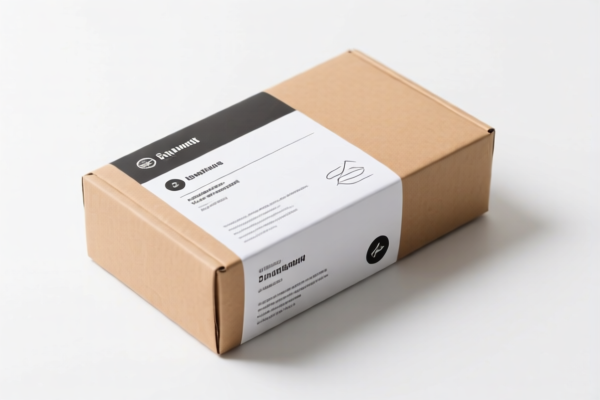
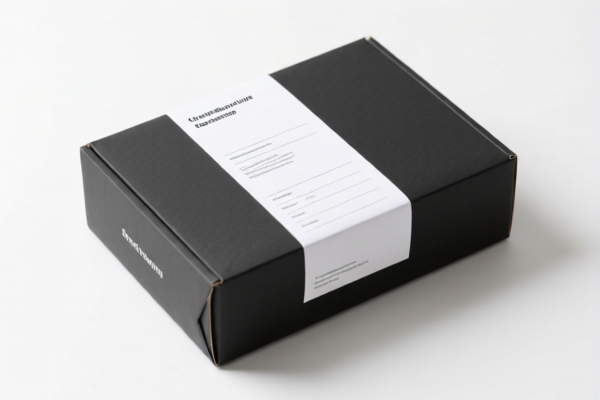
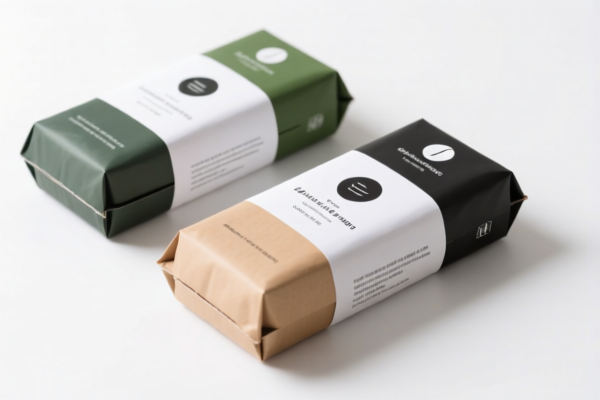
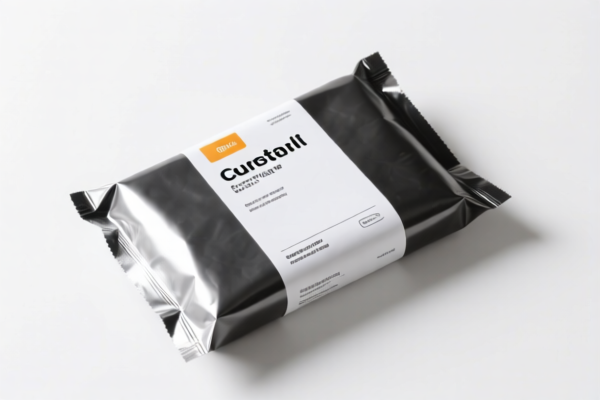
AI Analysis
📦 Packaging Material (Articles for the Conveyance or Packing of Goods)
🌐 HS Code Reference & Customs Clearance Guide | 2026 Updated Tariff Analysis | Professional Import Strategy
📌 One, Product Definition & Classification: What Exactly Is "Packaging Material"?
"Packaging Material" refers to any item used to protect, contain, or transport goods during shipment, storage, or retail. It is not a standalone product but a functional component in logistics and supply chains.
In international trade, packaging materials are classified based on material type, form, and intended use. The key question is: Is it made of plastic? Paper? Fiber? Or something else?
⚠️ Critical Distinction:
- If the material is plastic-based, used for conveyance or packing, it falls under plastics (HS 3923).
- If it's paper, cardboard, or fiber-based, and functions as a container, it belongs to paper & paperboard (HS 4819).
- Since the name “Packaging Material” is vague, customs authorities rely on context, usage, and common industry assumptions to assign the correct HS Code.
📦 Two, HS Code Classification Details (2026 Official Tariff Match)
| HS Code | Product Description | Usage Context | Material Assumption | Tax Rate |
|---|---|---|---|---|
3923.90.00.80 |
Articles for the conveyance or packing of goods, of plastics | Plastic trays, boxes, wraps, cushioning, film, or containers used in logistics | Plastic (based on common usage) | 38.0% |
3923.10.90.00 |
Other articles for the conveyance or packing of goods, of plastics | Plastic packaging films, bags, foam inserts, or molded plastic cases | Plastic (default assumption under "catch-all" rule) | 38.0% |
4819.10.00.40 |
Packaging containers of paper or paperboard | Cardboard boxes, corrugated containers, paper sleeves, folding cartons | Paper / Paperboard (common assumption) | 35.0% |
4819.50.40.40 |
Other packaging containers, of paper, paperboard, or fiber | Paper bags, woven fiber containers, fiberboard boxes, or paper-based wraps | Paper, paperboard, or fiber (non-plastic) | 35.0% |
🔍 Key Insight:
- The same product name ("Packaging Material") can lead to different HS codes depending on material assumption. - Plastic-based packaging → Higher tax (38%)
- Paper/fiber-based packaging → Lower tax (35%)
- No material specified → Customs applies "duty drawback" or "catch-all" logic based on typical usage.
💰 Three, 2026 Updated Tariff Breakdown (With Full Legal Justification)
✅ Applicable Country: United States (US)
✅ Origin: China (CN)
✅ Effective Date: November 10, 2025 (including subsequent imports)
🎯 1. 3923.90.00.80 — Plastic Packaging for Goods Transport
| Item | Details |
|---|---|
| Base Tariff | 3.0% (ad valorem) |
| Section 301 (USITC) Additional Duty | +25.0% |
| Section 122 (IEEPA) Additional Duty | +10.0% |
| Total Effective Rate | 38.0% |
| Tax Calculation | CIF Value × 38.0% |
| De Minimis Exemption | ❌ Not applicable (denied under US law) |
| Legal Basis Path | IEEPA:9903.01.25 → IEEPA:9903.01.24 → USITC:3923.90.00.80 → FOOTNOTE:9903.88.01 |
📌 Explanation:
- USITC 25%: Imposed under Section 301 of the Trade Act of 1974, targeting unfair trade practices by China.
- IEEPA 10%: Enacted under the International Emergency Economic Powers Act, used to impose sanctions on goods from China.
- Combined with 3% base, this results in 38% total — one of the highest tariffs on packaging materials.
- No exemption even for small shipments — de minimis threshold is waived for China-origin goods.
🎯 2. 3923.10.90.00 — Other Plastic Packaging Articles
| Item | Details |
|---|---|
| Base Tariff | 3.0% |
| USITC Additional Duty | +25.0% |
| IEEPA Additional Duty | +10.0% |
| Total Effective Rate | 38.0% |
| Tax Calculation | CIF × 38.0% |
| De Minimis Exemption | ❌ Not allowed |
| Legal Basis Path | IEEPA:9901.25 → IEEPA:9903.01.24 → USITC:3923.10.90.00 → FOOTNOTE:9903.88.01 |
📌 Note:
- This code covers non-specific plastic packaging like films, wraps, or molded inserts.
- Even if the item is not a container, but still used for packing, it qualifies.
- No material conflict — plastic is assumed due to "catch-all" rule.
🎯 3. 4819.10.00.40 — Paper/Paperboard Packaging Containers
| Item | Details |
|---|---|
| Base Tariff | 0.0% |
| USITC Additional Duty | +25.0% |
| IEEPA Additional Duty | +10.0% |
| Total Effective Rate | 35.0% |
| Tax Calculation | CIF × 35.0% |
| De Minimis Exemption | ❌ Not applicable |
| Legal Basis Path | IEEPA:9903.01.25 → IEEPA:9903.01.24 → USITC:4819.10.00.40 → FOOTNOTE:9903.88.01 |
📌 Why Lower Than Plastic?
- Paper-based packaging has 0% base tariff, but still subject to 25% + 10% add-ons.
- Still high at 35%, but 3% lower than plastic packaging.
- Common in e-commerce, retail, and food packaging.
🎯 4. 4819.50.40.40 — Other Paper/Fiber-Based Packaging Containers
| Item | Details |
|---|---|
| Base Tariff | 0.0% |
| USITC Additional Duty | +25.0% |
| IEEPA Additional Duty | +10.0% |
| Total Effective Rate | 35.0% |
| Tax Calculation | CIF × 35.0% |
| De Minimis Exemption | ❌ Not allowed |
| Legal Basis Path | IEEPA:9901.25 → IEEPA:9903.01.24 → USITC:4819.50.40.40 → FOOTNOTE:9903.88.01 |
📌 Scope:
- Includes woven fiber bags, paper sacks, fiberboard boxes, paper wraps, or non-corrugated containers.
- No plastic content → avoids higher plastic-related tariffs.
- Still subject to 35% due to China origin.
🛠️ Four, Customs Clearance Best Practices (Pro Tips to Avoid Penalties)
✅ 1. Required Documentation (Must-Have Checklist)
| Document | Required? | Why It Matters |
|---|---|---|
| ✅ Product Specification Sheet | ✔️ | Shows material, dimensions, function |
| ✅ Material Certificate (Plastic/Paper/Fiber) | ✔️ | Proves material type for accurate HS Code |
| ✅ High-Res Product Photos | ✔️ | Shows structure, labeling, construction |
| ✅ Commercial Invoice | ✔️ | Must clearly state "Packaging Material" + intended use |
| ✅ Packing List | ✔️ | Details number of units, packaging type |
| ✅ Certificate of Origin (CO) | ✔️ | Critical for tariff eligibility |
| ✅ Test Reports (e.g., FDA, REACH, RoHS) | ✔️ | If applicable (e.g., food-grade packaging) |
✅ 2.申报技巧(Key Rules to Remember)
🔥 "Material First, Use Second, Name Last!"
| Scenario | Correct HS Code | Wrong Approach |
|---|---|---|
| Plastic wrap used for shipping | 3923.90.00.80 or 3923.10.90.00 |
Misclassified as paper → 35% vs 38% |
| Cardboard box with plastic liner | Use 4819.10.00.40 if primary material is paper |
If plastic is dominant → use plastic code |
| Fiber bag for agricultural goods | 4819.50.40.40 |
Not 3923 unless plastic-based |
| No material specified | Assume plastic (default) → 38% | Risk of underpayment if paper is correct |
✅ 3. Special Cases & How to Handle Them
| Situation | Recommended Action |
|---|---|
| Mixed-material packaging (e.g., paper box with plastic insert) | Use the dominant material (by weight or function). If plastic is functional, use plastic HS Code. |
| Custom-designed packaging | Provide design drawings + material list to support classification. |
| Reused or recycled packaging | Still subject to same tariffs — no exemption. |
| Low-value shipment | No de minimis relief — even $100 shipment pays 35%–38%. |
| Export from Vietnam/Mexico | Can avoid IEEPA/USITC tariffs if origin is changed — consider re-export strategy. |
🌍 Five, Global Market Comparison (2026 Update)
| Country/Region | Recommended HS Code | Tariff Rate | Certification Required | Notes |
|---|---|---|---|---|
| 🇺🇸 United States | 3923.90.00.80 / 4819.10.00.40 |
35%–38% | FCC, FDA (if food contact), REACH | No de minimis for China |
| 🇨🇳 China | 3923.90.00.80 |
5% | CCC, RoHS | No extra duties |
| 🇪🇺 European Union | 3923.90.00.80 |
0% (if CE compliant) | CE, REACH, RoHS | No US-style add-ons |
| 🇦🇺 Australia | 4819.10.00.40 |
5% | RCM, AS/NZS | No IEEPA/USITC |
| 🇯🇵 Japan | 4819.10.00.40 |
0% | PSE | No extra tariffs |
📌 Takeaway:
- The US is the most punitive market for packaging from China.
- Plastic packaging = 38%, Paper = 35% — a 3% difference can save thousands.
- Changing origin (e.g., to Vietnam) can avoid 35%+ tariffs — strategic sourcing is key.
📌 Six, Common Mistakes & How to Avoid Them (Real-World Risks)
❌ Mistake 1: Assuming "Packaging Material" = always paper
👉 Result: Misclassified plastic → 38% tax instead of 35% → overpayment or audit risk
❌ Mistake 2: Not proving material type in documentation
👉 Result: Customs assumes plastic → higher tax → reassessment, penalties, delays
❌ Mistake 3: Splitting packaging into multiple shipments to avoid de minimis
👉 Result: All shipments taxed at 35–38% — no savings, only risk
❌ Mistake 4: Using generic names like "Packaging" or "Wrapping" on invoice
👉 Result: Customs can reclassify to higher-risk category → audit, seizure
✅ Correct Declaration Example:
"Plastic Shrink Wrap, 100m x 15cm, for Electronics Transport, Non-Toxic, FDA Compliant, HS 3923.90.00.80"
🎯 Seven, Conclusion: Accurate Classification = Lower Cost & Faster Clearance!
🎯 Remember the Golden Rule:
🔹 "Material Drives Code, Code Drives Tax, Tax Drives Profit!"
🔹 "If you don’t specify the material, customs assumes plastic → 38%!"
📌 Pro Tip:
If your packaging is made in Vietnam, Mexico, Thailand, or Malaysia, you can avoid IEEPA and USITC tariffs — apply for origin change via free trade agreement (FTA) or re-export strategy.
📣 Take Action Now:
📞 Contact a licensed customs broker + provide product photos + material test report
🚀 Apply for HS Code Pre-Ruling (Advance Ruling) to lock in tariff rate
🌐 Consider sourcing from non-China countries to reduce risk
✨ Professional Customs Starts with Precision!
💼 Your packaging cost is not just about material — it’s about how you classify it.
Customer Reviews
About HS Code Classification
The Harmonized System (HS) is an internationally standardized nomenclature developed by the World Customs Organization (WCO) to classify traded products. Over 200 countries use the HS system as the basis for customs tariffs, trade statistics, and import/export regulations.
Each HS code follows a hierarchical structure:
- Chapter (2 digits) — Broad category of goods (e.g., Chapter 84: Machinery and Mechanical Appliances)
- Heading (4 digits) — More specific grouping within the chapter
- Subheading (6 digits) — Internationally standardized breakdown, used by all WCO member countries
- National subdivisions (8-10 digits) — Country-specific extensions for further classification, such as US HTSUS 10-digit codes
Correct HS code classification is essential for smooth customs clearance, accurate duty payment, and compliance with trade regulations. Misclassification can lead to customs delays, overpayment of duties, or penalties.
When importing from CN to US, the applicable tariff rates may include:
- Most-Favored-Nation (MFN) rate — The standard duty rate applied to WTO members
- General rate — Applied to countries without trade agreements
- Trade remedy duties — Additional tariffs such as Section 301 (anti-dumping), Section 232 (national security), or countervailing duties
The information provided on this page is for reference purposes only. For official classification, please consult with your local customs authority or a licensed customs broker.