packaging sealing machine
CN → US| HS Code | Tariff Rate | Origin | Destination | Doc |
|---|---|---|---|---|
| 8422309160 | 35.0% | CN | US | Official Doc |
| 8422309150 | 35.0% | CN | US | Official Doc |
| 8422309186 | 35.0% | CN | US | Official Doc |
Product Images
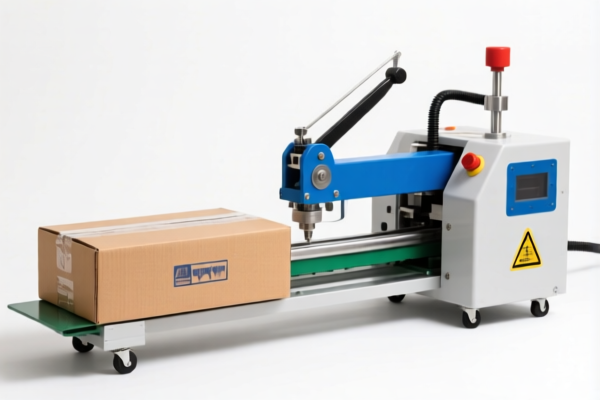
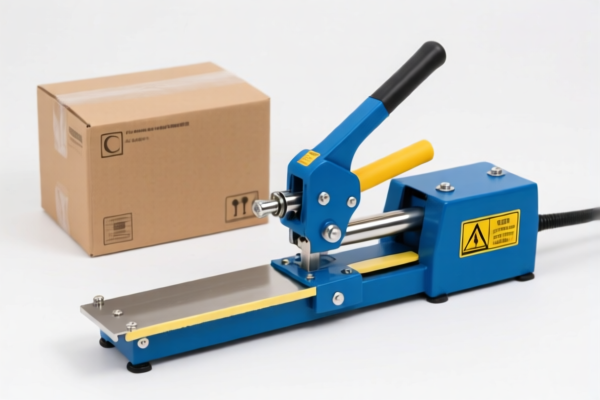
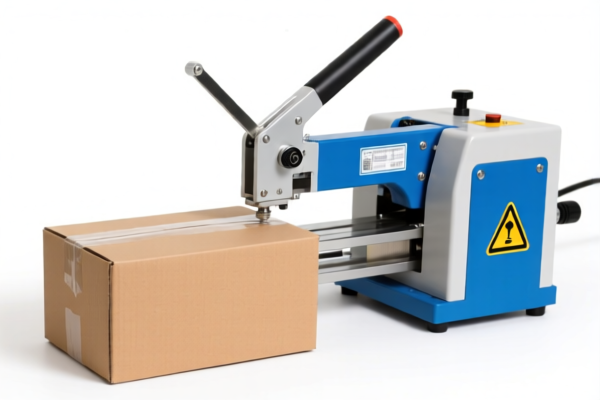
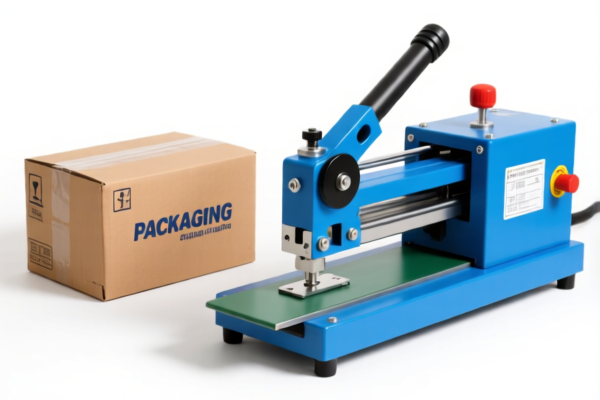
AI Analysis
📦 Packaging Sealing Machine (Industrial Packaging Equipment)
🌐 HS Code Reference & Customs Clearance Guide | 2026 Latest Tariff Analysis | Professional Clearance Strategy
📌 Part 1: Product Definition & Classification: Do You Truly Understand "Packaging Sealing Machines"?
A Packaging Sealing Machine is a critical piece of industrial equipment used in the filling, closing, sealing, and packaging industries. It is designed to execute sealing or closing operations on containers, boxes, bags, or pouches. In international trade, these machines are classified under Chapter 84 (Nuclear reactors, boilers, machinery and mechanical appliances), specifically within the heading for 8422 (Dish-washing, machine; machinery for cleaning or drying bottles; other filling, closing, sealing or labelling bottles, cans, boxes, bags or other containers; other packing or wrapping machines).
⚠️ Key Distinction:
- If the machine is primarily for filling liquids/gases into containers → It may fall under8422.30.
- If the machine is for closing/sealing (e.g., capping, crimping, heat sealing, stapling boxes) → It falls under8422.30as well, but specific subheadings depend on the mechanism and target container type.
- Crucial Point: The classification depends on the primary function (Sealing/Close) and the type of container it handles.
📦 Part 2: HS Code Classification Details (2026 Latest Tariff Authoritative Comparison)
Based on the provided data, the Packaging Sealing Machine is classified under HS Code Prefix 8422.30.91 (Other machinery for filling, closing, sealing or labelling bottles, cans, boxes, bags or other containers), with the following specific subcodes:
| HS Code | Product Description | Application Scenario | Key Functional Match |
|---|---|---|---|
8422.30.91.60 |
Sealing machine classified as machinery for sealing or closing operations | Machines that perform sealing or closing operations on various containers | ✅ Matches "execution of sealing or closing operations" |
8422.30.91.50 |
Sealing machine matching filling, closing, and sealing functions | General sealing machines for general-purpose packaging | ✅ Matches "filling, closing, sealing" functionality |
8422.30.91.86 |
Sealing machine matching the "closing" function for boxes | Machines specifically for closing/sealing boxes, cartons, or crates | ✅ Matches "closing/sealing boxes" high compatibility |
🔍 Critical Note:
- All three codes fall under 8422.30.91, which covers "Other" machinery for filling/closing/sealing not specifically mentioned elsewhere (like bottle cappers or can sealers).
- The distinction between.50,.60, and.86often lies in the specific mechanical action or target container type (e.g., boxes vs. general containers).
- Do not confuse with8422.40(Wrapping machines) if the primary action is sealing/closing rather than wrapping film.
💰 Part 3: 2026 Latest Tariff Rate Breakdown (Including Surcharges & Policy Add-ons)
✅ Applicable Country: United States (US)
✅ Country of Origin: China (CN)
✅ Effective Date: From 2025-11-10 onwards (including subsequent imports)
🎯 1. 8422.30.91.60 – Sealing Machine (Sealing/Closing Operations)
| Item | Content |
|---|---|
| Base Duty Rate | 0.0% (ad valorem) |
| Section 301 Additional Duty | +25.0% (From USITC Footnote 9903.88.01) |
| 122 Section Duty | +10.0% (Specific policy surcharge) |
| Total Tariff Rate | 35.0% |
| Tax Calculation | CIF Value × 35% |
| De Minimis Exemption Eligibility | ❌ Not Eligible (deny_de_minimis) |
| Legal Basis Path | Section 301: 9903.88.01 → Section 122: Specific Clause → USITC: 8422.30.91.60 |
📌 Explanation:
- Base Rate (0%): The standard Most Favored Nation (MFN) rate is 0%.
- Section 301 (+25%): Imposed under Trade Act of 1974 Section 301, targeting Chinese goods.
- Section 122 (+10%): An additional surcharge applied to specific Chinese imports under recent trade policies.
- Total (35%): This is a high tariff. Importers must budget accordingly.
🎯 2. 8422.30.91.50 – Sealing Machine (Filling/Closing/Sealing Functions)
| Item | Content |
|---|---|
| Base Duty Rate | 0.0% |
| Section 301 Additional Duty | +25.0% |
| 122 Section Duty | +10.0% |
| Total Tariff Rate | 35.0% |
| Tax Calculation | CIF × 35% |
| De Minimis Exemption Eligibility | ❌ Not Eligible |
| Legal Basis Path | Section 301: 9903.88.01 → Section 122: Specific Clause → USITC: 8422.30.91.50 |
📌 Note:
- Identical tariff structure to.60.
- Applies to general-purpose sealing machines that may also perform filling or closing.
- No benefit from de minimis (Section 321) for shipments from China.
🎯 3. 8422.30.91.86 – Sealing Machine (Closing Boxes/Packages)
| Item | Content |
|---|---|
| Base Duty Rate | 0.0% |
| Section 301 Additional Duty | +25.0% |
| 122 Section Duty | +10.0% |
| Total Tariff Rate | 35.0% |
| Tax Calculation | CIF × 35% |
| De Minimis Exemption Eligibility | ❌ Not Eligible |
| Legal Basis Path | Section 301: 9903.88.01 → Section 122: Specific Clause → USITC: 8422.30.91.86 |
📌 Note:
- Specifically matches machines for closing/sealing boxes or similar containers.
- Despite being a "mechanical" closure device, it is still subject to the full 35% tariff stack.
- Critical: Even if the machine is for simple box taping or stapling, if it's a dedicated sealing/closing machine, it falls here.
🛠️ Part 4: Customs Clearance Practical Advice (Avoiding Pitfalls)
✅ 1. Documentation Checklist (Essential)
| Document | Must Provide | Notes |
|---|---|---|
| ✅ Product Specification Sheet | ✔️ | Must detail: Machine type, sealing method (heat, ultrasonic, mechanical), container type handled. |
| ✅ Commercial Invoice | ✔️ | Clearly state: "Packaging Sealing Machine, Model XYZ, HS Code 8422.30.91.xx". Avoid vague terms like "Packaging Tool". |
| ✅ Technical Drawing / Flowchart | ✔️ | Shows the mechanism (e.g., heating element, capping head, sealing jaw) to prove it’s a "machine" not a "hand tool". |
| ✅ User Manual | ✔️ | Demonstrates operational steps, confirming industrial/commercial use. |
| ✅ Photo of Equipment | ✔️ | Clear images of label, brand, model, and key components. |
| ✅ Origin Certificate | ✔️ | For proving China origin (critical for Section 301 application). |
✅ 2. Declaration Tips (Key Mantra)
🔥 “Function First, Machine Not Hand, Code Specific, Tax Avoided!”
| Scenario | Correct Declaration | Wrong Practice |
|---|---|---|
| Industrial Sealing Machine | 8422.30.91.50/60/86 |
Declare as "Hand Sealer" → 8205 (Different tariff, but risky if misclassified) |
| General Purpose Sealer | 8422.30.91.50 |
Vague: "Packaging Machine" → Customs may hold for review |
| Box Sealing Machine | 8422.30.91.86 |
Declare as "Box Folder" → 8441 (Incorrect chapter) |
| Small Portable Sealer | Check if <30kg & manual → May be 8205 or 8422.30.91.90 |
Declare as "Machine" if it’s a simple handheld iron → Misclassification |
⚠️ Warning:
- Do not declare under 8441 (Machinery for making up boxes/cases) unless the machine’s primary function is making the box itself (e.g., folding, gluing, not just sealing the top).
- If it’s purely sealing a pre-made container, 8422 is correct.
- Handheld sealers (electric or manual) might fall under 8205 (Hand Tools) or 8422.30.91.90 (Other). The codes provided (.50,.60,.86) suggest industrial/large machines.
✅ 3. Special Circumstances Handling
| Situation | Handling Advice |
|---|---|
| OEM Custom Sealer | Provide design drawings and client order. Specify if it’s for a specific industry (e.g., food, pharma). |
| Multi-function Machine (Filling + Sealing) | Declare under the primary function. If sealing is dominant, use 8422.30.91.50. |
| Used Equipment | Must declare as "Used". May require additional inspection for hygiene/safety (if food/pharma). |
| Parts for Sealing Machine | Spare parts (e.g., sealing jaws, heaters) may be classified separately under 8422.90 (Parts). Do not mix parts with machine in one HS Code unless declared as a kit. |
🌍 Part 5: Global Market Clearance Comparison (2026 Latest)
| Country/Region | Recommended HS Code | Tariff Rate (China Origin) | Certification Requirements | Notes |
|---|---|---|---|---|
| 🇺🇸 USA | 8422.30.91.50/60/86 |
35% (0% Base + 25% Sec 301 + 10% Sec 122) | UL, CSA (Electrical Safety) | Highest tariff. No de minimis. |
| 🇨🇳 China | 8422.30.91.50/60/86 |
5%–8% (Variable) | CCC (if applicable) | Domestic trade, lower cost. |
| 🇪🇺 EU | 8422.30.91 |
0%–3.7% (General MFN) | CE, RoHS, ERP | No Section 301. Competitive. |
| 🇦🇺 Australia | 8422.30.91 |
5% | RCM (Electrical) | Standard rate, no major surcharges. |
| 🇯🇵 Japan | 8422.30.91 |
0%–5% | PSE (Electrical) | Low tariff, strict safety standards. |
📌 Conclusion:
- The USA is the most expensive market due to the 35% combined tariff.
- EU, Japan, Australia offer significantly lower tariff burdens (0–5%).
- Strategy: Consider sourcing from or routing through non-Chinese countries (e.g., Vietnam, Thailand) to avoid Section 301 and 122 duties, if substantial transformation rules are met.
📌 Part 6: Common Mistakes & Pitfalls (Lessons Learned)
❌ Mistake 1: Declaring as "Hand Tool" for a machine |
👉 Result: Misclassification, potential penalties, and delay. Hand tools are under 8205. Machines are under 8422.
❌ Mistake 2: Ignoring the 122 Section Duty |
👉 Result: Underpayment of 10%. Customs will assess back taxes + interest.
❌ Mistake 3: Confusing "Sealing" with "Wrapping" |
👉 Result: Wrapping machines (8422.40) have different tariff implications. Ensure the primary action is sealing/closing, not film wrapping.
❌ Mistake 4: Assuming De Minimis Applies |
👉 Result: Section 321 (de minimis) does not apply to Chinese goods under Section 301 and 122. Even small shipments are subject to full duty.
✅ Correct Approach:
"Industrial Packaging Sealing Machine, Automatic Heat Sealer, Model ABC, for Plastic Bags and Pouches, Voltage 110V/220V, HS Code 8422.30.91.50, Made in China."
🎯 Part 7: Conclusion: Professional Declaration, Cost Efficiency!
🎯 Remember the Mantra:
🔹 “35% is the Reality for US Imports from China!”
🔹 “Section 301 + 122 = 35%, No Exemptions!”
🔹 “HS Code Precision Saves Thousands!”
📌 Pro Tip:
If your sealing machine is not made in China (e.g., made in Vietnam, Italy, or the US), you can avoid the 35% tariff entirely.
- Vietnam/Thailand: Potentially 0–5% + no Section 301.
- Pre-ruling: Apply for an Advance Ruling from US Customs to confirm the HS Code before shipment. This prevents clearance delays and ensures accurate duty calculation.
📣 Immediate Action Required:
📞 Consult a Licensed Customs Broker + Provide Product Specs + Apply for Advance Ruling
🚀 Optimize Your Supply Chain, Avoid Hidden Costs, Ensure Smooth Clearance!
✨ Professional Clearance Starts with Accurate Classification!
💼 Every Percent of Tariff Counts in Your Profit Margin!
Customer Reviews
About HS Code Classification
The Harmonized System (HS) is an internationally standardized nomenclature developed by the World Customs Organization (WCO) to classify traded products. Over 200 countries use the HS system as the basis for customs tariffs, trade statistics, and import/export regulations.
Each HS code follows a hierarchical structure:
- Chapter (2 digits) — Broad category of goods (e.g., Chapter 84: Machinery and Mechanical Appliances)
- Heading (4 digits) — More specific grouping within the chapter
- Subheading (6 digits) — Internationally standardized breakdown, used by all WCO member countries
- National subdivisions (8-10 digits) — Country-specific extensions for further classification, such as US HTSUS 10-digit codes
Correct HS code classification is essential for smooth customs clearance, accurate duty payment, and compliance with trade regulations. Misclassification can lead to customs delays, overpayment of duties, or penalties.
When importing from CN to US, the applicable tariff rates may include:
- Most-Favored-Nation (MFN) rate — The standard duty rate applied to WTO members
- General rate — Applied to countries without trade agreements
- Trade remedy duties — Additional tariffs such as Section 301 (anti-dumping), Section 232 (national security), or countervailing duties
The information provided on this page is for reference purposes only. For official classification, please consult with your local customs authority or a licensed customs broker.