paint brushes and similar brushes
CN → US| HS Code | Tariff Rate | Origin | Destination | Doc |
|---|---|---|---|---|
| 4417004000 | 17.5% | CN | US | Official Doc |
| 9603404060 | 14.0% | CN | US | Official Doc |
| 9603404040 | 14.0% | CN | US | Official Doc |
| 4417006000 | 35.0% | CN | US | Official Doc |
Product Images
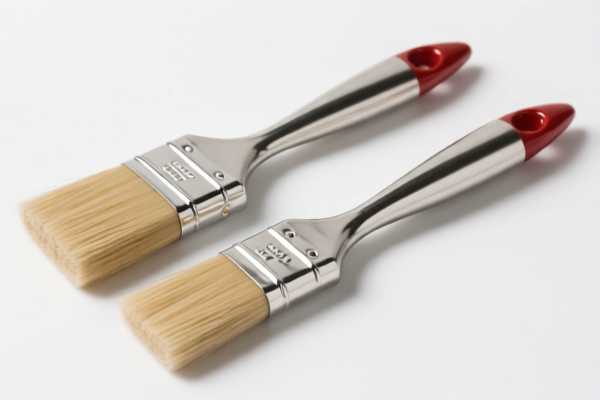
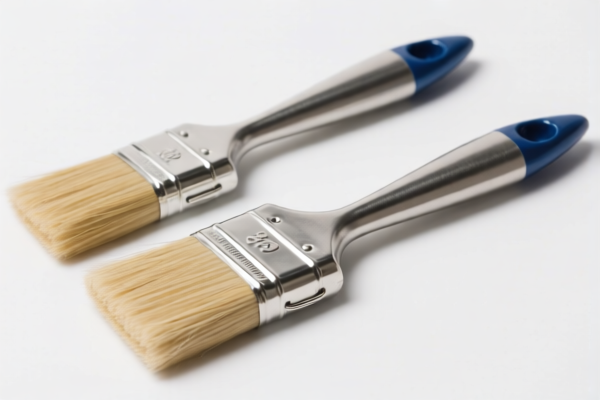
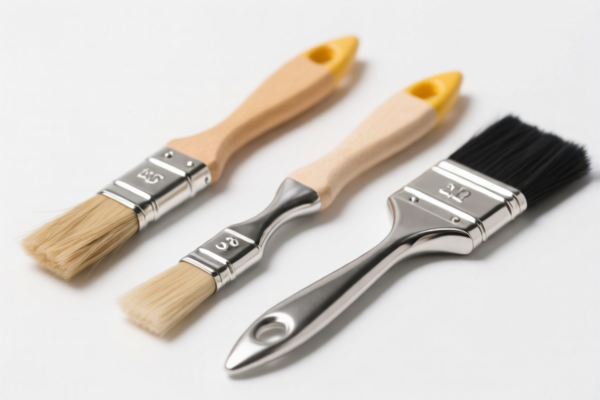
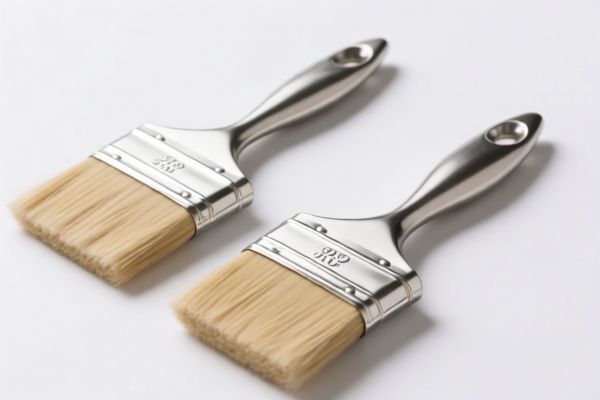
AI Analysis
🖌️ Paint Brushes & Similar Brushes (Classification & US Customs Guide)
🌐 HS Code Reference & Customs Clearance Guide | 2026 Latest Tariff Analysis | Professional Clearance Strategy
📌 1. Product Definition & Classification: Do You Really Know "Paint Brushes"?
Paint brushes and similar brushes are essential tools for artistic creation, industrial coating, and daily cleaning. In international trade, they are categorized based on material, shape, and specific use. Key distinctions include:
Wooden-Handle Paint Brushes: Typically feature wooden handles and synthetic/natural bristles; used for painting walls, furniture, or art.
Art Brushes: Often made with natural animal hair (e.g., sable, squirrel) or high-quality synthetic fibers; designed for precision painting.
Industrial/Cleaning Brushes: May include metal, plastic, or wire bristles; used for scrubbing, polishing, or machinery maintenance.
⚠️ Key Distinction Point:
- If the brush has a wooden handle and is primarily used for painting/coating → Consider 4417.00.40.00 or 4417.00.60.00.
- If the brush is categorized under "Other Brushes" (e.g., art brushes, toothbrushes, nail brushes) → Consider 9603.40.40.60 or 9603.40.40.40.
📦 2. HS Code Classification Details (2026 Latest Tariff Authority Comparison)
| HS Code | Product Description | Applicable Scenario | Material/Feature Conflict |
|---|---|---|---|
4417.00.40.00 |
Wooden brushes, including paint brushes, for use as tools | Matches use (painting/coating) and form; inferred wooden handle based on common sense; no material conflict. | ✅ No conflict |
9603.40.40.60 |
Other brushes (excluding hair brushes, toothbrushes, etc.) | Matches use and form; "paintbrush" falls under "other" category; no obvious material/shape conflict with paint/coloring brushes. | ✅ Possible match |
9603.40.40.40 |
Other brushes (excluding hair brushes, toothbrushes, etc.) | "Paintbrush" fits brush morphology; often uses natural bristles; inferred reasonable material without conflict. | ✅ Possible match |
4417.00.60.00 |
Wooden brushes, including paint brushes, for use as tools | Matches form and use; inferred wooden handle based on common sense; fits wooden tool characteristics; no material conflict. | ✅ No conflict |
🔍 Key Reminder:
- Wooden-handle paint brushes are often classified under 4417 due to their wooden components, but this depends on the primary purpose and material composition.
- Art brushes or brushes without clear wooden handles may fall under 9603.40.40 as "other brushes."
- Misclassification risk: Declaring a wooden paint brush as9603.40.40.60may trigger higher tariffs due to tariff rate differences.
💰 3. 2026 Latest Tariff Rate Details (Including Additional Taxes & Policy Add-ons)
✅ Applicable Country: United States (US)
✅ Origin: China (CN)
✅ Effective Time: November 10, 2025 (including subsequent imports)
🎯 1. 4417.00.40.00 —— Wooden Paint Brushes
| Item | Content |
|---|---|
| Base Tariff Rate | 0% (ad valorem) |
| Section 301 Additional Tariff | +7.5% |
| Section 122 Tariff | +10% |
| Total Rate | 17.5% |
| Tax Calculation | CIF Value × 17.5% |
| De Minimis Eligibility | ❌ Not Eligible |
| Legal Basis Path | Section 301: 4417.00.40.00 → Section 122: 4417.00.40.00 |
📌 Explanation:
- "Section 301 additional tariff 7.5%" is part of the U.S. Trade Act Section 301 additional duties;
- "Section 122 Tariff 10%" is an additional duty for certain Chinese products;
- Total 17.5%, which is moderate but still significant for bulk imports.
🎯 2. 9603.40.40.60 —— Other Brushes (Paintbrushes)
| Item | Content |
|---|---|
| Base Tariff Rate | 4.0% |
| Section 301 Additional Tariff | 0% |
| Section 122 Tariff | +10% |
| Total Rate | 14.0% |
| Tax Calculation | CIF Value × 14.0% |
| De Minimis Eligibility | ❌ Not Eligible |
| Legal Basis Path | Section 122: 9603.40.40.60 |
📌 Note:
- Lower total tariff compared to wooden brushes due to no Section 301 additional tariff;
- Suitable for brushes with non-wooden handles or where the primary material is not wood.
🎯 3. 9603.40.40.40 —— Other Brushes (Art/Natural Hair)
| Item | Content |
|---|---|
| Base Tariff Rate | 4.0% |
| Section 301 Additional Tariff | 0% |
| Section 122 Tariff | +10% |
| Total Rate | 14.0% |
| Tax Calculation | CIF Value × 14.0% |
| De Minimis Eligibility | ❌ Not Eligible |
| Legal Basis Path | Section 122: 9603.40.40.40 |
📌 Note:
- Same tariff rate as9603.40.40.60;
- Specifically suitable for art brushes made with natural animal hair or high-quality synthetic fibers.
🎯 4. 4417.00.60.00 —— Wooden Brushes (Other)
| Item | Content |
|---|---|
| Base Tariff Rate | 0% |
| Section 301 Additional Tariff | +25.0% |
| Section 122 Tariff | +10% |
| Total Rate | 35.0% |
| Tax Calculation | CIF Value × 35.0% |
| De Minimis Eligibility | ❌ Not Eligible |
| Legal Basis Path | Section 301: 4417.00.60.00 → Section 122: 4417.00.60.00 |
📌 Warning:
- Highest tariff rate (35%) among all options;
- Applies to wooden brushes not specifically designated for painting/coating;
- Avoid this classification unless the brush is clearly not for painting (e.g., cleaning brushes with wooden handles).
🛠️ 4. Customs Clearance Practical Advice (Pitfall Avoidance Guide)
✅ 1. Required Documents (All Are Mandatory)
| Document | Must Provide | Description |
|---|---|---|
| ✅ Product Specification Sheet | ✔️ | Include size, bristle material, handle material, intended use. |
| ✅ Product Photos (Including Nameplate) | ✔️ | Clearly show model, brand, handle/bristle details. |
| ✅ Commercial Invoice | ✔️ | Explicitly state "Paint Brushes" or "Art Brushes" with HS Code. |
| ✅ Packing List | ✔️ | Explain relationships between components to avoid split declaration. |
| ✅ Third-Party Test Report (If Applicable) | ✔️ | FSC, CE, RoHS (if required for specific markets). |
✅ 2. Declaration Tips (Key Mantras)
🔥 "Know the Handle, Declare the Use, Avoid the Trap!"
| Scenario | Correct Declaration | Wrong Practice |
|---|---|---|
| Wooden-handled paint brush | 4417.00.40.00 (17.5%) or 4417.00.60.00 (35%) |
Misdeclare as 9603.40.40.60 → Higher risk of audit |
| Art brush with natural bristles | 9603.40.40.40 (14.0%) |
Misdeclare as 4417.00.40.00 → 17.5% instead of 14.0% |
| Cleaning brush with wooden handle | 4417.00.60.00 (35%) |
Misdeclare as 9603.40.40.60 → Significant cost increase |
| Brush with plastic/metal handle | 9603.40.40.60 (14.0%) |
Misdeclare as wooden brush → 17.5% or 35% |
✅ 3. Special Cases Handling
| Scenario | Handling Advice |
|---|---|
| OEM Custom Brushes | Provide customer orders + design drawings to avoid "non-standard" classification. |
| Brushes with Mixed Materials | Declare based on primary material/use; e.g., wooden handle + synthetic bristles → 4417.00.40.00. |
| Bulk Industrial Brushes | Ensure correct HS Code for industrial cleaning vs. painting to avoid misclassification. |
🌍 5. Global Market Clearance Comparison (2026 Latest)
| Country/Region | Recommended HS Code | Tariff | Certification Requirements | Remarks |
|---|---|---|---|---|
| 🇺🇸 United States | 9603.40.40.60 / 9603.40.40.40 |
14.0% | None (generally) | Lowest tariff for non-wooden brushes |
| 🇪🇺 European Union | 9603.40.40 |
0% | CE (if applicable) | No additional tariffs |
| 🇨🇳 China | 9603.40.40 |
5% | CCC (if applicable) | Low tariff for domestic trade |
| 🇦🇺 Australia | 9603.40.40 |
5% | RCM | No additional tariffs |
| 🇯🇵 Japan | 9603.40.40 |
0% | PSE | No additional tariffs |
📌 Conclusion:
- The U.S. imposes additional tariffs (Section 122) on all brush imports from China;
- Non-wooden brushes (9603.40.40.60 / 9603.40.40.40) are the most cost-effective for U.S. imports due to lower total tariffs (14.0%).
📌 6. Common Mistakes & Pitfall Avoidance (Lessons Learned)
❌ Mistake 1: Declaring a wooden paint brush as 9603.40.40.60 to avoid Section 301 tariffs
👉 Consequence: Customs may reclassify as 4417.00.40.00 → 17.5% tariff + penalties
❌ Mistake 2: Declaring an art brush as 4417.00.60.00 due to wooden handle
👉 Consequence: 35.0% tariff instead of 14.0% → Massive cost increase
❌ Mistake 3: Not specifying bristle material in documentation
👉 Consequence: Customs may dispute classification → Delayed clearance or audit
✅ Correct Practice:
"Paint Brush, Wooden Handle, Synthetic Bristles, Model XYZ, Intended for Artistic Use"
🎯 7. Conclusion: Precise Classification Saves Time & Money!
🎯 Remember the Mantras:
🔹 "Wooden Handle, Check Use, 17.5% or 35%!"
🔹 "Non-Wooden, Art/Cleaning, 14.0% Is the Way!"
🔹 "HS Code Determines Tax, 3.5% Difference = Thousands in Savings!"
📌 Pro Tip:
If your brushes are originating from Vietnam, Mexico, Thailand, or Malaysia, you may apply for Section 122 Exemption with 0%~5% tariff;
Recommend Applying for Advance Ruling (Advance Ruling) to avoid clearance risks.
📣 Take Action Now:
📞 Contact Professional Customs Broker + Provide Product Photos + Apply for HS Code Advance Ruling
🚀 Let your brushes clear smoothly, export efficiently, and boost profits!
✨ Professional Clearance Starts with Accurate Classification!
💼 Every Cent Counts – Calculate Precisely!
Customer Reviews
About HS Code Classification
The Harmonized System (HS) is an internationally standardized nomenclature developed by the World Customs Organization (WCO) to classify traded products. Over 200 countries use the HS system as the basis for customs tariffs, trade statistics, and import/export regulations.
Each HS code follows a hierarchical structure:
- Chapter (2 digits) — Broad category of goods (e.g., Chapter 84: Machinery and Mechanical Appliances)
- Heading (4 digits) — More specific grouping within the chapter
- Subheading (6 digits) — Internationally standardized breakdown, used by all WCO member countries
- National subdivisions (8-10 digits) — Country-specific extensions for further classification, such as US HTSUS 10-digit codes
Correct HS code classification is essential for smooth customs clearance, accurate duty payment, and compliance with trade regulations. Misclassification can lead to customs delays, overpayment of duties, or penalties.
When importing from CN to US, the applicable tariff rates may include:
- Most-Favored-Nation (MFN) rate — The standard duty rate applied to WTO members
- General rate — Applied to countries without trade agreements
- Trade remedy duties — Additional tariffs such as Section 301 (anti-dumping), Section 232 (national security), or countervailing duties
The information provided on this page is for reference purposes only. For official classification, please consult with your local customs authority or a licensed customs broker.