painted anti corrosion pine fence post
CN → US| HS Code | Tariff Rate | Origin | Destination | Doc |
|---|---|---|---|---|
| 4421997040 | 35.0% | CN | US | Official Doc |
| 4403220115 | 35.0% | CN | US | Official Doc |
| 4407120002 | 35.0% | CN | US | Official Doc |
| 4403210115 | 35.0% | CN | US | Official Doc |
| 4407110002 | 35.0% | CN | US | Official Doc |
Product Images
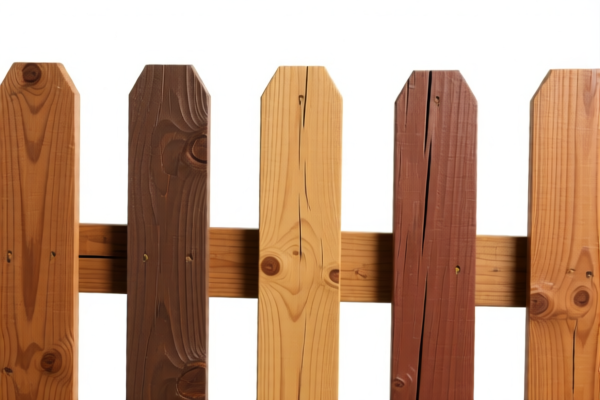
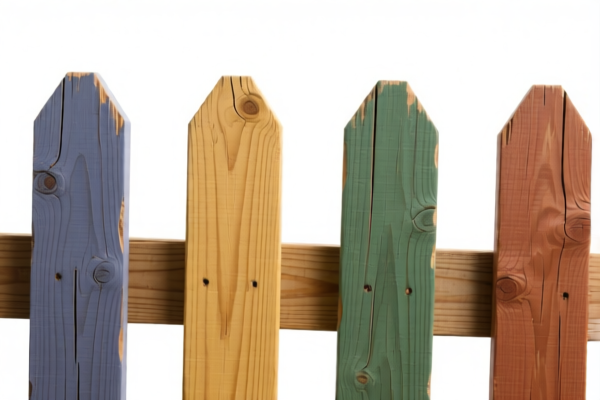
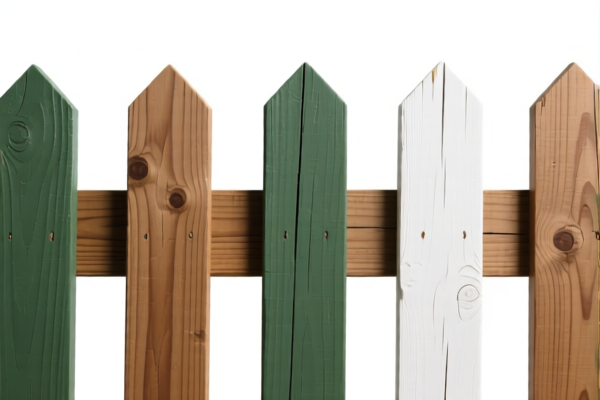
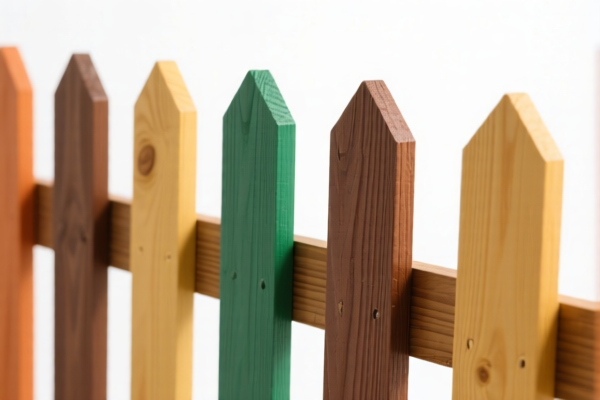
AI Analysis
🌲 Painted Anti-Corrosion Pine Fence Post (Wooden Garden Posts)
🌐 HS Code Reference & Customs Clearance Guide | 2026 Latest Tariff Analysis | Professional Clearance Strategy
📌 I. Product Definition & Classification: Do You Really Understand "Treated Pine Posts"?
Painted Anti-Corrosion Pine Fence Posts are wooden components specifically processed for outdoor structural use. In international trade, they are not merely "wood" but "processed wood products." The key distinction lies in the processing depth:
- Simple Sawn Posts (Ch. 44.03): Raw pine logs or lumber cut into post shapes, possibly debarked but not heavily processed or coated.
- Deeply Processed/Treated Posts (Ch. 44.07 or 44.21): Pine that has been planed, smoothed, stained, colored, or chemically treated (anti-corrosion), and potentially finished with paint.
⚠️ Critical Distinction Point:
- If the post is merely sawn into a post shape without significant surface processing like staining/painting, it may fall under 4403 (Wood Prepared for Joinery).
- If the post has undergone painting, staining, or anti-corrosion treatment, it is often reclassified under 4407 (Wood sawn lengthwise, sliced or peeled) because the surface treatment changes its essential character, OR it is classified as a finished wooden article under 4421 if it is clearly a ready-to-use structural component.
- Note: The specific HS codes provided in the data below reflect various interpretations: some customs authorities view painted posts as finished articles (4421), while others view them as processed lumber (4407). Some even view them as prepared wood (4403) if the treatment is minor. The data provided shows multiple potential classifications depending on the precise technical definition of "anti-corrosion" and "painted."
📦 II. HS Code Classification Details (2026 Latest Tariff Authority Comparison)
Based on the provided data, here are the 5 potential HS Codes for "Painted Anti-Corrosion Pine Fence Post":
| HS Code | Product Description | Application Scenario | Processing Depth |
|---|---|---|---|
4421.99.70.40 |
Wooden fence posts, made of pine, shaped as posts, classified as sawn piles, rails, and posts | Ready-to-use fence posts, finished goods | ✅ Finished Article (Post-shape) |
4403.22.01.15 |
Pine fence posts, material pine, use as fence posts, classified as prepared wood | Sawn pine posts, possibly lightly treated | ✅ Prepared Wood (Ch. 44.03) |
4403.21.01.15 |
Pine fence posts, material pine, use as fence posts, classified as prepared wood | Sawn pine posts, possibly lightly treated | ✅ Prepared Wood (Ch. 44.03) |
4407.12.00.02 |
Painted anti-corrosion wood fence post, treated with paint and anti-corrosion, material coniferous wood, classified by longitudinal sawing logic | Post with surface treatment (paint/stain) | ✅ Processed Lumber (Ch. 44.07) |
4407.11.00.02 |
Painted anti-corrosion wood fence post, treated with paint and anti-corrosion, material pine/coniferous, classified by processing technology | Post with specific surface treatment matching Ch. 44.07 | ✅ Processed Lumber (Ch. 44.07) |
🔍 Key Insight:
- The data shows two main branches:
1. Ch. 44.03 & 44.21: Focus on the shape (post) and material (pine).
2. Ch. 44.07: Focus on the processing method (sawn, planed, painted, anti-corrosion treated).
- Why so many codes? Customs authorities may classify the same physical product differently based on whether they prioritize the end-use (post) or the processing stage (treated wood).
- Crucially, ALL listed codes carry the same tax rate in this dataset.
💰 III. 2026 Latest Tariff Rate Details (Including Surtaxes, Policy Surcharges)
✅ Applicable Country: United States (US)
✅ Origin: China (CN)
✅ Effective Date: 2025年11月10日起 (Including subsequent imports)
🎯 1. All Listed HS Codes (4421.99.70.40, 4403.22.01.15, 4403.21.01.15, 4407.12.00.02, 4407.11.00.02)
| Item | Content |
|---|---|
| Base Tariff Rate | 0% (Ad Valorem) |
| Section 301 Surtax | +25% (From USITC Footnote related to Section 301) |
| Section 122 Surtax | +10% (From "122条款关税", likely referring to IEEPA or specific Section 232/301 related provisions) |
| Total Tariff Rate | 35% |
| Tax Calculation | CIF Value × 35% |
| De Minimis Eligibility | ❌ Not Eligible (Deny De Minimis for these codes) |
| Legal Basis Path | Base: 0% → Surtax 1: 25% → Surtax 2: 10% → Total: 35% |
📌 Explanation:
- 0% Base Rate: Wood products from China often have low base MFN rates.
- 25% Surtax: This is the standard Section 301 tariff on Chinese wood products.
- 10% Surtax: The data explicitly mentions "122条款关税10%". This likely refers to an additional surcharge, possibly linked to IEEPA (International Emergency Economic Powers Act) or a specific Section 232 or Section 301 add-on for certain wood categories.
- Total 35%: This is a significant cost. Importers must account for this 35% on top of shipping and insurance (CIF value).
- No De Minimis: These goods cannot use the $800 de minimis exemption for small shipments; they must be formally entered.
🛠️ IV. Customs Clearance Practical Advice (Combat Pitfall Guide)
✅ 1. Document Preparation Checklist (All Required)
| Document | Must Provide | Explanation |
|---|---|---|
| ✅ Product Specification Sheet | ✔️ | Must detail: Material (Pine), Treatment (Paint/Anti-Corrosion), Dimensions, Shape (Post) |
| ✅ Technical Data Sheet | ✔️ | Proof of "Anti-Corrosion" treatment: Chemical composition, treatment method (pressure impregnation vs. surface coating) |
| ✅ Product Photos | ✔️ | Clear images showing: Surface finish (painted/stained), ends, and any markings |
| ✅ Commercial Invoice | ✔️ | Must explicitly state: "Painted Anti-Corrosion Pine Fence Post", HS Code, Value |
| ✅ Packing List | ✔️ | Detail number of posts per bundle, total bundles, gross/net weight |
| ✅ Bill of Lading | ✔️ | Standard shipping document |
| ✅ Customs Bond | ✔️ | Required for formal entry in the US |
⚠️ Critical Tip:
- Do NOT simply write "Wooden Post". You MUST specify "Painted", "Anti-Corrosion", and "Pine".
- If the anti-corrosion treatment involves chemicals (e.g., copper azole, ACQ), you may need to provide an MSDS (Material Safety Data Sheet) to prove it is safe for handling and transport.
✅ 2. Declaration Strategy (Key Mantra)
🔥 "Shape + Material + Treatment = Correct HS Code!"
| Scenario | Correct Declaration | Wrong Declaration |
|---|---|---|
| Fully Painted & Treated | 4407.12.00.02 or 4421.99.70.40 |
"Raw Wood Post" → Risk of audit |
| Sawn Post, No Paint | 4403.22.01.15 |
"Painted Post" → Misclassification |
| Pine Fence Post | Specify "Pine" and "Treatment" | "Timber Post" → Too vague |
📌 Advice:
- Given the data, both 4407 (processed) and 4421 (finished article) are valid.
- Recommendation: Use4407.12.00.02if the painting/treatment is the dominant feature. Use4421.99.70.40if the post is a clear, finished product for immediate installation.
- Consult with your customs broker to determine which classification aligns best with your product's physical state and documentation.
✅ 3. Special Circumstances Handling
| Situation | Handling Advice |
|---|---|
| Chemical Treatment (Preservative) | Provide MSDS. Some preservatives may be regulated. Ensure compliance with EPA/FDA guidelines if applicable. |
| Paint Type (Oil-based vs. Water-based) | Declare the paint type. Oil-based paints may have additional hazardous material considerations. |
| Origin Marking | Ensure each post or bundle is marked "Made in China". Mislabeling leads to penalties. |
| ISPM 15 (Pest Control) | If the wood is raw or minimally treated, it may require ISPM 15 fumigation. However, painted and anti-corrosion treated wood is often considered processed enough to be exempt, but verify with customs. |
🌍 V. Global Main Market Comparison (2026 Latest)
| Country/Region | Recommended HS Code | Tariff | Certification | Remarks |
|---|---|---|---|---|
| 🇺🇸 USA | 4407.12.00.02 / 4421.99.70.40 |
35% (China Origin) | ISPM 15 (if exempt, provide proof) | High tariff due to Section 301 + 122 |
| 🇨🇳 China | 4407 / 4421 |
0-5% | N/A | Low tax, easy entry |
| 🇪🇺 EU | 4407 / 4421 |
0% (if FSC certified) | FSC/PEFC | No surtaxes if origin is not sanctioned |
| 🇨🇦 Canada | 4407 / 4421 |
0% (if FTA applies) | Phytosanitary Certificate | Check CUSMA for preferential rates |
📌 Conclusion:
- USA is the most expensive market for Chinese wooden fence posts due to the 35% combined tariff.
- EU and Canada are more favorable, provided you meet sustainability (FSC) and phytosanitary requirements.
📌 VI. Common Errors & Pitfall Guide (Lessons Learned)
❌ Error 1: Declaring as "Raw Wood Lumber" (44.03) when it is painted.
👉 Consequence: Customs may reclassify to 44.07 or 44.21, causing delays and potential penalties.
❌ Error 2: Not declaring "Anti-Corrosion Treatment".
👉 Consequence: Customs may treat it as raw wood, requiring ISPM 15 fumigation at your cost, or suspect hidden chemicals.
❌ Error 3: Ignoring the 35% Tariff in Costing.
👉 Consequence: Profit margin erased. 35% is a major cost factor!
❌ Error 4: Using "Wooden Post" as the description.
👉 Consequence: Customs broker may choose a wrong HS code, leading to audit risks.
✅ Correct Action:
"Painted Anti-Corrosion Pine Fence Post, Pressure-Treated, 4x4x8ft, Outdoor Use, Origin: China"
🎯 VII. Conclusion: Professional Declaration, Save Money, Avoid Delays!
🎯 Remember the Mantra:
🔹 "Painted & Treated = 4407/4421, Not Raw Wood!"
🔹 "35% Tariff in USA is Real, Plan Your Budget!"
🔹 "Specify Material, Treatment, and Shape Clearly!"
📌 Pro Tip:
- If you are shipping to the US, consider pre-classification rulings from CBP to confirm the exact HS code (4407 vs. 4421).
- For non-US markets, leverage Free Trade Agreements (FTAs) to reduce tariffs.
- Always ensure phytosanitary certificates are in order, even for treated wood, to avoid port delays.
📣 Immediate Action:
📞 Contact your customs broker with product photos and MSDS.
🚀 Get a pre-clearance ruling to avoid 35% tariff surprises or port hold-ups.
✨ Professional clearance starts with accurate classification!
💼 Every percent of tariff counts in your bottom line!
Customer Reviews
About HS Code Classification
The Harmonized System (HS) is an internationally standardized nomenclature developed by the World Customs Organization (WCO) to classify traded products. Over 200 countries use the HS system as the basis for customs tariffs, trade statistics, and import/export regulations.
Each HS code follows a hierarchical structure:
- Chapter (2 digits) — Broad category of goods (e.g., Chapter 84: Machinery and Mechanical Appliances)
- Heading (4 digits) — More specific grouping within the chapter
- Subheading (6 digits) — Internationally standardized breakdown, used by all WCO member countries
- National subdivisions (8-10 digits) — Country-specific extensions for further classification, such as US HTSUS 10-digit codes
Correct HS code classification is essential for smooth customs clearance, accurate duty payment, and compliance with trade regulations. Misclassification can lead to customs delays, overpayment of duties, or penalties.
When importing from CN to US, the applicable tariff rates may include:
- Most-Favored-Nation (MFN) rate — The standard duty rate applied to WTO members
- General rate — Applied to countries without trade agreements
- Trade remedy duties — Additional tariffs such as Section 301 (anti-dumping), Section 232 (national security), or countervailing duties
The information provided on this page is for reference purposes only. For official classification, please consult with your local customs authority or a licensed customs broker.