paper and paperboard hs code 4805934060
CN → US| HS Code | Tariff Rate | Origin | Destination | Doc |
|---|---|---|---|---|
| 4805924010 | 35.0% | CN | US | Official Doc |
| 4805924020 | 35.0% | CN | US | Official Doc |
| 4810991050 | 35.0% | CN | US | Official Doc |
| 4823690020 | 35.0% | CN | US | Official Doc |
| 4805934060 | 35.0% | CN | US | Official Doc |
Product Images
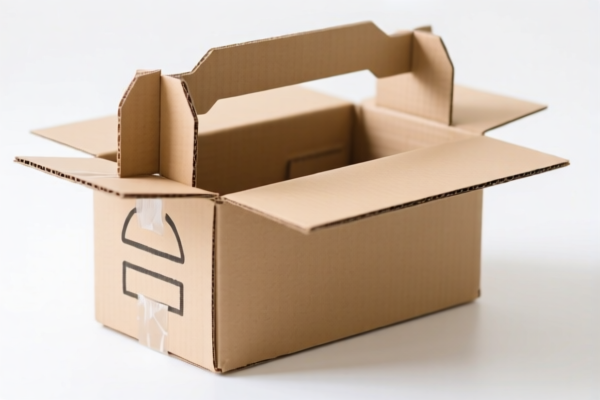
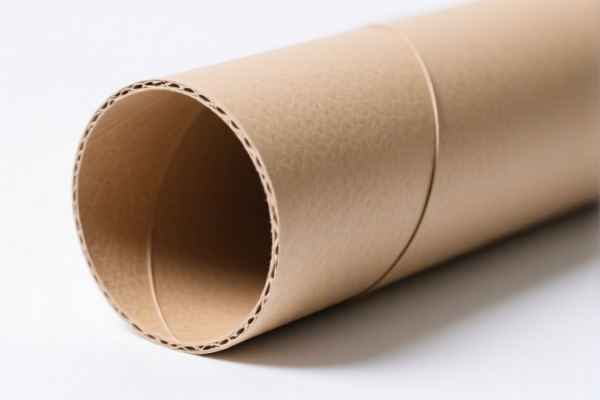

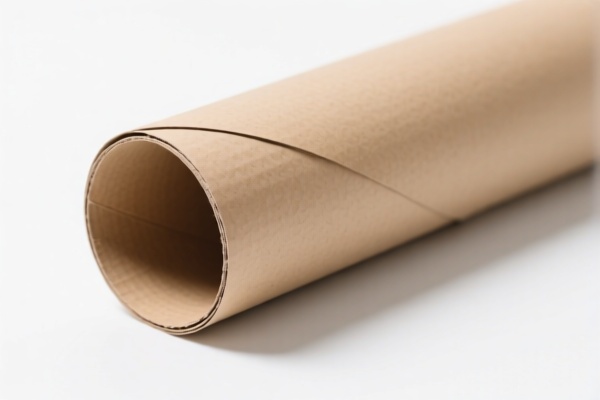
AI Analysis
📜 Paper & Paperboard (HS Code: 4805.93.40.60)
🌐 HS Code Reference & Customs Clearance Guide | 2026 Latest Tariff Analysis | Professional Entry Strategy
📌 I. Product Definition & Classification: Do You Truly Understand "Paper"?
Paper and Paperboard are the fundamental materials for packaging, printing, and industrial applications. In international trade, they are strictly categorized by material composition, coating status, and grammage.
Uncoated Paper & Paperboard: Paper that has not been coated with substances like clay, calcium carbonate, or latex on both surfaces. It relies on its inherent fiber structure for strength and opacity. Specific Sub-Heading (4805.93.40.60): Typically refers to "Other" uncoated paper/paperboard of specific grammage ranges or forms that do not fit into standard writing, printing, or newsprint categories.
⚠️ Key Distinction:
- If the paper is coated (glossy, matte finish) → It likely falls under 4810 or 4823.
- If the paper is uncoated and does not match standard A4/Newsprint specs → It may fall under 4805.93.
- Crucial Check: Verify the grammage (gsm) and finish. If it’s coated, 4805.93.40.60 is incorrect.
📦 II. HS Code Classification Details (2026 Latest Tariff Authority)
| HS Code | Product Description | Applicable Scenario | Coated? | Grammage Range* |
|---|---|---|---|---|
4805.93.40.60 |
Other uncoated paper and paperboard, other than that of subheading 4805.93.40.20, 4805.93.40.40, 4805.93.40.50, 4805.93.40.70, or 4805.93.40.80 | "Catch-all" for uncoated papers not otherwise specified (e.g., specialty uncoated boards, specific industrial grades) | ❌ No | Varies (Check specific 8-digit subheading notes) |
4805.92.40.10 |
Other uncoated paper and paperboard | Uncoated paper/board not meeting other specific criteria | ❌ No | N/A |
4805.92.40.20 |
Other uncoated paper and paperboard | General uncoated category | ❌ No | N/A |
4810.99.10.50 |
Other coated paper and paperboard | Folded boxes, coated boards | ✅ Yes | N/A |
4823.69.00.20 |
Other paper, paperboard, cellulose wadding and webs of cellulosic fibers | Cut-to-size, molded pulp, or other forms | ❌/✅ Depends | N/A |
4805.93.40.60 |
Other uncoated paper and paperboard | Target Code: Uncoated, generic "other" | ❌ No | N/A |
🔍 Critical Reminder:
- The description "Paper and Paperboard" must match Uncoated status for 4805.93.
- If the product is Coated, it must NOT use 4805 codes.
- Since the user input "paper and paperboard" is generic, 4805.93.40.60 is a valid "catch-all" ONLY IF the paper is uncoated and doesn’t fit more specific subheadings.
💰 III. 2026 Latest Tariff Rate Breakdown (Including Surtaxes & Policy Add-ons)
✅ Applicable Country: United States (US)
✅ Country of Origin: China (CN)
✅ Effective Date: November 10, 2025 onwards (for subsequent imports)
🎯 1. 4805.93.40.60 —— Uncoated Paper & Paperboard (Generic "Other")
| Item | Content |
|---|---|
| Base Tariff Rate | 0% (ad valorem) |
| USITC Surcharge Tax | +25% (Under USITC Footnote 9903.88.01 / Section 301) |
| IEEPA Surcharge Tax | +10% (For China/HK products, under IEEPA) |
| Total Tax Rate | 35.0% |
| Tax Calculation | CIF Value × 35% |
| De Minimis Eligibility | ❌ NO (deny_de_minimis) |
| Legal Basis Path | IEEPA:9903.01.25 → IEEPA:9903.01.24 → USITC:4805.93.40.60 → FOOTNOTE:9903.88.01 |
📌 Explanation:
- "USITC Surcharge 25%": From Section 301 of the Trade Act (targeting Chinese manufacturing);
- "IEEPA 10%": Additional emergency economic power surcharge for Chinese imports;
- Total 35%: This is a high tariff for paper products. Pre-calculation is mandatory!
🎯 Comparative Analysis with Other Potential HS Codes (From Data)
All listed HS codes in your reference data share the same tariff structure because they are all Chinese-origin paper products subject to Section 301 and IEEPA measures.
| HS Code | Description Match | Total Tax | Key Distinction |
|---|---|---|---|
4805.92.40.10 |
Uncoated Paper | 35.0% | Less specific than 4805.93.40.60 |
4805.92.40.20 |
Uncoated Paper | 35.0% | General "Other" uncoated |
4810.99.10.50 |
Coated Paper/Board | 35.0% | ⚠️ MUST BE COATED |
4823.69.00.20 |
Other Paper Forms | 35.0% | For cut/molded forms |
4805.93.40.60 |
Uncoated Paper | 35.0% | Your Target Code |
📌 Note:
- All these codes carry a 35% total tariff.
- The difference lies in product description accuracy. Misclassification leads to seizure or penalties, not tax savings.
🛠️ IV. Customs Clearance Practical Advice (Practical Pitfall Avoidance Guide)
✅ 1. Required Documentation Checklist (None Can Be Omitted)
| Document | Must Provide | Explanation |
|---|---|---|
| ✅ Product Specification Sheet | ✔️ | Must state: Coated/Uncoated, Grammage (gsm), Fiber Content |
| ✅ Product Photos | ✔️ | Clear images showing texture, edges, and any printing/coating |
| ✅ Commercial Invoice | ✔️ | Must clearly state "Uncoated Paper and Paperboard" |
| ✅ Packing List | ✔️ | Details roll/w sheet dimensions, weight, and quantity |
| ✅ Certificate of Origin (CO) | ✔️ | To prove CN origin (subject to 35% tax) |
| ✅ Manufacturer Declaration | ✔️ | Confirms no banned additives or recycled content restrictions |
✅ 2. Declaration Tips (Key Mantra)
🔥 "Uncoated is Key, Grammage Matters, Name Precise, Avoid Fines!"
| Situation | Correct Declaration | Wrong Practice |
|---|---|---|
| Uncoated, Generic Paper | 4805.93.40.60 + "Uncoated Paper" |
Calling it "Cardboard" → Wrong Code |
| Coated Paper (e.g., Glossy) | 4810.99.10.50 |
Using 4805 code → Smuggling/Fraud Risk |
| Molded Pulp/Cellulose | 4823.69.00.20 |
Using 4805 code → Rejection |
| Generic "Paper Board" | Verify Coating Status | Assuming all board is 4805 |
✅ 3. Special Case Handling
| Situation | Handling Advice |
|---|---|
| OEM Custom Paper | Provide sample + spec sheet. If uncoated, use 4805. If coated, use 4810. |
| Recycled Paper | Ensure it meets US EPA standards. Additional environmental declarations may be required. |
| High Grammage (>250gsm) | May be classified as "Paperboard" under 4805.93. Confirm gsm threshold. |
| Non-Chinese Origin | If from Vietnam/Thailand, IEEPA 10% may be waived. Check FTAs. |
🌍 V. Global Market Comparison (2026 Latest)
| Country/Region | Recommended HS Code | Tariff (China Origin) | Certification Requirements | Remarks |
|---|---|---|---|---|
| 🇺🇸 USA | 4805.93.40.60 |
35% (0% Base + 25% + 10%) | None specific for paper | High tariff impact |
| 🇨🇳 China | 4805.93.40.60 |
5-10% (Import Tariff) | CCC (if applicable) | Lower import duty |
| 🇪🇺 EU | 4805.93.40.60 |
0-6.5% (Depending on type) | REACH Compliance | No Section 301 equivalent |
| 🇦🇺 Australia | 4805.93.40.60 |
5% | No special certification | Moderate duty |
| 🇯🇵 Japan | 4805.93.40.60 |
3-5% | JIS Standards | Low duty |
📌 Conclusion:
- USA has the highest effective tariff (35%) due to political trade measures.
- EU and Japan are more favorable for Chinese paper products.
- Strategic Advice: Consider sourcing from non-Section 301 countries (e.g., Vietnam, Thailand) if targeting the US market to avoid the 35% tax.
📌 VI. Common Errors & Pitfalls (Lessons Learned)
❌ Error 1: Classifying Coated Paper as 4805.93.40.60 (Uncoated)
👉 Consequence: Customs rejects declaration. Fines + Back Tariffs.
❌ Error 2: Ignoring Grammage
👉 Consequence: If paper is actually "Paperboard" (>250gsm), it might need a different subheading. Mismatch leads to delays.
❌ Error 3: Not declaring Recycled Content
👉 Consequence: Violation of US environmental import rules. Potential seizure.
❌ Error 4: Assuming "Paper" = Low Tax
👉 Consequence: With 35% total tax, profit margins can be wiped out. Pre-calculation is essential.
✅ Correct Practice:
"Uncoated Kraft Paper, 120 GSM, 50kg Rolls, Unbleached, For Industrial Packaging, HS Code 4805.93.40.60"
🎯 VII. Conclusion: Professional Declaration, Cost Efficiency, Risk Mitigation
🎯 Remember the Mantra:
🔹 "Coated? Use 4810. Uncoated? Use 4805. Check GSM. Avoid Fraud!"
🔹 "35% Tax is Real for CN Origin. Plan Your Supply Chain!"
📌 Pro Tip:
If your paper products are originally from Vietnam, Mexico, Thailand, or Malaysia, you MAY apply for IEEPA Exemption, reducing the tax to 0%~25%.
👉 Recommendation: Apply for Advance Ruling with US Customs (CBP) to confirm the HS Code before shipment.
📣 Immediate Action:
📞 Contact a licensed Customs Broker + Provide Product Spec Sheet + Verify Coating Status
🚀 Ensure smooth clearance, accurate classification, and cost control!
✨ Professional Clearance Starts with Accurate Classification!
💼 Every Cent of Cost Deserves Precise Calculation!
Customer Reviews
About HS Code Classification
The Harmonized System (HS) is an internationally standardized nomenclature developed by the World Customs Organization (WCO) to classify traded products. Over 200 countries use the HS system as the basis for customs tariffs, trade statistics, and import/export regulations.
Each HS code follows a hierarchical structure:
- Chapter (2 digits) — Broad category of goods (e.g., Chapter 84: Machinery and Mechanical Appliances)
- Heading (4 digits) — More specific grouping within the chapter
- Subheading (6 digits) — Internationally standardized breakdown, used by all WCO member countries
- National subdivisions (8-10 digits) — Country-specific extensions for further classification, such as US HTSUS 10-digit codes
Correct HS code classification is essential for smooth customs clearance, accurate duty payment, and compliance with trade regulations. Misclassification can lead to customs delays, overpayment of duties, or penalties.
When importing from CN to US, the applicable tariff rates may include:
- Most-Favored-Nation (MFN) rate — The standard duty rate applied to WTO members
- General rate — Applied to countries without trade agreements
- Trade remedy duties — Additional tariffs such as Section 301 (anti-dumping), Section 232 (national security), or countervailing duties
The information provided on this page is for reference purposes only. For official classification, please consult with your local customs authority or a licensed customs broker.