paper bag
CN → US| HS Code | Tariff Rate | Origin | Destination | Doc |
|---|---|---|---|---|
| 4823908680 | 35.0% | CN | US | Official Doc |
| 4819400040 | 35.0% | CN | US | Official Doc |
| 4819300040 | 35.0% | CN | US | Official Doc |
| 6305900000 | 23.7% | CN | US | Official Doc |
| 4819100040 | 35.0% | CN | US | Official Doc |
Product Images

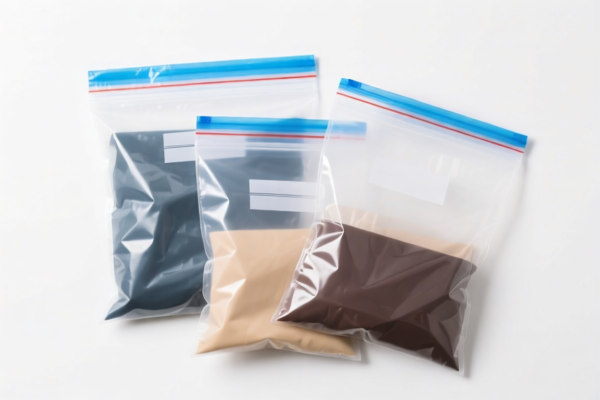


AI Analysis
Here is the comprehensive Wiki-style Guide for Paper Bags, based strictly on the provided <DATA> and <TAX> content.
🎒 Paper Bags: Global Trade & Customs Classification Guide (2026 Edition)
🌐 HS Code Reference & Clearance Strategy | Detailed Tariff Breakdown | Professional Clearance Tactics
📌 I. Product Definition & Classification: Do You Know Your "Paper Bag"?
Paper bags are the backbone of eco-friendly packaging, used widely in retail, logistics, food service, and e-commerce. However, in international trade, a "paper bag" is not a single HS Code. It is a functional category that splits into specific technical classifications based on structure, material composition, and intended use.
Misclassification can lead to 35% tax on some items and 23.7% on others, or worse, customs seizures.
⚠️ Key Distinction Points:
- Structure: Is it a flat sack (4819.30), a box shape (4819.10), or a complex folded bag (4819.40)?
- Material Context: Is it treated purely as paper (Chapter 48) or loosely categorized under textiles (6305)?
- Use Case: Is it strictly for packaging (4819) or does it fall under general textile sacks?
📦 II. HS Code Classification Details (2026 Tariff Authority)
| HS Code | Product Description | Logic & Definition | Tax Rate |
|---|---|---|---|
| 4823.90.86.80 | Other Paper Products | Summary: Paper bags made of paper, appearing as general paper products. Logic: Fits the "catch-all" logic for other paper articles not specified elsewhere. |
35.0% |
| 4819.40.00.40 | Paper Pouches/Bag | Summary: Paper bags, paper material, bag form. Logic: Fits the definition of paper packaging containers. |
35.0% |
| 4819.30.00.40 | Paper Sacks/Bags | Summary: Paper bags (sacks), paper material, bag form. Logic: Fits the definition of paper packaging containers (Sacks). |
35.0% |
| 4819.10.00.40 | Cardboard Boxes | Summary: Paper boxes, paper material, box form. Logic: Fits the definition of boxes made of paper/paperboard (if the "bag" has a rigid box shape). |
35.0% |
| 6305.90.00.00 | Sacks & Bags (Other) | Summary: Paper bags, bag form, packaging use. Logic: Inferred as "other textile materials" based on common sense (Riskier classification). |
23.7% |
🔍 Critical Insight:
- 4823, 4819 series: These are the standard, safe classifications for paper packaging. They attract the high "Add-on" tax but are technically correct.
- 6305: This classifies paper under "Textiles." While it has a lower total tax (23.7%), it is a "Common Sense Inference" classification, which carries a higher risk of customs rejection if the material isn't strictly textile-compliant.
💰 III. 2026 Tariff Rate Breakdown (Detailed Tax Clauses)
✅ Applicable Market: US (United States)
✅ Origin: China (CN)
✅ Effective Date: Current (Based on 122 Clause & Section 301 rules)
🎯 A. The "Standard" Paper Packaging Cluster (Codes: 4819 & 4823)
Applicable to: 4823.90.86.80, 4819.40.00.40, 4819.30.00.40, 4819.10.00.40
| Tax Component | Rate | Legal Source | Explanation |
|---|---|---|---|
| Base Tariff | 0.0% | General Rate of Duty | Standard duty for paper goods is often 0%. |
| Section 301 Add-on | 25.0% | USITC / Section 301 | The primary "Anti-Dumping/Unfair Trade" surcharge on Chinese goods. |
| "122 Clause" Add-on | 10.0% | Section 122 (IEEPA) | Additional surcharge targeting specific Chinese categories. |
| TOTAL EFFECTIVE RATE | 35.0% | Sum of all above | High Tariff Category. |
📌 Calculation:
Duty = CIF Value × (0% Base + 25% 301 + 10% 122) = CIF Value × 35%
Note: There is NO de minimis exemption for these high-value packaging items. Every single bag counts.
🎯 B. The "Textile-Inferred" Cluster (Code: 6305.90.00.00)
Applicable to: 6305.90.00.00
| Tax Component | Rate | Legal Source | Explanation |
|---|---|---|---|
| Base Tariff | 6.2% | General Rate of Duty | Standard duty for "Sacks and Bags" (Textiles). |
| Add-on (301/122) | 17.5% | Mixed Add-ons | Composed of 7.5% (likely 301 portion) + 10% (122 portion). |
| TOTAL EFFECTIVE RATE | 23.7% | Sum of all above | Lower Tariff Category. |
📌 Risk Warning:
While the tax is lower (23.7% vs 35.0%), customs officers may challenge this classification if the product is clearly defined as Paper (Chapter 48) rather than Textile (Chapter 63). Misusing this to avoid the 35% tax can lead to penalties and re-classification.
🛠️ IV. Customs Clearance Practical Advice (Real-World Pitfalls)
✅ 1. Documentation Checklist (Non-Negotiable)
| Document | Requirement | Why? |
|---|---|---|
| ✅ Technical Data Sheet | Must specify Material Composition (e.g., "100% Paper," "Kraft Paper") | Proves it belongs to Chapter 48, not Chapter 63. |
| ✅ Structural Diagram | Show if it's a "Sack," "Pouch," or "Box" | Determines if it fits 4819.30, 4819.40, or 4819.10. |
| ✅ Photos of Product | Clear view of seams, handles, and base | Helps Customs verify the "Bag" vs. "Box" distinction. |
| ✅ Commercial Invoice | Must use precise terms: "Paper Sack," "Kraft Bag," "Paper Packaging Container" | Avoids vague terms like "Bag" alone. |
| ✅ Packing List | Quantities by SKU | Ensures volume calculation matches the HS Code. |
✅ 2. Declaration Strategy (The "Golden Rules")
🔥 Strategy 1: The "Exact Form" Rule
- If the bag is rigid and box-shaped → Declare as 4819.10.00.40 (Paper Boxes).
- If the bag is a folded sack (flat bottom) → Declare as 4819.30.00.40.
- If the bag is a pouch/sack with complex structure → Declare as 4819.40.00.40.
- If it's an odd shape not fitting above → Use 4823.90.86.80.🔥 Strategy 2: The "Tax Trap" Avoidance
- DO NOT use6305.90.00.00unless you have a specific legal exemption proving the "textile" nature.
- Risk: If Customs decides it is paper, they will re-classify to 4819, charge the 35%, and demand back taxes + penalties.
- Recommendation: Stick to 35% (4819/4823) for stability. The extra 11.3% is worth the safety.
✅ 3. Special Case Handling
| Scenario | Action |
|---|---|
| Reinforced Paper Bags | If paper is reinforced with plastic or textile mesh, 4819 is still preferred, but declare reinforcement clearly. |
| Coated Paper Bags | If coated with wax/plastic, still falls under 4819 (Paper) unless the coating makes it a "Textile" by definition. |
| Bulk vs. Retail | Bulk rolls of paper sacks vs. finished bags: Ensure the "finished" state is declared (finished goods = 4819). |
🌍 V. Market Comparison (China to US)
| Region | Preferred HS Code | Tax Rate | Risk Level | Recommendation |
|---|---|---|---|---|
| 🇺🇸 USA | 4819.30.00.40 / 4819.40.00.40 |
35.0% | Low | High Stability. Pay the tax, avoid audit risk. |
| 🇺🇸 USA (Risky) | 6305.90.00.00 |
23.7% | High | Avoid unless expert advice confirms textile status. |
| 🇨🇳 China | 4819 Series |
~5-10% | Low | Different tax structure; check domestic codes. |
📌 Conclusion:
- USA Market: The 35% rate is standard for paper bags from China due to Section 301 and Clause 122.
- Classification Accuracy is more important than tax rate. A wrong code (e.g., claiming 6305) can freeze your shipment.
- Strategy: Classify by Physical Form (Sack, Pouch, Box) under 4819/4823.
📌 VI. Common Mistakes & Lessons Learned (Blood & Tears)
❌ Mistake 1: Calling everything "Paper Bag" and hoping for 6305.
👉 Consequence: Customs flags it as "Paper," reclassifies to 4819, charges 35%, and fines you. Total Cost: +11.3% + Penalty.
❌ Mistake 2: Confusing "Paper Sack" (4819.30) with "Paper Box" (4819.10).
👉 Consequence: If the item is a box, using 4819.30 might look suspicious. Always match Shape to Code.
❌ Mistake 3: Ignoring the "122 Clause".
👉 Consequence: Missing the 10% surcharge calculation leads to budget overruns and cash flow issues.
✅ Correct Practice:
"Use 4819 for all standard paper packaging. Declare the exact shape (Sack/Pouch/Box). Accept the 35% total tax to ensure smooth clearance."
🎯 VII. Conclusion: Clear, Classify, Conquer!
🎯 The Golden Rule:
🔹 "Paper is Chapter 48. Textile is Chapter 63."
🔹 "Shape dictates the Sub-Code (10, 30, 40)."
🔹 "Tax is 35% (301+122). Don't gamble on 23.7%."
📌 Pro Tip:
If you are importing Paper Bags into the US:
1. Verify Material: Is it 100% paper?
2. Verify Shape: Sack vs. Pouch vs. Box?
3. Declare: Use 4819.30, 4819.40, or 4819.10.
4. Calculate: Budget for 35% duty.
5. Ship: With full structural photos and specs.
✨ Professional Clearance Starts with Precision!
💼 Your bottom line depends on the right HS Code.
🚀 Don't let a "Paper Bag" cost you 35% in fines—Classify it Right the First Time!
Customer Reviews
About HS Code Classification
The Harmonized System (HS) is an internationally standardized nomenclature developed by the World Customs Organization (WCO) to classify traded products. Over 200 countries use the HS system as the basis for customs tariffs, trade statistics, and import/export regulations.
Each HS code follows a hierarchical structure:
- Chapter (2 digits) — Broad category of goods (e.g., Chapter 84: Machinery and Mechanical Appliances)
- Heading (4 digits) — More specific grouping within the chapter
- Subheading (6 digits) — Internationally standardized breakdown, used by all WCO member countries
- National subdivisions (8-10 digits) — Country-specific extensions for further classification, such as US HTSUS 10-digit codes
Correct HS code classification is essential for smooth customs clearance, accurate duty payment, and compliance with trade regulations. Misclassification can lead to customs delays, overpayment of duties, or penalties.
When importing from CN to US, the applicable tariff rates may include:
- Most-Favored-Nation (MFN) rate — The standard duty rate applied to WTO members
- General rate — Applied to countries without trade agreements
- Trade remedy duties — Additional tariffs such as Section 301 (anti-dumping), Section 232 (national security), or countervailing duties
The information provided on this page is for reference purposes only. For official classification, please consult with your local customs authority or a licensed customs broker.