paper bag with handles
CN → US| HS Code | Tariff Rate | Origin | Destination | Doc |
|---|---|---|---|---|
| 4819400040 | 35.0% | CN | US | Official Doc |
| 4823908680 | 35.0% | CN | US | Official Doc |
| 3923210085 | 38.0% | CN | US | Official Doc |
Product Images
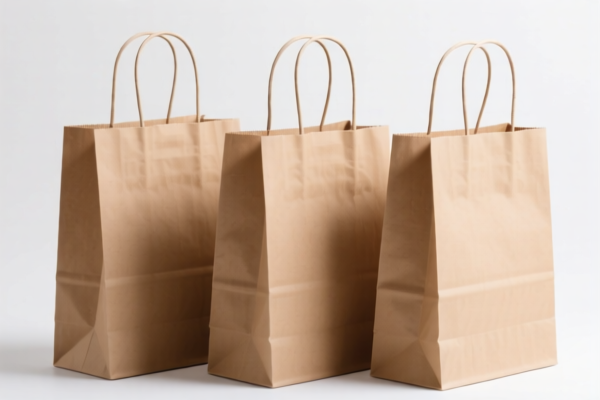
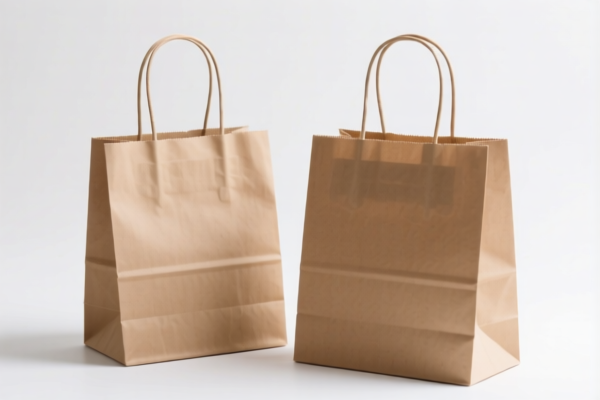
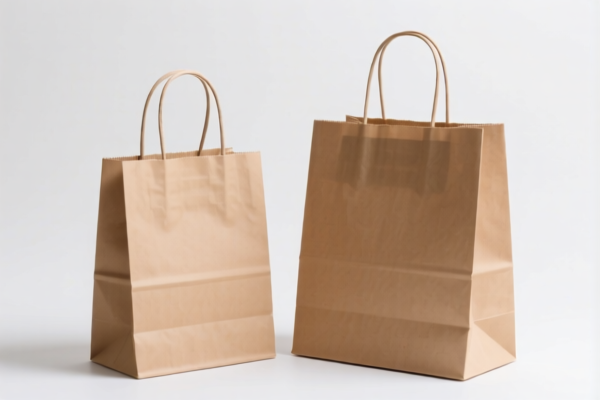
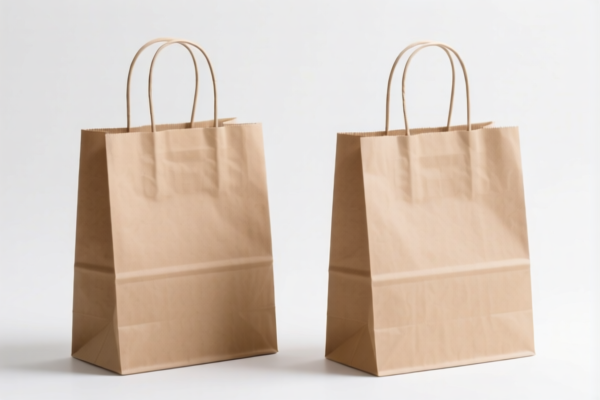
AI Analysis
🛍️ Paper Bags with Handles (Paper Bags)
🌐 HS Code Reference & Customs Clearance Guide | 2026 Latest Tariff Analysis | Professional Clearance Strategy
📌 I. Product Definition & Classification: What Exactly is a "Paper Bag with Handles"?
A "paper bag with handles" is a common packaging container made primarily of paper materials, designed for carrying goods. In international trade, it is categorized based on its material (Paper) and form (Bag/Container).
Key Distinction:
- It falls under Chapter 48 (Paper and Paperboard).
- Specifically, it is classified as "Other paper bags" rather than woven bags, laminated bags, or bags made of plastic.
⚠️ Critical Classification Point:
- If the bag is made of Paper and has Handles (paper or other material attached), it generally falls under 4819.40 (Other paper bags).
- If the bag is made of Plastic (e.g., Polyethylene) with handles, it falls under 3923 (Articles for the conveyance or packing of goods).
- Note: The provided data confirms that paper-based bags with handles are primarily categorized under 4819.40.00.40 or 4823.90.86.80 depending on specific structural details, but predominantly 4819.40.00.40 for standard non-woven paper bags.
📦 II. HS Code Classification Details (2026 Latest Tariff Authority Comparison)
| HS Code | Product Description | Applicable Scenario | Material | Handle Type |
|---|---|---|---|---|
4819.40.00.40 |
Paper bags with handles, non-woven type, other paper bags | Standard paper shopping bags, gift bags, lightweight paper bags | Paper | Paper or attached handle |
4823.90.86.80 |
Other paper articles, paper bags (fallback category) | Paper bags not fitting specific sub-categories, generic paper containers | Paper | N/A |
3923.21.00.85 |
Polyethylene bags with handles | Plastic shopping bags, grocery bags made of PE | Polyethylene | Plastic or paper handle |
🔍 Key Reminder:
-4819.40.00.40is the primary code for paper-based bags with handles (non-woven, other paper bags).
-3923.21.00.85is for plastic (polyethylene) bags with handles. Do not confuse paper bags with plastic bags.
-4823.90.86.80is a fallback for other paper products if4819.40is not applicable.
💰 III. 2026 Latest Tariff Rate Breakdown (Including Surcharges & Policy Add-ons)
✅ Applicable Country: United States (US)
✅ Origin: China (CN)
✅ Effective Date: 2025-11-10 onwards (including subsequent imports)
🎯 1. 4819.40.00.40 —— Paper Bags with Handles (Non-woven, Other Paper Bags)
| Item | Content |
|---|---|
| Base Tariff Rate | 0% (ad valorem) |
| USITC Surcharge | +25% (under USITC Footnote related to Section 301) |
| 122 Clause Surcharge | +10% (Specific trade remedy tariff) |
| Total Tariff Rate | 35.0% |
| Tax Calculation | CIF Value × 35% |
| De Minimis Exemption | ❌ Not Eligible (deny_de_minimis) |
| Legal Basis Path | Base Tariff 0% → USITC +25% → 122 Clause +10% |
📌 Explanation:
- "Base Tariff 0%": Standard MFN rate for paper bags is often 0%.
- "USITC Surcharge 25%": This is the Section 301 tariff on Chinese goods.
- "122 Clause 10%": This is an additional tariff imposed under specific trade remedy provisions.
- Total: 35%. This is a high tariff rate. Cost calculation must include all three components.
🎯 2. 4823.90.86.80 —— Other Paper Articles (Paper Bags Fallback)
| Item | Content |
|---|---|
| Base Tariff Rate | 0% |
| USITC Surcharge | +25% |
| 122 Clause Surcharge | +10% |
| Total Tariff Rate | 35.0% |
| Tax Calculation | CIF Value × 35% |
| De Minimis Exemption | ❌ Not Eligible |
| Legal Basis Path | Base Tariff 0% → USITC +25% → 122 Clause +10% |
📌 Note:
- Same tariff structure as4819.40.00.40.
- Applies to paper bags that do not fit the specific description of4819.40but are still paper containers.
🎯 3. 3923.21.00.85 —— Polyethylene Bags with Handles (Plastic)
| Item | Content |
|---|---|
| Base Tariff Rate | 3.0% |
| USITC Surcharge | +25% |
| 122 Clause Surcharge | +10% |
| Total Tariff Rate | 38.0% |
| Tax Calculation | CIF Value × 38% |
| De Minimis Exemption | ❌ Not Eligible |
| Legal Basis Path | Base Tariff 3% → USITC +25% → 122 Clause +10% |
📌 Note:
- Plastic bags have a higher base rate (3%) compared to paper bags (0%).
- Total rate is 38%, which is 3% higher than paper bags.
- Crucial: Ensure the bag is correctly identified as Paper (HS 4819) vs. Plastic (HS 3923) to avoid misclassification and potential penalties.
🛠️ IV. Customs Clearance Practical Advice (Avoid Pitfalls)
✅ 1. Required Documentation Checklist
| Document | Must Provide | Notes |
|---|---|---|
| ✅ Product Specification Sheet | ✔️ | Material: Paper (Grammage, Type), Handle Material, Dimensions |
| ✅ Product Photos | ✔️ | Clear images showing the bag, handle attachment, and any logos |
| ✅ Commercial Invoice | ✔️ | Clearly state "Paper Bag with Handles" or "Polyethylene Bag with Handles" |
| ✅ Packing List | ✔️ | Include unit weight, quantity, and total weight |
| ✅ Certificate of Origin (CO) | ✔️ | If applicable for preferential treatment (though 35%+ tariff applies to CN origin) |
| ✅ Material Composition Statement | ✔️ | Confirm if the bag is 100% paper or if handles contain other materials |
✅ 2. Declaration Tips (Key Principles)
🔥 "Material First, Handle Second, Name Precise, Tax Accurate!"
| Scenario | Correct Declaration | Wrong Practice |
|---|---|---|
| Paper bag with paper handles | 4819.40.00.40 (35%) |
Declare as plastic → 3923.21.00.85 (38%) or vice versa |
| Paper bag with plastic handles | 4819.40.00.40 (35%) |
Split declaration → Risk of higher combined tax |
| Plastic (PE) bag with handles | 3923.21.00.85 (38%) |
Declare as paper → Risk of penalty for misclassification |
| Generic "Packaging Bag" | Specify Material | Vague description → Customs delay, audit, or reclassification |
✅ 3. Special Cases
| Case | Handling Advice |
|---|---|
| Mixed Material Bags (e.g., Paper body, Plastic handle) | Generally classified by the main material (Paper → 4819). Declare clearly. |
| Laminated Paper Bags | If laminated with plastic, it may fall under different subheadings. Check if it still qualifies as "Paper Bag" under 4819. |
| Custom Printed Bags | Provide proof of customization if relevant, but it does not change HS Code. |
| Reinforced Paper Bags | If the bag has significant plastic reinforcement, re-evaluate classification. |
🌍 V. Global Market Customs Clearance Comparison (2026 Latest)
| Country/Region | Recommended HS Code | Tariff Rate (CN Origin) | Certification | Notes |
|---|---|---|---|---|
| 🇺🇸 USA | 4819.40.00.40 |
35.0% | None specific | High tariff due to 301 + 122 clauses |
| 🇨🇳 China | 4819.40.00.40 |
~5-10% (Import) | None | Lower duty for imports into China |
| 🇪🇺 EU | 4819.40 |
0-3% | FSC Certification (optional) | No Section 301 surcharge |
| 🇬🇧 UK | 4819.40 |
0-5% | FSC Certification (optional) | Post-Brexit tariff regime |
| 🇯🇵 Japan | 4819.40 |
0% | None | Favorable tariff for paper products |
📌 Conclusion:
- USA imposes the highest tariffs (35%) on Chinese paper bags due to trade policies.
- EU and Japan have much lower or zero tariffs.
- Cost optimization: If possible, source paper bags from non-China origins (e.g., Vietnam, India) to avoid US surcharges.
📌 VI. Common Mistakes & Pitfalls (Lessons Learned)
❌ Mistake 1: Declaring a Plastic Bag as a Paper Bag
👉 Consequence: Underpayment of tax (35% vs 38%). Customs will reassess and charge the difference + penalty.
❌ Mistake 2: Declaring a Paper Bag as a Plastic Bag
👉 Consequence: Overpayment of tax (38% vs 35%). Unnecessary cost increase.
❌ Mistake 3: Vague Description "Bag"
👉 Consequence: Customs may select for inspection, demand detailed material breakdown, causing delays.
❌ Mistake 4: Ignoring the 122 Clause
👉 Consequence: Underestimating total tax by 10%. Budgeting errors.
✅ Correct Approach:
"Paper Bag with Handles, 100% Paper, Non-woven, Gift/Shopping Use, Model XYZ, CN Origin"
🎯 VII. Conclusion: Professional Declaration for Cost Savings
🎯 Remember the Rule:
🔹 "Paper Bags: 35% (0% Base + 25% + 10%)"
🔹 "Plastic Bags: 38% (3% Base + 25% + 10%)"
🔹 "Check Material First, Then Declare!"
📌 Tips:
- For USA imports, the 35% tariff is significant. Consider tariff engineering (e.g., using non-China materials if feasible) or pre-classification rulings.
- Ensure HS Code accuracy to avoid customs holds.
- For non-US markets, tariffs are generally lower, making export more cost-effective.
📣 Immediate Action:
📞 Verify material composition with supplier.
📄 Prepare detailed product description.
📊 Calculate landed cost including 35% (or 38%) duty.
🚀 Ensure smooth customs clearance by accurate classification!
✨ Professional Clearance Starts with Accurate Classification!
💼 Every Percent of Tariff Counts!
Customer Reviews
About HS Code Classification
The Harmonized System (HS) is an internationally standardized nomenclature developed by the World Customs Organization (WCO) to classify traded products. Over 200 countries use the HS system as the basis for customs tariffs, trade statistics, and import/export regulations.
Each HS code follows a hierarchical structure:
- Chapter (2 digits) — Broad category of goods (e.g., Chapter 84: Machinery and Mechanical Appliances)
- Heading (4 digits) — More specific grouping within the chapter
- Subheading (6 digits) — Internationally standardized breakdown, used by all WCO member countries
- National subdivisions (8-10 digits) — Country-specific extensions for further classification, such as US HTSUS 10-digit codes
Correct HS code classification is essential for smooth customs clearance, accurate duty payment, and compliance with trade regulations. Misclassification can lead to customs delays, overpayment of duties, or penalties.
When importing from CN to US, the applicable tariff rates may include:
- Most-Favored-Nation (MFN) rate — The standard duty rate applied to WTO members
- General rate — Applied to countries without trade agreements
- Trade remedy duties — Additional tariffs such as Section 301 (anti-dumping), Section 232 (national security), or countervailing duties
The information provided on this page is for reference purposes only. For official classification, please consult with your local customs authority or a licensed customs broker.