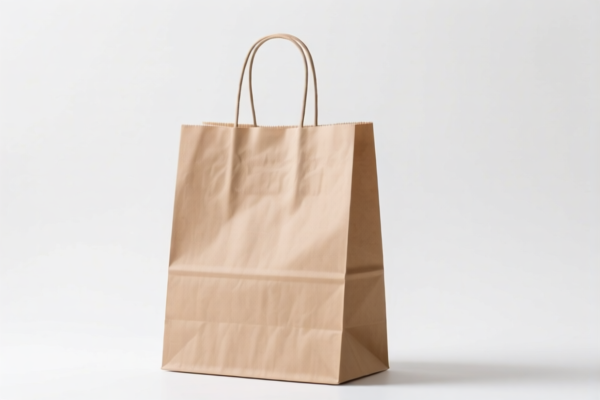
paper caring bag
CN → US| HS Code | Tariff Rate | Origin | Destination | Doc |
|---|---|---|---|---|
| 4819400040 | 35.0% | CN | US | Official Doc |
| 4819300040 | 35.0% | CN | US | Official Doc |
| 4823908680 | 35.0% | CN | US | Official Doc |
| 4821902000 | 35.0% | CN | US | Official Doc |
| 4821904000 | 35.0% | CN | US | Official Doc |
Product Images



AI Analysis
🛍️ Paper Care Bags (Paper Caring Bags)
🌐 HS Code Reference & Customs Clearance Guide | 2026 Latest Tariff Analysis | Professional通关 Strategy
📌 I. Product Definition & Classification: What Exactly Are "Paper Care Bags"?
"Paper Care Bags" typically refer to paper-based packaging solutions used for retail, shopping, or specific "care" product lines (e.g., cosmetics, baby care, dry cleaning, or wellness items). In international trade, their classification depends heavily on material structure, form factor (bag vs. box), and intended use.
Key Distinctions: 1. Paper Shopping Bags: Folded paper bags with handles, used for retail. → Likely HS 4819.40 2. Paper Sachets/Envelopes: Flat, sealable paper packaging. → Likely HS 4819.30 3. Paper Tags/Stickers: Paper labels attached to care products. → Likely HS 4821.90 4. General Paper Goods: If the bag doesn't fit specific "bag" definitions but is purely paper. → Likely HS 4823.90
⚠️ Critical Identification Point:
- If it has handles and is for carrying goods → 4819.40 (Shopping Bags)
- If it is a folded container without handles → 4819.30 (Other Paper Bags)
- If it is a label/tag → 4821.90
- If it is a miscellaneous paper item (e.g., complex folded pack) → 4823.90
📦 II. HS Code Classification Details (2026 Latest Tariff Reference)
| HS Code | Product Description | Application Scenario | Key Feature |
|---|---|---|---|
4819.40.00.40 |
Paper/Cardboard Bags & Pouches, Shopping Bags | Retail shopping, branded bags with handles | ✅ Has Handles / Shopping Form |
4819.30.00.40 |
Other Paper Cardboard Bags & Pouches | Folding cartons, flat paper packs, no handles | ✅ Container Shape, No Handles |
4823.90.86.80 |
Other Paper Items (兜底/General) | Non-standard paper packs, complex structures | ❌ General Paper Category |
4821.90.20.00 |
Paper Tags / Stickers | Labels for care products, hang-tags | ✅ Tag/Sticker Form |
4821.90.40.00 |
Paper Labels (General) | General paper labels, no specific exclusion | ✅ Label Form |
🔍 Important Note:
- "Shopping Bags" (4819.40) are specifically for bags with handles.
- "Other Bags" (4819.30) include flat paper packs or folding boxes made of paperboard.
- "Labels" (4821.90) are for attached paper items, not the bag itself.
- "General Paper" (4823.90) is the catch-all if the bag doesn't fit4819definitions.
💰 III. 2026 Latest Tariff Rate Breakdown (Including Additional Duties)
✅ Applicable Country: United States (US)
✅ Origin: China (CN)
✅ Effective Date: From November 10, 2025 (and subsequent imports)
🎯 1. 4819.40.00.40 – Paper Shopping Bags
| Item | Content |
|---|---|
| Base Tariff | 0.0% (ad valorem) |
| Section 301 Additional Duty | +25.0% (USITC Footnote for Chinese goods) |
| Section 122 Duty | +10.0% (Additional duty on Chinese imports) |
| Total Rate | 35.0% |
| Tax Calculation | CIF Value × 35% |
| De Minimis Exemption? | ❌ NO (Denied for Chinese origin under these sections) |
| Legal Basis Path | USITC:4819.40.00.40 → Section 301: +25% → Section 122: +10% |
📌 Explanation:
- Base: 0% for standard paper bags.
- Section 301 (+25%): Standard penalty for Chinese manufactured goods.
- Section 122 (+10%): Additional duty targeting specific Chinese imports.
- Total 35%: High tariff for simple paper shopping bags.
🎯 2. 4819.30.00.40 – Other Paper Bags (Cardboard)
| Item | Content |
|---|---|
| Base Tariff | 0.0% |
| Section 301 Additional Duty | +25.0% |
| Section 122 Duty | +10.0% |
| Total Rate | 35.0% |
| Tax Calculation | CIF Value × 35% |
| De Minimis Exemption? | ❌ NO |
| Legal Basis Path | USITC:4819.30.00.40 → Section 301: +25% → Section 122: +10% |
📌 Note:
- Same rate as shopping bags.
- Includes flat paper packs, folding cartons made of paperboard.
🎯 3. 4823.90.86.80 – Other Paper Items (Catch-All)
| Item | Content |
|---|---|
| Base Tariff | 0.0% |
| Section 301 Additional Duty | +25.0% |
| Section 122 Duty | +10.0% |
| Total Rate | 35.0% |
| Tax Calculation | CIF Value × 35% |
| De Minimis Exemption? | ❌ NO |
| Legal Basis Path | USITC:4823.90.86.80 → Section 301: +25% → Section 122: +10% |
📌 Note:
- Used if the item is a complex paper pack that doesn't fit "bag" definitions.
- Still subject to 35% total tariff.
🎯 4. 4821.90.20.00 & 4821.90.40.00 – Paper Tags/Labels
| Item | Content |
|---|---|
| Base Tariff | 0.0% |
| Section 301 Additional Duty | +25.0% |
| Section 122 Duty | +10.0% |
| Total Rate | 35.0% |
| Tax Calculation | CIF Value × 35% |
| De Minimis Exemption? | ❌ NO |
| Legal Basis Path | USITC:4821.90.xx.xx → Section 301: +25% → Section 122: +10% |
📌 Note:
- Applies if the "bag" is actually a label or sticker (e.g., a large paper tag attached to a garment).
- Warning: Misclassifying a bag as a label to lower tariff is high-risk and will lead to customs penalties.
🛠️ IV. Customs Clearance Practical Advice (Pitfall Avoidance)
✅ 1. Preparation Checklist (All Required)
| Document | Required | Notes |
|---|---|---|
| ✅ Product Specification | ✔️ | Describe material (cardboard/paper), form (bag/tag), and function. |
| ✅ Product Photos | ✔️ | Must show handles (if any), seals, and overall structure. |
| ✅ Commercial Invoice | ✔️ | Clearly state "Paper Shopping Bag" or "Paper Packaging Bag". |
| ✅ Packing List | ✔️ | Specify quantity and dimensions. |
| ✅ Origin Certificate | ❌ | Not for preferential rate (China origin faces 35% regardless). |
| ✅ Pre-Ruling (Optional but Recommended) | ✔️ | Strongly advised to confirm HS Code with CBP before shipment. |
✅ 2. Classification Strategy (Key Mnemonics)
🔥 "Handles = Shopping, No Handles = Other, Tags = Labels, Else = General"
| Scenario | Correct HS Code | Wrong Approach | Consequence |
|---|---|---|---|
| Bag with handles | 4819.40.00.40 |
Misclassify as 4819.30 |
Minor discrepancy, may be accepted but risks audit. |
| Flat paper pack (no handles) | 4819.30.00.40 |
Misclassify as 4823.90 |
Same tax rate, but incorrect description triggers scrutiny. |
| Paper Label/Tag | 4821.90.20.00 |
Misclassify as Bag | High Risk: Customs may reject as "Bag" and demand higher duties or penalties. |
| Complex Paper Pack | 4823.90.86.80 |
N/A | Use only if it truly doesn't fit bag definitions. |
⚠️ Critical Warning:
- Do NOT try to declare a bag as a label (4821.90) to simplify customs. The form factor is visually distinct. Customs officers will check photos.
- Do NOT assume "Paper" means low tariff. The 35% combined duty applies to all these codes for Chinese origin.
✅ 3. Special Cases
| Case | Handling Suggestion |
|---|---|
| Mixed Shipment (Bags + Labels) | Declare separately. Bags under 4819, Labels under 4821. Do not lump together. |
| Bag with Plastic Coating | If >50% by weight or essential character is plastic, might move to Chapter 39 (Plastics). Check carefully! |
| Bag with Metal Handles | If metal handles are substantial, may move to Chapter 73 (Iron/Steel). Usually, small wire handles keep it in 4819. |
| Origin: Vietnam/Mexico | If re-exported from Vietnam/Mexico with substantial transformation, may avoid Section 301/122. Get Certificate of Origin! |
🌍 V. Global Market Comparison (2026 Latest)
| Country/Region | Recommended HS Code | Tariff Rate | Notes |
|---|---|---|---|
| 🇺🇸 USA | 4819.40.00.40 |
35% | Section 301 (+25%) + Sec 122 (+10%). No exemption. |
| 🇨🇳 China | 4819.40 |
5-10% | Standard import duty. No additional penalties. |
| 🇪🇺 EU | 4819.40 |
3.7% - 5% | No Section 301. Standard EU tariff. |
| 🇯🇵 Japan | 4819.40 |
5% - 8% | Standard tariff. No additional penalties. |
| 🇰🇷 Korea | 4819.40 |
0% - 8% | FTA benefits may apply if origin is Korea. |
📌 Conclusion:
- USA is the only market with punitive 35% tariffs for Chinese paper bags.
- Supply Chain Strategy: Consider sourcing from Vietnam, India, or Mexico to avoid Section 301/122 duties.
- Pre-Ruling: Always file an Advance Ruling with CBP to confirm HS Code and avoid detention.
📌 VI. Common Errors & Pitfalls (Lessons Learned)
❌ Error 1: Declaring a bag with handles as a flat paper pack (4819.30)
👉 Consequence: Customs may accept it but flag for inconsistent description. If challenged, may lead to penalties.
❌ Error 2: Declaring a bag as a label (4821.90)
👉 Consequence: High Risk of Seizure. Labels are small and attached; bags are containers. Visual inspection will catch this.
❌ Error 3: Ignoring Section 122 (10%)
👉 Consequence: Underpaying duties by 10%. CBP will assess back-tariffs + interest + penalties.
❌ Error 4: Not providing photos with handles
👉 Consequence: Customs cannot verify "Shopping Bag" status. May delay clearance or downgrade to general paper (4823.90).
✅ Correct Practice:
"Paper Shopping Bag, Brown Kraft Paper, with Twisted Paper Handles, for Retail Use, Model XYZ, Made in China"
🎯 VII. Conclusion: Precise Classification, Cost Control
🎯 Remember Mnemonics:
🔹 "Handles = Shopping (4819.40), No Handles = Other (4819.30)"
🔹 "China Origin = 35% Total (0% + 25% + 10%)"
🔹 "Misclassification = Penalties & Delays"
📌 Pro Tip:
If your paper bags are essential to your product (e.g., premium packaging for cosmetics), consider value-added design to justify higher retail price, offsetting the 35% tariff.
For large volumes, explore third-country manufacturing (Vietnam/India) to avoid Section 301/122.
📣 Immediate Action:
📞 Consult a Licensed Customs Broker
📤 Submit Advance Ruling Request to CBP
🚀 Optimize Supply Chain to mitigate tariff impact!
✨ Professional Clearance Starts with Accurate Classification!
💼 Every Percent of Tariff Matters – Protect Your Margins!
Customer Reviews
About HS Code Classification
The Harmonized System (HS) is an internationally standardized nomenclature developed by the World Customs Organization (WCO) to classify traded products. Over 200 countries use the HS system as the basis for customs tariffs, trade statistics, and import/export regulations.
Each HS code follows a hierarchical structure:
- Chapter (2 digits) — Broad category of goods (e.g., Chapter 84: Machinery and Mechanical Appliances)
- Heading (4 digits) — More specific grouping within the chapter
- Subheading (6 digits) — Internationally standardized breakdown, used by all WCO member countries
- National subdivisions (8-10 digits) — Country-specific extensions for further classification, such as US HTSUS 10-digit codes
Correct HS code classification is essential for smooth customs clearance, accurate duty payment, and compliance with trade regulations. Misclassification can lead to customs delays, overpayment of duties, or penalties.
When importing from CN to US, the applicable tariff rates may include:
- Most-Favored-Nation (MFN) rate — The standard duty rate applied to WTO members
- General rate — Applied to countries without trade agreements
- Trade remedy duties — Additional tariffs such as Section 301 (anti-dumping), Section 232 (national security), or countervailing duties
The information provided on this page is for reference purposes only. For official classification, please consult with your local customs authority or a licensed customs broker.