paper handbag commercial
CN → US| HS Code | Tariff Rate | Origin | Destination | Doc |
|---|---|---|---|---|
| 4819400020 | 35.0% | CN | US | Official Doc |
| 4819400040 | 35.0% | CN | US | Official Doc |
| 4819300040 | 35.0% | CN | US | Official Doc |
Product Images
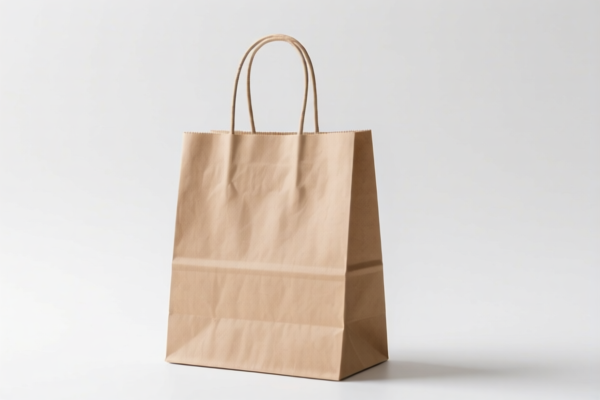
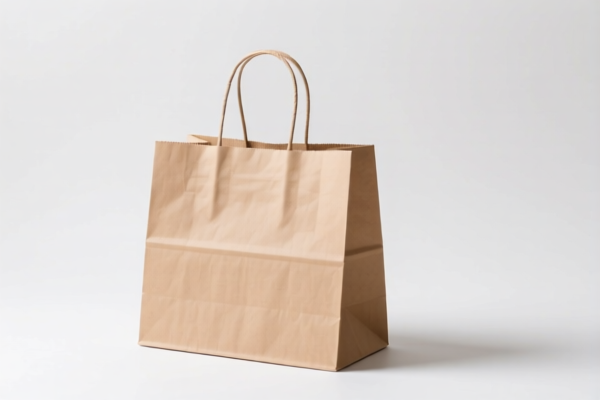
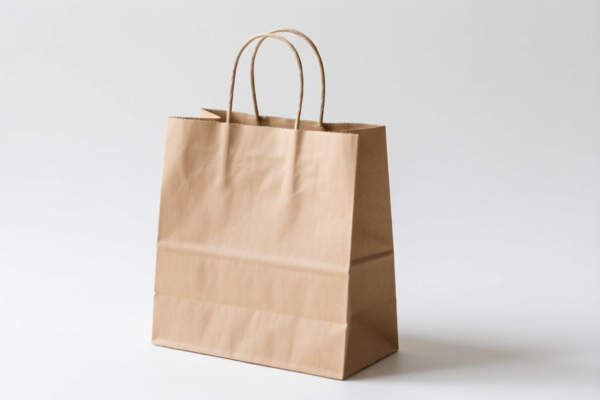
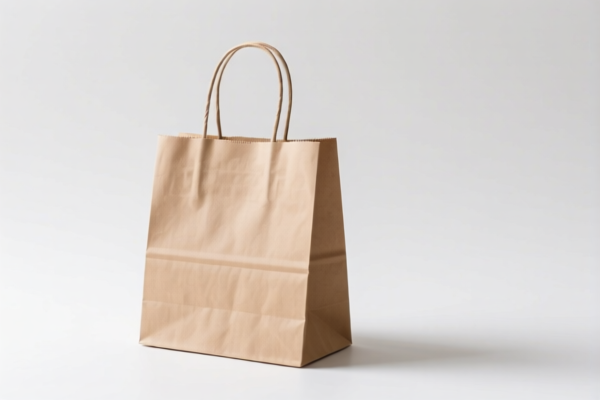
AI Analysis
🛍️ Commercial Paper Handbags & Packaging Containers
🌐 HS Code Reference & Customs Clearance Guide | 2026 Latest Tariff Analysis | Professional-Level Strategy
📌 I. Product Definition & Classification: Do You Really Understand "Paper Handbags"?
Commercial paper handbags are critical tools for retail, logistics, and brand presentation. In international trade, they are not merely "bags" but are categorized based on material, structure, and specific use. They fall primarily under Heading 48.19 ("Cartons, boxes, cases, bags and other packing containers... of paper, paperboard, cellulose wadding or webs of cellulose fibers").
The classification hinges on two key factors: 1. Function: Is it for general packing/logistics (Shipping/Multiwall) or general retail/packaging? 2. Material Construction: Is it a woven web, a solid board, or a specific folded structure?
⚠️ Key Distinction:
- If the bag is a standard retail paper bag (handled by customer or small commerce), it often falls under general packing containers.
- If the bag is a shipping sack or multiwall bag used for industrial/commercial bulk transport, it falls under specific subheadings for sacks and bags.
- Grocers' bags (single-use, thin, often for food) are excluded from these specific codes and go elsewhere (typically 4819.50 or 4819.60 depending on specifics). This guide focuses on Commercial/Industrial/Packing contexts as per the provided data.
📦 II. HS Code Classification Details (2026 Latest Tariff Authority Comparison)
Based on the provided <DATA>, the following HS Codes apply to commercial paper handbags and packing containers:
| HS Code | Product Description | Application Scenario | Key Characteristics |
|---|---|---|---|
4819.40.00.20 |
Other sacks and bags, including cones Shipping sacks and multiwall bags, other than grocers' bags | Industrial packaging, bulk material transport, multi-wall paper sacks, shipping sacks | ✅ Multi-wall, ✅ Sacks, ✅ Not for single retail grocery use |
4819.50.40.60 |
Other packing containers, including record sleeves: Other Other: Other | General commercial packaging, rigid paper boxes, custom-shaped paper containers, non-standard bags | ✅ General Packing, ✅ Non-standard shapes, ✅ Office/Retail storage |
🔍 Critical Clarification:
-4819.40.00.20is for Sacks & Bags: Think of heavy-duty paper bags used for cement, flour, or bulk goods (multiwall), or specific shipping sacks. These are structural, often layered.
-4819.50.40.60is for Other Containers: Think of rigid paper boxes, file folders, or non-sack-style packaging containers. If your "handbag" is a rigid, shaped box for retail (not a flexible sack), this may apply.
- Exclusion: Standard single-ply grocery bags (flimsy, single-use) are NOT covered by these specific codes in this dataset. They typically fall under different subheadings (e.g., 4819.50.40.40 for record sleeves or other general bags not specified).
💰 III. 2026 Latest Tariff Rate Breakdown (Including Surcharges & Policy Add-ons)
✅ Applicable Country: United States (US)
✅ Country of Origin: China (CN)
✅ Effective Date: From November 10, 2025 (and subsequent imports)
🎯 1. 4819.40.00.20 —— Sacks, Shipping Sacks, Multiwall Bags
| Item | Content |
|---|---|
| Base Tariff Rate | 0% (Ad valorem) |
| USITC Additional Tariff | +25% (From USITC Footnote: Section 301 Actions) |
| IEEPA Additional Tariff | +0% (Note: Paper packaging products generally do not have the extra 10% IEEPA surcharge that applies to many electronics or consumer goods, but the 25% Section 301 remains) |
| Total Tax Rate | 25.0% |
| Tax Calculation | CIF Value × 25% |
| De Minimis Eligibility | ❌ Not Eligible (Section 301 tariffs generally apply below $800 threshold for China-origin goods if not exempt) |
| Legal Basis Path | USITC:4819.40.00.20 → FOOTNOTE:301-TAR-25 |
📌 Explanation:
- The 25% is a Section 301 tariff applied to specific Chinese-origin goods, including certain paper products.
- Base rate is 0%, meaning the entire tax burden is the surcharge.
- No IEEPA 10% applies here because paper packaging is not in the specific IEEPA list for an additional 10% on top of Section 301 in many cases, or the total is capped at 25%. Always verify the latest IEEPA list, but the provided data states "Total Tax: 25.0%".
🎯 2. 4819.50.40.60 —— Other Packing Containers (Non-Sack)
| Item | Content |
|---|---|
| Base Tariff Rate | 0% (Ad valorem) |
| USITC Additional Tariff | +25% (From USITC Footnote: Section 301 Actions) |
| IEEPA Additional Tariff | +0% (As per provided data total) |
| Total Tax Rate | 25.0% |
| Tax Calculation | CIF Value × 25% |
| De Minimis Eligibility | ❌ Not Eligible |
| Legal Basis Path | USITC:4819.50.40.60 → FOOTNOTE:301-TAR-25 |
📌 Note:
- This code covers rigid or semi-rigid paper containers. If your "commercial handbag" is a stiff, box-like package for cosmetics or electronics, this may apply.
- The tariff impact is identical to sacks: 25% total.
🛠️ IV. Customs Clearance Practical Advice (Real-World Pitfall Avoidance Guide)
✅ 1. Documentation Checklist (All Required)
| Document | Must Provide | Explanation |
|---|---|---|
| ✅ Product Specifications | ✔️ | Material (e.g., kraft paper, cardboard), weight (GSM), dimensions, wall thickness (single/multi-wall) |
| ✅ Material Composition | ✔️ | Percentage of cellulose fibers, recycled content, coatings (plastic/foil) |
| ✅ Product Photos | ✔️ | Clear images of the bag/container, showing structure, handles, and any logos |
| ✅ Commercial Invoice | ✔️ | Must clearly state "Paper Handbags" or "Paper Packing Containers" and HS Code |
| ✅ Packing List | ✔️ | Details quantity, net/gross weight per carton |
| ✅ Original Certificate of Origin (CO) | ✔️ | To prove China origin and confirm applicability of tariffs |
✅ 2. Declaration Tips (Key Mnemonic)
🔥 "Sacks vs. Boxes, Walls Matter, Name Precise, Rates Stay Clear!"
| Situation | Correct Declaration | Wrong Practice |
|---|---|---|
| Multi-wall paper sacks (e.g., for cement, flour) | 4819.40.00.20 |
Misdeclare as "boxes" → Potential customs inquiry |
| Rigid paper boxes/handbags (e.g., luxury packaging) | 4819.50.40.60 |
Misdeclare as "sacks" → Incorrect classification |
| Single-ply grocery bags | NOT in provided data (Check 4819.50.40.40) | Force into 4819.40 → Rejection/Fines |
| Plastic-coated paper bags | Declare both paper and plastic content | Ignore coating → Material misdeclaration |
✅ 3. Special Case Handling
| Situation | Handling Advice |
|---|---|
| OEM Custom Handbags | Provide design drawings. If the bag has a unique shape not fitting "sack" or "standard box," 4819.50.40.60 is safer. |
| Biodegradable Paper Bags | Provide biodegradation certificates. Tariff rate remains 25%, but may help with environmental compliance in destination. |
| Mixed Containers | If a shipment contains both sacks and boxes, declare separately. Do not lump them under one code. |
| Sample Shipments | Even samples are subject to 25% tariff if declared correctly. Do not under-invoice to avoid duties; Customs may assess based on market value. |
🌍 V. Global Market Customs Comparison (2026 Latest)
| Country/Region | Recommended HS Code | Tariff Rate (China Origin) | Certification Required | Notes |
|---|---|---|---|---|
| 🇺🇸 USA | 4819.40.00.20 / 4819.50.40.60 |
25% | None specific, but FDA compliance if food-contact | High Tariff due to Section 301 |
| 🇨🇳 China | 4819.40.00.20 / 4819.50.40.60 |
0% - 5% (Import) | CCC (if applicable) | No surcharges |
| 🇪🇺 EU | 4819.40 / 4819.50 |
0% - 5% | CE (if applicable), FSC (if sustainable) | No Section 301 tariffs |
| 🇬🇧 UK | 4819.40 / 4819.50 |
0% - 5% | None specific | Post-Brexit rules apply |
| 🇯🇵 Japan | 4819.40 / 4819.50 |
0% - 6% | None specific | Low tariffs, strict quality checks |
📌 Conclusion:
- USA is the only major market with the 25% additional tariff on these paper products from China.
- EU, UK, Japan offer significantly lower or zero tariffs, making them more cost-effective for paper packaging exports from China.
- Supply Chain Strategy: Consider diversifying sourcing to Southeast Asia (Vietnam, Thailand) to avoid US tariffs, as these countries often have lower or zero duties under various trade agreements.
📌 VI. Common Mistakes & Pitfall Avoidance (Lessons Learned)
❌ Mistake 1: Declaring "Multi-wall sacks" as "Boxes" (4819.50)
👉 Consequence: Customs may reclassify, leading to delays, additional duties, or penalties. Sacks have specific structural definitions.
❌ Mistake 2: Ignoring "Grocers' Bag" Exclusion
👉 Consequence: If your product is a thin, single-use retail bag, it does not fit 4819.40.00.20. Using this code for grocery bags is incorrect and may lead to audits.
❌ Mistake 3: Under-invoicing to Avoid Tariffs
👉 Consequence: US Customs actively monitors under-invoicing. Penalties include seizure of goods and fines up to 3x the value of the goods.
❌ Mistake 4: Assuming "Paper" Means Low Tariff Everywhere
👉 Consequence: While base rates are 0%, the 25% Section 301 surcharge makes the total cost high for US imports. Plan your pricing accordingly.
✅ Correct Practice:
"Multi-wall Paper Sacks, 50kg Capacity, Kraft Paper, China Origin, HS Code 4819.40.00.20"
🎯 VII. Conclusion: Professional Declaration, Cost Efficiency!
🎯 Remember the Mnemonic:
🔹 "Sacks are 40, Boxes are 50, 25% Tax in USA, Plan Ahead!"
🔹 "Paper is light, Tariffs are heavy, Get it Right, Stay A-Stay-Away from Paying Extra!"
📌 Pro Tip:
If your paper handbags are sourced from Vietnam, Malaysia, or Indonesia, you may qualify for lower or zero tariffs in the US under various trade policies.
Consider Advanced Ruling (Pre-Ruling) from US Customs and Border Protection (CBP) to confirm the HS Code and tariff rate before shipping.
📣 Immediate Action:
📞 Consult with a licensed customs broker + Provide product photos + Verify HS Code pre-shipment
🚀 Ensure your paper handbags clear US Customs smoothly, avoid delays, and protect your profit margins!
✨ Professional Customs Clearance Starts with Accurate Classification!
💼 Every Percent of Tariff Counts!
Customer Reviews
About HS Code Classification
The Harmonized System (HS) is an internationally standardized nomenclature developed by the World Customs Organization (WCO) to classify traded products. Over 200 countries use the HS system as the basis for customs tariffs, trade statistics, and import/export regulations.
Each HS code follows a hierarchical structure:
- Chapter (2 digits) — Broad category of goods (e.g., Chapter 84: Machinery and Mechanical Appliances)
- Heading (4 digits) — More specific grouping within the chapter
- Subheading (6 digits) — Internationally standardized breakdown, used by all WCO member countries
- National subdivisions (8-10 digits) — Country-specific extensions for further classification, such as US HTSUS 10-digit codes
Correct HS code classification is essential for smooth customs clearance, accurate duty payment, and compliance with trade regulations. Misclassification can lead to customs delays, overpayment of duties, or penalties.
When importing from CN to US, the applicable tariff rates may include:
- Most-Favored-Nation (MFN) rate — The standard duty rate applied to WTO members
- General rate — Applied to countries without trade agreements
- Trade remedy duties — Additional tariffs such as Section 301 (anti-dumping), Section 232 (national security), or countervailing duties
The information provided on this page is for reference purposes only. For official classification, please consult with your local customs authority or a licensed customs broker.