paper handbag geometric pattern
CN → US| HS Code | Tariff Rate | Origin | Destination | Doc |
|---|---|---|---|---|
| 4819400040 | 35.0% | CN | US | Official Doc |
| 4819400020 | 35.0% | CN | US | Official Doc |
Product Images
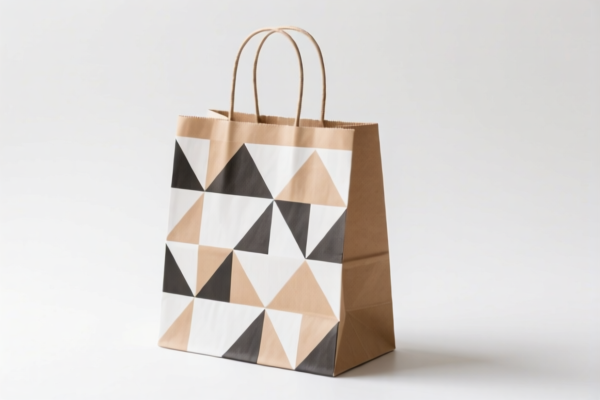
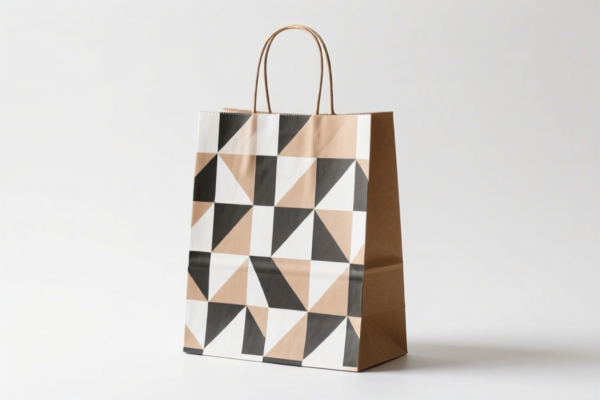
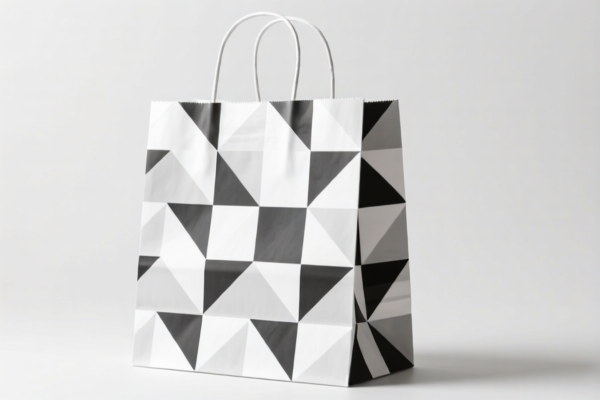
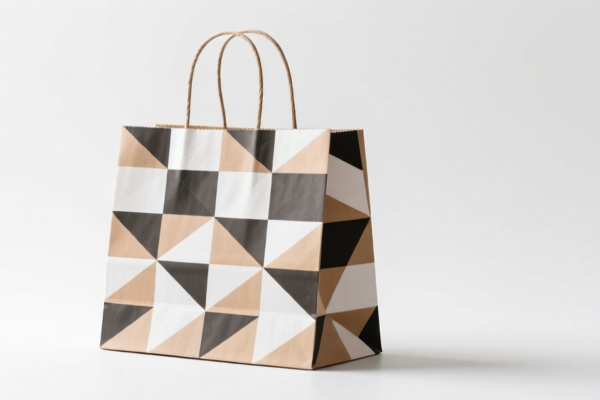
AI Analysis
🛍️ Paper Handbag with Geometric Pattern
🌐 HS Code Reference & Customs Clearance Guide | 2026 Latest Tariff Full Analysis | Professional Clearance Strategy
📌 I. Product Definition & Classification: Do You Really Understand "Paper Handbags"?
A paper handbag with a geometric pattern is a packaging or carrying container made primarily of paper, paperboard, cellulose wadding, or webs of cellulose fibers. In international trade, despite its aesthetic design (geometric pattern), it is classified strictly by its material composition and function as a packing container or bag, not as a fashion accessory or textile product.
Key Distinction Points:
- If the bag is made of paper/paperboard, regardless of printing patterns (geometric, floral, etc.), it falls under Chapter 48.
- If it contains significant non-paper components (e.g., plastic handles, metal clasps) that change its essential character, it might be reconsidered, but standard paper handbags remain in 4819.
- It is not a textile bag (Chapter 63) or a leather good (Chapter 42), even if used for carrying personal items.
⚠️ Critical Note:
- The "geometric pattern" is purely decorative and does not change the HS Code classification.
- The primary factor is the material: Paper/Paperboard.
- Sub-classification depends on the type of bag: Sacks, bags, cones, etc.
📦 II. HS Code Classification Details (2026 Latest Tariff Authority Comparison)
Based on the provided data, the product falls under HS Code 4819.40, which covers "Other sacks and bags, including cones."
| HS Code | Product Description | Application Scenario | Material & Type |
|---|---|---|---|
4819.40.00.20 |
Shipping sacks and multiwall bags, other than grocers' bags | Industrial shipping, bulk packaging, multi-layer paper sacks | ✅ Paper/Paperboard, Multiwall/Ships Sacks |
4819.40.00.40 |
Other sacks and bags, including cones (Other) | Retail handbags, gift bags, decorative paper bags, single-wall bags | ✅ Paper/Paperboard, Retail/Decorative Bags |
🔍 Key Insight for Your Product:
- A "paper handbag" with a "geometric pattern" is typically a retail/gift bag or a single-wall decorative bag, NOT a heavy-duty "shipping sack" or "multiwall bag."
- Therefore,4819.40.00.40is the most likely correct classification.
-4819.40.00.20is for industrial shipping sacks, which paper handbags usually are not.⚠️ Warning:
- If your "handbag" is actually a heavy-duty multiwall sack used for shipping, use4819.40.00.20.
- For retail, gift, or decorative paper bags (even with handles), use4819.40.00.40.
💰 III. 2026 Latest Tariff Rate Detailed Breakdown (Including Additional Taxes, Policy Add-ons)
✅ Applicable Country: United States (US)
✅ Country of Origin: China (CN)
✅ Effective Date: From November 10, 2025 onwards (including subsequent imports)
🎯 1. 4819.40.00.40 — Other sacks and bags, including cones (Other)
(Most Likely for "Paper Handbag with Geometric Pattern")
| Item | Content |
|---|---|
| Base Tariff Rate | 0.0% (ad valorem) |
| Additional Tariff (USITC 301) | +25.0% |
| IEEPA Additional Tariff | Not explicitly listed in the provided data for this specific code, but note that the provided data shows Total Tax: 25.0% |
| Total Tax Rate | 25.0% |
| Tax Calculation | CIF Value × 25% |
| De Minimis Exemption Available? | ❌ No (For China-origin goods under 301 tariffs, de minimis may not apply if specific conditions are met; however, the provided data explicitly states "Total Tax: 25.0%" with no exemption mentioned) |
| Legal Basis Path | USITC:4819.40.00.40 → FOOTNOTE:301 |
📌 Explanation:
- The provided data explicitly states: "Base Tariff: 0.0%, Additional Tariff: 25.0%, Total Tax: 25.0%".
- This means you will pay 25% of the CIF value as duty.
- No base tax, but the 25% additional tariff applies due to Section 301 actions against Chinese goods.
🎯 2. 4819.40.00.20 — Shipping sacks and multiwall bags
(Less Likely for "Handbag", but included for completeness)
| Item | Content |
|---|---|
| Base Tariff Rate | 0.0% (ad valorem) |
| Additional Tariff (USITC 301) | +25.0% |
| Total Tax Rate | 25.0% |
| Tax Calculation | CIF Value × 25% |
| De Minimis Exemption Available? | ❌ No |
| Legal Basis Path | USITC:4819.40.00.20 → FOOTNOTE:301 |
📌 Note:
- Same tax rate as4819.40.00.40.
- Even if misclassified, the tax burden is the same in this case. However, correct classification is crucial for compliance and avoiding penalties.🔍 Tax Clause Detailed Explanation:
- Base Tariff 0.0%: Paper products often have low base tariffs.
- Additional Tariff 25.0%: This is the Section 301 tariff imposed on Chinese goods. It is mandatory and non-negotiable for China-origin goods in this category.
- Total 25.0%: This is the final duty rate you must pay to US Customs.
- No IEEPA 10%: The provided data does not list an additional IEEPA tariff for these codes, so the total is strictly 25%.
🛠️ IV. Customs Clearance Practical Advice (Real-World Pitfall Avoidance Guide)
✅ 1. Preparation Checklist (All Items Required)
| Document | Must Provide | Notes |
|---|---|---|
| ✅ Product Description | ✔️ | Clearly state: "Paper Handbag, Geometric Pattern, For Retail/Gift Use" |
| ✅ Material Composition | ✔️ | Specify: 100% Paper/Paperboard, no plastic lining (or % if any) |
| ✅ Photos | ✔️ | Show the bag, pattern, handles, and any labels |
| ✅ Bill of Lading | ✔️ | Ensure HS Code 4819.40.00.40 is listed |
| ✅ Commercial Invoice | ✔️ | Value must match CIF (Cost, Insurance, Freight) |
| ✅ Packing List | ✔️ | Include dimensions, weight, number of bags |
| ✅ Origin Certificate | ✔️ | Proof of Chinese origin (if applicable) |
✅ 2. Declaration Tips (Key Mnemonics)
🔥 "Material First, Pattern Ignored, Type Matters, Tax Same!"
| Scenario | Correct Declaration | Wrong Declaration |
|---|---|---|
| Retail Paper Handbag (Geometric) | 4819.40.00.40 |
4202.92 (Leather/Plastic) → Risk of Penalty |
| Multiwall Shipping Sack | 4819.40.00.20 |
4819.40.00.40 → Minor Issue (Same Tax) |
| Plastic-Coated Paper Bag | 4819.40.00.40 (if paper is essential) |
3923.21 (Plastic) → Wrong HS Code |
| Fabric Bag with Paper Labels | 6307.90 (Textile) |
4819.40.00.40 → Wrong HS Code |
📌 Critical Warning:
- Do NOT declare as "Fashion Accessory" or "Textile Bag".
- The primary material is Paper, so it must go to Chapter 48.
- Using the wrong HS Code (e.g., 4202 or 6307) could lead to higher duties (if any) or penalties for misdeclaration, even if the tax rate is similar in this specific case.
✅ 3. Special Cases Handling
| Scenario | Handling Advice |
|---|---|
| Bag with Plastic Handles | If plastic handles are minor and paper is the main material, still 4819.40.00.40. If handles are substantial, consult a customs broker. |
| Bag with Laminated Plastic Coating | If plastic coating is essential, it might be 3923.21. However, most paper handbags are just printed, not laminated. |
| OEM Custom Design | Provide design specs and samples to prove it's a paper product, not a textile or leather good. |
| Small Quantity (De Minimis) | ⚠️ Caution: For China-origin goods, de minimis ($800) may not exempt you from the 25% tariff if specific rules apply. Check with your customs broker. |
🌍 V. Global Market Comparison for Paper Bags (2026 Latest)
| Country/Region | Recommended HS Code | Duty Rate (China Origin) | Key Notes |
|---|---|---|---|
| 🇺🇸 USA | 4819.40.00.40 |
25.0% | High tariff due to Section 301 |
| 🇨🇳 China | 4819.40.00.40 |
5-10% (Import Duty) | Lower duty, but export from China is subject to local regulations |
| 🇪🇺 EU | 4819.40.00.40 |
0-6.5% | No major additional tariffs for paper bags |
| 🇬🇧 UK | 4819.40.00.40 |
0-6.5% | Post-Brexit tariffs apply, generally lower than US |
| 🇯🇵 Japan | 4819.40.00.40 |
0% | Free trade agreements may apply |
📌 Conclusion:
- The US market is the most expensive due to the 25% additional tariff.
- For other markets, paper bags are relatively low-cost.
- Strategy: If targeting the US, factor in the 25% duty into your pricing model. Consider sourcing from non-China countries (e.g., Vietnam, India) if possible to avoid the 301 tariff.
📌 VI. Common Mistakes & Pitfall Guide (Lessons Learned)
❌ Mistake 1: Declaring "Paper Handbag" as "Plastic Bag"
👉 Consequence: Wrong HS Code (3923 vs 4819). If plastic is not the main material, this is fraud. If caught, heavy penalties and back taxes.
❌ Mistake 2: Ignoring the "Geometric Pattern" in Description
👉 Consequence: While the pattern doesn't change the HS Code, failing to describe it accurately can lead to customs delays or questions about the product's nature. Always include "Geometric Pattern" in the description for clarity.
❌ Mistake 3: Assuming De Minimis Applies
👉 Consequence: For China-origin goods, de minimis may not apply to goods subject to Section 301 tariffs. Always verify with your customs broker. If the 25% tariff applies, you must pay it even for small shipments.
✅ Correct Practice:
"Paper Handbag, Retail Gift Bag, Geometric Pattern, 100% Paper, No Plastic Lining, HS Code 4819.40.00.40, Country of Origin: China"
🎯 VII. Conclusion: Precise Classification, Smooth Clearance, Cost Control
🎯 Remember the Mnemonic:
🔹 "Paper is Chapter 48, Pattern Doesn't Matter, Type Decodes the Code, 25% Tax is the Order!"
🔹 "HS Code 4819.40.00.40 for Retail Paper Bags, Don't Misdeclare as Plastic or Textile!"
📌 Pro Tip:
- If your paper handbags are laminated with plastic to make them waterproof, the classification might change to 3923.21 (Plastic sacks/bags). Consult a customs broker for high-volume plastic-laminated products.
- For pure paper bags (even with handles), 4819.40.00.40 is safe.
📣 Immediate Action:
📞 Contact a licensed customs broker to confirm HS Code
4819.40.00.40for your specific design.
📄 Ensure your commercial invoice clearly states "Paper Handbag" and "Geometric Pattern."
💰 Budget for 25% duty on all China-origin paper handbags entering the US.
✨ Professional Clearance Starts with Accurate Classification!
💼 Your Profit Margin Depends on Correct Tariff Application!
Customer Reviews
About HS Code Classification
The Harmonized System (HS) is an internationally standardized nomenclature developed by the World Customs Organization (WCO) to classify traded products. Over 200 countries use the HS system as the basis for customs tariffs, trade statistics, and import/export regulations.
Each HS code follows a hierarchical structure:
- Chapter (2 digits) — Broad category of goods (e.g., Chapter 84: Machinery and Mechanical Appliances)
- Heading (4 digits) — More specific grouping within the chapter
- Subheading (6 digits) — Internationally standardized breakdown, used by all WCO member countries
- National subdivisions (8-10 digits) — Country-specific extensions for further classification, such as US HTSUS 10-digit codes
Correct HS code classification is essential for smooth customs clearance, accurate duty payment, and compliance with trade regulations. Misclassification can lead to customs delays, overpayment of duties, or penalties.
When importing from CN to US, the applicable tariff rates may include:
- Most-Favored-Nation (MFN) rate — The standard duty rate applied to WTO members
- General rate — Applied to countries without trade agreements
- Trade remedy duties — Additional tariffs such as Section 301 (anti-dumping), Section 232 (national security), or countervailing duties
The information provided on this page is for reference purposes only. For official classification, please consult with your local customs authority or a licensed customs broker.