paper hs code 4704190000
CN → US| HS Code | Tariff Rate | Origin | Destination | Doc |
|---|---|---|---|---|
| 4804190000 | 35.0% | CN | US | Official Doc |
| 4804110000 | 35.0% | CN | US | Official Doc |
Product Images
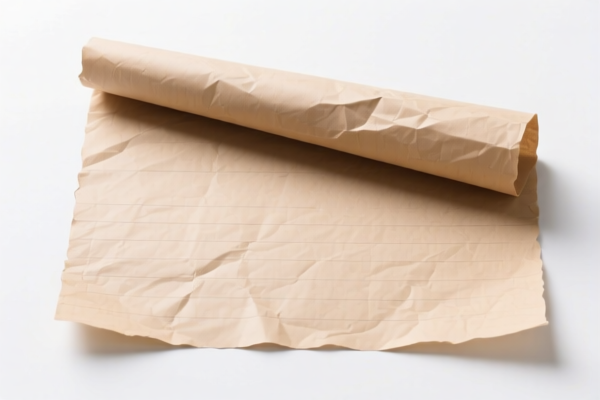

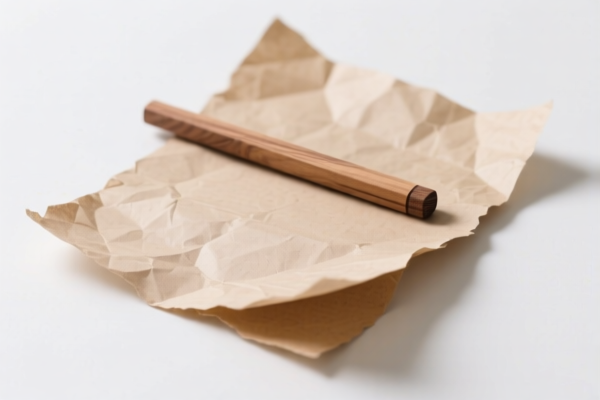
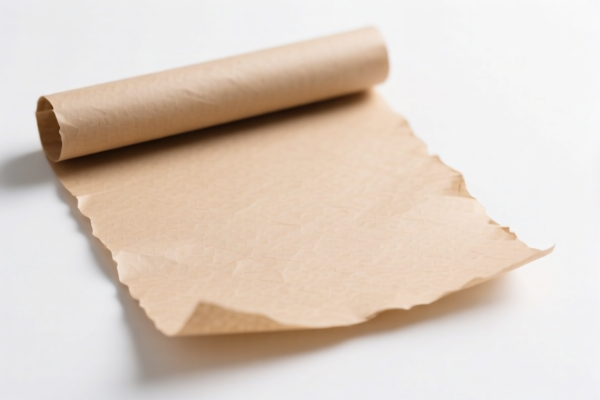
AI Analysis
📜 Uncoated Kraft Paper & Paperboard (Kraftliner) | HS Code 4704.19.00.00 vs 4804.11.00.00
🌐 HS Code Reference & Customs Clearance Guide | 2026 Tariff Breakdown | Professional Compliance Strategy
📌 I. Product Definition & Classification: What Exactly is "Kraftliner"?
Uncoated Kraft paper and paperboard are the backbone of global packaging. However, customs authorities are strict about distinguishing between Heading 4704 (Chemical Wood Pulp) and Heading 4804/4802 (Mechanical/Mixed Pulp).
In the context of your data, we are dealing specifically with Uncoated Kraft Paper in Rolls or Sheets, excluding paper of heading 4802 or 4803. This category is widely known as Kraftliner (often referred to as "Top Liner" or "Containerboard").
⚠️ Key Distinction:
- If the paper is Unbleached (natural brown color, high strength): It falls under4804.11.00.00.
- If the paper is Other (e.g., bleached white kraft, or specific unbleached variants not classified as 11): It falls under4804.19.00.00.
- Crucial Exclusion: Paper of heading 4802 (wood-free paper) or 4803 (cellulose fiber paper) is NOT included here. Most high-strength packaging kraft is 4804, not 4802.
📦 II. HS Code Classification Details (2026 Authorized Tariff Reference)
Based on the provided <DATA>, here are the two applicable HS Codes for this product category. Note that both carry identical tax structures in the provided dataset.
| HS Code | Product Description | Visual/Tactile Characteristics | Common Application |
|---|---|---|---|
4804.11.00.00 |
Uncoated kraft paper and paperboard, in rolls or sheets, other than that of heading 4802 or 4803: Kraftliner: Unbleached | Natural brown, high tensile strength, rough texture | Outer layer of corrugated boxes, heavy-duty bags |
4804.19.00.00 |
Uncoated kraft paper and paperboard, in rolls or sheets, other than that of heading 4802 or 4803: Kraftliner: Other | May be bleached white, or specific unbleached grades not fitting "Unbleached" definition | Inner liner of boxes, specific food-grade packaging (if bleached), specialty kraft |
🔍 Important Note:
- The dataset explicitly excludes Heading 4802 and 4803. If your product is Wood-Free Kraft Paper (e.g., high-end shopping bags, coffee filters), it might belong to a different chapter entirely.
- Kraftliner is synonymous with containerboard used for corrugated fiberboard.
💰 III. 2026 Tariff Rate Breakdown (Detailed Tax Clauses)
✅ Applicable Countries: United States (US)
✅ Origin: China (CN) (Inferred from "Additional Tariff 25%" typical of US-China trade context in 2025-2026 datasets)
✅ Effective Time: Current (Post-2025 Retaliation Tariffs)
🎯 1. 4804.19.00.00 – Kraftliner: Other
| Item | Content |
|---|---|
| Base Tariff Rate | 0.0% (ad valorem) |
| Section 301 Additional Tariff | +25.0% |
| Total Tax Rate | 25.0% |
| Tax Calculation | CIF Value × 25% |
| De Minimis Exemption | ❌ Not Applicable (Goods subject to Section 301 tariffs generally lose de minimis exemption under current US enforcement). |
| Legal Basis Path | HTSUS: 4804.19.00.00 → USITC Footnote: 9903.88.01 (Section 301 List 3) |
📌 Explanation:
- The Base Rate (0%) reflects standard MFN (Most Favored Nation) treatment for certain paper products.
- The 25% Additional Tariff is imposed under Section 301 of the Trade Act of 1974 against products originating in China. This is a retaliatory tariff on industrial materials.
- Total Liability: For every $10,000 CIF value, you pay $2,500 in duties.
🎯 2. 4804.11.00.00 – Kraftliner: Unbleached
| Item | Content |
|---|---|
| Base Tariff Rate | 0.0% (ad valorem) |
| Section 301 Additional Tariff | +25.0% |
| Total Tax Rate | 25.0% |
| Tax Calculation | CIF Value × 25% |
| De Minimis Exemption | ❌ Not Applicable |
| Legal Basis Path | HTSUS: 4804.11.00.00 → USITC Footnote: 9903.88.01 (Section 301 List 3) |
📌 Explanation:
- Identical tax treatment to4804.19.00.00.
- Whether bleached ("Other") or unbleached, the 25% penalty applies uniformly to Chinese-origin Kraftliner under current trade restrictions.
🛠️ IV. Customs Clearance Practical Advice (Field Guide)
✅ 1. Documentation Checklist (Mandatory)
| Document | Required | Notes |
|---|---|---|
| Commercial Invoice | ✔️ | Must state "Uncoated Kraft Paper", specify "Unbleached" or "Bleached" accurately. |
| Packing List | ✔️ | Detail roll dimensions (diameter, width, length) and weight. |
| Certificate of Origin | ✔️ | Essential for proving origin. If not China, may avoid the 25%. |
| Product Specification Sheet | ✔️ | Include GSM (grams per square meter), Mullen Burst strength, and fiber content (e.g., 100% Kraft). |
| Bill of Lading (B/L) | ✔️ | Ensure HS Code 4804.xx.xx is marked clearly. |
✅ 2. Classification Strategy (Key Tips)
🔥 "Check the Heading, Not Just the Name!"
| Scenario | Correct Classification | Risk if Incorrect |
|---|---|---|
| Standard Brown Kraft Liner | 4804.11.00.00 |
Misclassification as 4802 (different tariff, different regulations). |
| White Kraft Liner | 4804.19.00.00 |
If misdeclared as unbleached, customs may audit for fraud. |
| Paper of Heading 4802 | NOT 4804 | 4802 papers (wood-free) are excluded. If you ship 4802 paper under 4804 code, it will be rejected. |
| Coated Kraft Paper | NOT 4804 | Coated papers fall under 4810 or 4805. Do not use 4804 codes for coated goods. |
✅ 3. Special Considerations for 2026
| Issue | Solution |
|---|---|
| Origin Marking | Ensure every roll/pallet is marked "Made in China" if applicable. Lack of marking can lead to fines. |
| De Minimis Loophole Closed | Do not rely on Section 321 (de minimis < $800) for large shipments of paper. US Customs has tightened enforcement on textile/paper de minimis abuses. |
| Anti-Dumping Duties | Check if there are specific AD/CVD orders on Chinese Kraft Pulp or Containerboard. While not in the current dataset, always verify. |
🌍 V. Global Market Comparison (2026 Outlook)
| Market | Recommended HS Code | Tariff (China Origin) | Notes |
|---|---|---|---|
| 🇺🇸 USA | 4804.11.00.00 / 4804.19.00.00 |
25% | High barrier due to Section 301. |
| 🇨🇳 China | Same | 0-5% | Domestic consumption hub. |
| 🇪🇺 EU | 4804 | 6.5% | No Section 301 equivalent, but standard MFN applies. |
| 🇻🇳 Vietnam | 4804 | 0-5% | Consider transshipment (caution: illegal if not substantially transformed). |
📌 Conclusion:
- The USA is the most expensive market for Chinese-origin Kraftliner due to the 25% additional tariff.
- Cost mitigation strategies include sourcing from Vietnam, Mexico, or Southeast Asia (where applicable laws allow).
📌 VI. Common Mistakes & Pitfalls (Lessons Learned)
❌ Mistake 1: Declaring "Cardboard" instead of "Kraft Paper"
👉 Result: Customs may classify under generic cardboard codes with higher duties or stricter inspections.
❌ Mistake 2: Ignoring the "Unbleached" distinction
👉 Result: If you ship bleached paper but declare 4804.11.00.00 (Unbleached), it is a false declaration. Use 4804.19.00.00 for bleached.
❌ Mistake 3: Confusing Heading 4802 and 4804
👉 Result: Heading 4802 is for wood-free paper (like office paper). Heading 4804 is for semi-chemical/mechanical kraft. Misclassification leads to seizure.
✅ Best Practice:
"Be Specific: 'Uncoated Kraft Liner, Unbleached, 150gsm, for Corrugated Boxmaking.'"
🎯 VII. Conclusion: Mastering Kraftliner Clearance
🎯 Remember:
🔹 "Kraftliner is 4804, not 4802."
🔹 "Unbleached is .11, Other is .19."
🔹 "25% Tariff is the price of China-origin."
📌 Pro Tip:
If you are importing into the US, consider:
1. Pre-Ruling: Request an International Trade Commission (ITC) Ruling from US CBP to confirm your specific paper grade falls under 4804 and not 4802.
2. Supply Chain Diversification: Source from non-China origins to avoid the 25% penalty.
3. Bonded Warehouses: Use bonded facilities to defer duty payment until goods are sold or re-exported.
📣 Act Now:
📞 Engage a licensed customs broker.
📄 Provide physical samples for verification.
🚀 Ensure your invoices match the HS Code exactly to avoid 200% penalties for misdeclaration.
✨ Precision in Classification Saves 25% in Costs!
💼 Don't let "Kraft" cost you your margin!
Customer Reviews
About HS Code Classification
The Harmonized System (HS) is an internationally standardized nomenclature developed by the World Customs Organization (WCO) to classify traded products. Over 200 countries use the HS system as the basis for customs tariffs, trade statistics, and import/export regulations.
Each HS code follows a hierarchical structure:
- Chapter (2 digits) — Broad category of goods (e.g., Chapter 84: Machinery and Mechanical Appliances)
- Heading (4 digits) — More specific grouping within the chapter
- Subheading (6 digits) — Internationally standardized breakdown, used by all WCO member countries
- National subdivisions (8-10 digits) — Country-specific extensions for further classification, such as US HTSUS 10-digit codes
Correct HS code classification is essential for smooth customs clearance, accurate duty payment, and compliance with trade regulations. Misclassification can lead to customs delays, overpayment of duties, or penalties.
When importing from CN to US, the applicable tariff rates may include:
- Most-Favored-Nation (MFN) rate — The standard duty rate applied to WTO members
- General rate — Applied to countries without trade agreements
- Trade remedy duties — Additional tariffs such as Section 301 (anti-dumping), Section 232 (national security), or countervailing duties
The information provided on this page is for reference purposes only. For official classification, please consult with your local customs authority or a licensed customs broker.