paper hs code 4802
CN → US| HS Code | Tariff Rate | Origin | Destination | Doc |
|---|---|---|---|---|
| 4802541000 | 35.0% | CN | US | Official Doc |
| 4802551000 | 35.0% | CN | US | Official Doc |
| 4823908680 | 35.0% | CN | US | Official Doc |
| 4823906700 | 35.0% | CN | US | Official Doc |
| 4810225080 | 35.0% | CN | US | Official Doc |
Product Images
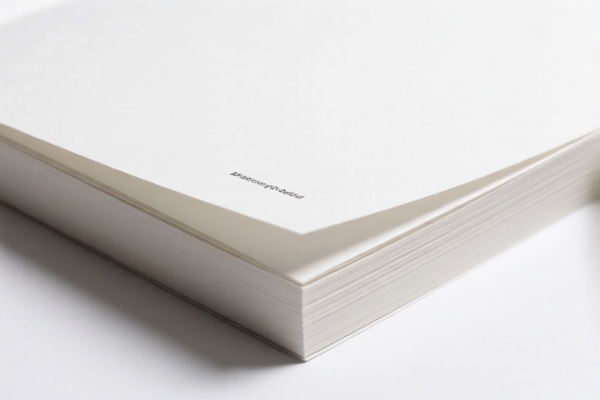
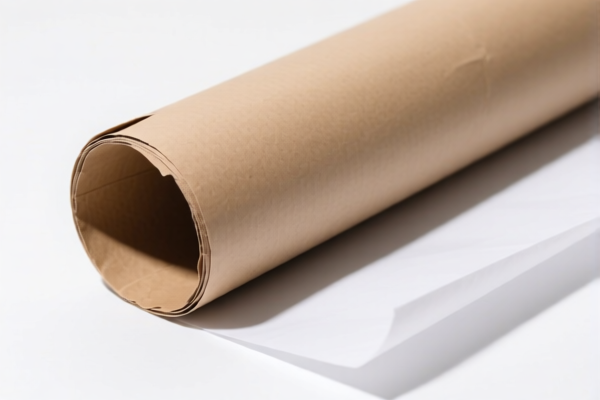

AI Analysis
📄 Paper & Paperboard (HS Code 4802 Series)
🌐 HS Code Classification & Customs Clearance Guide | 2026 Latest Tariff Analysis | Professional Strategy for Unspecified Paper Products
📌 I. Product Definition & Classification: Do You Understand "Paper"?
"Paper and Paperboard" is a broad category in international trade, primarily governed by Chapter 48 of the Harmonized System. However, HS Code 4802 specifically refers to "Paper and paperboard, containing recovered (waste) fibers, or other paper/paperboard, uncoated, in rolls or sheets, weighing not more than 150 g/m²."
Since the input product name is only "paper and paperboard" without specific details on weight, coating, or fiber content, the classification relies on preliminary logical matching. Below are the most likely HS Code candidates based on the provided data, along with their tax implications.
⚠️ Critical Disclaimer:
- The product name is generic. Accurate classification requires knowing:
1. Grammage (g/m²): Under 150g/m²? Over 150g/m²?
2. Coating: Uncoated, coated, or impregnated?
3. Fiber Content: Is it recycled (waste fibers)?
4. End Use: Writing, printing, packaging, or industrial?
- The following analysis is based on preliminary matching assuming the product fits the general characteristics of HS 4802 (uncoated paper/board ≤150g/m²).
📦 II. HS Code Classification Details (Based on Provided Data)
The following HS Codes are identified as potential matches. Note that all listed codes carry a 35% Total Tax Rate due to US-China trade tensions.
| HS Code | Product Description | Matching Logic | Key Attribute |
|---|---|---|---|
4802.54.10.00 |
Uncoated paper/board, for writing/printing, ≤150g/m² | Match Success: Material "paper/paperboard" aligns with uncoated paper/board under HS 4802. Preliminarily classified as writing paper based on HS 4802 attributes. | Writing/Printing Paper |
4802.55.10.00 |
Other uncoated paper/board, ≤150g/m² | Potential Match: Material matches HS 4802. Since no specific weight/shape/use is provided, it logically falls under "Other" in the absence of material conflict. | Other Uncoated Paper |
4823.90.86.80 |
Other paper/board articles | Match Success: Material is paper. As a catch-all category, it matches as long as there is no material conflict. Suitable if the paper doesn't fit specific sub-categories. | Catch-All Paper Article |
4823.90.67.00 |
Other paper/board articles | Match Success: Material is paper. This is also a catch-all category for other paper/board items not specified elsewhere. | Catch-All Paper Article |
4810.22.50.80 |
Paper with surface coating or treatment | Match Success: Material "paper" aligns with "paper and paperboard." Although coating status is unknown, it is a reasonable inference within the material scope. | Coated/Treated Paper |
🔍 Important Note:
- HS 4802.54 and 4802.55 are specific to uncoated paper ≤150g/m².
- HS 4823 and 4810 are broader or for coated/treated papers.
- Without more details, HS 4802.54/55 are the most common for standard printing/writing paper.
💰 III. 2026 Latest Tariff Rate Breakdown (Including Surtaxes & Policy Surcharges)
✅ Applicable Country: United States (US)
✅ Origin: China (CN)
✅ Effective Date: From November 10, 2025 (including subsequent imports)
🎯 1. Common Tax Structure for All Listed HS Codes
All five HS codes listed above share the exact same tax structure in the provided data:
| Item | Content |
|---|---|
| Base Tariff | 0.0% (ad valorem) |
| Section 301 Tariff (USITC) | +25.0% |
| Section 122 Tariff (IEEPA) | +10.0% |
| Total Tax Rate | 35.0% |
| Tax Calculation | CIF Value × 35% |
| De Minimis Exemption | ❌ Not Applicable (Deny De Minimis) |
| Legal Basis Path | Section 301: Footnote 9903.88.01 → IEEPA: 9903.01.24/25 → USITC: [HS Code] |
📌 Explanation:
- Section 301 Tariff (25%): Imposed under the US Trade Act of 1974, Section 301, targeting Chinese-origin goods.
- Section 122 Tariff (10%): Imposed under the International Emergency Economic Powers Act (IEEPA), specifically targeting Chinese/Hong Kong products.
- Total 35%: This is a high tariff rate. For a $10,000 shipment, the duty alone would be $3,500.
- No De Minimis: Packages under $800 (Section 321) cannot be used to avoid these tariffs for these specific HS codes.
🛠️ IV. Customs Clearance Practical Advice (Pitfall Avoidance Guide)
✅ 1. Required Documentation Checklist (Non-Negotiable)
| Document | Must Provide | Explanation |
|---|---|---|
| ✅ Product Specification Sheet | ✔️ | Must include: Material composition, grammage (g/m²), dimensions, coating status, fiber content (recycled vs. virgin). |
| ✅ Commercial Invoice | ✔️ | Must clearly state: "Paper and Paperboard," HS Code, Country of Origin (China), and CIF value. |
| ✅ Packing List | ✔️ | Detail roll/sheet dimensions, weight, and packaging type to avoid dimensional weight disputes. |
| ✅ Certificate of Origin (CO) | ✔️ | Essential for proving Chinese origin (which triggers the 35% tariff). If from Vietnam/Malaysia, may reduce tariffs. |
| ✅ Third-Party Test Report | ✔️ | If claimed as "recycled" or "coated," test reports help justify HS Code selection. |
| ✅ Import License (if applicable) | ✔️ | Check if any special permits are needed for paper imports. |
✅ 2. Declaration Tips (Key Mantras)
🔥 "Specify Grammage, Clarify Coating, Avoid Generic Names!"
| Scenario | Correct Declaration | Wrong Practice |
|---|---|---|
| Standard Writing Paper | "Uncoated Paper, 80g/m², A4 Size, Virgin Wood Pulp" → 4802.54.10.00 |
"Paper" → Ambiguous, may lead to audit. |
| Packaging Paper | "Uncoated Kraft Paper, 150g/m², Roll" → 4802.55.10.00 |
"Paperboard" → May be misclassified if under 150g/m². |
| Coated Paper | "Coated Paper, 100g/m², Glossy Finish" → 4810.22.50.80 |
"Uncoated Paper" → Classification error. |
| Generic Paper | "Unspecified Paper, Paperboard" → 4823.90.86.80 |
"Paper" → Risk of being classified as "Other" with higher scrutiny. |
✅ 3. Special Case Handling
| Situation | Handling Advice |
|---|---|
| OEM Custom Paper | Provide client order + design specs. Avoid generic "Paper" on invoice. |
| Paper with Print/Logos | Still classified under 4802 if uncoated. Do not declare as "Printed Matter" (Chapter 49) unless it's publications. |
| Recycled Paper | Must declare "Contains Recovered Fibers." If >50%, may fall under different sub-headings. |
| Non-Chinese Origin | If from Vietnam, Malaysia, or Thailand, apply for Certificate of Origin to potentially avoid Section 301/122 tariffs (check FTAs). |
🌍 V. Global Market Comparison (2026 Latest)
| Country/Region | Recommended HS Code | Tariff (China Origin) | Certification | Notes |
|---|---|---|---|---|
| 🇺🇸 USA | 4802.54.10.00 / 4802.55.10.00 |
35% (25% Sec 301 + 10% IEEPA) | None | High tariff. De Minimis not available. |
| 🇨🇳 China | 4802.54.10.00 |
5% - 10% | CCC (if applicable) | Low tariff for imports into China. |
| 🇪🇺 EU | 4802.54.10.00 |
0% - 6.5% | CE (if treated) | No additional surtaxes. |
| 🇬🇧 UK | 4802.54.10.00 |
0% - 6.5% | UKCA | No additional surtaxes. |
| 🇦🇺 Australia | 4802.54.10.00 |
5% | RCM | No additional surtaxes. |
📌 Conclusion:
- The US is the only market with the 35% punitive tariff for Chinese-origin paper.
- EU, UK, Australia, and China have significantly lower tariffs.
- If targeting the US, consider supply chain diversification (e.g., sourcing from Southeast Asia) to avoid the 35% tariff.
📌 VI. Common Errors & Pitfall Guide (Lessons Learned)
❌ Error 1: Declaring "Paper" without specifying grammage or coating.
👉 Consequence: Customs may reclassify to a higher tariff bracket or demand extensive documentation, causing delays.
❌ Error 2: Using "Paper" for items that are actually "Printed Publications" (e.g., books, magazines).
👉 Consequence: Misclassification under Chapter 49 vs. Chapter 48. Penalties and back-dated duties.
❌ Error 3: Assuming De Minimis ($800) applies to paper.
👉 Consequence: Incorrect! Paper products from China are not exempt from Section 301/122 tariffs, even under $800. All shipments will be assessed duty.
❌ Error 4: Incorrectly labeling "Coated Paper" as "Uncoated."
👉 Consequence: Classification error. If found to be coated, it may fall under 4810 with different scrutiny, or be subject to additional anti-dumping duties.
✅ Correct Practice:
"Uncoated Offset Paper, 80g/m², 500 Sheets, Virgin Wood Pulp, Made in China, Model XYZ"
🎯 VII. Conclusion: Precision in Classification Saves Costs!
🎯 Remember the Mantra:
🔹 "Grammage Defines, Coating Determines, Origin Triggers Tariff!"
🔹 "HS Code 4802 is for Uncoated Paper ≤150g/m². Anything Else Needs Different Codes."
🔹 "35% Tax is Real. Plan Your Supply Chain Accordingly!"
📌 Pro Tip:
If your paper is sourced from Vietnam, Indonesia, or Malaysia, you may be eligible for lower or zero tariffs on Section 301/122 duties.
- Action: Obtain a Form A Certificate of Origin from the respective country.
- Benefit: Potential tariff reduction from 35% to 0%~5%.
📣 Immediate Action:
📞 Contact a licensed customs broker + Provide Product Specs + Apply for Advance Ruling (if high volume).
🚀 Let your paper clear customs smoothly, avoid penalties, and maximize profits!
✨ Professional Clearance Starts with Accurate Classification!
💼 Your Every Penny Should Be Precisely Calculated!
Customer Reviews
About HS Code Classification
The Harmonized System (HS) is an internationally standardized nomenclature developed by the World Customs Organization (WCO) to classify traded products. Over 200 countries use the HS system as the basis for customs tariffs, trade statistics, and import/export regulations.
Each HS code follows a hierarchical structure:
- Chapter (2 digits) — Broad category of goods (e.g., Chapter 84: Machinery and Mechanical Appliances)
- Heading (4 digits) — More specific grouping within the chapter
- Subheading (6 digits) — Internationally standardized breakdown, used by all WCO member countries
- National subdivisions (8-10 digits) — Country-specific extensions for further classification, such as US HTSUS 10-digit codes
Correct HS code classification is essential for smooth customs clearance, accurate duty payment, and compliance with trade regulations. Misclassification can lead to customs delays, overpayment of duties, or penalties.
When importing from CN to US, the applicable tariff rates may include:
- Most-Favored-Nation (MFN) rate — The standard duty rate applied to WTO members
- General rate — Applied to countries without trade agreements
- Trade remedy duties — Additional tariffs such as Section 301 (anti-dumping), Section 232 (national security), or countervailing duties
The information provided on this page is for reference purposes only. For official classification, please consult with your local customs authority or a licensed customs broker.