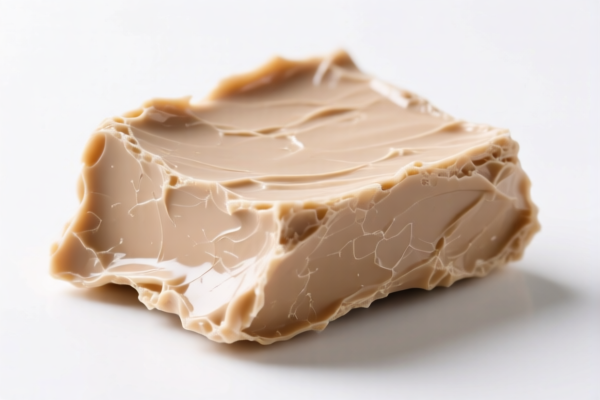
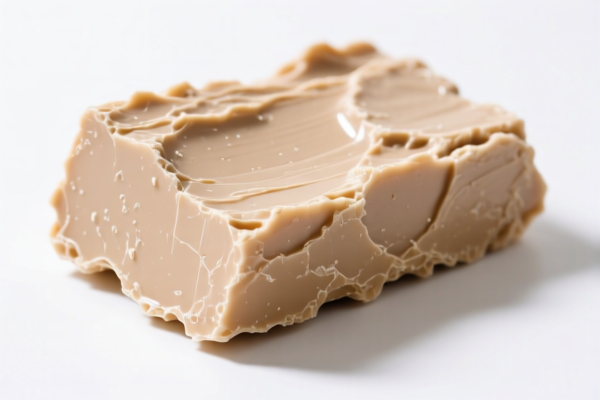
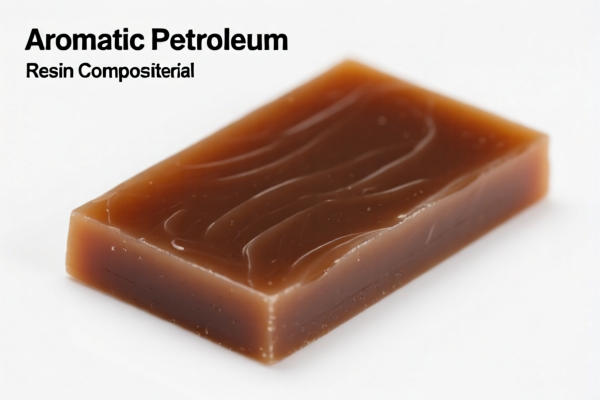
paraffin based material
CN → US| HS Code | Tariff Rate | Origin | Destination | Doc |
|---|---|---|---|---|
| 2712902000 | 35.0% | CN | US | Official Doc |
| 2712200000 | 17.5% | CN | US | Official Doc |
| 3402422050 | 39.0% | CN | US | Official Doc |
| 3402422010 | 39.0% | CN | US | Official Doc |
| 3402422010 | 39.0% | CN | US | Official Doc |
Product Images
AI Analysis
🕯️ Paraffin-Based Materials: The Ultimate HS Code & Customs Clearance Guide (2026 Edition)
🌐 HS Code Reference & Customs Strategy | 2026 Latest Tariff Analysis | Professional Clearance Protocol
📌 I. Product Definition: What Exactly is "Paraffin Based Material"?
Paraffin wax is a white, odorless, tasteless solid hydrocarbon mixture derived principally from petroleum (crude oil). In international trade, it is rarely a single standardized product but rather a broad category encompassing refined waxes, microcrystalline waxes, and paraffin derivatives used in: * Packaging: Coatings for food containers (cans, boxes). * Cosmetics: Base for creams, lipsticks, and candles. * Industrial: Lubricants, sealants, and lubricating oil additives. * Chemical: Surfactants and emulsifiers derived from fatty substances.
⚠️ Critical Distinction:
The classification depends heavily on the purity, state (solid vs. liquid/emulsified), and application (pure wax vs. chemical mixture). - Pure Refined Paraffin Wax → Generally falls under Chapter 27 or 29. - Paraffin Emulsions/Surfactants → Falls under Chapter 34 (Surface-active agents, prepared wax). - Additives/Blends → Depends on the primary function and composition.
📦 II. HS Code Classification Matrix (2026 Latest Tariff Data)
Based on the provided dataset, here are the applicable HS Codes for "Paraffin Based Material" when importing into the United States from China.
| HS Code | Product Description | Application Scenario | Tax Category |
|---|---|---|---|
2712.90.20.00 |
Paraffin-like products, used as additives or derivatives | Industrial additives, lubricating oil additives, non-specific blends | 📊 35.0% |
2712.20.00.00 |
Paraffin wax and similar products, containing key paraffin materials | Standard refined paraffin wax, basic industrial wax | 📊 17.5% |
3402.42.20.50 |
Fatty substances (animal/vegetable/microbial origin) used as paraffin base | Biologically derived paraffin substitutes, natural waxes blended with paraffin | 📊 39.0% |
3402.42.20.10 |
Paraffin Emulsifiers / Surfactants (Core components: Fatty acids/alcohols) | Paraffin emulsions used in cosmetics, food coating, or textile treatment | 📊 39.0% |
🔍 Key Insight:
-2712Codes apply to petroleum-derived paraffin wax. -3402Codes apply when paraffin is part of a surface-active agent (emulsifier) or blended with fatty substances. - The tax rate jumps significantly (from 17.5% to 39%) if the product is classified as a chemical mixture or emulsifier rather than pure wax.
💰 III. 2026 Tariff Rate Breakdown (Detailed Analysis)
✅ Destination Country: United States (US)
✅ Country of Origin: China (CN)
✅ Effective Date: Current trade policies (Section 301 & IEEPA)
🎯 1. 2712.20.00.00 – The "Standard Paraffin" (Lowest Risk)
| Item | Details |
|---|---|
| Base Tariff | 0.0% |
| Section 301 Additional Duty | +7.5% |
| IEEPA (122 Clause) Additional Duty | +10.0% |
| Total Tax Rate | 17.5% |
| Calculation Basis | CIF Value × 17.5% |
| De Minimis Exemption? | ❌ No (Deny de minimis) |
| Legal Basis Path | USITC:2712.20.00.00 → Section 301: Footnote 7.5% → IEEPA:9903.01.25 |
📌 Explanation:
This is the most favorable rate for standard paraffin wax. If your product is clearly defined as "Paraffin Wax" without significant additives or emulsifiers, this is the target HS Code.
🎯 2. 2712.90.20.00 – "Paraffin-like Products" (Higher Risk)
| Item | Details |
|---|---|
| Base Tariff | 0.0% |
| Section 301 Additional Duty | +25.0% |
| IEEPA (122 Clause) Additional Duty | +10.0% |
| Total Tax Rate | 35.0% |
| Calculation Basis | CIF Value × 35.0% |
| De Minimis Exemption? | ❌ No |
| Legal Basis Path | USITC:2712.90.20.00 → Section 301: Footnote 25% → IEEPA:9903.01.25 |
📌 Explanation:
This code applies to "similar products" or derivatives that are not strictly pure wax. The 25% Section 301 rate suggests these items are viewed as more sensitive industrial inputs. Do not use this code for pure wax.
🎯 3. 3402.42.20.10 & 3402.42.20.50 – Emulsifiers & Fatty Substances (Highest Cost)
| Item | Details |
|---|---|
| Base Tariff | 4.0% |
| Section 301 Additional Duty | +25.0% |
| IEEPA (122 Clause) Additional Duty | +10.0% |
| Total Tax Rate | 39.0% |
| Calculation Basis | CIF Value × 39.0% |
| De Minimis Exemption? | ❌ No |
| Legal Basis Path | USITC:3402.42.20.xx → Section 301: Footnote 25% → IEEPA:9903.01.25 |
📌 Explanation:
If your paraffin material is emulsified (mixed with water/chemicals to form a liquid cream) or blended with fatty acids/alcohols, it moves from Chapter 27 to Chapter 34.
-3402.42.20.10: Specifically for Paraffin Emulsifiers (Surfactants).
-3402.42.20.50: For other fatty substance-based mixtures.
- Warning: The base tariff (4%) plus the high additional duties make this the most expensive classification.
🛠️ IV. Customs Clearance Practical Advice (Avoiding Pitfalls)
✅ 1. Preparation Checklist (Mandatory Documents)
| Document | Required? | Description |
|---|---|---|
| ✅ Product Specification Sheet | ✔️ | Must detail chemical composition, melting point, and viscosity. |
| ✅ Certificate of Origin (CO) | ✔️ | Proves CN origin. Critical for calculating Section 301/IEEPA taxes. |
| ✅ Commercial Invoice | ✔️ | Must clearly state "Paraffin Wax" or "Paraffin Emulsion," not just "Chemical Material." |
| ✅ Safety Data Sheet (SDS) | ✔️ | Required for customs valuation and safety compliance. |
| ✅ Formula/Composition List | ✔️ | Crucial: If >5% of weight is fatty acids or surfactants, you MUST use HS 3402. |
✅ 2. Declaration Strategy (The "Golden Rules")
🔥 "Pure Wax goes to 2712; Emulsions go to 3402. Misclassification = Penalties!"
| Scenario | Correct HS Code | Incorrect HS Code | Consequence of Error |
|---|---|---|---|
| Solid, refined Paraffin Wax | 2712.20.00.00 |
2712.90.20.00 |
Overpayment of tax (35% vs 17.5%). |
| Paraffin Emulsion (Liquid/Cream) | 3402.42.20.10 |
2712.20.00.00 |
Underpayment + Fraud Risk. Customs may seize goods for misdeclaration. |
| Paraffin + Fatty Acid Blend | 3402.42.20.50 |
2712.20.00.00 |
Underpayment + Penalty. |
| General Industrial Additive | 2712.90.20.00 |
2712.20.00.00 |
Underpayment. |
✅ 3. Special Situations
| Situation | Handling Advice |
|---|---|
| OEM/Custom Formulation | If you blend paraffin with other chemicals, provide the exact percentage of each component. If the primary function is emulsification, use 3402. |
| Food-Grade vs. Industrial | Both can use 2712.20.00.00 if pure. Food-grade requires FDA compliance documentation, but does not change HS Code. |
| Microcrystalline Wax | Often falls under 2712.20.00.00 or 2712.90.20.00. Check the melting point and oil content. High oil content may push it to 2712.90. |
| Partial Exemptions? | ❌ None. Section 301 and IEEPA taxes apply to all paraffin products from China. No de minimis exemption for individual shipments. |
🌍 V. Global Market Comparison (2026)
| Market | Recommended HS Code | Approx. Tariff (CN Origin) | Key Compliance Requirement |
|---|---|---|---|
| 🇺🇸 USA | 2712.20.00.00 |
17.5% | SDS, CO, Precise Description |
| 🇺🇸 USA | 3402.42.20.10 |
39.0% | Formula Disclosure, Surfactant Labeling |
| 🇨🇳 China | 2712.20.00.00 |
1-2% | No major additional duties |
| 🇪🇺 EU | 2712.20.00.00 |
0% - 2% | REACH Registration required |
| 🇯🇵 Japan | 2712.20.00.00 |
0.5% - 2% | FSLV (Food Sanitation Law) if food-grade |
📌 Conclusion:
The US market imposes significant tariffs (17.5% - 39%) on Chinese paraffin products. Supply chain diversification or value-added processing in third countries (Vietnam, Mexico) may be necessary to reduce costs.
📌 VI. Common Errors & Pitfalls (Blood & Tears Lessons)
❌ Error 1: Labeling "Paraffin Emulsion" as "Paraffin Wax" to get the 17.5% rate.
👉 Consequence: Customs will inspect the SDS. If surfactants are found, they will reclassify to 3402 and charge 39% + penalties.
❌ Error 2: Using 2712.90.20.00 for standard wax.
👉 Consequence: You will overpay by 17.5% unnecessarily. Always argue for 2712.20.00.00 for pure wax.
❌ Error 3: Ignoring the "122 Clause" (IEEPA 10%).
👉 Consequence: Even if you think you are exempt from Section 301, the IEEPA 10% tax still applies. Total cost is always at least 17.5% for pure wax.
✅ Correct Practice:
"Paraffin Wax, White, Refined, Melting Point 56-58°C, CAS No. 8002-74-2. NOT an emulsion. NOT blended with fatty acids."
🎯 VII. Conclusion: Precise Classification Saves Money
🎯 Remember the Mantra:
🔹 "Pure Wax = 17.5% | Emulsions = 39% | Derivatives = 35%."
🔹 "Check the Formula! A 5% Additive Changes Everything!"
🔹 "No De Minimis for Paraffin from China to the US!"
📌 Pro Tip:
If your product is a Paraffin Emulsion, consider if it can be shipped as concentrated wax (HS 2712) and emulsified after arrival in the US. This could save you 21.5% in tariffs (39% - 17.5%), provided the technical process allows it.
📣 Immediate Action:
📞 Consult a Customs Broker: Provide the full chemical formula.
📄 Request a Ruling: Apply for a Pre-Ruling from US Customs to lock in the HS Code.
🚀 Optimize Your Supply Chain: If volumes are high, explore Third-Country Transshipment (e.g., Vietnam) to mitigate IEEPA/Section 301 risks.
✨ Professional Clearance Starts with Accurate Classification!
💼 Every 1% of Tax Saved is Pure Profit!
Customer Reviews
About HS Code Classification
The Harmonized System (HS) is an internationally standardized nomenclature developed by the World Customs Organization (WCO) to classify traded products. Over 200 countries use the HS system as the basis for customs tariffs, trade statistics, and import/export regulations.
Each HS code follows a hierarchical structure:
- Chapter (2 digits) — Broad category of goods (e.g., Chapter 84: Machinery and Mechanical Appliances)
- Heading (4 digits) — More specific grouping within the chapter
- Subheading (6 digits) — Internationally standardized breakdown, used by all WCO member countries
- National subdivisions (8-10 digits) — Country-specific extensions for further classification, such as US HTSUS 10-digit codes
Correct HS code classification is essential for smooth customs clearance, accurate duty payment, and compliance with trade regulations. Misclassification can lead to customs delays, overpayment of duties, or penalties.
When importing from CN to US, the applicable tariff rates may include:
- Most-Favored-Nation (MFN) rate — The standard duty rate applied to WTO members
- General rate — Applied to countries without trade agreements
- Trade remedy duties — Additional tariffs such as Section 301 (anti-dumping), Section 232 (national security), or countervailing duties
The information provided on this page is for reference purposes only. For official classification, please consult with your local customs authority or a licensed customs broker.