parking heater
CN → US| HS Code | Tariff Rate | Origin | Destination | Doc |
|---|---|---|---|---|
| 7307933040 | 91.2% | CN | US | Official Doc |
| 8708925000 | 37.5% | CN | US | Official Doc |
| 7326908630 | 87.9% | CN | US | Official Doc |
| 7326908688 | 87.9% | CN | US | Official Doc |
| 7307995045 | 89.3% | CN | US | Official Doc |
Product Images
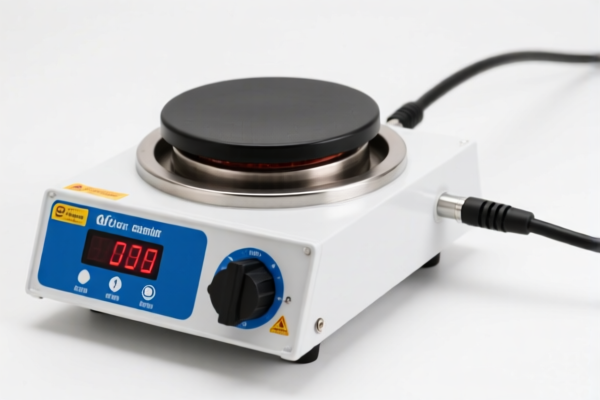
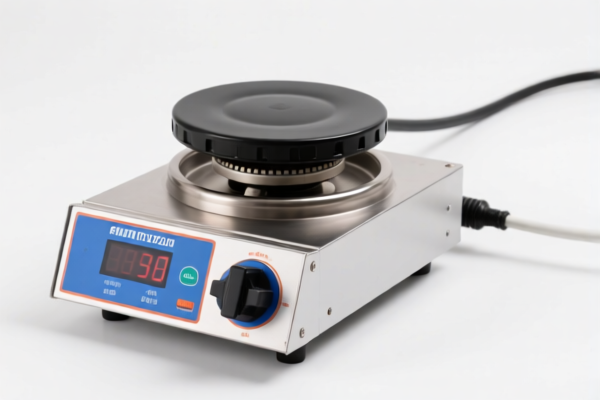
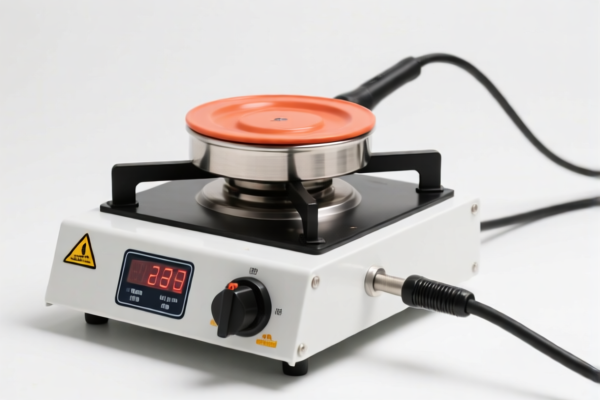
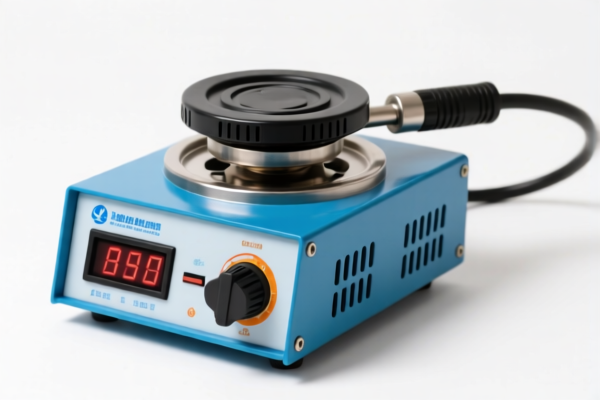
AI Analysis
🔥 Parking Heaters & Exhaust Pipes: The Ultimate Classification & Clearance Guide
🌐 HS Code Reference & Customs Clearance Guide | 2026 Latest Tariff Analysis | Professional Strategies for Metallic Exhaust Components
📌 I. Product Definition & Classification: Understanding the "Parking Heater Exhaust Pipe"
In the automotive after-sales and industrial heating sectors, a Parking Heater Exhaust Pipe is not just a simple metal tube. Its HS Code classification depends heavily on its structural form, specific function, and material composition. Misclassification can lead to drastic duty differences (from 37.5% to 91.2%).
⚠️ Critical Distinction:
- Is it a general fitting (elbow, reducer) → Likely Chapter 73 (Iron/Steel Articles);
- Is it a complete vehicle component (part of the exhaust system) → Likely Chapter 87 (Vehicles);
- Is it a support structure → Likely Chapter 73 (Other Iron/Steel Articles).
📦 II. HS Code Classification Details (Based on Provided Data)
| HS Code | Summary Description | Material | Key Classification Logic |
|---|---|---|---|
7307.93.30.40 |
Stub-ended Fittings (Pipe Fittings) | Iron or Non-alloy Steel | Classified as a fitted component (e.g., elbow, tee, reducer) for joining pipes. |
8708.92.50.00 |
Vehicle Exhaust System Components | Metal | Classified as a specific part of a vehicle's exhaust system. Broadest "vehicle part" category. |
7326.90.86.30 |
Pipe Support Structures | Steel | Classified as a support/bracket holding the pipe, not the pipe itself. |
7326.90.86.88 |
Other Iron/Steel Articles | Metal | The "Catch-all" category for other manufactured steel items not specified elsewhere. |
7307.99.50.45 |
Pipe Accessories | Iron or Non-alloy Steel | Classified as a general tube accessory or fitting, distinct from standard fittings. |
🔍 Key Insight:
-8708.92.50.00offers the lowest total tax (37.5%) among the options. It is best if the item is clearly recognized as a dedicated vehicle exhaust part.
-7307.93.30.40has the highest total tax (91.2%). This is often triggered if Customs views it strictly as a generic steel fitting subject to heavy "Section 232" steel tariffs.
-7326codes are risky for pipes unless they are explicitly structural supports, not the exhaust conduit itself.
💰 III. Detailed Tariff Breakdown (2026 Context)
✅ Context: The provided data reflects a scenario with high additional tariffs (likely US imports from China, given the "122 Clause" and "Section 232" references).
✅ Note: "122 Clause" refers to Section 232 (National Security) tariffs on steel/aluminum.
🎯 1. 8708.92.50.00 – Vehicle Exhaust System Components
(🏆 Recommended for Cost Efficiency)
| Item | Details |
|---|---|
| Base Duty | 2.5% |
| Section 301 Tariff (Add-on) | 25.0% |
| Section 122 Tariff (Steel/Aluminum) | 10% |
| Total Tax Rate | 37.5% |
| Legal Basis | HS 8708 (Vehicle Parts) + 301 Tariff List + 122 Steel Tariff |
| Strategy | This is the most favorable rate among the options. Ensure documentation clearly states it is a "Parking Heater Exhaust Pipe for Automotive/Industrial Use" to avoid being reclassified as a generic steel fitting. |
🎯 2. 7307.93.30.40 – Stub-ended Fittings
(⚠️ High Cost Risk)
| Item | Details |
|---|---|
| Base Duty | 6.2% |
| Section 301 Tariff (Add-on) | 25.0% |
| Section 122 Tariff (Steel/Aluminum) | 50% |
| Total Tax Rate | 91.2% |
| Legal Basis | HS 7307 (Tube Fittings) + 301 Tariff List + Heavy 50% Section 232 Steel Tariff |
| Strategy | Avoid if possible. The 50% Section 232 tariff applies because it is classified under Chapter 73 (Iron/Steel articles) rather than Chapter 87 (Vehicle parts). This classification treats the part as raw steel goods, not a vehicle component. |
🎯 3. 7326.90.86.30 & 7326.90.86.88 – Other Steel Articles
(⚠️ High Cost Risk)
| Item | Details |
|---|---|
| Base Duty | 2.9% |
| Section 301 Tariff (Add-on) | 25.0% |
| Section 122 Tariff (Steel/Aluminum) | 50% |
| Total Tax Rate | 87.9% |
| Legal Basis | HS 7326 (Other articles of iron/steel) + 301 Tariff List + 50% Section 232 Steel Tariff |
| Strategy | These are "catch-all" steel categories. They attract the same heavy 50% steel tariff as 7307. Only use if the item is a support bracket (86.30) or a miscellaneous steel part (86.88) and cannot be classified as a pipe fitting or vehicle part. |
🎯 4. 7307.99.50.45 – Pipe Accessories
(⚠️ High Cost Risk)
| Item | Details |
|---|---|
| Base Duty | 4.3% |
| Section 301 Tariff (Add-on) | 25.0% |
| Section 122 Tariff (Steel/Aluminum) | 50% |
| Total Tax Rate | 89.3% |
| Legal Basis | HS 7307 (Other tube fittings) + 301 Tariff List + 50% Section 232 Steel Tariff |
| Strategy | Similar to 7307.93, this incurs the 50% steel tariff. It is broader than "stub-ended fittings" but still suffers from the steel-specific penalties. |
🛠️ IV. Customs Clearance Practical Advice (Pitfall Avoidance)
✅ 1. Preparation Checklist (Must-Have Documents)
| Document | Requirement | Purpose |
|---|---|---|
| Product Specification Sheet | Material Grade (e.g., Stainless Steel 409, 304, or Carbon Steel), Dimensions, Wall Thickness | Proves whether it is "Iron/Non-alloy Steel" or "Stainless Steel" (which may have different tariffs). |
| Technical Drawing | Clearly shows it is an exhaust pipe or component of a heating system, not a generic pipe. | Crucial for arguing for HS 8708 (Vehicle Part) instead of HS 7307 (Steel Fitting). |
| Commercial Invoice | Description: "Exhaust Pipe for Parking Heater, Not for Use as General Pipe Fitting" | Avoids vague terms like "Steel Pipe" which trigger Chapter 73. |
| Proof of End-Use | OEM Order or Statement of Use for Automotive/Industrial Heating Systems | Supports classification under HS 8708 (Parts of Vehicles). |
✅ 2. Classification Strategy (Key Maneuvers)
| Scenario | Recommended HS Code | Reason |
|---|---|---|
| Item is clearly a pipe/exhaust for a heater | 8708.92.50.00 |
Lowest Tax (37.5%). Argue it is a "Part of Vehicle Exhaust System" (even if for auxiliary heaters). |
| Item is a generic elbow/reducer for plumbing/industrial use | 7307.93.30.40 |
Must pay 91.2%. If you cannot prove vehicle use, this is the fallback for fittings. |
| Item is a bracket/hold-down for the pipe | 7326.90.86.30 |
Classified as a "Support Structure." Still high tax (87.9%) due to steel tariffs. |
| Item is miscellaneous steel hardware | 7326.90.86.88 |
Last resort for non-specific steel items. High tax (87.9%). |
🔥 Critical Tip:
- Avoid Chapter 73 if possible. The 50% Section 232 Steel Tariff is the main driver of the high costs (91.2%, 87.9%, 89.3%).
- Fight for Chapter 87 (8708.92.50.00). Even though the base duty is low (2.5%), it avoids the 50% steel tariff, resulting in the lowest total duty (37.5%).
- Do NOT declare as "Steel Pipe" without specifying its function. Generic steel pipes fall under Chapter 73 and attract the highest tariffs.
✅ 3. Special Circumstances
| Situation | Action |
|---|---|
| Material is Stainless Steel | Check if HS 7307/7326 still applies. Sometimes stainless steel fittings have different subheadings. Verify if the 50% steel tariff applies to stainless. |
| OEM Part for Specific Vehicle Brand | Provide the brand and model compatibility. This strengthens the argument for HS 8708 (Vehicle Part). |
| Used/Refurbished Parts | Ensure declaration matches new/used status. Some HS codes have different restrictions for used goods. |
| Pre-Ruling Request | Highly Recommended. Submit an Advance Ruling request to US CBP with technical drawings to lock in HS 8708.92.50.00 before shipping. |
🌍 V. Global Market Comparison (Contextual)
| Market | Likely HS Code | Est. Duty Impact | Notes |
|---|---|---|---|
| 🇺🇸 USA (From China) | 8708.92.50.00 |
37.5% (Best) vs 91.2% (Worst) | Avoid Chapter 73 to bypass 50% Steel Tariff. |
| 🇨🇳 China (Import) | Various | Depends on FTA | Check ASEAN/Chile FTAs for reductions. |
| 🇪🇺 EU | 7307 or 8708 | ~4-10% + Anti-dumping? | EU does not have Section 232 steel tariffs. |
| 🇬🇧 UK | Similar to EU | ~4-10% | Post-Brexit tariffs may vary. |
📌 Conclusion:
- For US Imports, classification is critical.8708.92.50.00saves 50%+ in duties compared to7307codes.
- Always provide technical documentation proving the item is a vehicle/exhaust component, not a generic steel fitting.
📌 VI. Common Errors & Pitfalls (Lessons Learned)
❌ Error 1: Declaring as "Steel Pipe Fitting"
👉 Result: Landed in HS 7307 → 91.2% Duty due to 50% Steel Tariff.
💡 Fix: Use "Exhaust System Component" in description.
❌ Error 2: Vague Description "Heater Part"
👉 Result: Customs may guess Chapter 73 or 85 (Electrical). Delay and potential audit.
💡 Fix: Specify "Parking Heater Exhaust Pipe, Metal, for Automotive Use."
❌ Error 3: Ignoring Material Grade
👉 Result: If declared as "Iron" but is "Stainless Steel," penalties apply.
💡 Fix: Correctly identify material in technical specs.
🎯 VII. Conclusion: Smart Classification Saves Money!
🎯 Key Takeaway:
"Classify as Vehicle Part (8708), Not Steel Fitting (7307), to Avoid the 50% Steel Tax!"
- 8708.92.50.00: 37.5% Total Duty 🟢
- 7307/7326: 87-91% Total Duty 🔴
📌 Pro Tip:
- Request an Advance Ruling from US CBP using technical drawings.
- Ensure your commercial invoice and packing list clearly state "Exhaust Component for Parking Heater" to align with HS 8708.
✨ Precision in Classification = Profit in your Pocket!
💼 Don't let a 50% Steel Tariff eat your margin!
🚀 Clear the Way to Profitable Imports!
Customer Reviews
About HS Code Classification
The Harmonized System (HS) is an internationally standardized nomenclature developed by the World Customs Organization (WCO) to classify traded products. Over 200 countries use the HS system as the basis for customs tariffs, trade statistics, and import/export regulations.
Each HS code follows a hierarchical structure:
- Chapter (2 digits) — Broad category of goods (e.g., Chapter 84: Machinery and Mechanical Appliances)
- Heading (4 digits) — More specific grouping within the chapter
- Subheading (6 digits) — Internationally standardized breakdown, used by all WCO member countries
- National subdivisions (8-10 digits) — Country-specific extensions for further classification, such as US HTSUS 10-digit codes
Correct HS code classification is essential for smooth customs clearance, accurate duty payment, and compliance with trade regulations. Misclassification can lead to customs delays, overpayment of duties, or penalties.
When importing from CN to US, the applicable tariff rates may include:
- Most-Favored-Nation (MFN) rate — The standard duty rate applied to WTO members
- General rate — Applied to countries without trade agreements
- Trade remedy duties — Additional tariffs such as Section 301 (anti-dumping), Section 232 (national security), or countervailing duties
The information provided on this page is for reference purposes only. For official classification, please consult with your local customs authority or a licensed customs broker.